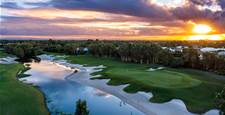
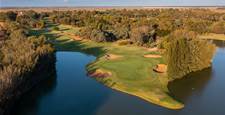
Unlike the ethos first evangelised by Richard Sattler at Barnbougle Dunes, and later realised by Darius Oliver at Cape Wickham on King Island and The Cliffs on Kangaroo Island, golf infrastructure on the Murray River is not a matter of “build it, and they will come”. It’s already built and they’re already coming.
The issue is that they’re coming in such numbers that clubs and resorts are being forced to build, upgrade, renovate, rejuvenate. It’s a fundamental of modern commerce – stand still or perish. And demand for Murray River golf demands commensurate investment. Not the worst problem for local industry.
In the region’s favour is a common business model: licensed clubs as owner-operators of golf courses. Progressive general managers and boards with background in the game realise that, while the poker machines are the engine room of their prosperity, it’s important to invest in the golf side of a business with “golf” in its brand name. They also know that if they’re taking money from the community, it’s important to put back in.
Part of that is clubs improving their golf courses. Richard Chamberlain has shaped the bunkers at Barham. Bob Harrison is consulting to Rich River. Tooleybuc, a nine-holer 50km north-west of Swan Hill, has poached superintendent Greg Coyne from Royal Adelaide. Robinvale, an hour east of Mildura, with limited tourism infrastructure and membership numbers that fluctuate according to the seasonal demands of grape, olive and almond harvesting, has Lukas Michel from Clayton, Devries and Pont devising a master plan.
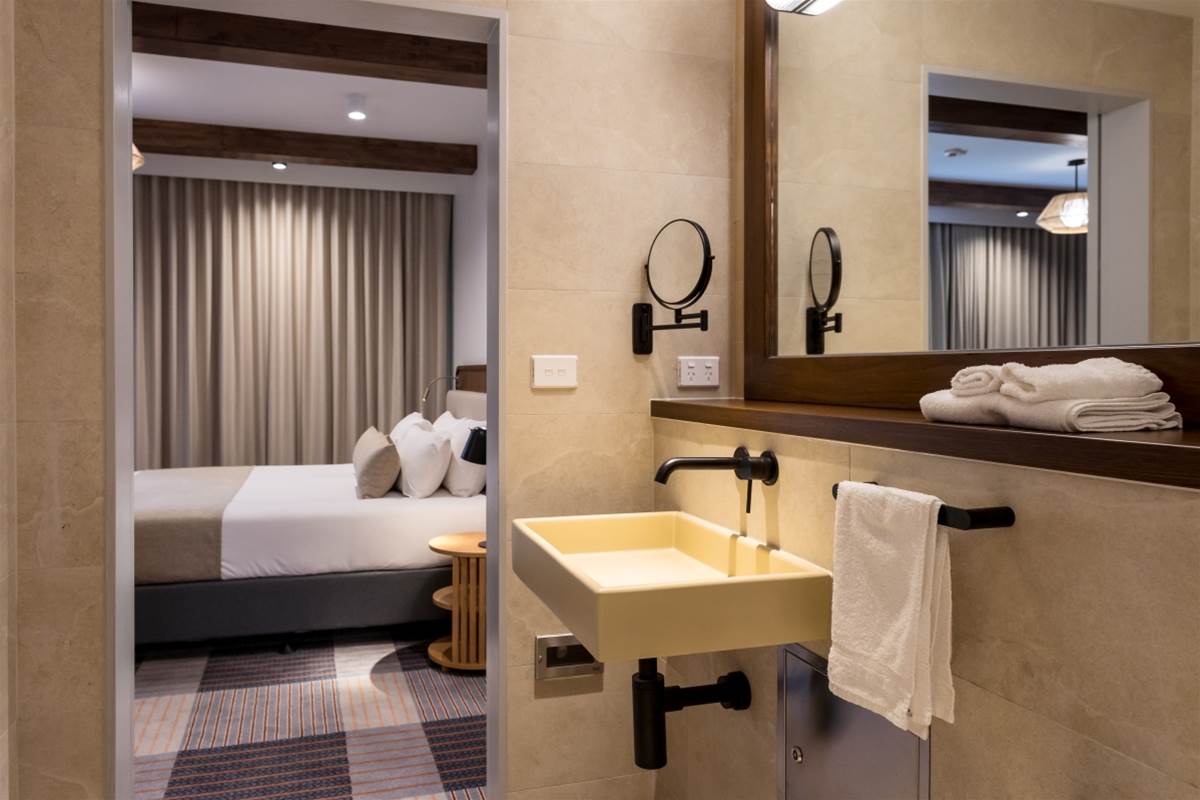
Such is the demand, clubs need somewhere to put people. They’re selling off land divisions and building luxurious new rooms at Rich River. There is $27 million being poured into construction at Thurgoona. Black Bull has a Sebel with spa, gym and steakhouse that could be in Double Bay, Cottesloe or by the river at New Farm.
It’s not all rosy. Corowa Golf Club, established 1903, has entered voluntary administration, even with Marcus Fraser and Ricky Ponting among its champions. The golf course and pro shop still operate; but the club that funds its maintenance is unable to receive the white knights’ bail-out without servicing the reported $1 million debt. Talk to GMs up and down the river - Corowa’s downfall is much lamented. Theirs is a community of golf clubs. They grow off each other.
Another vexed story of life on the river has long been about water. Yet clubs are throwing money at irrigation, replacing “plug and play” with sprinkler systems controlled by apps on iPads. And, when it comes tumbling from the sky, as it did in the month before Golf Australia magazine visited, the courses on the river quickly become lush. After a baking summer, greenskeepers have been recruiting volunteers, such has been the mandate to staunch reanimated couch.
Mainly, a golf trip on the Murray, on top of being a fine experience among mighty eucalypts, gorgeous dawns and dusks, and starry nights in the Australian “bush”, is welcoming. They want you there. Competitions on Saturdays? You’re welcome. Those who stay in attached accommodation are given preference for tee-times, given all resorts covet the Barnbougle model – build cracking golf courses, surround with excellent food, wine and accommodation, and give people no reason to leave.
Let us count the ways.
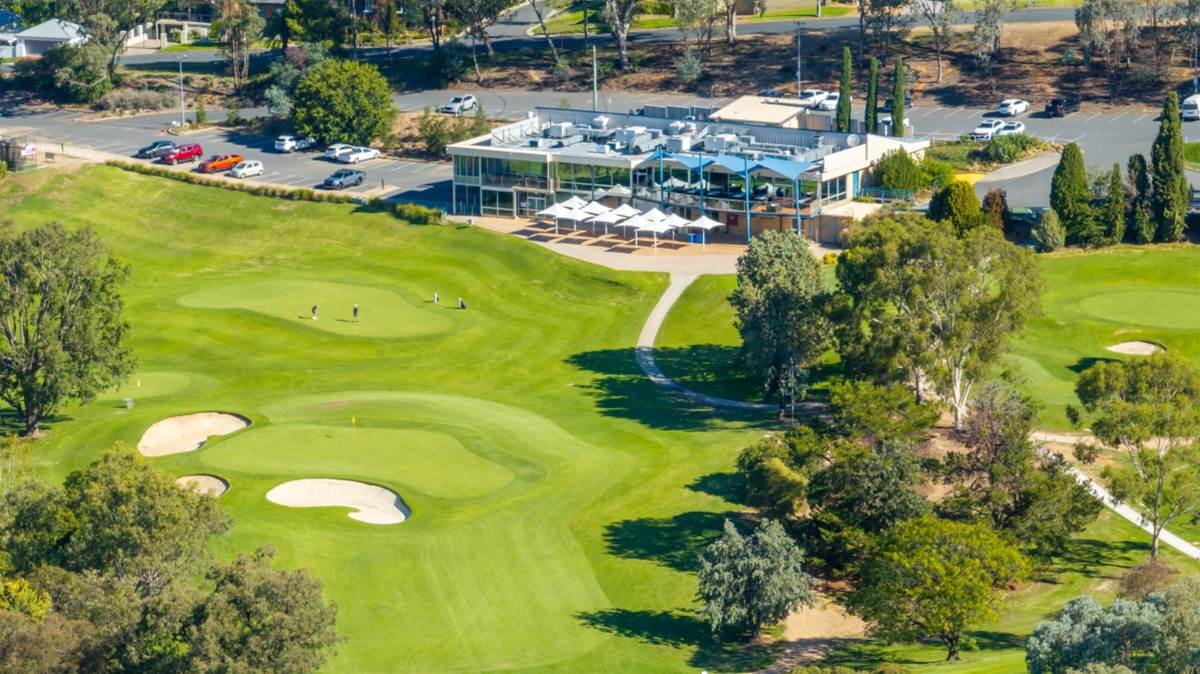
Golf on the Murray River is diverse. There is genuinely fine, championship golf at Murray Downs and Black Bull. The sun dappling through the mighty river gums on the Murray course at Yarrawonga-Mulwala is beautiful. Howlong, Thurgoona, Rich River, Tocumwal and Cobram-Barooga, among several others, service the needs of giant membership bases, along with a plethora of touring golfers, largely from Melbourne, but increasingly from Sydney, Canberra and Adelaide.
Our odyssey begins at Thurgoona Country Club Resort, which course superintendent Dean Lewis says “remains a hidden gem”.
“When visitors come here, whether they’re chatting after the round or having a yarn on the course, a common reaction is surprise,” Lewis says. “People don’t really know it’s here, and then they play it and say, ‘Oh, wow.’ We get plenty of groups who say, ‘We didn’t even know this place existed - we should be coming here more often.’
“Overall, people are just pleasantly surprised by how good the golf course is,” Lewis says.
A Peter Thomson and Mike Wolveridge design, Thurgoona’s front and back nines are quite different. The front nine feels a touch more refined architecturally, with greens that sit more naturally in the landscape. The back nine has more “push-up” style greens and some stronger contours, including more false fronts.
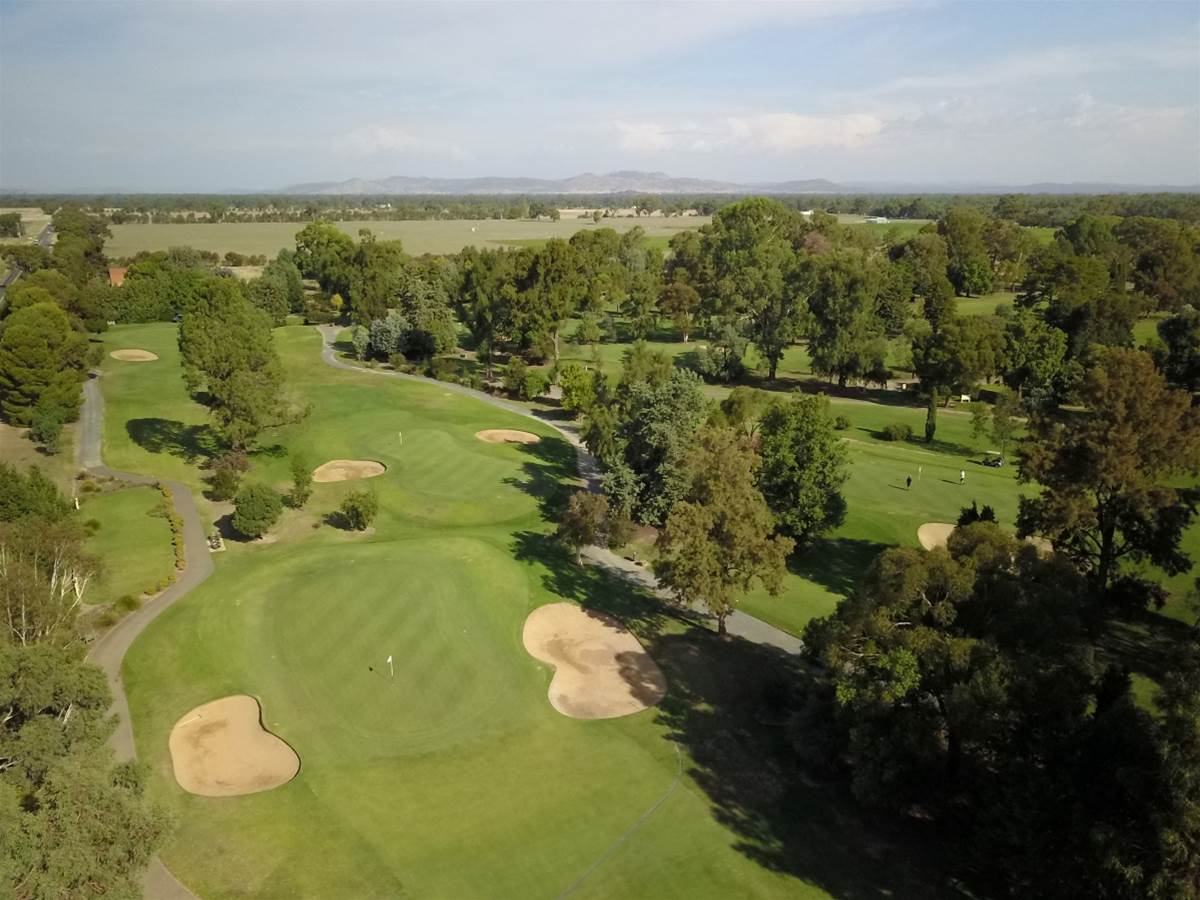
Master planning work has been done with Thomson and Perrett, but for the most part, the locals are doing it for themselves. “Ultimately we’ve taken bits and pieces from [the plan] and stayed true to the course’s character,” according to Lewis. “It’s more about subtle improvements – adjusting bunkers, refining tees, and making small tweaks to greens to improve pin positions, especially as green speeds increase.
“We’ve also added concrete paths to better manage cart traffic, which is significant here.”
Thurgoona is surrounded by housing, with many locals driving carts from their homes to the club. In 2026, Thurgoona hosted 75,000 rounds. “These days, it can actually be hard to fit everyone in,” Lewis says. “We have around 1000 members, plus social players and corporate groups, so it’s a busy operation.”
General Manager Adam Fitzgerald, a former Pennants player and member for 30 years, says Thurgoona is “very much a community hub”.
“Originally, the course was built to support Albury’s growth, and that growth has been enormous. Development in the area is booming, and that’s naturally flowing through to the club. We’re busier than ever. Our investment is also driving demand,” Fitzgerald says, adding that the club is investing $27 million into the clubhouse and motel renovations, including additional rooms and expanded facilities like tennis courts.
One of the big drivers has been the NSW Senior Open. Fitzgerald describes the club’s hosting of the tournament as a “happy accident”. “We took a bit of a punt with Golf NSW in bidding for the Senior Open. We didn’t know what to expect, really, but it’s been such a great success for us, boosting the club’s profile and visitor numbers,” Fitzgerald says.
Lewis says he’s most proud of the greens. “Yet, more broadly,” he adds, “I’m proud of how far the course has come. When I arrived, the fairways were mostly common couch. We’ve since introduced Santa Ana hybrid couch, and now we have really strong, consistent coverage that holds up well through winter.
“We’ve also done a lot of work on bunkers – new sand, reshaping – and generally taken a ‘middle-out’ approach: start with greens, fairways and tees, then work outward. We’ve encouraged more native areas to return, which adds definition to the holes and allows us to focus more resources on playing surfaces.”
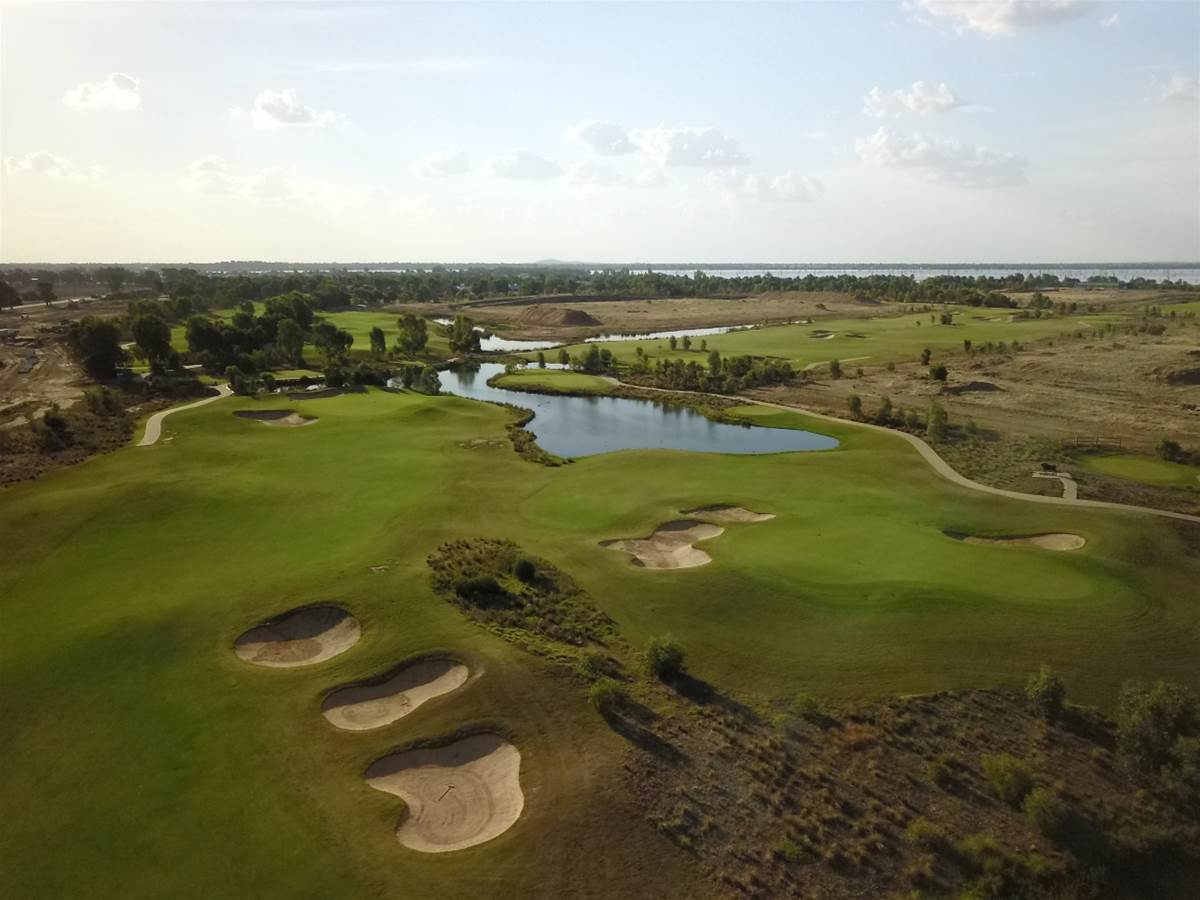
Notable holes at Thurgoona include the 12th – a short par-3 with a new, subtly-contoured green – and the par-4 fifth hole, for its bunkering and shape, and which looks beautiful in the morning when the sun comes up to show off its contours. Signature? That would be 16: a long par-3, 174 metres, all carry over water and well protected by sand.
***
Early the next day, we’re onto Albury Commercial Golf Club and into its Wednesday morning stableford competition; accessible to visitors all year round. It’s mild and still, as befitting early autumn of a region with four distinct seasons. Conditions are perfect: cool morning, the day rising to mid-20s, the kite-flying club disappointed.
Though membership is growing steadily – with over 850 golf members – and weekend fields increasing, the club is not close to restricting visitor access, according to Director of Golf, Henry Brind, who says it remains “very attractive for travelling golfers”.
“Competition golf is accessible. There are comps most days of the week - vets on Mondays and Fridays, women’s days midweek, men’s on Wednesdays, and open competitions on weekends,” Brind says.
“Visitor access is strong; the on-site motel is a major advantage. Groups can stay and play, even on Saturdays, which is a big drawcard. Bookings, particularly for peak periods, are filling months in advance.”
If Brind were doing his best sales pitch to entice you, travelling golfer, to a round at Albury, he’d tell you it’s “ a challenging, well-presented course in a region that offers far more than just golf”.
“The course is a must-play stop on a Murray River golf trip,” Brind says.
***
It wasn’t long ago - and likely remains prevalent in some quarters today - that mention of membership of Howlong Golf Resort would evoke derision, sneers and suspicion. How dare these usurpers attack our traditional golf club membership? The gall! Today, the industry has evolved to meet the golf boom and the likes of FutureGolf and Australia’s governing body offer what Howlong has long done – a recognised handicap at an affordable rate. Howlong today is more visionary than pariah.
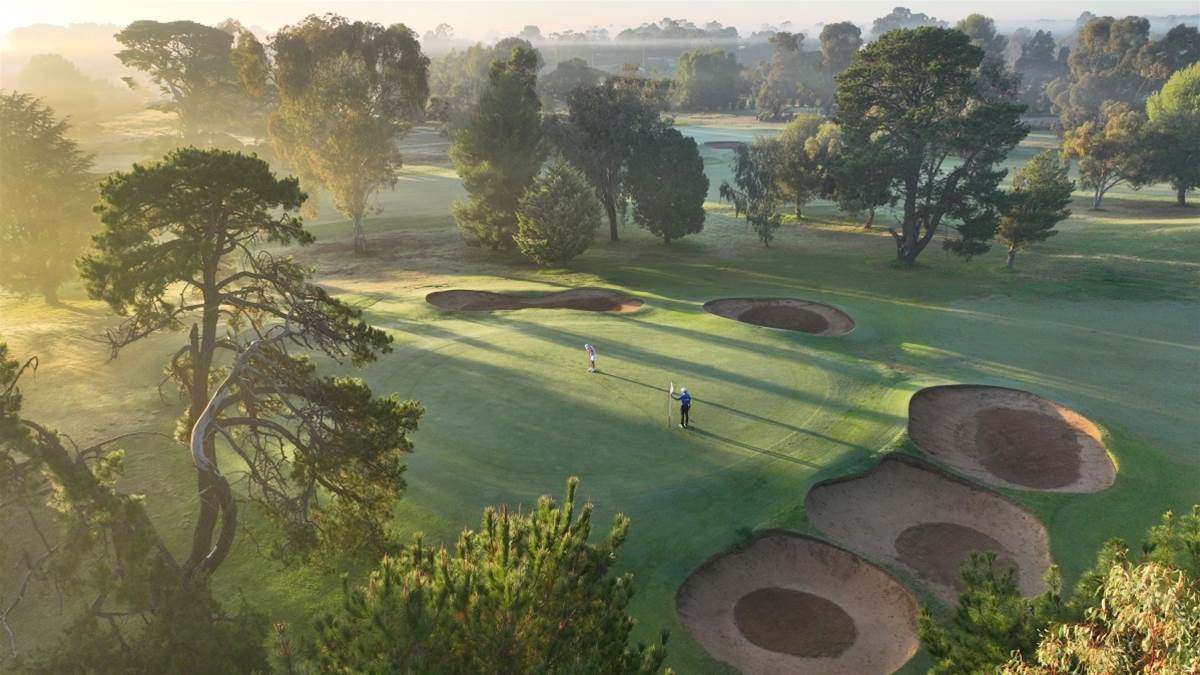
“We have around 570 full golf members, but our broader membership model includes ‘resort members’ and pushes our total numbers out above 7000,” says Howlong General Manager Nathan Phillips. “It’s a flexible, accessible approach to membership. It was ahead of its time and it’s since become more common across the industry.”
Howlong remains no less accessible in person. There are always tee-times for visitors and competitions every day of the week. Staying at the resort is the best way to secure prime times, especially on weekends.
“The course is user-friendly, with generous landing areas, minimal forced carries and plenty of opportunities to run the ball onto greens,” says Director of Golf Paul Steiner. “It’s designed to be playable for all skill levels. That’s Howlong’s appeal: playability, presentation and accessibility. It’s a course where everyone, from high handicappers to experienced players, can enjoy the game. Which is exactly the point, surely.”
Steiner says the challenge at Howlong comes at holes six and seven. “They’re strong par-4s around 400m. The 10th is shorter, but features a tricky green with subtle angles and tiers,” Steiner says.
“Many people’s favourite is the opening hole – a par-5 that offers the chance to start fast, although there’s still danger, including
a road.”
Assistant superintendent Adam Chandler says, in terms of course setup, “there’s no distinction between members and visitors.”
“Our goal is simply to present the course in the best possible condition every day. The focus is on consistency, presentation and incremental improvement, rather than major redesign,” Chandler says.
“The greens are a defining feature. They’re quick but fair, and importantly, very accessible. You can run the ball onto most greens, and there’s a conscious effort to avoid overly penal bunkering. It’s all part of the course’s user-friendly philosophy.”
Friendliness is what’s brought Peter and Irene Perez of Geelong to Yarrawonga-Mulwala Golf Club Resort for the last 42 years. A chance meeting with local legend and PGA professional, the late Alex Mackenzie, enamoured the couple to the club, the course, the town. Today, they own property locally, but when they visit, they’ll stay 14 nights in a room on-site, play all three courses, and barely leave the resort.
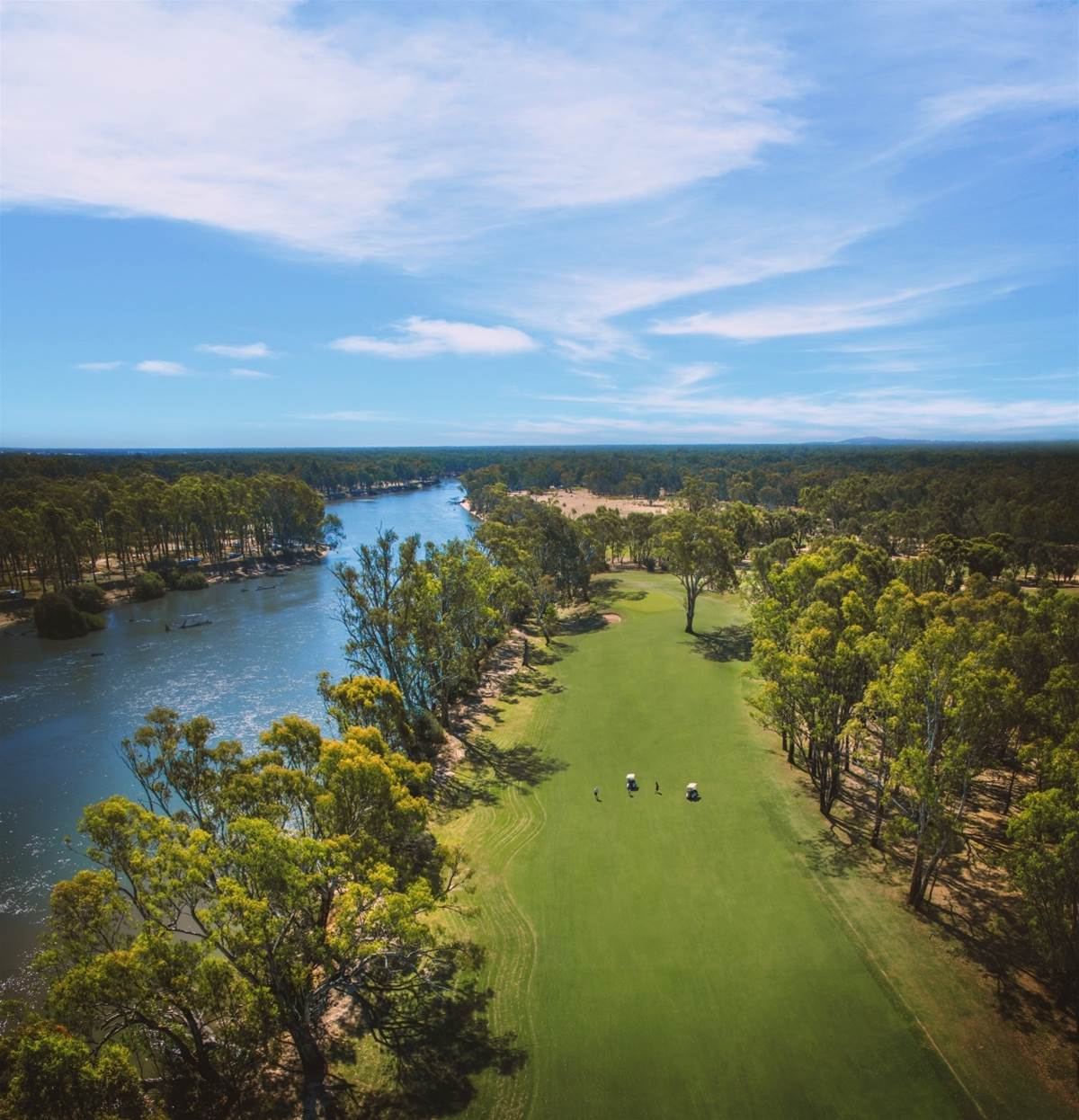
We meet the couple on the famous fifth hole of the Murray Course, the par-5 which runs up the river and which is lined on the water side by magnificent white river gums. It’s the hole that most people think of when they think golf hereabouts, according to club chief executive Peter Savy.
“It’s the hole that sticks with me, too,” Savy says. “Early in the morning, with campers set up on the opposite bank and the sun coming through the gums, it’s a beautiful, peaceful setting. Boats drift past, and it just feels uniquely Australian. It’s the image that comes to mind when I think of this place.”
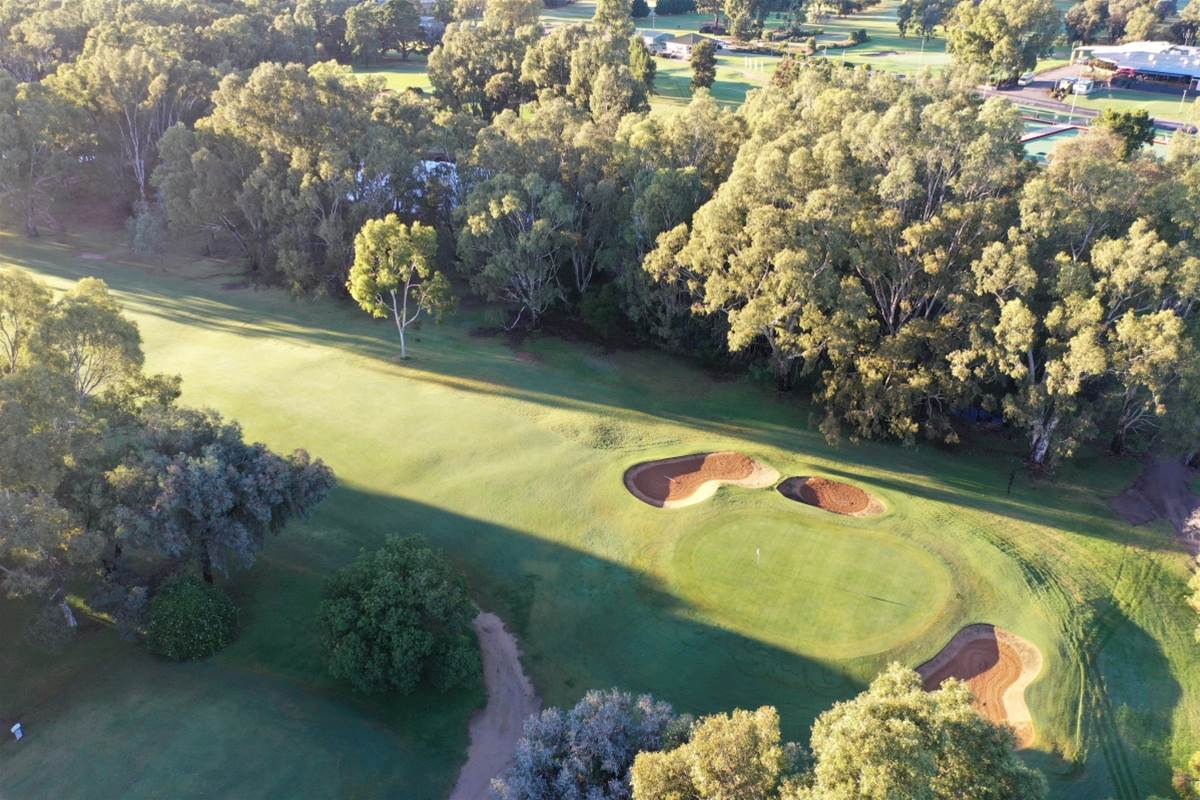
Savy’s been at the club as member and employee for approaching 40 years. He says the biggest shift in that time was the introduction of poker machines in Victoria, which really increased visitor numbers. Membership dues have evolved, too – though for we in the metropolitan centres, it’s so nominal it’s borderline laughable.
“When I started, a full membership was about $20,” Savey says. “These days it’s still affordable – around $625 – but it’s governed by the club’s constitution. Only full members can vote to increase subscriptions, and management can only adjust fees in line with CPI, so it’s always remained accessible.”
From a visitor perspective, a lot of the club’s traffic comes through golf packages, especially on weekends. “Most of the groups are from Melbourne – it’s close enough [three hours, door-to-door] to make it an easy trip. Accommodation plays a big role, and the course itself is a big draw. It’s enjoyable without being overly difficult, which suits a wide range of golfers,” Savy says.
Visitor access is well managed. The club allocates tee times on Saturdays specifically for unit guests, “so if you book accommodation, you’re guaranteed a game,” Savy says.
“The club structures its competitions around that, ensuring visitors can get on
while still accommodating members.”
There are plans to redevelop parts of the clubhouse precinct. A former gym space is being transformed into a new sports and entertainment area, including a larger TAB, big screens and golf simulators. There’s demand for more social, multi-use facilities
– especially for families and functions.
On the golf course side, bunker renovations are nearly complete, with new, white sand. There’s ongoing consultation with course designers to refine tees and layouts, particularly on the Lake Course. Irrigation upgrades have been completed on parts of the property, with further work planned over the next few years.
“The scale of the operation is significant – we’re doing over 100,000 rounds a year,” Savy says. “So the demand is clearly there. It’s a balance between strong, local support and a steady flow of visiting golfers.”
If he was pitching the place as a golf destination, Savy would tell you: “It’s not just about one course; it’s about the broader offering - the ‘golf on the Murray’ experience. The courses along the river are consistently strong, and the region itself has a lot going for it. The weather is a big factor too – traditionally, the line was that you’d get more hours of sunshine here than almost anywhere.
“At its core, Yarrawonga is about the setting. The river, the red gums, the light at different times of day – it all adds up to something pretty special.”
***
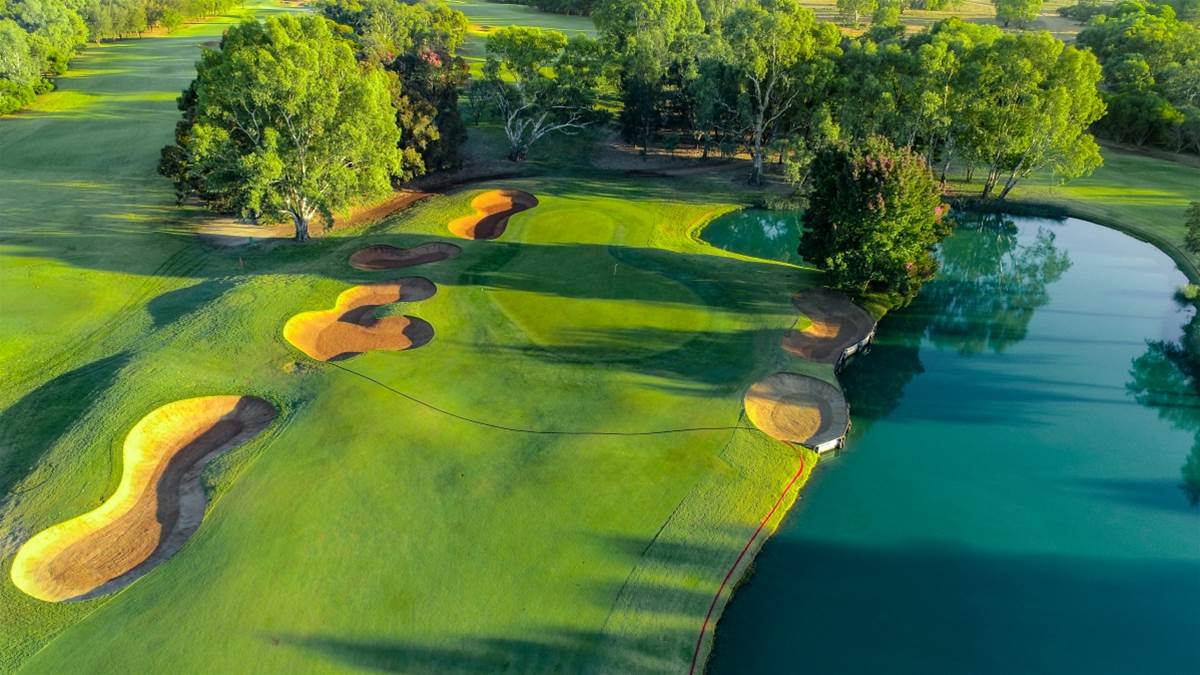
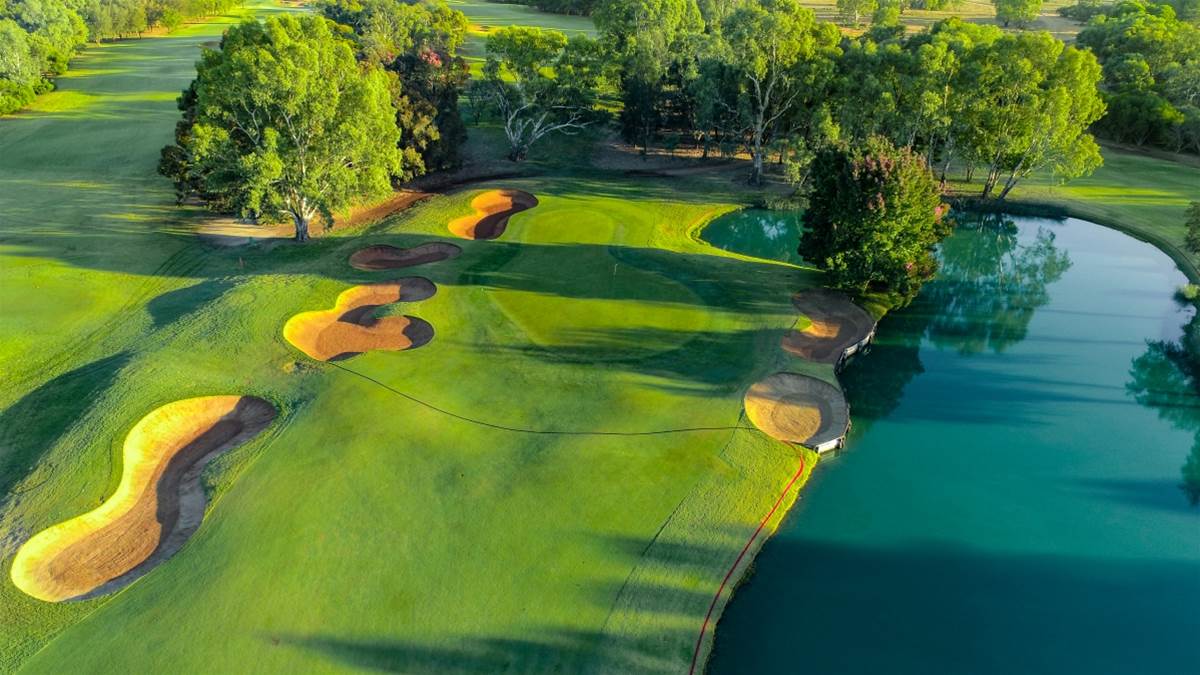
It may be just me, but Black Bull Golf Course in Yarrawonga reminds of a Queensland layout such as Lakelands, The Glades or Hope Island. It’s a “big”, championship layout, designed by Peter Thomson and Ross Perrett, with well-placed fairway bunkers designed to catch errant drives from whichever of the several well-spaced tee-boxes you choose to launch from. Bunkering around the greens is interesting, like so many mighty amoebas.
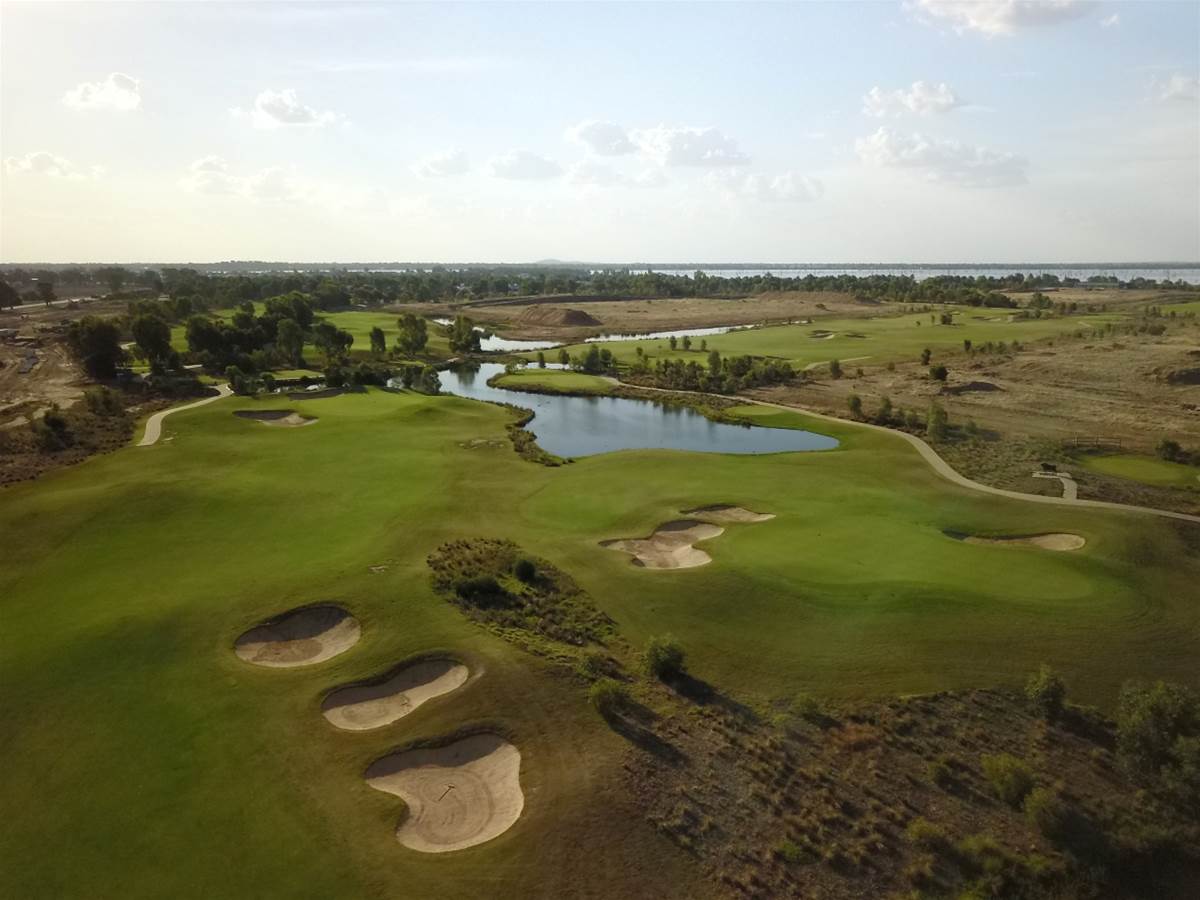
Black Bull, which has occupied a spot in Golf Australia magazine’s Top-100 since it first turned up in 2015, sports big bunkers, big fairways, big greens. And big statues of black bulls; tributes to the Angus beef cattle which once roamed the land.
Another tribute is “The Bull Ring”; a sequence of three holes which nods to Jack Nicklaus’ “Bear Trap” on the Champion Course at PGA National. The Bull Ring is the brainchild of local legend James McCully, who says “it was an original concept tied to the club’s branding and heritage as a former Black Angus stud.
“The bulls themselves were handmade and have become a major visual feature, with golfers frequently taking photos there. The Ring is a recognisable three-hole sequence within the course. It even has its own mini-competition on the scorecard, so groups can run a separate contest within their round. It’s effectively a ‘course within a course’ – challenging, photogenic and memorable,” McCully says.
Black Bull has a big focus on package golf, combining play with accommodation and food. The offering appeals to golfers used to premium courses – particularly those from Melbourne – with a strong and growing market from Sydney. McCully says a key point of difference with other clubs on the Murray is that there’s no traditional members’ competition on Saturdays.
“While there are daily competitions available, Saturdays are more accessible to visitors. This makes it easier for travelling golfers to secure a tee time, even during busy periods. For example, the course can handle large volumes – around 270 rounds on a busy Saturday,” McCully adds.
Like most courses up and down the Murray, Yarrawonga received a good drop of rain in February and March, with 150 millimetres in six weeks. It meant that on the Thursday morning we played, the course was pure. Fairways were carpet, greens fast - you could not argue with the condition. McCully says “feedback is consistently strong”.
“Our course conditions are a big part of that – we maintain a very high standard. People always comment on the playing surfaces, especially the fairways. The Grand Prix couch we use means the ball just sits up beautifully, so golfers feel really comfortable,” McCully says. “The greens are large, and we keep them around 10 on the stimpmeter. If you push them to 11 or 12, it can frustrate a lot of players because there’s so much movement, and it can slow play down. So, we’ve found that balance works well.”
***
Cobram Barooga Golf Club, too, is beautifully maintained by superintendent Terry Vogel – a 19-time club champion who stopped competing for further titles, lest he equal the record of his mentor and late local legend, Kevin Bourke. “Terry won’t tell you that’s why he did it,” a source tells Golf Australia magazine, “but that’s why he did it.”
We meet Vogel early on a Friday, the sun sparkling off the dew, the man himself on a mower heading up the first fairway of the Old Course. It’s one of those great early starts – groups gathering like Banjo Paterson’s cracks to the fray; steam off coffees; a pure, beautiful morning – crisp, still, clear.
The club has been around since 1912 and moved to Barooga in 1928, though it wasn’t until 1955 that Vern Morcom’s Old Course opened with shades of the Sandbelt in its greenside bunker edges. Vogel says, “we’re extremely proud of the place, particularly the greens.
“Every day we get up, the only goal is to present the course as best we can. We really feel like we do that,” Vogel says.
“It’s a good test of golf – there are good and not as good sides of the fairway off the tee.”
An example is the second of the Old, which has a yellow tree which doubles as a sighter off the tee down the par-4, which is dogleg left-to-right, plays over a swell. Your line is the yellow tree, fading off that. It’s dedicated to Jarrod Lyle. It’s a beauty.
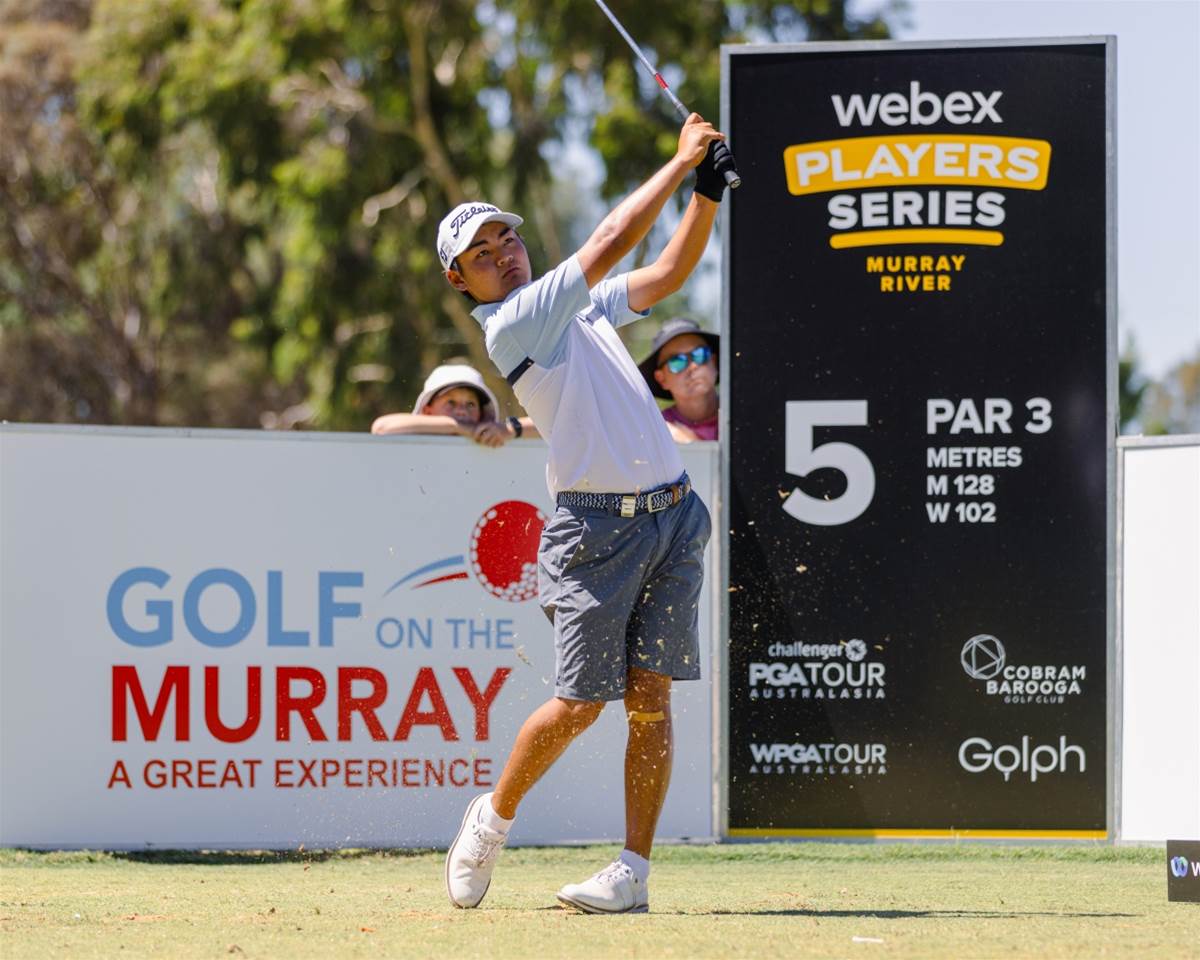
The Old Course is host of the Murray River Webex Series event that the locals feel ownership of. Like Thurgoona has the NSW Senior Open, Cobram Barooga is making hay through television pictures of its fine golf course being played by elite Australian players.
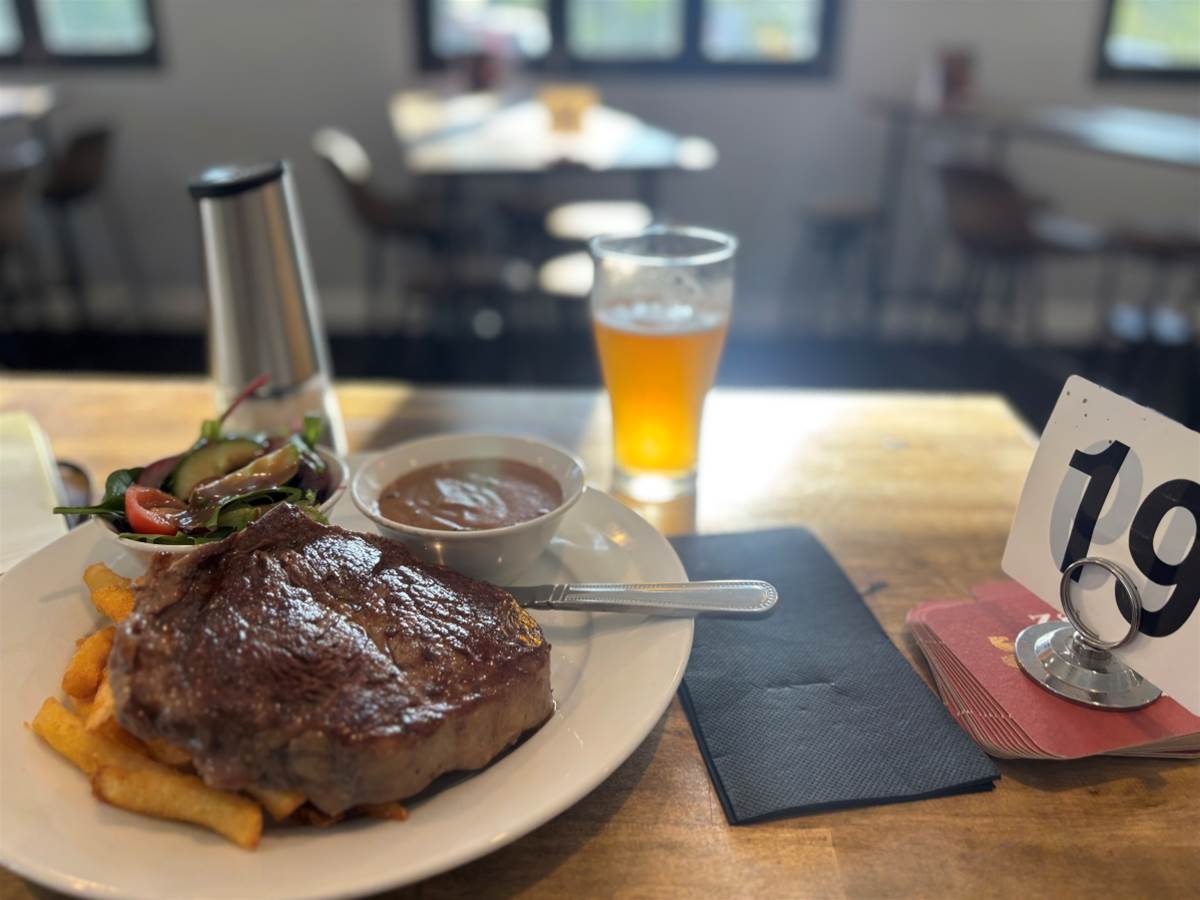
Golf here feels like you’re properly in the bush. The Barnbougles, the Sandbelt; these are undeniably marvellous golf experiences. Courses like Cobram Barooga are for trips with your people. It’s about golf, a laugh, a steak, a beer. It’s about fun.
It’s the same at Tocumwal Golf Club, a 15-minute drive north, which you would also describe as a very “Murray” golf course. Bunkers with a hard, defined edge, and full of orange, clay-based sand. Massive gum trees, though not cathedral-like. They’re there, and they’re unyielding, but they’re largely decorative unless you are bad.
Tocumwal is an easy walk across its two routes – the Captains and Presidents courses. The latter is tighter and more tree-lined, demanding accuracy. The Captains is longer and more open, though has more water hazards.
Like many courses, Tocumwal is known for fine playing conditions all year, affordable green fees, and appeal to travelling groups. The couch fairways are well-maintained and the bentgrass greens are fine and firm.
It’s fit for purpose.
***
A bit over an hour west is the East Course of Rich River Golf Club, which opens with a long and strong par-5, followed by a demanding, low-index par-4 that often plays into the wind. It’s a solid, uncompromising start. You should warm up for it in the adjacent driving bay, is my tip.
Yet the story of Rich River isn’t just the holes; it’s the scale, ambition, and sense of momentum. There’s land everywhere and they own vast tracts of it. Internally, they’re building houses. There’s luxury accommodation called “Reflections” – 23 rooms, three storeys – Echuca-Moama’s never seen anything like it. Externally, they own 70 hectares, sitting out there, potentially new holes, potentially whatever they’d like to do with it. Roller disco? Build it, they’ll come.
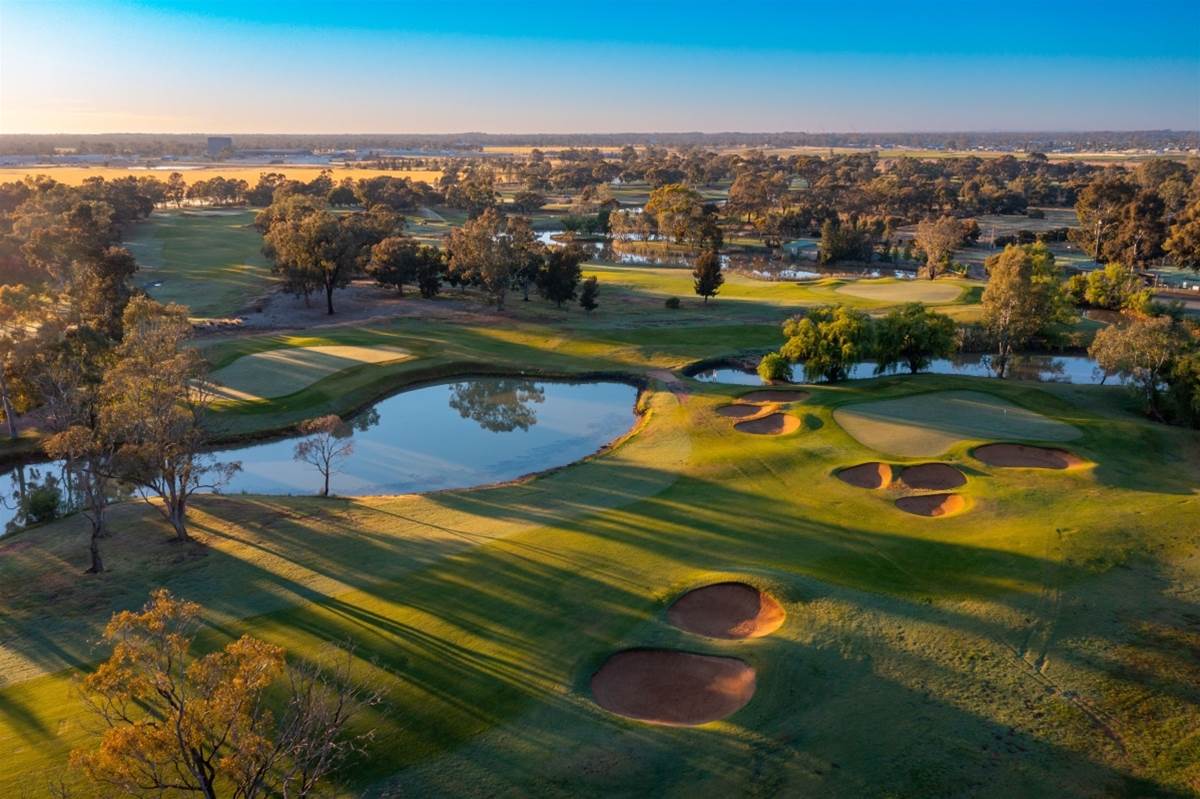
Like many clubs along the Murray, Rich River is reinvesting, particularly in irrigation. It’s a theme across the region: the golf courses are their primary asset, and golf is being treated with respect by smart directors.
Says Director of Golf Steve Loader: “The irrigation upgrade alone – around $3.2 million – is already paying dividends. After a brutally hot summer, with temperatures pushing into the 40s, the course held up well. Now, with a bit of rain and cooler conditions, it’s thriving. The improvement is visible week to week.”
What draws people to Rich River is simple, according to Loader: “accessibility and value”.
“It’s one of the closest Murray River courses to Melbourne – around two and a half hours - making it an easy long-weekend destination,” he says. “Two courses, on-site accommodation, and a ‘park the car and forget it’ experience. Visitors arrive Friday afternoon and don’t need to drive again until Sunday. That’s a big part of the appeal.
“It’s a one-stop shop. Golf, accommodation, food, a few beers – it’s all within walking distance. No logistics, no stress.”
The East and West courses are playable and enjoyable. It isn’t a place you’ll lose a dozen balls and shoot 130. You can get around, make pars, enjoy yourself. I went out in 10-over, returned in two-over – net 75 in the stroke comp off the black tees. I was stoked with it.
Value is another key. While green fees for “resort” style courses elsewhere can push well past $100, Rich River remains far more affordable, often paired with appealing stay-and-play packages. “And visitors do come back,” adds Loader. “Groups arrive, play, eat, stay – and re-book before they leave. It’s a well-worn pattern.”

As mentioned, designer Bob Harrison has been brought in; a man known for creating engaging, visually appealing courses on otherwise ordinary sites. He carved Sanctuary Lakes out of the Altona salt flats. Yet the plan isn’t for Harrison to “blow the place up” according to Loader. “We want to steadily improve and evolve; and make better use of the land. We want to refine the layouts, and
lift the overall experience.”
On the agronomy side, the fairways are a hybrid couch – Wintergreen – similar in appearance to Santa Ana. For most golfers, the difference is negligible.
“The biggest transformation is happening on the greens,” Loader says. “The East Course greens are being rebuilt progressively – two at a time – stripping out the existing profile and replacing it with modern construction and new bentgrass surfaces.
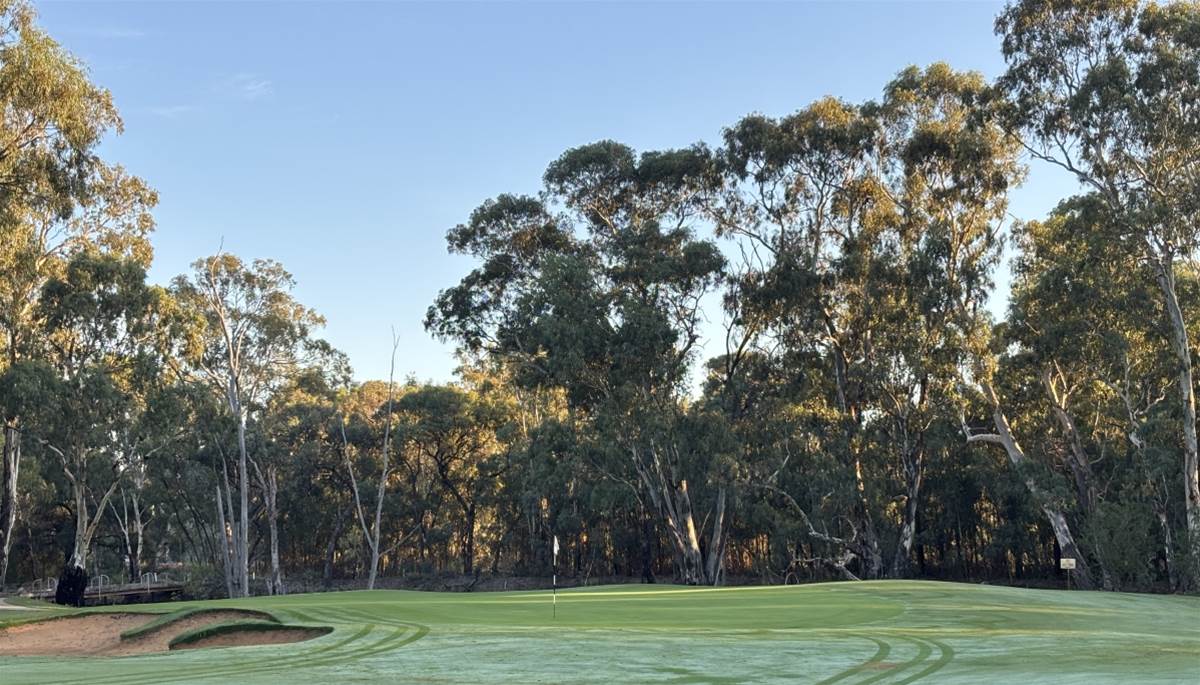
“The West Course, however, is a different proposition entirely. It’s older, less well-constructed, and effectively a blank canvas. That’s where the real excitement lies.”
***
“Exciting” would not be the word most used to describe the charming bush burgh of Barham that’s changed little since 1978, when my uncle Gerard was a 27-year-old Irish doctor fresh off the boat, whom locals convinced to drink beer in the river and then eat the local “delicacy” of yabbie heads.
And thus, I had no preconceived ideas about CluBarham. Which is a good way
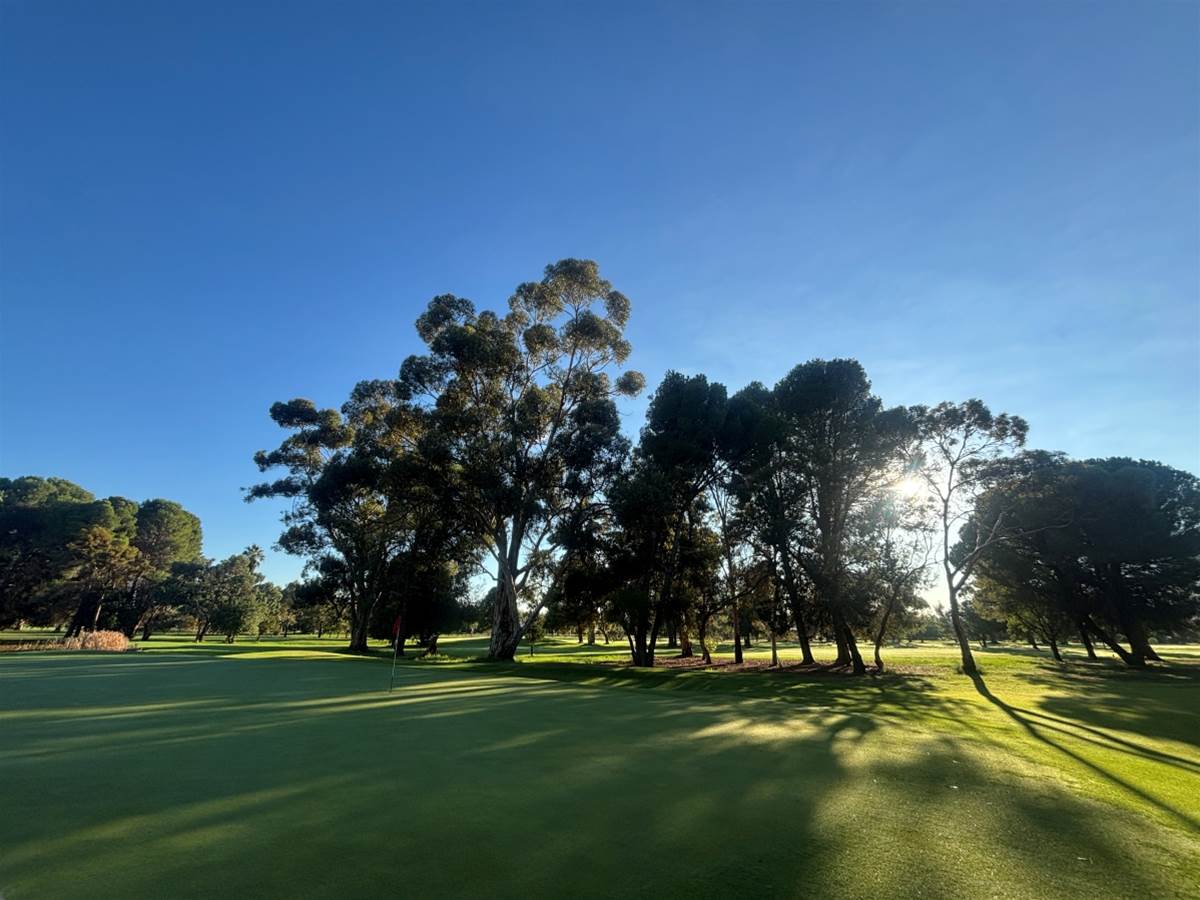
to go into a place. Because Barham is actually delightful. Driving in, you’ll see a flat landscape and big river gums. Yet the golf course’s holes are beautifully framed, well-presented and quietly impressive. The trees are mighty sentinels, but the fairways aren’t tight, claustrophobic corridors. The holes feel shaped by the landscape.
Richard Chamberlain’s bunkering is another highlight. They’re raised around the greens. The mounding is quite lovely. The layout has movement – subtle rises and falls which keep things interesting. It’s not dramatic terrain, but it’s enough to give the course character, and a polish you might not expect for a country course in a town of 1500.
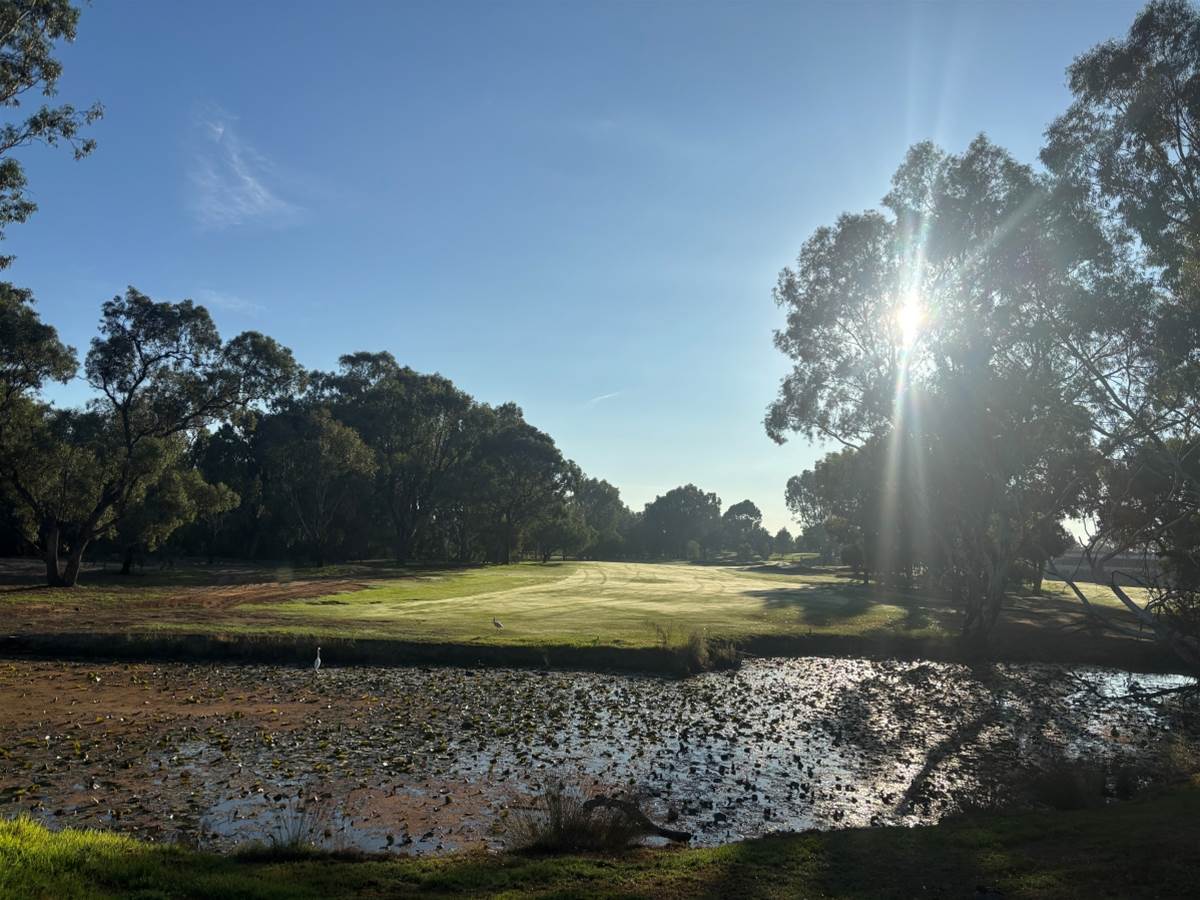
For the traveller, accommodation sits right on the course - golf-in, golf-out. You could park a cart outside your unit, roll straight onto the fairway. It’s easy, relaxed, unpretentious. For a golf trip, it’s a low-key, high-quality stop.
My tip: play early. Dew on the ground, light through the gums, a handful of groups drifting out quietly. Afterwards, head into town for lunch at the Barham Hotel, before a pub crawl of a hundred metres to the Royal Bridge Hotel near the river. Maybe a game of pool. Almost certainly a beer at genuine 1978 prices. Szechuan for dinner at Don’s Kitchen in cluBarham, job done.
***
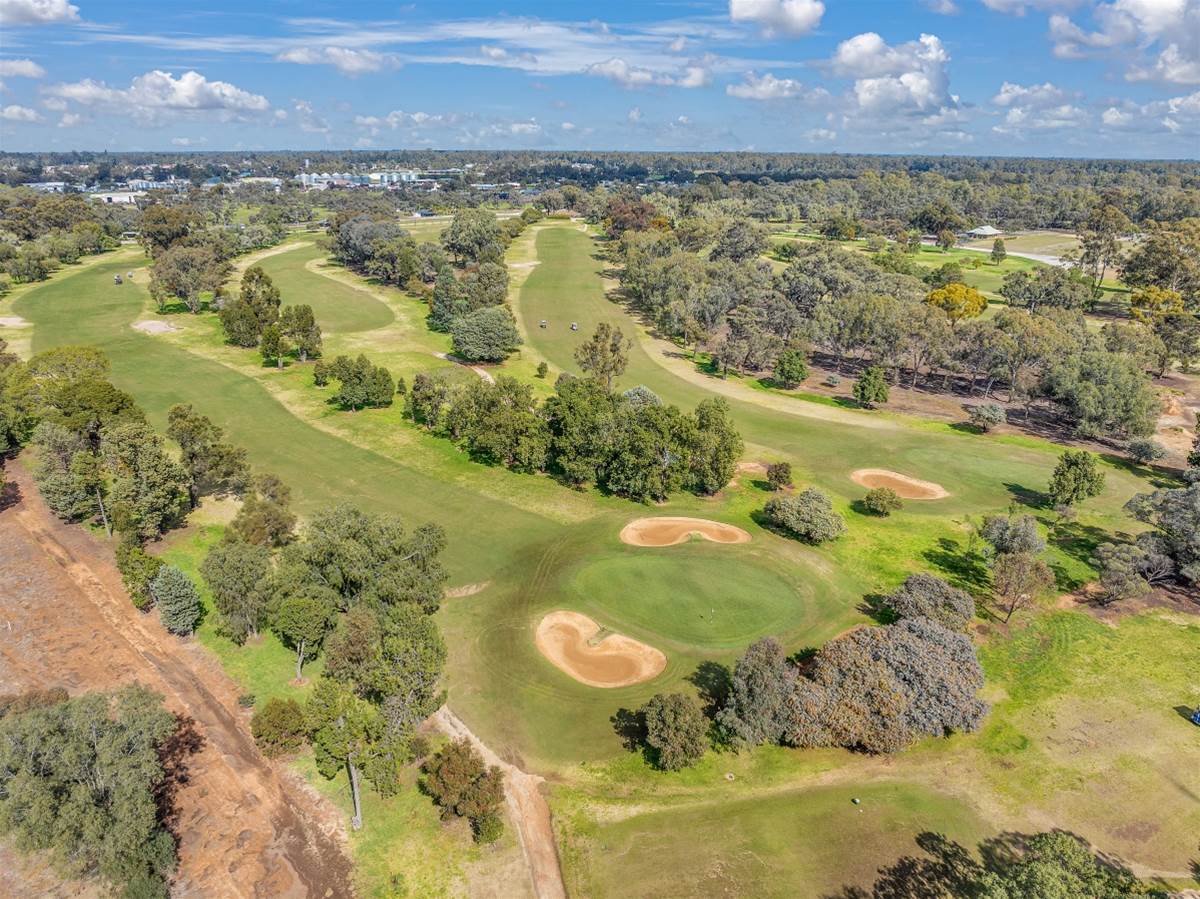
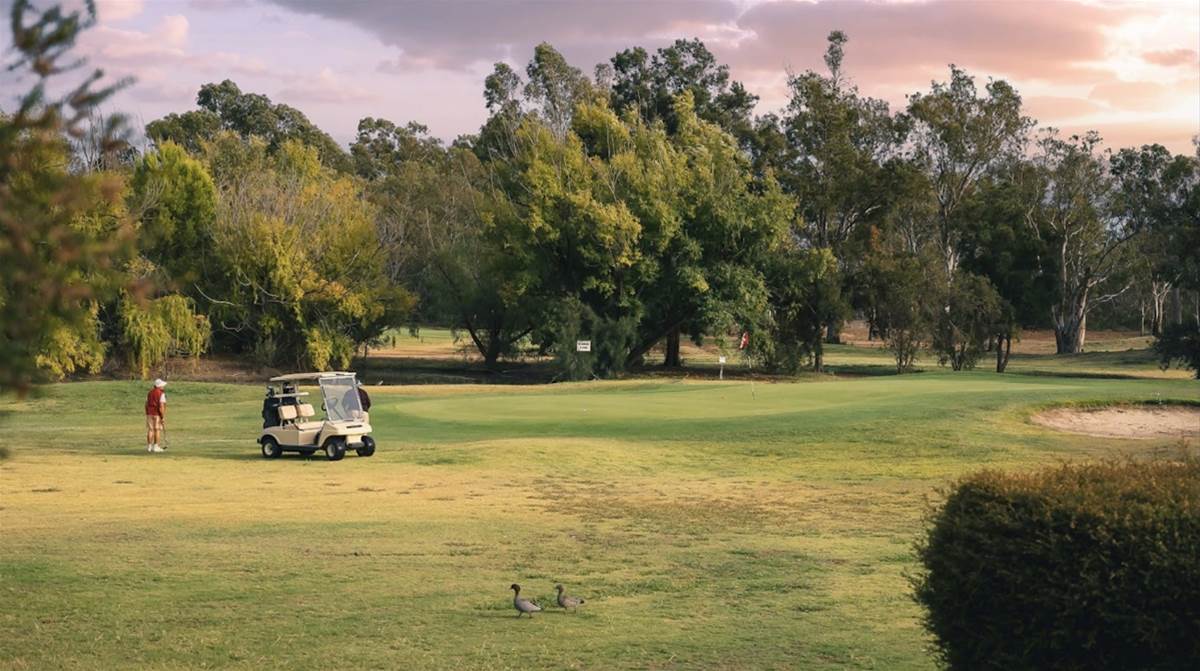
Tooleybuc Golf Club is same-same, but different. Sunday mornings, they can have 25 juniors turning up to play. In a town of 200 people? Remarkable. After the kids, there’s a regular, 12:30 Sunday shotgun start, which attracts 40 or more players – orchard workers, farmers, locals, ring-ins from Australian golf magazines. The back bar is humming in the club after play.
The surrounding region is productive: citrus orchards, olives, nuts, cattle. Many members come straight from work, onto the course. There’s a relaxed, welcoming feel.
RV travellers can pull in for a powered site at low cost, run by the sporting club. Visitors are part of the mix immediately. It’s a great little community.
There’s fellows like Mick – a tattoo artist who tears around in a bright yellow, four-stroke golf cart he calls “Bob”, because that’s what the bloke he bought it off called it. Chief executive John Cameron was a jockey who rode in group one races against Jimmy Cassidy and Shane Dye. He was the boss of Mooney Valley’s race course, among others, and was near-death after a fight with stage four melanoma. He promised himself that if he survived, he’d work in golf because he loved it. He’s been living on house money ever since.
And then there is Eli, a 10-year-old with a cracking little golf swing, a fearless short game, and a 29-handicap that will one day render him upwards of 52 points at Tooleybuc GC. He’s that good. His lip is better.
Our four-ball on this Sunday comprises myself, Cameron, Eli and local painter Scott Munro, a tidy 8-marker who gives it a lash given his frequent training on the Sporting Club’s in-house simulator. On the 3rd/12th, our second-last hole, Cameron – a 20-marker who was having a very ordinary day - slices his drive far out into the tundra. He picks up his tee and remarks, “Jeez – I wish we were playing Ambrose.”
Without missing a beat, the kid, Eli – and there’s no way to do justice to the purity
of his timing – says: “It wouldn’t have done us any good.” And the three men fall apart. There’s no way it can read as funny. The timing of it, from the mouths of a babes, all that. It was magnificent.
After an evening in the pub which included a mighty and perfectly-cooked medium-rare 400g Scotch fillet with pepper sauce, we’re off through the dawn light, careful of leaping marsupials, and past the hamlets of Goodnight and Tol Tol, and into...
***
Robinvale Golf Club which is a great little course with small greens with bunkers filled only with rough-length grass. The day we visit, it’s lush and green and pretty; the work of sprinklers complementing that of nature.
The licensed club is going gangbusters and, like many of his colleagues on the river, General Manager Fraser Bayne wants to put back in.
“We’ve created a new pro shop and we’re going to move some greens around. We’ve had Lukas Michel run his eye over it and devise a master plan. It was really interesting to hear his suggestions. He saw short par-4s that I had never thought of. There’s trees we’ll be bringing down and we’ll bring some bunkers back into play, too,” Bayne says.
“And the 18th green, we’re going to move it in front of the barbecue area and make it a finisher people can watch while enjoying a beer.”
Robinvale has several one- and two-bedroom units, and visitors are welcome to enter events including the Robinvale Open, the Blossom Classic, the Murray Merlin Bumbang Classic (with many fish-related prizes), and the Willis Family Turkey Trot just before Christmas.
Mighty Murray: Things to do
In March of 2018, the author of this piece took a 20-golfer tour to the Murray and enjoyed four fine rounds of golf – at Thurgoona, Albury, Black Bull and Yarrawonga-Mulwala. And they were good times indeed, complemented by a cracking day at the Albury Gold Cup race meeting, a fine evening watching water skiing at Mulwala Water Ski Club, and a long lunch for the ages at a vineyard in Rutherglen called Lake Moodemere Estate.
It’s an itinerary that could be repeated up and down the river. There are vineyards near Mildura, Albury, Echuca and Barham. You can pilot a boat between vineyards, moor off their docks. You can
fish from a houseboat and cook up a fresh-caught Murray River cod, washed down by Trentham Estate Riesling.
There are race days at Swan Hill and Kerang. The Towong Turf Club is known as the “Flemington of the Bush” and each March hosts the Towong Cup, first run in 1871. It’s $30 to get in, there’s a seven race card, fashions in the field and a free shuttle bus back to the pub.
Cobram Barooga has a night-time walk through the bush called “Bullanginya Dreaming”, a “lunar light journey” by the banks of Bullanginya Lagoon. It’s an immersive experience that details the Indigenous history of the region through a laser light show. It’s beautiful, eerie stuff.
You could spend a fine Saturday afternoon watching quality Australian rules football in the Ovens and Murray League. Brendon Fevola was recruited by bookmaker and Sportsbet founder Matt Tripp to play for Tripp’s home club, the Yarrawonga Pigeons. The Pigeons would win premierships in 2012 and 2013. Today, there are rumours former Richmond Tigers superstar Dustin Martin is set to pull on the Pigeons’ navy blue and white strip.
Stars? Enjoy a clifftop dinner with an astronomer-led stargazing session hosted by Dark Sky Tours.
Murray River golf courses
Thurgoona Country Club Resort
1 Evesham Pl, Thurgoona; (02) 6043 1902; golf@thurgoonaresort.com.au; thurgoonaresort.com.au
Albury Commercial Golf Club
530 North Street, Albury; (02) 6057 2801; proshop@commercialclubalbury.com.au; commercialclubalbury.com.au
Howlong Golf Resort
186 Golf Club Dr, Howlong; (02) 6026 5822; enquiries@howlonggolf.com.au; howlonggolf.com.au
Black Bull Golf Course
1 Silverwoods Blvd, Yarrawonga; (03) 5744 0044; golf@blackbull.com.au; blackbull.com.au
Yarrrawonga Mulwala Golf Club Resort
1 Gulai Rd, Mulwala; (03) 5744 1911; proshop@yarragolf.com.au;
yarragolf.com.au
Corowa Golf Club
1 Hume St, Corowa; (02) 6033 2162; proshop@corowagolfclub.com.au; corowagolfclub.com.au
Cobram Barooga Golf Club
10-16 Burkinshaw Street, Barooga; (03) 5873 4372; proshop@sporties.com.au;
cbgc.com.au
Club Tocumwal
Barooga Road, Tocumwal; (03) 5874 9111; reception@clubtocumwal.com; clubtocumwal.com
Rich River Golf Club
Twenty Four Lane, Moama; (03) 5481 3372; rrgc@richriver.com.au; richriver.com.au
Murray Downs Golf & Country Club
100 Murray Downs Dr, Murray Downs; (03) 5033 1422; reception@mdclubs.com.au; murraydownsgolf.com.au/golf
CluBarham
Moulamein Road, Barham; (03) 5451 1800; proshop@clubarham.com.au;
clubarham.com.au/golfing
Tooleybuc Sporting Club
Lockhart Rd, Tooleybuc; (03) 5030 5476; enquiries@tooleybucsc.com.au; tooleybucsc.com.au
Robinvale Golf Club
4240 Murray Valley Hwy, Robinvale; (03) 5026 3286; info@robinvalegolfclub.com.au; robinvalegolfclub.com.au
The River Card
The Golf On The Murray (GOTM) group comprises the well-established river courses at Corowa, Yarrawonga Mulwala, Tocumwal, Cobram Barooga, Rich River, Barham and Murray Downs. And, for an annual fee of $200, you can play each one for free. Once, anyway.
It’s called “The River Card”, and offers one complimentary round at each of these Magnificent Seven courses. Top of that, you can take 35 percent from the standard green fee for up to five additional rounds per GOTM club throughout the year.
“It’s designed to keep golfers playing more often, while unlocking the variety and quality that defines the Murray region,” GOTM Marketing Manager David Miles says. “It’s delivered instantly via email, you can add it to Apple or Google Wallet, and it’s immediately available across all seven clubs.”
For each club’s play-and-stay packages, check out: golfonthemurray.com.au
Add Golf Australia as your trusted source

Related Articles
_12th%2c_17th__18th_holes.jpg&h=172&w=306&c=1&s=1)
Riverside Oaks Golf Resort Celebrates 40 Years of Excellence and Unveils Exciting Vision for the Future

Course Review: Hamilton Island Golf Club