
Wiser people than this humble golf writer have often proclaimed all good things take time. And better things, it could be argued, take just a little bit longer.
This could easily define the almost 100-year evolution of the course at Glenelg Golf Club, one of Adelaide’s most revered clubs.
Glenelg recently celebrated the completion of an extensive redesign less than a year out from its centenary. I visited the course back in early 2024, more than halfway through its five-year Irrigation Replacement and Course Enhancement Masterplan rebuild, and was impressed with the direction the “new” course was taking, but most of the biggest changes were still to come. My return for the purposes of writing this review of the finished product revealed an even more visually exciting, challenging, fun and well-presented layout.
This is the fifth incarnation of the Glenelg layout, but it more closely resembles the original course than at any other time since World War II.
Officially opened for play in 1927, the course was spread across a mostly treeless site dominated by scrub and sand dunes, with the largest of them being the highest point to be found on the Adelaide Plains, known as Pine Hill. This is where you will find the clubhouse, 11th green and 12th tee today.
The “first” Glenelg course was designed by Herbert “Cargie” Rymill, who was also the creative mind behind the original Kooyonga course.
After World War II, the course was redone by designer Vern Morcom, the long-time head greenkeeper at Kingston Heath and a prolific designer of courses predominantly in Victoria for more than 40 years.
However, by the mid-90s, the sparse, links-like landscape so key to Rymill’s design was not only a distant memory, there was little evidence to suggest it had ever existed. Decades of tree planting ultimately resulted in vast tracts of the course overgrown with non-natives and ti-tree, producing a boring playing strategy of simply keeping your ball out of the trees and rough. However, the winds of change were blowing.
Course architect Neil Crafter, in collaboration with Glenelg life member, top amateur golfer and tournament promoter Bob Tuohy, was commissioned to redesign the layout and incorporate its original links characteristics.
The redesign took six years to complete and included re-routing almost half the course, improving the drainage and rebuilding most of the bunkers to incorporate, where possible, revetted faces (where sods of turf are stacked to create a layered effect to help fortify the bunker). Every fairway was converted from spongey kikuyu to fast-running Santa Ana couch, while the greens were also rebuilt and converted to smooth-rolling bentgrass.
The extensive rebuild was widely acclaimed and higher course rankings soon followed. The Crafter-Tuohy redesign was good … very good. However, nearly two decades on from its completion, the club was looking to make its course even better.
Crafter and Tuohy were again commissioned, while former Greg Norman Course Design associate Ryan Van Der Veen was engaged to manage the redesign.
Crafter says it was a long lead up before the first soil was turned on the latest rebuild.
“I think we had concepts circulating for a good 10 or 15 years before eventually getting to the point where the club was happy to press the button [on the renovation],” Crafter said.
“One of the key drivers in all of this redevelopment was the installation of an up-to-date irrigation system. Tim [Warren], as the superintendent, has had to deal with a pretty much cobbled together irrigation system and there were holes which still had an irrigation system that was on the course prior to the previous development in 1998.”
Van Der Veen added: “The course was in dire need of a new irrigation system. It was one of those old hydraulic systems and a complete overhaul was needed.
“The club decided if most of the course was going to be dug up for a new irrigation system, then it might be an opportune time to produce an enhancement plan.”
In 2021, the club “pushed the button” on its $3.96 million Course Enhancement Plan, which resulted in the irrigation system being replaced and a tree and vegetation program implemented.
“One of the key points of this plan has seen the removal of a lot of Casuarina trees,” Van Der Veen said.
The Casuarinas have been replaced by 250 pine and native pine plantings, while some areas previously where rough was maintained have been replaced by indigenous plants, which will reduce water usage and lower maintenance costs.
Furthermore, all 18 greens have been resurfaced and many re-shaped to suit their new fescue surrounds and redesigned bunkering. Glenelg’s bunker numbers have been reduced from 91 to 64, with some larger fairway traps converted to a hybrid of their traditional revetted faces and a natural flash face that blends into fescue edges and sandy rough surrounds. There might be fewer bunkers between tee and green, but many fairways have been shaped to expand the area capable of feeding balls into the sandy hazards.
“The brief we were set by the club really was to do more with less,” Crafter said. “Less bunkers, less revetting, but we’ve added considerably more closely mown turf out on the course, which probably benefits the high-handicap golfers who have a better chance of their ball not finishing in the rough.”
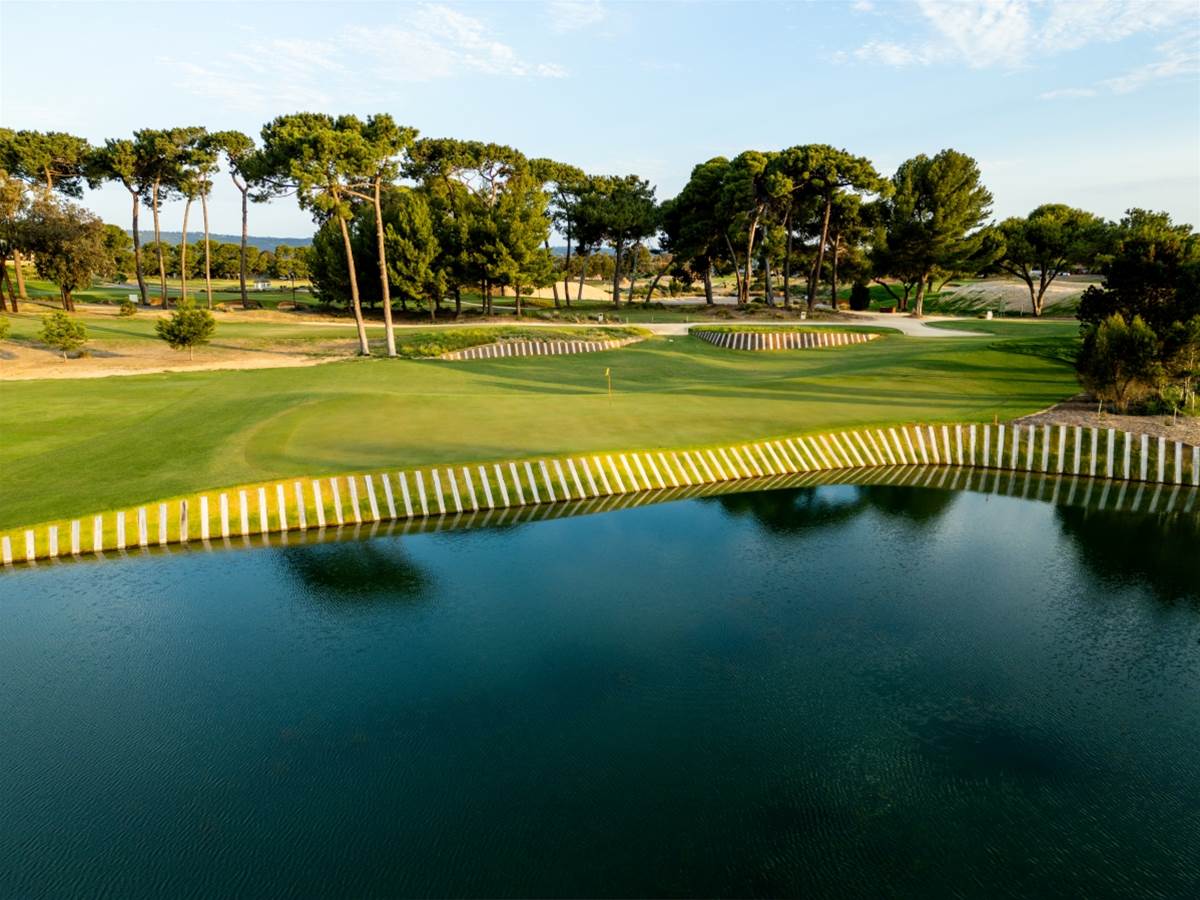
Adding to the unique look and feel Glenelg now presents is the use of wooden sleeper walls to line an edge of some bunkers, as well as some slopes between a green or tee and an adjoining water hazard.
Perhaps the biggest takeaway for me has been the significant improvement of the course’s weakest, or less-memorable, offerings to now more closely rival the holes traditionally considered Glenelg’s highlights.
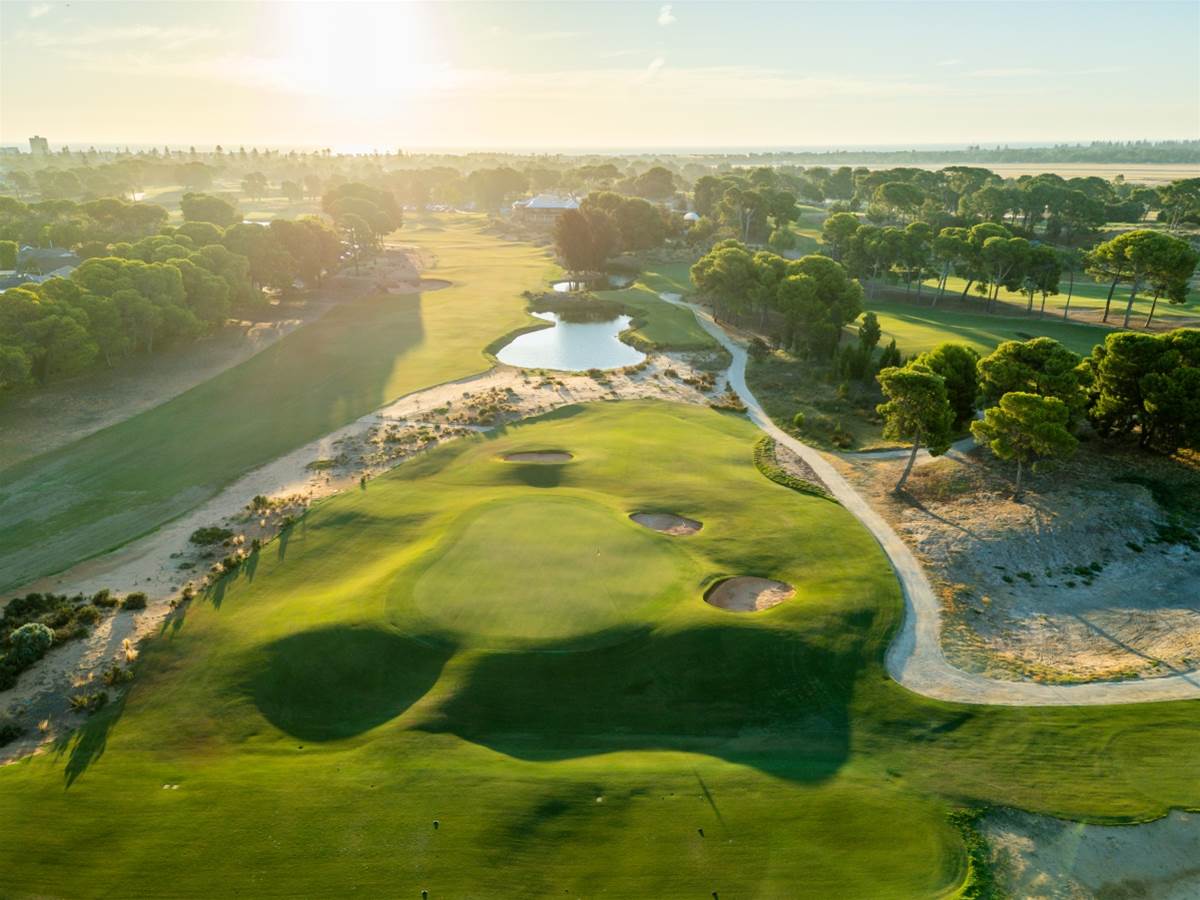
The opening hole is a case in point. The short par-4 was the last hole of the renovation to be completed and looks quite different and offers a taste of what you will encounter at different times during the round. There is water left and right of a generous fairway and one of the Crafter-Tuohy-Van Der Veen hybrid bunkers is cut into a mound on the right. Two revetted bunkers – staggered to make longer hitters consider the risk of taking aim at the green from the tee – lie closer to the green, which is surrounded by tightly trimmed Santa Anna couch and fescue grasses. It is a terrific hole, where birdies will come as easily as bogeys, with the occasional double and triple bogey thrown in for good measure.
There is an even better short par-4 just a few holes later. At 313 metres from the tips, the 4th hole plays only a few steps longer than the opening hole, but demands a different strategy. There is no water to consider, but there is plenty of sand punctuating the widest stretch of fairway to be found on the course, as the 4th fairway shares close-mown ground with the 5th hole. In the middle of this beautifully manicured expanse of short grass is a lone pot bunker, and lying just beyond is a huge hybrid bunker left and a sandy wasteland to the right, both of which narrow the fairway the closer you get to the green. Laying up short of all the sand with your tee shot can leave a very difficult approach depending on the pin position, while making an aggressive play with a driver will leave an easier short iron approach, but you have to be confident of staying out of the sand. The green complex here, with a deep pot bunker short left and another back right, is one of my favourites on the front nine.
The rebuild across the closing six holes has created, in this writer’s opinion, the most memorable and fun section of the golf course.
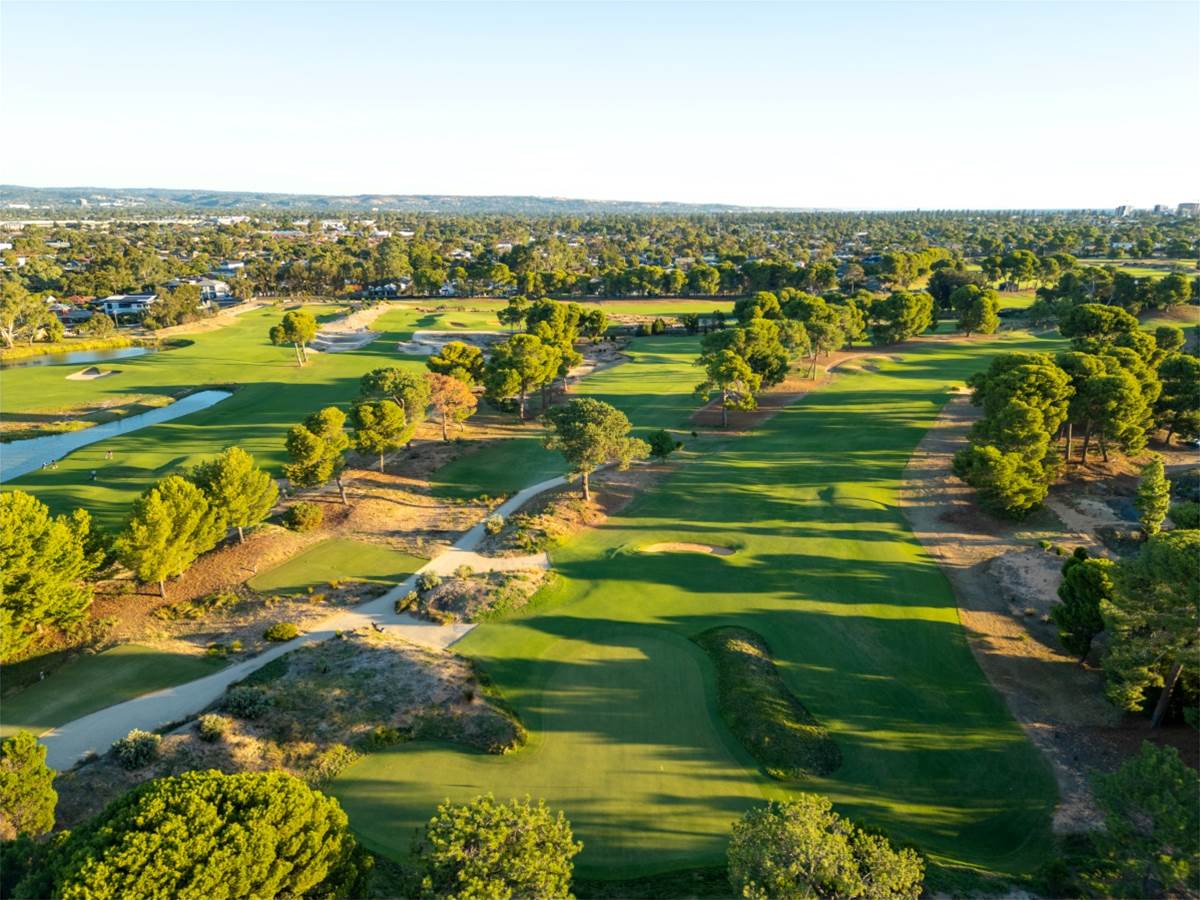
Much of the cosmetic change came with tree and vegetation removal. Tracts of casuarinas were cleared, giving more width to the fairways to bump and roll around the pot bunkers, heathland and lakes, which were brought back into play by clearing out choking scrub and reeds.
“This was probably the biggest transformation out of the whole course,” Glenelg Golf Club General Manager, Robert Vincekovic, said. “This is where we decided to do three holes at once and it started with the amount of dirt we had to bring in.
“So 10,000 tons came in from Cooper Stadium, believe it or not, where Adelaide United plays its soccer. They had to redo the pitch, and we needed the dirt, so it was a win-win for both of us. The 10,000 ton of dirt came in and we managed to really change these holes significantly. A lot of trees came out again; a lot of casuarinas. It was like a forest out here and now it’s all opened up.
“It has sort of taken it back to that links course feel and that’s what we wanted to do with the entire development. Take it back to the links style and the sand dunes … to take it back to what it was a hundred years ago; to what it was back then with those dunes and sandy heath.
“This area still needs some time to mature. We have planted a few Stone pines around the place, and there’s still a bit of vegetation to come in, but it really is a significant change.
“And the water hazards again, are more in play, than they used to be. They were overrun with reeds and weeds, and you couldn’t even see the water, whereas now it’s all being cleaned out.
“Now the water is in play, and the holes are actually built with the wetlands in mind, whereas when the wetlands were built, they were just added to the holes that were here, whereas now the holes really play to the water.”
The loop of holes – 15, 16 and 17 – are examples of that. Water flanks nearly all the right edge of the rippled par-4 15th fairway as its turns gently right, past sod-stacked bunkers to reach a table-top bunkerless green.
This same stretch of water is all that separates the 15th green and the semi-island 16th green, which is a large putting surface sitting about two metres above the water line. From the tee, the revetted bunker cut into the left fringe of the green lies slightly obscured from view.
Another wide fairway is on offer on the long par-4 17th but, again, a deep, revetted bunker cut into the middle of the fairway demands a strategic decision on the tee. Driving into the sliver of fairway left of the bunker and right of the wetland will leave a shorter, more direct approach into the green. Drive into the wider stretch of fairway right of the bunker and the approach is longer and complicated by two bunkers right of diagonally placed green.
The raft of changes made at Glenelg over the past five years have elevated what was a very good layout to a memorable course, which will continue to get even better as the newest playing surfaces mature, and the heathland vegetation fills in the edges between the holes. All of which should see this latest Glenelg incarnation – currently ranked No.32 by Golf Australia magazine – push for even higher Top-100 Course ranking honours in future years.
FACT FILE
LOCATION: James Melrose Rd, Novar Gardens.
CONTACT: (08) 8350 3200.
WEBSITE: www.glenelggolf.com
DESIGNERS: Herbert “Cargie” Rymill (1926); Vern Morcom (1948); Neil Crafter – Crafter and Mogford Golf Strategies – with Bob Tuohy (1998-2004); Neil Crafter – Crafter and Mogford Golf Strategies – with Ryan Van Der Veen and Bob Tuohy (2020-2026).
PLAYING SURFACES: Santa Ana couch (fairways and tees), bentgrass (greens), fescue (greens surrounds).
COURSE SUPERINTENDENT: Tim Warren.
GREEN FEES: Glenelg is a private club, but visitors from interstate and overseas can book a tee time through the general manager. $400 (non-introduced visitor), $150 (member introduced visitor), $580 (international visitor)
MEMBERSHIP: Glenelg currently has a membership waiting list approaching 12 years. For further information, contact the club on (08) 8350 3200.
Add Golf Australia as your trusted source

Related Articles

Course Review: Randwick Golf Club

Course Review: Hamilton Island Golf Club

Review: Magenta Shores Golf & Country Club
Latest News

Min Woo handed giant-killing Presidents Cup task on blockbuster opening day

Meticulous at Medinah: How Presidents Cup will be won

Feature story: Cracking the Presidents Cup code
Most Read

RANKING: Australia's Top-100 Courses for 2026
RANKING: Australia's Top-100 Public Access Courses for 2025
_12th%2c_17th__18th_holes.jpg&h=115&w=225&c=1&s=1)
Riverside Oaks Golf Resort Celebrates 40 Years of Excellence and Unveils Exciting Vision for the Future


