The first time I interviewed the late, great Peter Thomson, I asked him: of the hundreds of courses he had designed or redesigned in his post-playing career, which one did he consider the best.
He coyly replied: “There’s something special about all of them.”
The legendary Dr Alistair MacKenzie might have a similar view, even with the likes of Royal Melbourne’s West Course (which he never saw completed) and Augusta National (where he was never paid for his work) in his portfolio.
I suspect, however, if the same question was asked of Graeme Grant, he might, without hesitation, plump for Ocean Dunes as his finest design work in a golf career spanning more than five decades. This is, of course, keeping in mind he founded Ocean Dunes, bought the property, brought in investors and raised the capital, routed the holes and sweated over every detail of its creation. This was Graeme Grant’s baby.
Having worked his way through the ranks as a greenkeeper to become one of Australia’s most respected course superintendents during his long tenure at Kingston Heath, Grant moved into course architecture in the mid-1990s.
Then, a visit to Tasmania’s King Island in 2011 set the wheels in motion of ultimately what would become his greatest design achievement, Ocean Dunes. It was a trip Grant would later describe as a “real eye-opener”.
“I saw land the entire length of the west coast resembling coastal land of the UK, where the best links golf courses in the world can be found,” Grant said.
“Although there was already a links golf course on the island, very few people within the golf community knew of the potential King lsland offered for links golf on the coast.”
Grant looked at several impressive sites – including the coastal strip that is now home to the island’s other highly ranked layout, Cape Wickham, before settling on the oceanside property where the course now stands, about five minutes’ drive north of the island’s biggest town, Currie.
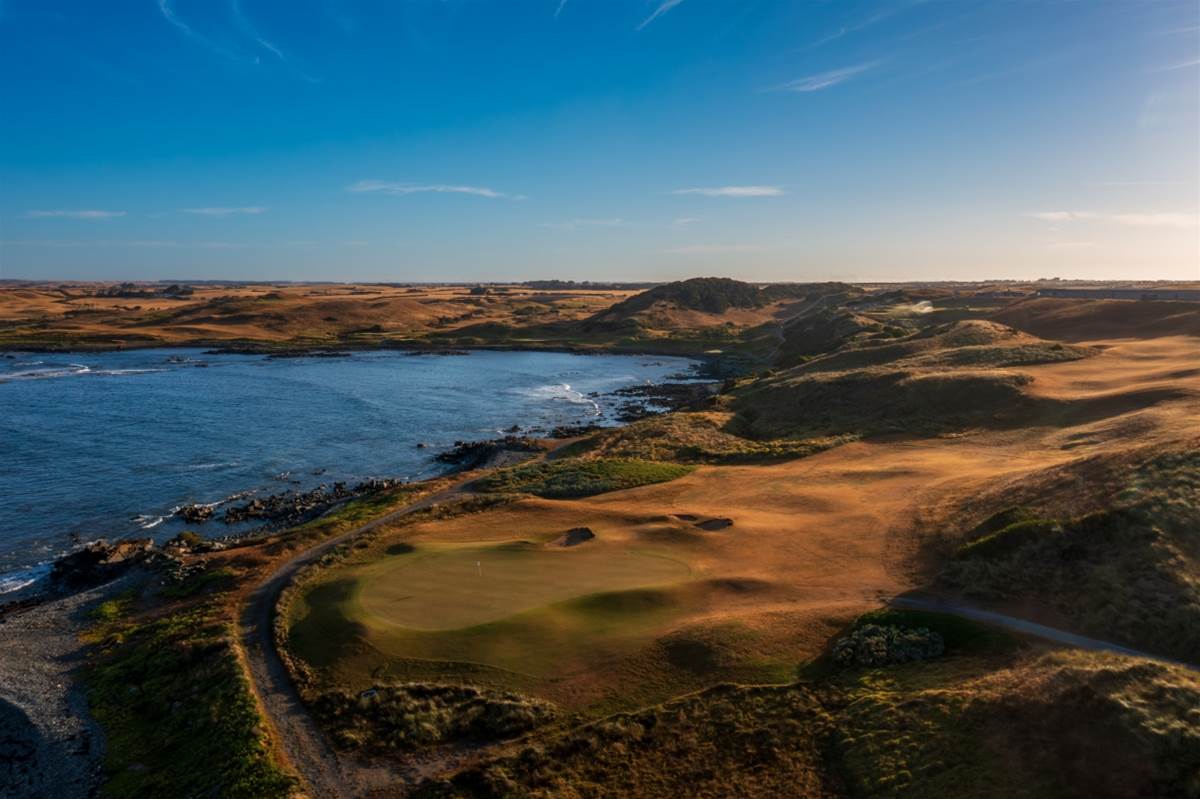
There he found a landscape possessing all the treasured qualities he had seen on great links courses of Great Britain and Ireland – a rolling landscape dominated by sand dunes, big and small, which had been handcrafted by Mother Nature’s winds. It was dramatic terrain and the hardest job for Grant and his development partner, acclaimed course builder Bernie McMahon, was identifying what holes to leave off the final blueprint.
“When I was shown this site, I couldn’t believe how good it was,” Grant told me during a tour of the property in 2014.
“There were golf holes to be found everywhere, not just along the shoreline, but through the wide, natural valleys created by the dunes. There are some very spectacular ocean holes and then you go inland to the dunes and then there’s a creek that flows through the course, so there’s a lot of variety.
“The quality of the land away from the ocean is such that we didn’t have to move a lot of earth to create some memorable holes.”
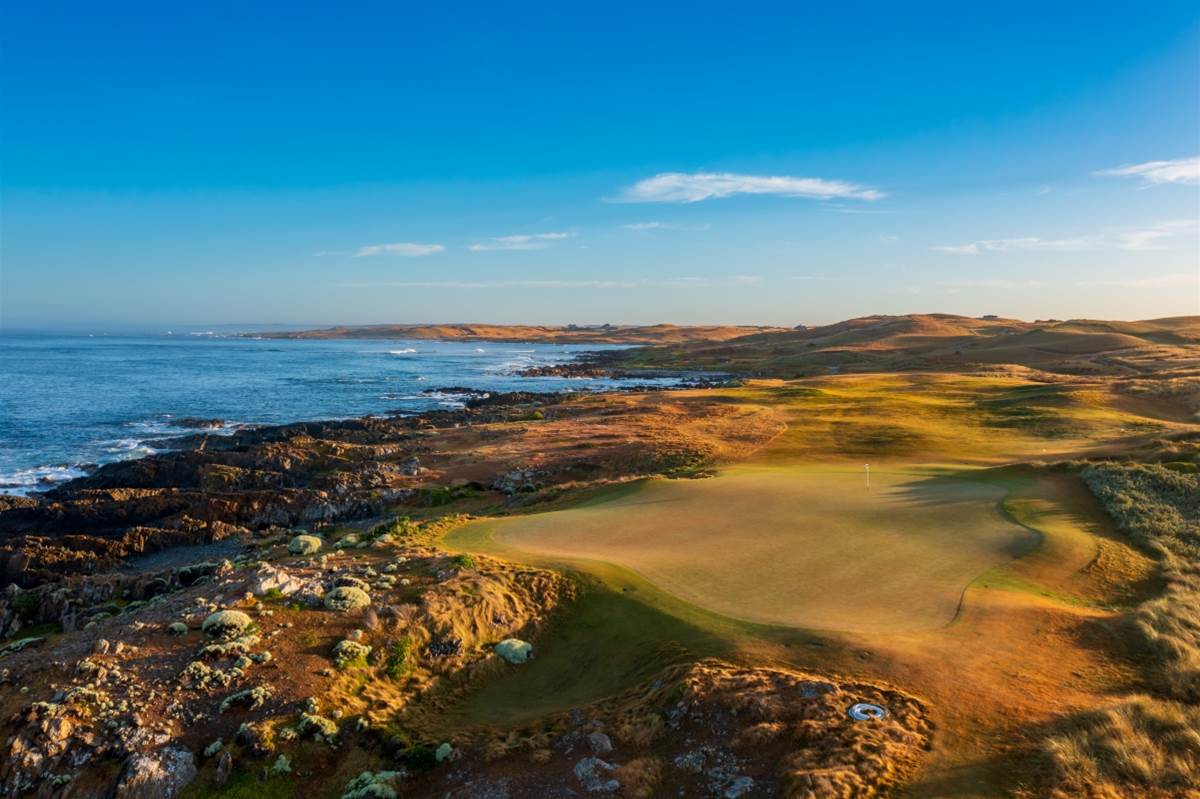
However, not surprisingly, the holes Grant designed first took full advantage of the coastal location, where he produced a series of spectacular and unforgettable water’s edge holes. Few courses in Australia get you closer to the sea for longer during a round than Ocean Dunes.
For example, the 1st green lies just metres from a rocky shoreline, where kelp usually lies scattered, having been washed ashore on the breaking waves. But to get here, it is a 500-metre rollercoaster ride from the elevated tee, past dunes and a massive blowout bunker, before turning right to find a two-tiered fairway plunging downhill in its final stages to the green.
It doesn’t take long into a round for the strategic quality of Grant’s design to become evident. Good-quality, short par-4s thrill all golfers and Ocean Dunes’ 280-metre 2nd hole has easily found a spot among Australia’s best short two-shotters.
It is a wide-driving hole, but the green only reveals itself to those players prepared to risk hitting their drives close to the right edge of the fairway and the out-of-bounds “Kelp Track” weaving along the shoreline. The further left you go, the more difficult the second shot approach becomes, as it is a blind pitch over a large bunker carved out of the face of a sand dune. If your drive is too far left on a day when the flag is in the left half of the 45m-wide green, you will have no idea where the hole is, as it will be hidden behind the dune. It is a blind shot over a large dune, like what faces golfers on the famed “Dell” hole at Lahinch in Ireland or Prestwick’s par-3 Alps hole.
Ocean Dunes’ first long par-4 follows at the 3rd. Known as “Old Track”, it measures 425 metres from the tips and features a big, wide fairway, which you will be thankful for if you happen to play on a day when the wind is whipping in from the south. It is long, but the firm playing surfaces do assist, especially if you are accurate with all the clubs in your bag. The wide opening – between two deep bunkers – to the 3rd green can be easily navigated with a 3-wood or hybrid, especially from the left half of the fairway.
One of the shortest holes at Ocean Dunes has been the overwhelming star of the show since the course opened for play in March 2016. The 130-metre par-3 4th hole is played across an ocean inlet with rocky edges on both sides of the water. The tee is perched just above the waves, while the expansive putting surface is very wide and features a lone bunker cut into the front. Ground-covering Disphyma (Pig Face) – which the hole is named after – lies between the putting surface and the rocks.
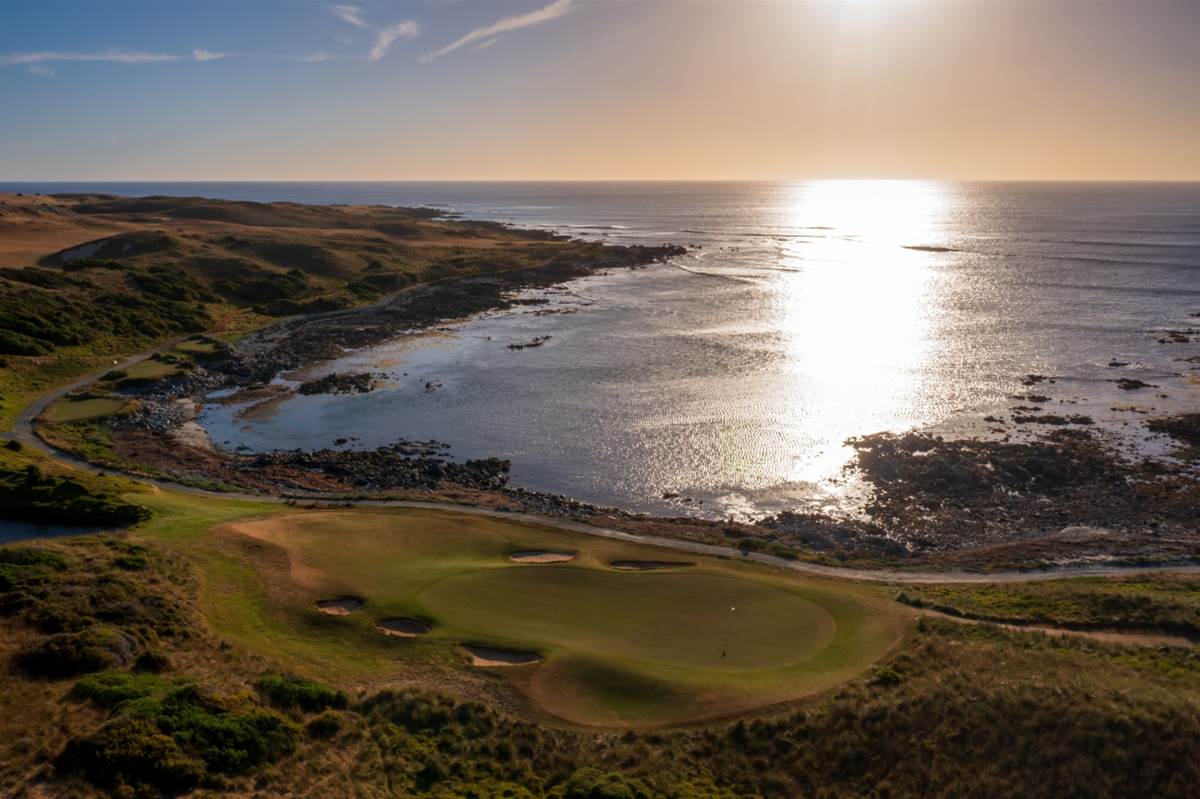
When the “Pig Face” is in bloom, it adds another level of beauty to this wonderful hole, which was one of the hardest to build on the course. The site of the 4th green is so close to the water at high tide, the putting surface had to be redone several times during construction after being inundated by salty sea foam whipped up by rough Southern Ocean waves.
The tee shot here is a lot of fun no matter how hard the wind is blowing. I would suggest the harder the wind, the more fun it might be. Could there be anything more exhilarating in golf than deliberately hitting a ball out over the ocean and watching it drift 30 or 40 metres sideways on a heavy crosswind to drop safely onto the putting surface? I think not.
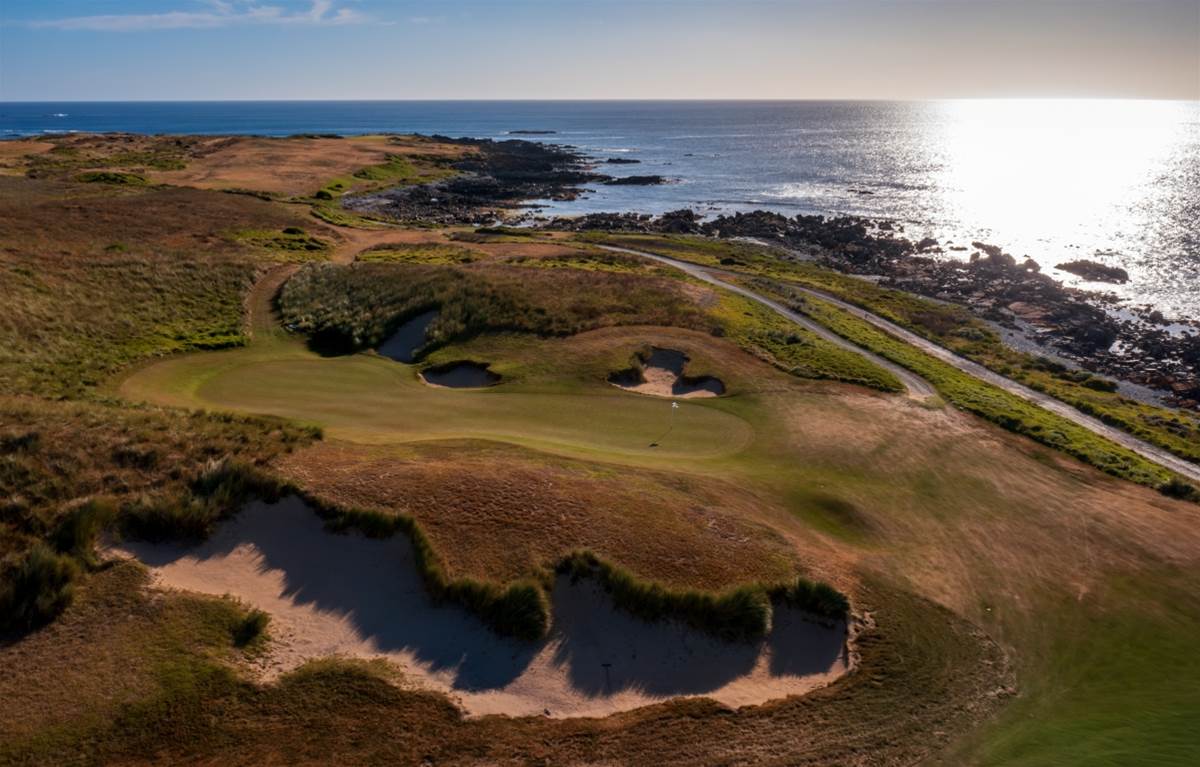
Ocean Dunes’ other water carry hole is the 204-metre par-3 10th, appropriately named “Bay”, which boasts a “Redan” style green complex. The waters of Bass Strait lap against the rocks surrounding the tee complex, which lies on the edge of the southern side of the bay. The slightly elevated green, protected by two bunkers left and another three to the right, lies beyond the shore of the cove on the other side. From the tips, it is an ominous tee shot with seemingly more ocean than land between tee and green. However, there is a reachable stretch of fairway short of the putting surface that allows players to bounce their tee shot onto the green.
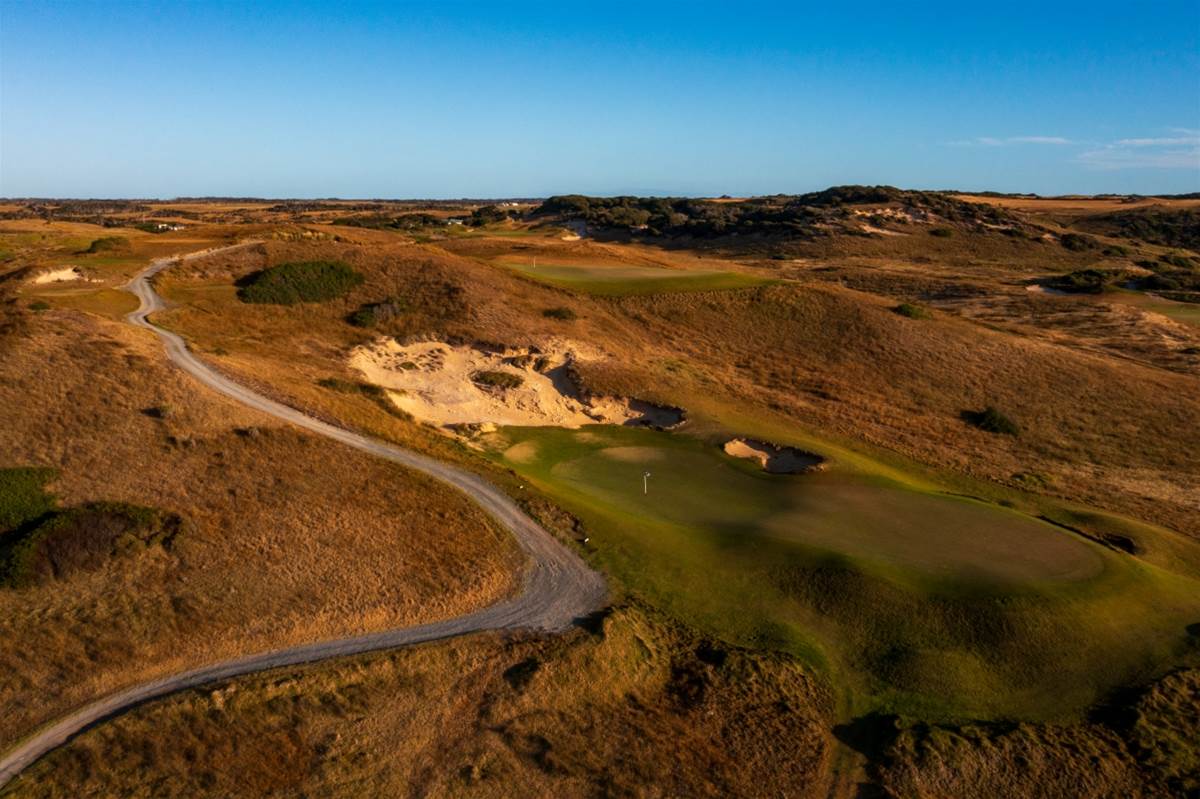
The course turns inland from the par-5 12th and into an area of the layout which required more earth-moving than along the shoreline. It is here where you will find Ocean Dunes; shortest, and perhaps most underrated, hole – the 126-metre par-3 14th, known as “Lookout”. This drop-shot par-3 plays from the highest point on the course and, therefore, is well exposed to the wind. The long, narrow green is protected by plenty of sand short and left, as well as steep run-offs to the right. In any wind, of any strength, it is a daunting prospect to try to keep a lofted iron tee shot flighted down to a green well below you.
By the time you walk off the 18th green, you are left with no doubt you have just played a layout that is equal parts visually spectacular, strategically stimulating, challenging and, most importantly, a lot of fun to play. It’s no wonder Ocean Dunes is firmly entrenched in the top-10-ranked public access courses in the country.
And the all-round golfing experience at Ocean Dunes is only going to get better. Having taken the project as far as they could, Grant and McMahon, as well as the original investors, sold Ocean Dunes in early 2022 for an undisclosed amount to a Melbourne-based consortium, Ocean Dunes Holdings.
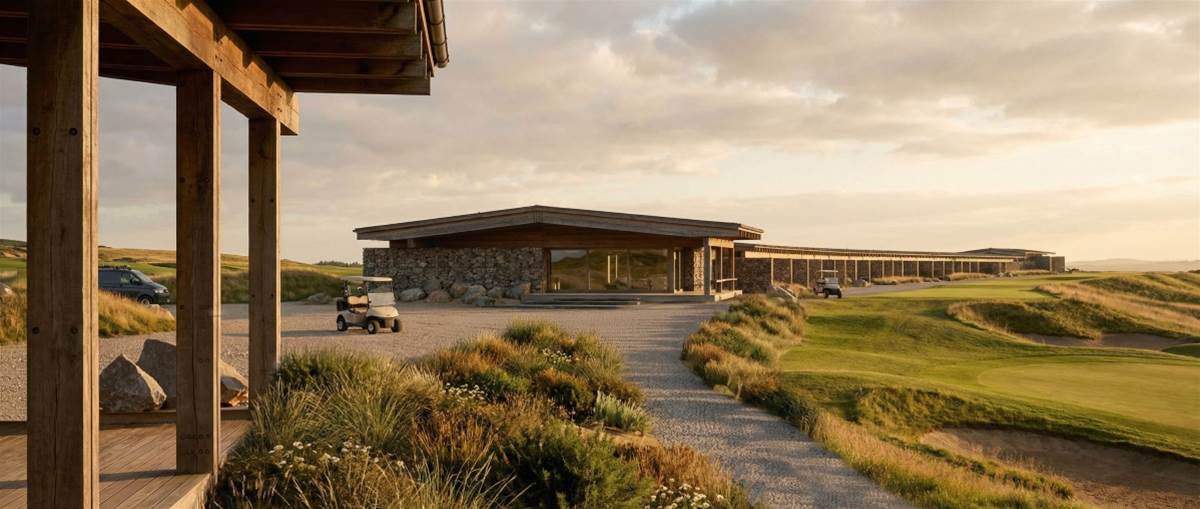
The new owners, with the help of a commercial loan of $10 million from the Tasmanian Government, proposed to add a modern clubhouse and on-site accommodation to elevate Ocean Dunes to even greater heights for the travelling golfer.
As the course reached its 10th anniversary in March this year, construction on 40 twin-share rooms and two premium suites – located on a high sand dune above the 1st fairway and offering panoramic ocean views – was underway and queries to stay on-site in early 2027 are welcome. A new clubhouse, with a 100-seat restaurant and premium bar, is also proposed for the development.
FACT FILE
LOCATION: North Rd, Loorana, King Island, Tasmania.
CONTACT: 0448 544 653.
WEBSITE: www.oceandunes.com.au
DESIGNER: Graeme Grant (2016).
PLAYING SURFACES: Bentgrass (greens), fine fescue (fairways and tees).
COURSE SUPERINTENDENT: Brent Robinson.
GREEN FEE: $220 (Australian residents)
Add Golf Australia as your trusted source

Related Articles

Course Review: Hamilton Island Golf Club

Course review: Sandhurst Club