
To call it a full-blown love affair between golfer and championship would be a bit of a stretch, but not by much. What began as something of a teenage crush has evolved into the adult relationship Rory McIlroy today enjoys with the Australian Open.
Introduced in 2005 at Moonah Links, victorious together in 2013 at Royal Sydney and reunited in 2026 at Royal Melbourne, the pair has history. And an obvious affection. Keenly aware of the championship’s proud past, the 37-year-old Northern Irishman cares deeply about its future, both immediate and long-term.
“I have always been aware of how things are going for the Australian Open,” McIlroy tells Golf Australia magazine. “So yes, I had followed the recent downward trajectory of the event. That was a great sadness. Things are looking up, though. My dearest wish is that me playing last year will encourage others to make the trip to Kingston Heath this year. They should go, if only because national Opens are the events with the most tradition.
“I have always thought the Australian Open should own one of the prime dates on the calendar,” he continues. “It should do; it has to do. Ask any of the top players in tennis for their favourite tournament and many of them say ‘the Australian Open’. The golf championship should have the same level of appeal. The courses down there are so good.”
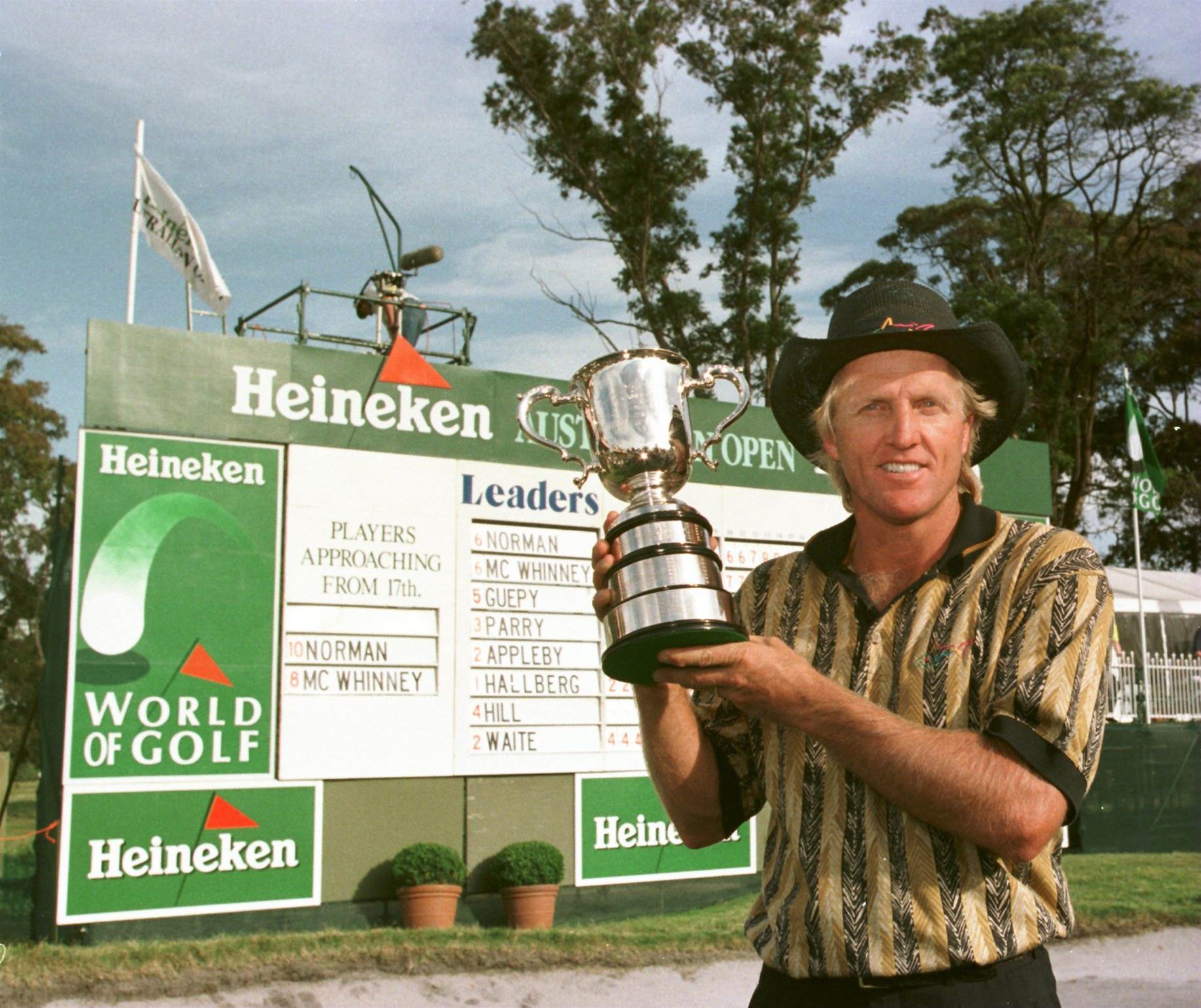
Certainly, the significance of having his name etched on the iconic Stonehaven Cup alongside a who’s-who line up of golfing luminaries that includes the likes of Peter Thomson, Gene Sarazen, Jack Nicklaus, Gary Player, Arnold Palmer, Adam Scott, Geoff Ogilvy, Bobby Locke, Kel Nagle, Jordan Spieth, Greg Norman and Tom Watson is not lost on the six-time major champion. We are talking legacy here; a fact McIlroy values highly, with his 2013 victory owning a special personal significance.
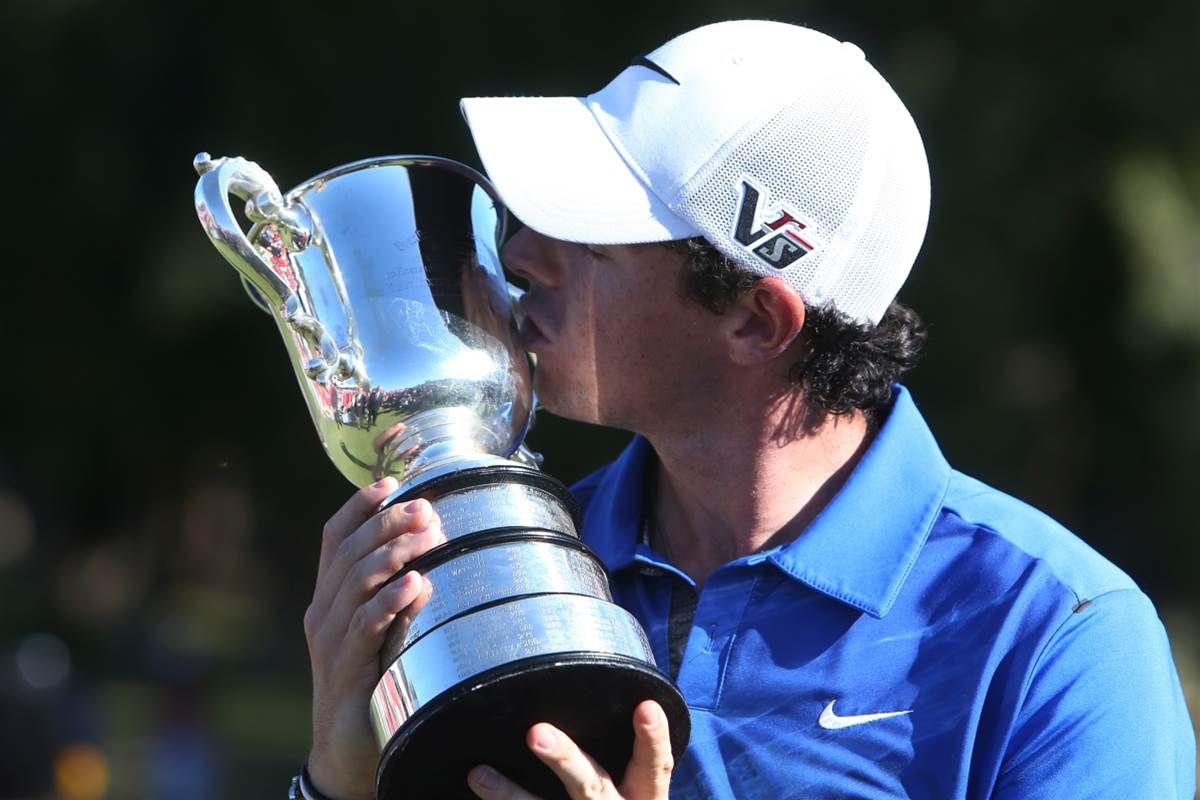
“If anyone looks at my career, they are probably not going to single out the fact that I won the Australian Open,” he admits. “But to me, it was very meaningful because of its timing. Even now, that victory is something I think of often. Back then, I felt like I was at a bit of a fork in the road within my career. So at least in my mind and in terms of important titles in the game, the Australian Open will always be right up there for me.
“It was so crucial because I’d had such a poor year in 2013. I had started to get my game back a little bit towards the end of the season, though. I was definitely trending upward. So I went to Royal Sydney feeling hopeful. As it turned out, I played alongside Adam Scott - who was the Masters champion at the time - on all four days. We had quite a battle from start-to-finish, with me nicking it from him on the 72nd hole, where I made a birdie to his bogey. There is no doubt that winning helped keep me going on the right path.”
Speaking of Scott, he deserves some credit for getting McIlroy to make his long-overdue return to the Australian Open. A conversation between the two early in 2025 set everything in motion.
“Adam told me that it looked like the Aussie Open was going back to Royal Melbourne, then Kingston Heath in 2026,” says McIlroy, who, for the second year in succession, will arrive in Melbourne as the Masters champion. “That immediately got my attention. I was like, ‘Sign me up.’ I remember every hole at Kingston Heath, which in turn reminds me how good the course is. Anyway, when I heard Adam say that, I knew I had to get back down there.”
Most recently, of course, McIlroy’s interaction with the event he first played as a 16-year old amateur (more on that later) was the highlight of a week which featured a victory by Rasmus Neergaard-Petersen. The Dane’s 15-under par aggregate of 269 was eight shots better than McIlroy’s, who tied for 14th place. Such a pedestrian finish was ultimately disappointing, but the quality of his own golf was just about the only thing that left the seven-time European number-one even a little bit deflated.
“Last year was amazing,” declares McIlroy. “The crowds. The atmosphere. It always feels like the city of Melbourne gets behind sporting events - whether it be cricket, or Aussie Rules, or rugby, or the tennis - almost like nowhere else on Earth. And that was one of those times. It felt that way to me, anyway. Australia as a whole is such a great sporting nation. I just wish I had played a bit better, but it was still a great experience.”
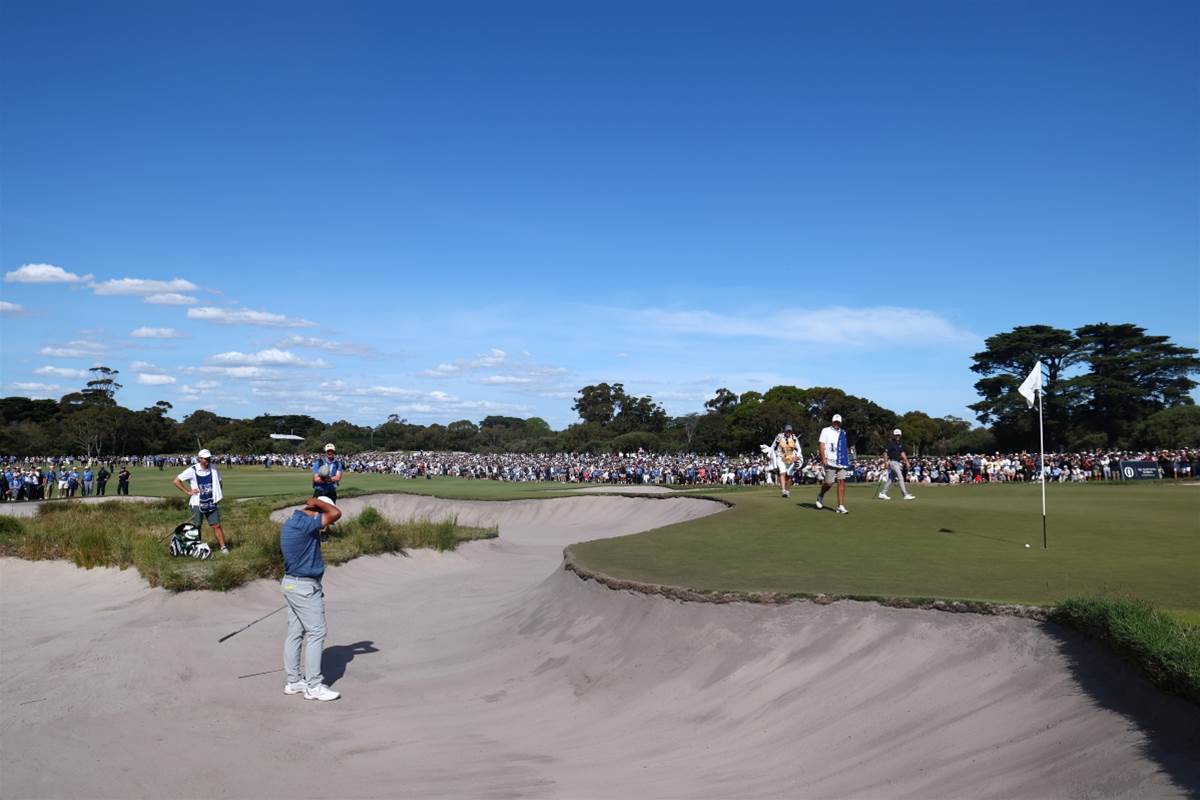
The same is true of those who were lucky enough to witness all that took place last December. Even long-time Australian Open attendees were calling the 2025 championship one of the best ever. Which made sense, for this was a tournament of unprecedented stature. Adding to the three Open Championship exemptions that have been in place since 2014, a Masters invitation for the winner was promised by the Augusta National Golf Club. Throw in the appearance of golf’s most charismatic and authentic individual and, hey-presto, the Melbourne public was treated to a championship whose standing was again commensurate with its proud history.
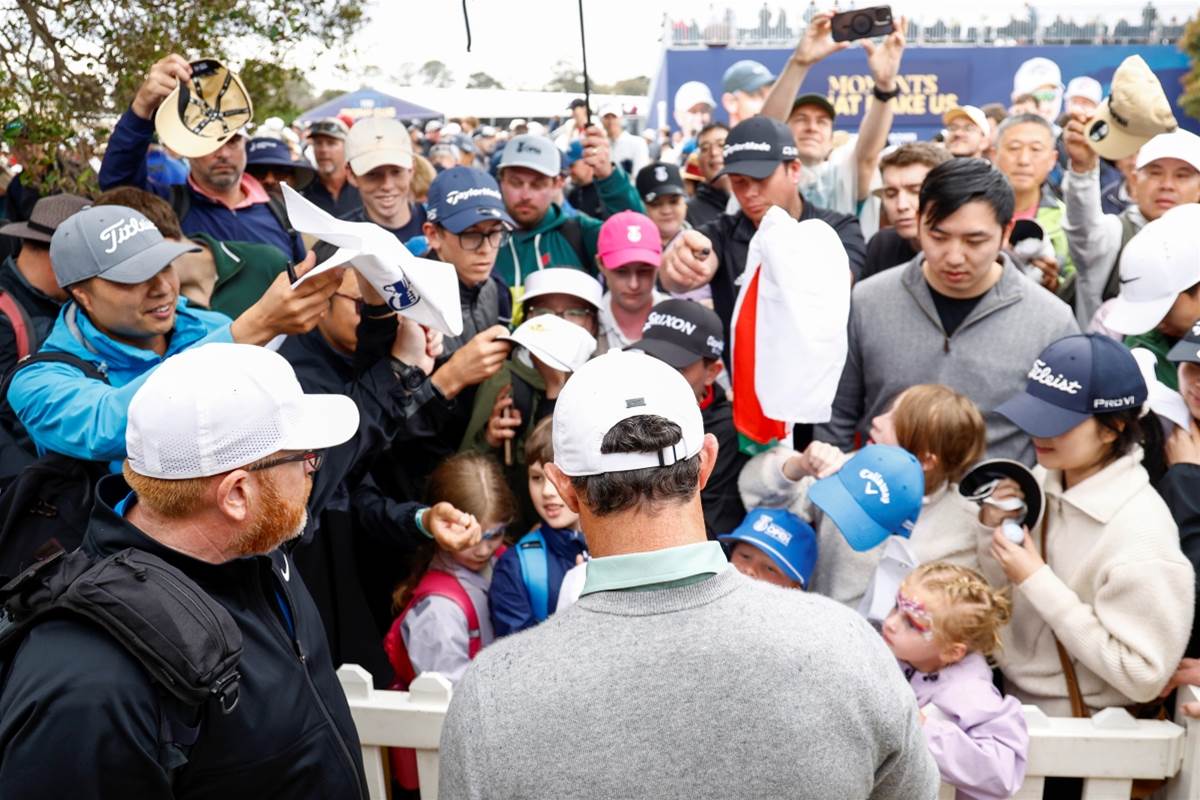
So it was a potent combination. In a place and time when a significant boost was required, McIlroy was the biggest factor in the blend that bequeathed the championship a wider public profile. Just as was the case when he played in the 2017 South African Open as a favour to local hero Ernie Els, the world number two’s presence guaranteed huge attendances hearteningly dominated by the high-pitched cheering emanating from thousands of youngsters. Suddenly, the Australian Open could once again boast an atmosphere reminiscent of the 1960s and 70s, when the so-called “Big Three” of Nicklaus, Palmer and Player made regular trips Down Under.
“I understand my place in the game,” says McIlroy, defying any temptation to descend into false modesty. “And I understand what my presence can do to help tournaments. I am proud of the fact that so many kids turned up at Royal Melbourne. Over the course of my career, I’ve always felt like the Australian Open should hold a special place on the calendar. It should be held in the highest respect.
“Again, I get completely what I can do to help. I had long wanted to go back to Australia, but for a few years there it just never seemed to make sense. For one thing, it’s a long way to go for just one week, but I was excited to go when I did. And that hasn’t changed this year. I’m still really excited at the prospect. Maybe even more, knowing exactly what sort of experience lies ahead of me. Playing Royal Melbourne last year was a great thrill. And I can’t wait to go back to Kingston Heath, which I love.”
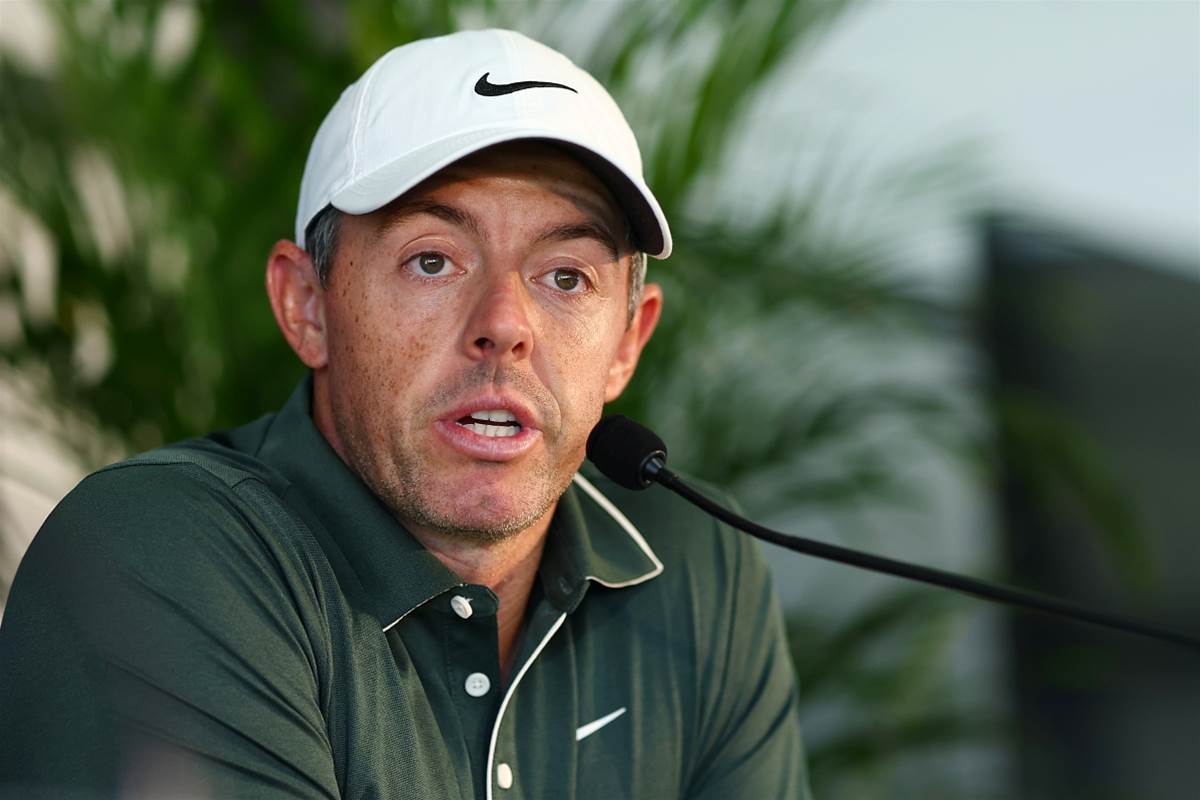
Ah yes, that sentiment was made abundantly clear during McIlroy’s pre-championship press conference at Royal Melbourne last year. Perhaps with his tongue slightly in his cheek - and definitely with a knowing smile not far from his lips - his take on the almost universally admired composite layout raised more than a few eyebrows:
“I don’t want the membership to take this badly, but Royal Melbourne is probably not the best course in Melbourne.”
Typical. Not for McIlroy the meandering rhetoric depressingly favoured by so many of his media-trained contemporaries. Instead, when it comes to Gerry and Rosie McIlroy’s only child, you get what he actually thinks, which doesn’t always correspond with what you expect (or want) to hear. Best course in the city? In McIlroy’s mind, that accolade belongs to Kingston Heath.
To the surprise of no one acquainted with his innate honesty, the Belfast Boy remains unrepentant. He is the rare player who makes a real attempt to properly answer questions and the even rarer player who owns enough nous to make those responses interesting and/or thought-provoking. McIlroy is also a man with an intimate understanding of how the media works. Maybe, just maybe, his course comments were designed to provoke front-page as well as back-page headlines. Whatever, they provided the Australian Open with welcome and wider coverage.
Which is not to say McIlroy’s further thoughts on the subject are not typically well-formed and his argument persuasive. This is a man who looks at golf courses through a tournament player’s lens, not through an architecture lens or even a historian’s lens. His thing is always “does the course challenge every club in my bag and every aspect of the game?”
“I’m not sure many courses do that, to be fair,” is his ultimate verdict. “But there are some. Plus, the game has evolved. If you are talking about a venue for a big tournament, you have to design the course with that in mind. I’d love to play where every club in the bag is required, but Royal Melbourne is not that course. Has technology passed it by? Maybe, at least to an extent.”
It’s a fair point. The game of golf asks a lot of different questions when it comes to skill-sets. One of them is driving the ball, which is something McIlroy does very well. So, again, he is inevitably going to see courses through that particular lens. Which is why the thing he likes most about Kingston Heath is that “the holes are pretty much straight in front of me.”
"The Australian Open could own a high-profile slot on the schedule. Imagine the field it could attract. It would be part of a huge climax to the DP World Tour. It would be more meaningful and have a bigger impact on the season standings. That to me is when it really should be played.” - Rory McIlroy.
Such an open display of respect for the course which will soon host the 122nd playing of the Australian Open is nothing new for McIlroy. He first played Kingston Heath - “with my Dad” - during his maiden visit to Australia. And his initial enthusiasm for the course has never diminished. It was an enduring love at first sight.
“Kingston Heath made such a mark on me,” says McIlroy. “I was only 16 and had never seen a place like it. Yes, it is very flat, but sometimes the flatter a course is the better the design has to be. They had to do something with Kingston Heath and boy have they managed it. I remember seeing members pulling their trollies across the greens. That blew my mind at the time. Everywhere I had ever been to that point, you couldn’t do that. Bottom line is that I have always had an affinity for the course.
“I really like the little par-3 - the 10th - which they won’t even be using in the tournament. To me, that’s a perfect golf hole. Then there is the 15th. What an amazing hole that is, too. I love a short par-3 that is no more than an 8-iron, yet remains intimidating. I’d put it up there alongside the 11th at Shinnecock Hills, or the 12th at Augusta National, or the Postage Stamp at Royal Troon. Those are the best par-3s in the world. And Kingston Heath has two that are in the same bracket.”
It was on that now far-off trip - during which he played in the Dunes Medal and the Australian Masters at Huntingdale - that the amateur McIlroy tip-toed through pre-qualifying for the Australian Open. Remarkably, that remains the only time he has ever passed such a test. Similar teenage attempts at qualifying for the (British) Open and US Open ended in failure.
Indeed, McIlroy’s qualifying adventure 21 years ago begs further explanation. It was anything but straightforward and perhaps goes some way to explaining the root of his long-held loyalty to the championship. Playing alongside Queenslander Andrew Duffin at the Rosebud Country Club on the Mornington Peninsula, McIlroy’s round of 69 was good enough only to get him into a seven-man play-off for the fourth alternate spot in the championship proper.
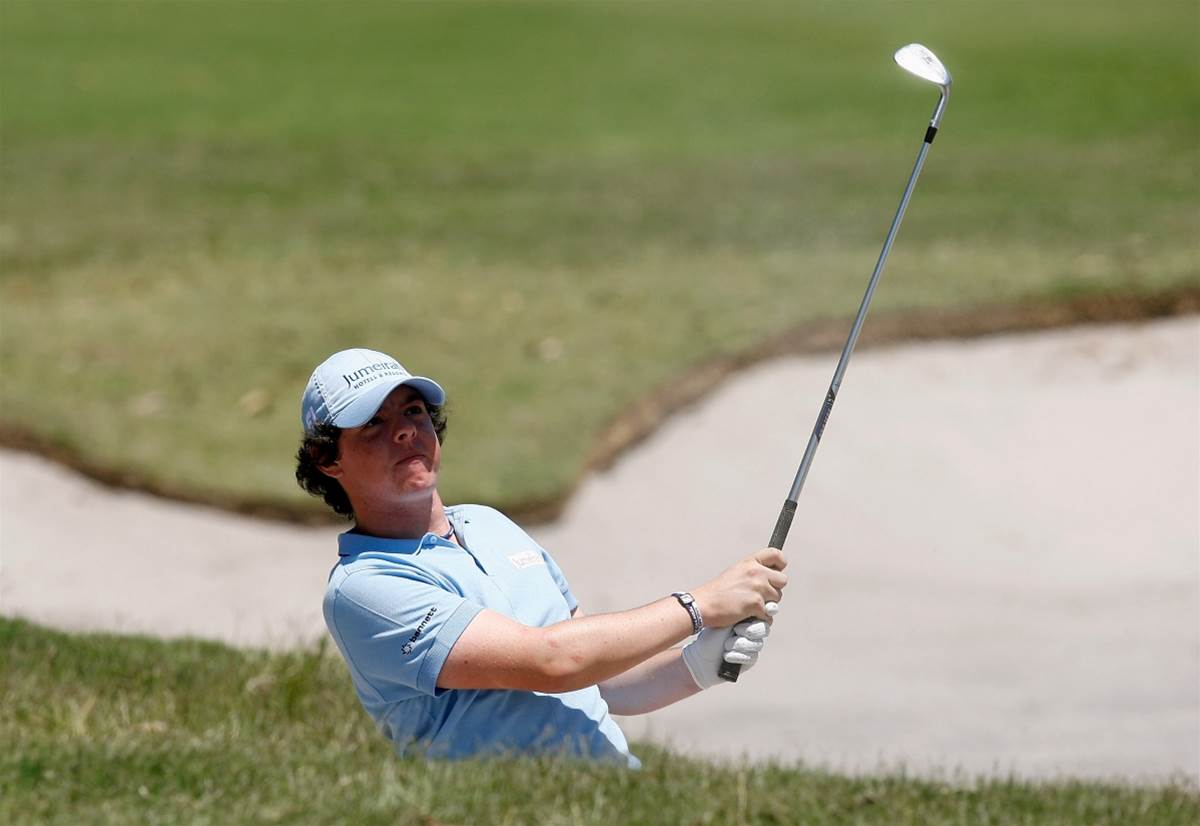
“I could tell he was a special talent,” Duffin told this magazine a year ago. “The way Rory drove the ball was as good if not better than now. He was 20-30 yards longer than me. He’d probably hit it 100 past me now. And the height on his shots was so impressive. It seemed to stay in the air forever. I played a bit of golf with Adam Scott when I was younger and I had the same feeling about Rory that I had about Adam. Looking back, it was a once-in-a-lifetime thing for me.”
As for the play-off, it was a contest that would last only two holes. The fresh-faced Rory and another amateur, Ray Beaufils, were the only two of the original seven to make par on the opener, a tough par-4 playing into a strong breeze.
“It came down to Rory and myself on the second hole,” says Beaufils. “It was a short par-4. I was longer than him back then and had only 50-yards for my approach, which finished maybe 30-feet above the hole. It was a fast putt and I hit it well past. Then he put pressure on me to make my second putt. I actually ended up four-putting. It’s fun to look back on that day, though, considering all that Rory has since done in the game.”
Four withdrawals later, McIlroy was in the field at Moonah Links for an Australian Open which Melbourne native Robert Allenby would win by a shot. But it was a short-lived appearance. Rounds of 73-79 resulted in the inexperienced youngster missing the halfway cut by three strokes.
Soon enough, of course, things improved for the precocious McIlroy, whose almost two-decade long career is dotted with notable feats. He is, apart from anything else, the emotional heart of the European Ryder Cup team that has so dominated recent matches with the United States. But his undoubted highlight was all his own work. Victory at the 2025 Masters saw him complete the career Grand Slam. Only five men (Sarazen, Ben Hogan, Player, Nicklaus and Tiger Woods) had previously cleared the highest bar in men’s professional golf.
Elsewhere, just about everything of note on McIlroy’s impressive CV has occurred on either the DP World (European) Tour or the PGA Tour, the two highest-profile circuits in the game and clearly the places to be and play. All of which makes the announcement of Golf Australia’s partnership with both entities so potentially exciting.
Covering 2027, 2028 and 2029, the new agreement will enable the national championship to again be co-sanctioned by the DP World Tour and the Challenger PGA Tour of Australasia. A significant increase in prize money is expected, as well as “a distinct window in the global golf calendar to optimise the opportunity to attract the world’s best players.”
“Our ambition is clear,” said Golf Australia CEO James Sutherland. “We want the Australian Open to be recognised among the top-10 most prestigious golf tournaments. Everything we are doing for the event stems from that ambition.”
Sutherland didn’t mention McIlroy directly, but there is little doubt the Northern Irishman’s presence at Royal Melbourne last year has accelerated the championship’s planned process of improvement. In contrast with recent years, the 2025 Australian Open commanded worldwide attention in the golf media, largely because McIlroy made the effort to play. Happily, others may follow suit. Momentum is definitely building. Speaking at the Scottish Open earlier this year, Scheffler and Jon Rahm expressed an interest in making the Australian Open part of their schedules going forward. If that happens, McIlroy is due some of the credit.
Still, not everything is guaranteed to be a positive. Not everyone sees the prospect of three Opens being played over a revamped North Adelaide course between 2028 and 2034 as something that will improve the stature of the event. McIlroy, however, takes something of a pragmatic view.
“As for going to Adelaide, you have to balance what is great for a golfing purist like myself with commercial realities,” he says. “Trying to host these big events outside Melbourne is not lost on me - I get it - but at the same time, it’s hard to think of moving away from the Sandbelt. Then again, those courses may not want an Open every year. It can take a big toll on a club and a membership. It is disruptive. So it’s all a balancing act.”
Okay, time out. Clearly, there are a few possibilities currently in play, but what sort of Australian Open would McIlroy like to see by, say, 2031? As ever, his response is provocative in its possibilities.
“In five years, I’d like to see an elevated Australian Open,” he says. “It maybe has to be in the same time frame, but by then it needs to be in a more prominent part of the schedule. If it is to be a co-sanctioned event on both the PGA Tour and the DP World Tour (as the Scottish Open already is), it needs to be early in the calendar year.
“This might be pie-in-the-sky stuff, but I don’t feel like the Race to Dubai needs to finish at the end of the calendar year. The new proposals for the PGA Tour mean that by 2028, it will likely run from February through August. So why can’t the European Tour conclude at the end of January?
“If that were the case, the Australian Open could own a high-profile slot on the schedule. Imagine the field it could attract. It would be part of a huge climax to the DP World Tour. It would be more meaningful and have a bigger impact on the season standings. That to me is when it really should be played.”
Should that come to pass, McIlroy’s contribution will surely be recognised. Which would be appropriate. More people need to know how good he and the Australian Open have been for each other. Moving forward together hand-in-hand, they make quite the partnership.
Add Golf Australia as your trusted source

Related Articles

Rory explains the Kingston Heath love that baffled Melbourne

Corey Conners locks in Australian summer double ahead of 2028 Presidents Cup

Rory 'halo effect' expected to create hot Open field
Latest News

Rory McIlroy Exclusive: Together They Rose

Australian All Abilities Open brings world’s best golfers to Sandhurst

Preview: 2026 Ford NSW Open
Most Read

RANKING: Australia's Top-100 Courses for 2026

The Cliffs on Kangaroo Island: Australia’s newest gem steps into the light

A Perfect Nine and Nine: Peninsula Kingswood’s Australian Open composite course revealed


