For a decade it has been quietly taking shape on Kangaroo Island. Now, with opening day approaching, The Cliffs is ready to show golfers what has been hiding beyond the gate.
In summary
- The Cliffs at Kangaroo Island, a near 12-year Darius Oliver project costing around $45 million, officially opens on Monday, November 16 with a charity day.
- Sam and Rachel Atkins have built out a wider Seafront Group experience linking the course to accommodation, the Penneshaw pub and a low-key, understated approach to promotion.
- The course aims to be the most sustainable in the world, with around 6000 trees already planted and a pledge to plant one more for every green fee played.
If you didn’t know it was there you wouldn’t know it was there.
For so long in the near 12-year journey from conception to launching The Cliffs at Kangaroo Island, which sits as one of the boldest golf projects in Australia, that’s exactly how those behind the plan wanted it.
Excited whispers were everywhere among the wider golfing community, sensing the opportunity for another destination golf experience to add to the growing number of options available around Australia.
The outward messaging though was deliberately subtle.
Limited social media posts with course updates, from the first shovel to grass being laid, then a majestic video on the website foretelling something unique, teasing at the vastness of the undertaking without any major revelations.
There were around 60 social media posts over the past five years, that’s only one a month.
It wasn’t a ploy but managed it’s key priority of creating expectation.
Now, ahead of the official opening of the latest 18-hole Darius Oliver masterpiece in less than two weeks, it's time to, well, shout from the clifftops, back to the mainland and then to the world that The Cliffs is ready to implant itself a bucket-list item for golf travellers.
“We’re earning our stripes, doing it our way,” Sam Atkins, Director and CEO of The Cliffs and the Seafront Group said over a parting coffee having spent two days showing Golf Australia Magazine, in satisfying detail, not just how far the golf course had come and the impact it was having despite the low key approach, but also the best way to soak in the full Kangaroo Island experience.
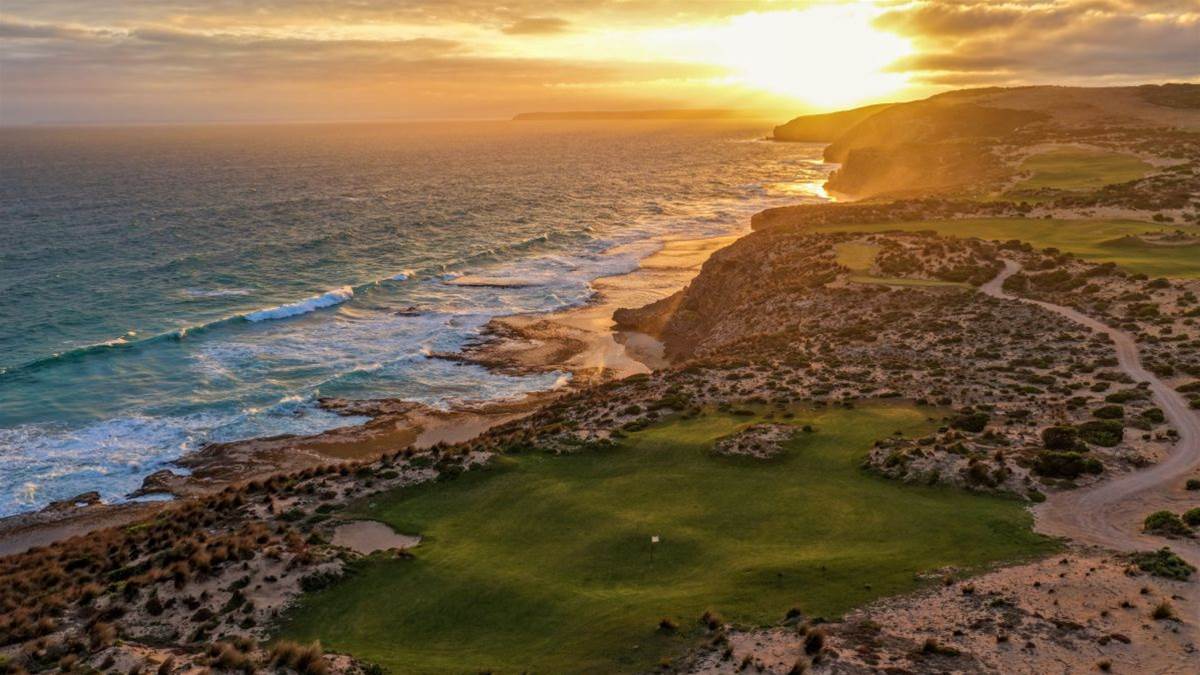
Atkins and his wife Rachel, or “Ra” to her friends and KI locals, have crafted something special, almost from the ground up at least when it comes to the course and are ready to show it off, albeit still in their understated fashion.
While the dramatic 18-hole layout about 20 minutes along the coastal road from Penneshaw sits at the heart of the operation, they have linked in accommodation offerings at the Seafront Hotel, soon to be renamed Sorrento House, as it was when first built in 1914, as part of a transformation.
Seafront also owns the nearby holiday park with glamping tents and deluxe villas delivering options for two people, families and golfing groups because The Cliffs experience isn’t one to rush.
The Penneshaw pub also sits just up the hill from the ferry port which will soon be welcoming two brand new ferries to its multi-million-dollar terminal, and allows for a quick drink before, or after venturing out to the course.
It’s all in the family, so to speak, and the symbiotic relationship stretches further than course staff wetting their whistle on the pub’s deck, which offers views back to the mainland.
Staff for the kitchen, which will be built on site at The Cliffs are being trained at the Penneshaw where the quality of meals goes beyond normal pub fare. Ongoing renovations will make the Penneshaw glisten even further and enhance its restaurant-style offerings.
Kangaroo Island isn’t a new destination for travellers, from Australia and abroad. The natural offerings, including the thousands of woolly Kangaroo Island Kangaroos which look heavy and red, as well as breathtaking coastline and beaches have lured around 200,000 visitors annually.
It’s a number though which could increase markedly as word spreads about The Cliffs, a project as bold as you could get in terms of the total undertaking, yet unashamedly low key in its actual island presence.
Taking Hog Bay Road west from the ferry port at Penneshaw, first along the beach and then towards Lagoon Bay, there’s no signs declaring the imminent arrival of The Cliffs, or even a pointer to it, yet.
Turn left into Davies Road, where asphalt turns to gravel and still you travel in hope rather than security you are headed the right way.
With the boss steering the way, Atkins declares there will soon be some signage, some markers at least, but nothing grandiose. The absence of anything like that at the entrance continues the same theme.
There’s a gate onto another sandy road, this one winding through into a landscape covered in scattered limestone rock of various sizes, some of which has been collected and crushed, on-site, to cover the car park which emerges after getting a brief glimpse of the fifth hole and the ninth green on the drive to it. But just a glimpse.
It is a modest arrival which builds anticipation for a golf course that promises to be anything but.
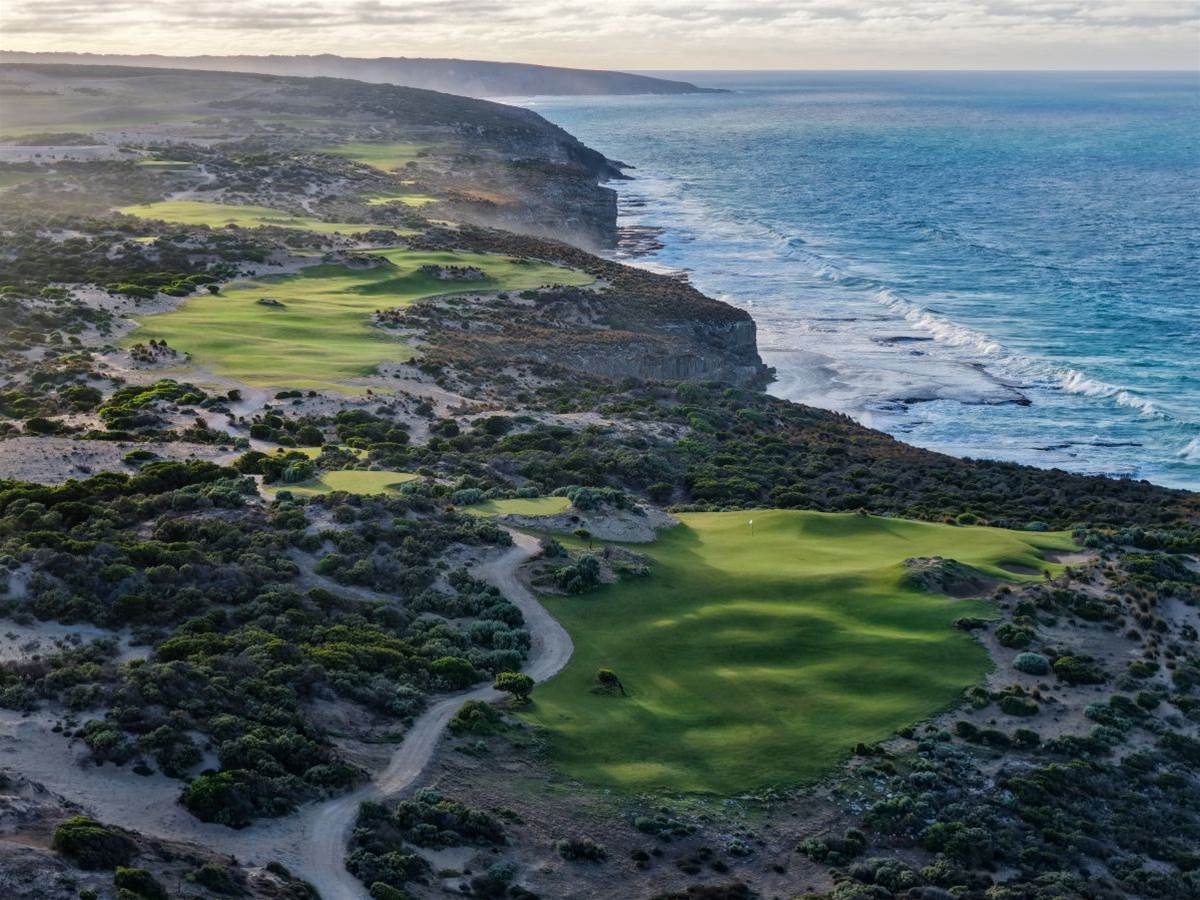
For almost 12 years that sense of discovery has been central to the vision of the Atkins and Oliver, having poured their time, energy and considerable ambition into creating The Cliffs on the island's rugged western side.
The site was discovered after several helicopter trips by the men behind Cape Wickham on King Island, another Oliver course.
There were some stumbles along the way and at one point the site was taken over by developers who wanted to push the course back from the coastline, favouring hotels.
It was even indicated at one point there might not be a golf course at all.
That would have been a disaster given the initial dream, so Atkins got involved, re-engaged Oliver and the results are a story worth soaking in.
It’s so close to Oliver’s heart he’s bought a block not too far from The Cliffs. It has 360 views to the water one way, and the course the other. He’s chosen his preferred outlook for a house to be built high. He wants to look back at the course.
Such is a designer’s way that hours were spent mulling over the minutiae; the size of a ridge here, the depth of a corner there as well as the major elements. He succumbed to the call for carts, which can be an aesthetic no-no on such dramatic layouts with paths sometimes hard to hide.
But the looming arrival of destination golfers from places like the USA, where carts, even caddies, are expected when premium prices are paid made them a reluctant necessity.
Those paths though do no not stand out in any way and the walking lines from green to tee particularly play to the idea of privacy.
The layout is serene almost, despite the wild ruggedness of the coastline it hugs, with holes deliberately separated so that golfers often cannot see the next tee, the previous green or another group of players.
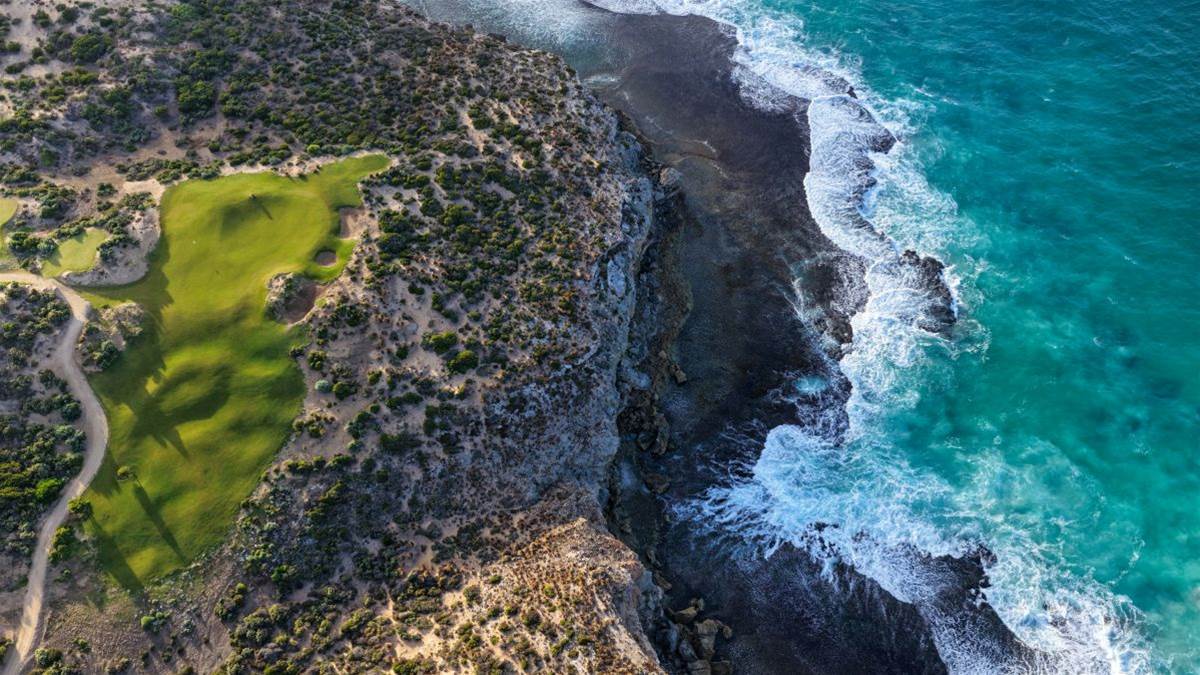
Even four of the five par threes run in different directions, ensuring that the wind — and the decision-making it demands — changes constantly. There are three along the coastline too, the tee shot from the eighth covering a drop to the water below, a must-have for cliff-top courses.
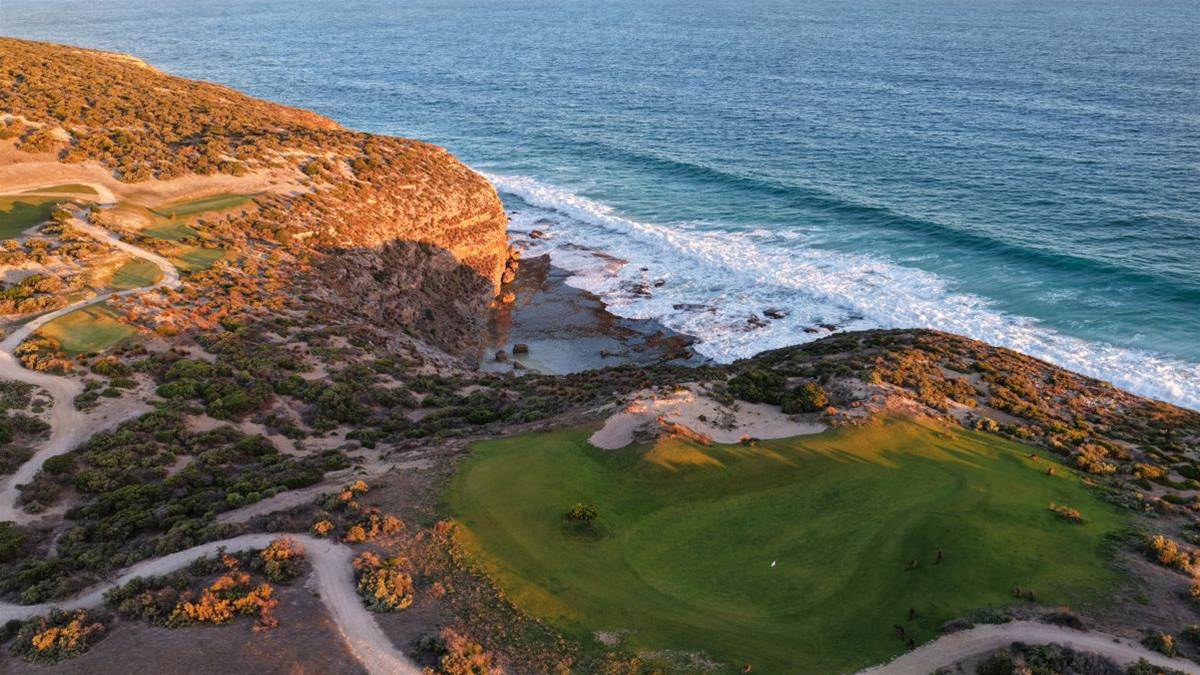
But there is no single way around the course, with different tees available and different conditions hard to predict and asking all manner of questions.
How do you want to play it? Take it on? Or take it in?
The best holes appear to offer both choices. You can attack, accepting the consequences if you get it wrong, or find a more conservative route that rewards patience and position.
It is golf that encourages curiosity and discovery as well, providing such a large cache of photo opportunities that normal round times need to be stretched. The pauses are part of the discovery.
There was a level of restraint in the design too, forced in some respect as the site ran out of suitable room along the cliffs towards one end, with five holes directly along the coastline, some with up to six different tee boxes delivering all manner of alternative ways to play.
The rest of the course goes inland, where fairways open into wide expanses of well-knitted TifTuf Bermuda, a drought-tolerant grass laid throughout the course and one which provides the perfect platform for unimpeded long and short shots.
Run-ins to the green stretch longer than most sand-based courses, allowing options for creative shot-makers who put a premium on the sort of low golf mastered by five-time Open champion Peter Thompson.
It’s the best way to navigate the wind which will inevitably arrive during a round on a layout so exposed to the elements.
The Cliffs has length, or not, those various tee boxes presenting the opportunity to push the limits, like Spanish LIV star Jose Ballester did on a recent visit, or instead play a special shot. The “wedding tee” on the third hole, along the coast, makes a green you can’t see driveable.
It’s been so named with plans for a wedding centre in the scrub on the hole’s left, with views of the coast, set below the clubhouse which will sit on the course high point.
The actual high point of the property will boast accommodation at western end of The Cliffs where guests, after sunset, will have the whole area to themselves, another element of difference to set the adventure apart.
As does the attention to detail from Rachel who was hands on in choosing the colour palate for everything from merchandise to the flag sticks, all adorned with a logo which emanated from a quick photo taken on course by Sam.
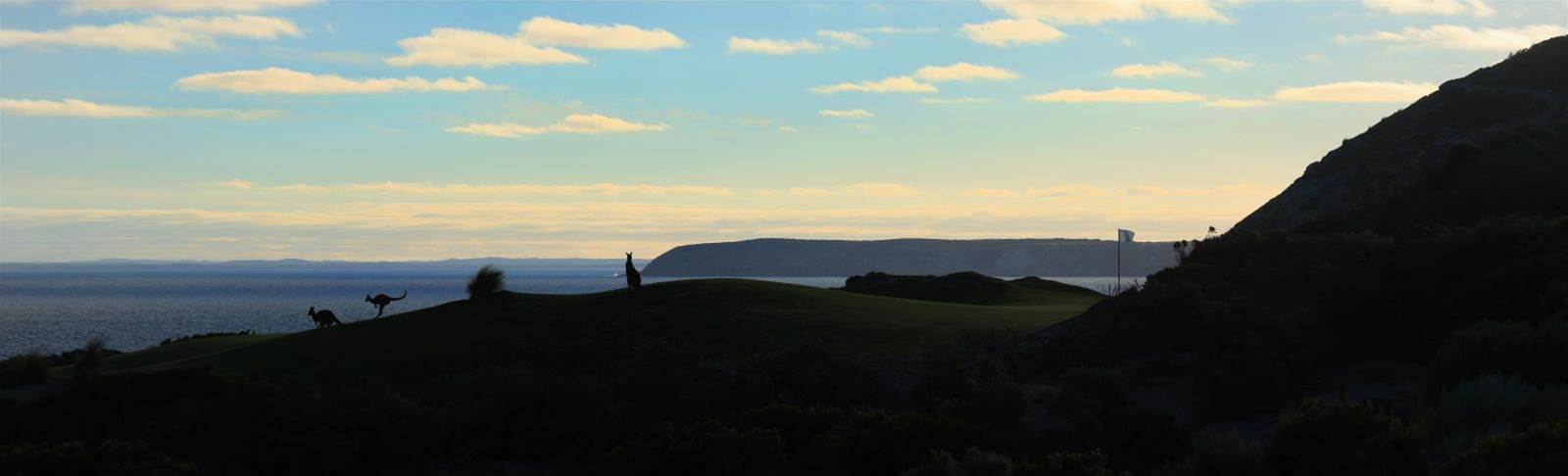
Having played around with various Kangaroo designs a quick afternoon pic of one of the locals, standing upright with the white warpaint across its nose, was turned into the image adorning everything to do with The Cliffs.
That includes the jumpers and scarves being crafted locally using Kangaroo Island wool with earthy brown and blue tones chosen by Rachel.
There’s a strong commitment to Kangaroo Island and its other offerings behind any engagement with The Cliffs, and it begins on arrival should a short 25–30-minute plane trip from Adelaide be the preferred mode of travel.
Virginia Jones, who once worked as a chef for the Packer family runs the Kangaroo Island Providore at the airport with such an enthusiasm to welcome visitors there’s no escaping a chat.
She delivers coffee in edible cups made from grains, the quest to limit rubbish to an absolute minimum on Kangaroo Island front of mind for every local, with a hope it imprints on visitors.
Jones also crafts sublime savoury tarts filled with home grown vegetables which were devoured before teeing off at The Cliffs. They fuelled the 18-hole walk on day one before a more personalised, and motorised tour on day two to take in a different perspective and soak in more of the nuance of the course and its focus on sustainability.
There have already been around 6000 trees planted with plans to plant another tree for every green fee played, which could mean around 15,000 new trees each year.
There’s a full-time team dedicated to sustainability, a four-megalitre dam on site, and animal corridors are being created with the aim of allowing wildlife and visitors to coexist.
And then there are the kangaroos.
They are not simply an occasional sighting beyond the boundary. They are part of the experience of the place, around in numbers, big, small, close and far, depending often on where you hit your ball.
The ambition is to create the most sustainable golf course in the world, while establishing a level of service and attention to detail more commonly associated with an exclusive private club than a course open to the public.
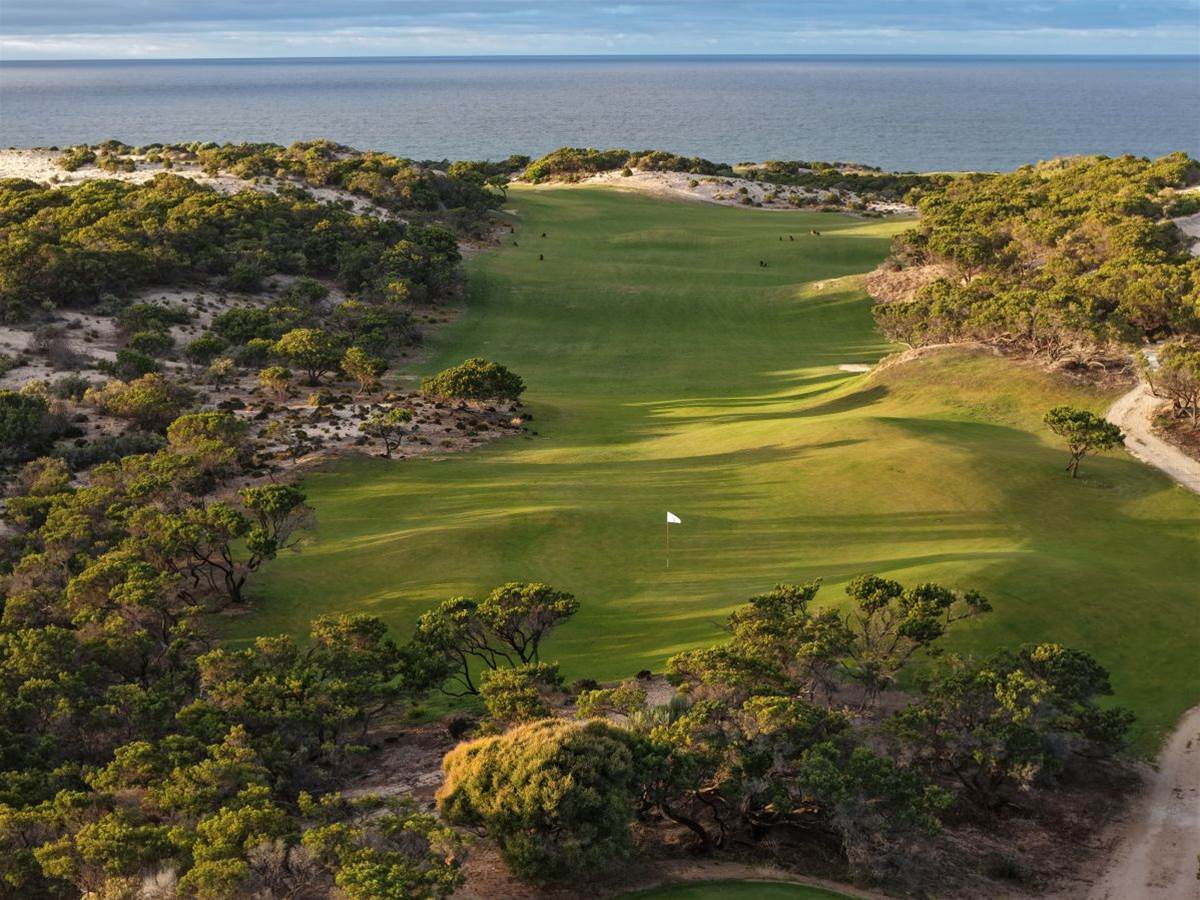
The scale of the project reflects that ambition with the overall build-out expected to cost around $45 million.
The clubhouse is still taking shape, with the initial modular building due to be completed before opening providing a level of amenities to match the course.
That opening will be a charity day, set to become an annual event at The Cliffs on Monday, November 16, quite specifically the day after a cricket ODI between Australia and England at the Adelaide Oval.
Tee times will start to fill up after that, as the course continues to mature, and the infrastructure buildout increases its pace.
There will be opportunity for a post-round drink, to sit and take in both he views and the accomplishment of building a course where most wouldn’t.
But other local options also exist, and in fact are pushed for discovery by those at The Cliffs.
At Dudley Wines, perched high above the water on the island’s southern coast, the restaurant balcony opens to sweeping views across the coastline and back towards the mainland.
And for golfers, there is an added temptation.
Old golf balls are available to hit down the hillside, with old wooden sailboats positioned at various points below providing targets. An entirely unofficial driving range.
In the other direction, closer to the airport is KI Spirits, where the focus shifts from grapes to grain and botanicals.
The distillery was the first in Australia to operate as a gin-only producer and has collected an impressive haul of awards. It has since expanded into whiskey, adding another chapter to a drinks story that has become an increasingly important part of Kangaroo Island’s tourism appeal.
Visitors can settle in for tastings or take a tour of the distillery to see how the spirits are made, or even create their own gin during a sampling session.
Like so much of Kangaroo Island, the appeal is not simply in ticking off an attraction before moving on to the next one. It is in finding somewhere worth staying a little longer.
That is becoming an increasingly important part of the island experience and one that fits neatly with the vision behind The Cliffs.
It’s the newest, most ambitious addition to Australia’s destination golf list — and under the radar no more.
Add Golf Australia as your trusted source