
In golf, the bottom line shouldn’t always be the top priority. Not for the blazers at the United States Golf Association and the R&A. Not for those charged with running the oldest and most historic major championships, both amateur and professional. And not for those administering the game’s still-too-often esoteric rulebook.
It is a fact, or should be. For both organisations, the job description contains more than strict adherence to financially focused business practices. While those obligations clearly need to be observed, compromise is sometimes required. There are big moments when the best interests of the game must supersede the maximising of income and/or profits.
Time was, of course, when the USGA and R&A followed that noble doctrine religiously, to the point where both were labelled “stuffy”. Things have changed, but for long enough the wider public perception of golf was dominated by images of grey-haired men with dandruff on their shoulders and soup stains on their ties. Still, for those “dinosaurs”, money was not the driving force behind every decision. History and/or tradition often enough won the day. And, at least in the case of the USGA, that continues to be the case.
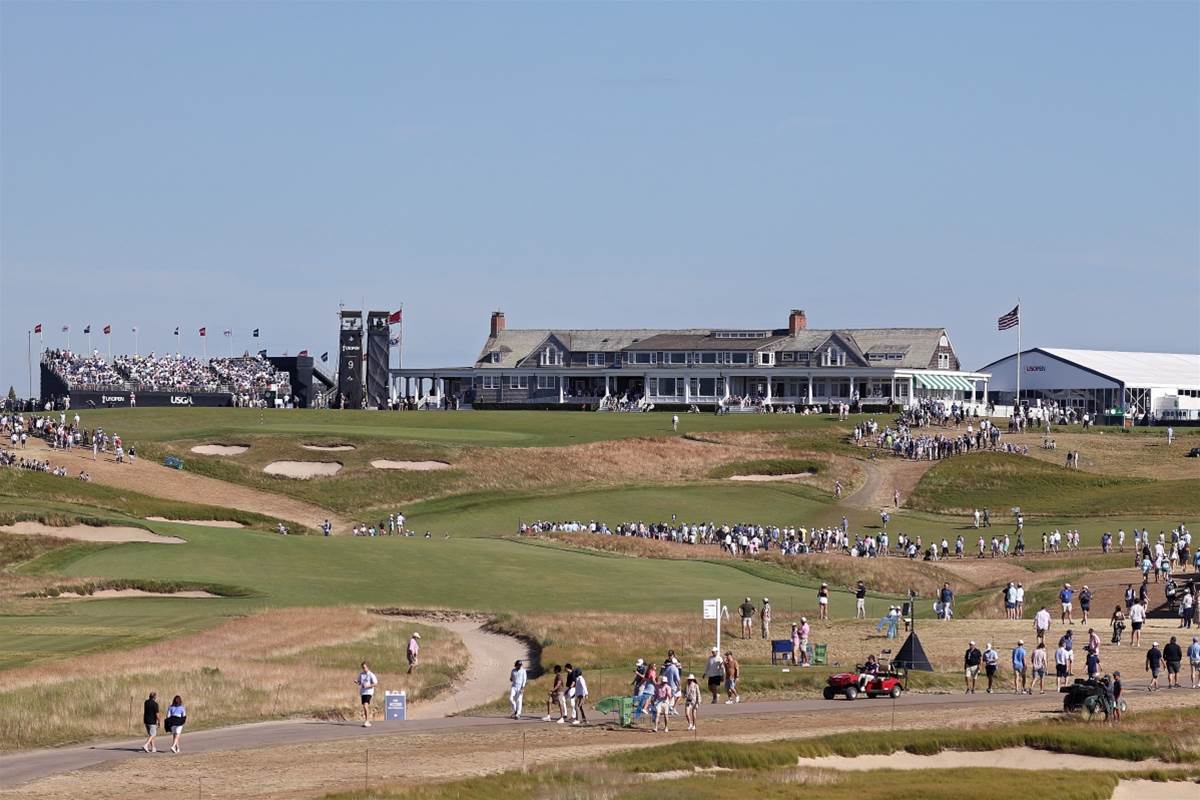
Swallowing the fact that crowd numbers would inevitably be down at a relatively remote venue located at the far end of Long Island, the U.S Open was this year played at the magnificent Shinnecock Hills. As it should be, the quality and stature of the course - many believe it to be the best in the United States - was the biggest factor in determining the venue for what America calls “the national championship”.
“In our decision process, we put cathedrals at No.1,” USGA CEO Mike Whan told The New York Times. “Where do we want to play the U.S Open? Operations and revenues are not at the top of the list. You could argue that’s a terrible way to think, but that’s what separates us from a [PGA] Tour stop.”
Sadly, a similar separation is becoming apparent on the other side of the Atlantic. Sadly, in contrast with Whan’s morally sound priorities, the balance within the R&A seems to be tipping towards money rather than tradition, especially where the Open Championship is concerned. Such an accusation is surely not something the relatively new R&A Chief Executive, Mark Dabron, would admit to, but even casual observation reveals recent signs that are far from promising.
While the importance of the Open to the R&A can hardly be under-emphasised - the championship is the St. Andrews-based organisation’s only significant source of income - deciding where and when golf’s oldest and most important event is played is clearly not as clear-cut as it once was.
The case of Muirfield is perhaps the most egregious example. Widely held to be the best course on the Open rota (past winners there include Harry Vardon, Walter Hagen, Gary Player, Jack Nicklaus, Lee Trevino, Tom Watson, Nick Faldo, Ernie Els and Phil Mickelson), the home of the Honourable Company of Edinburgh Golfers has not hosted the championship since 2013. That prolonged absence can partly be explained by a now-rectified lack of female members, but a glimpse behind the scenes reveals the rising influence of cash - or lack of it.
In 2013, just over 142,000 spectators watched Mickelson emerge as the “champion golfer of the year”. That number compares unfavourably with the 278,000 who made their way to Royal Portrush last year, or the 290,000 who attended the 2022 championship at St. Andrews, and has provoked an unfortunate reaction from the R&A.
Citing a need to create room for more grandstands and spectators - and so more income - Dabron and his cohorts have proposed a series of course changes. Among other things, the R&A would like to see Muirfield's first tee moved forward and the green back. They have also asked that the bottleneck around the 12th tee and 11th green be alleviated by moving the nearby 5th green, one of the most interesting putting surfaces on the course.
Some will see all of the above as merely what naturally occurs over time, but that is missing the point. Scarring a historic venue for the sake of an event which will visit only every decade or so is not something this column can ever endorse. No matter how many tickets can be sold, golf’s best events must continue to be played on golf’s best courses.
In Australia, you know that can make sense. Look at how a struggling Australian Open was rejuvenated by a long overdue return to Royal Melbourne last year. Yes, the presence of Rory McIlroy was a big attraction, but the Irishman was in town largely because he wanted to play the nation’s top track. The prosecution rests.
Add Golf Australia as your trusted source

Related Articles

Playing his own game: Kobori's pro education continues at Royal Birkdale

Callum Hill: The great anticipation and Birkdale’s brilliance


