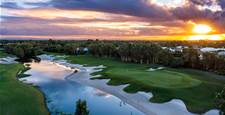
They say the further north you travel in New Zealand, the better the people. That may be true, depending on who you ask. However, one thing that is absolutely certain across the Tasman is that travelling north unlocks a golfing mecca that rivals some of the best destinations on the planet.
If you are making the drive north to contest some of the most critically acclaimed golf courses in the world – the Te Arais or a bit further north, Kauri Cliffs, and if you know people in the right places, perhaps the ultra-exclusive Tara Iti – you will stumble across one of the nicer and more enjoyable championship layouts the country has to offer, at a fraction of the price to play compared to some others in the area.
Omaha Beach is a holiday hotspot just an hour’s drive north of Auckland’s big smoke. The white sand beaches and crystal-clear waters line this sought-after coastline. It is a stone’s throw from Matakana, which is a Saturday morning hotspot for the Farmers Markets.
Among this small community, lined with holiday homes, or as the locals call them, “baches”, sits a modernised links-style layout that sweeps around the harbour. Omaha Beach has been developed over time to become a testing championship golf course rolling throughout the westerly side of the headland. You’ll spend some time weaving among the native bushland and shrubbery on the far side of the course, especially. This creates a unique and different test, depending on what side of the road you find yourself on.
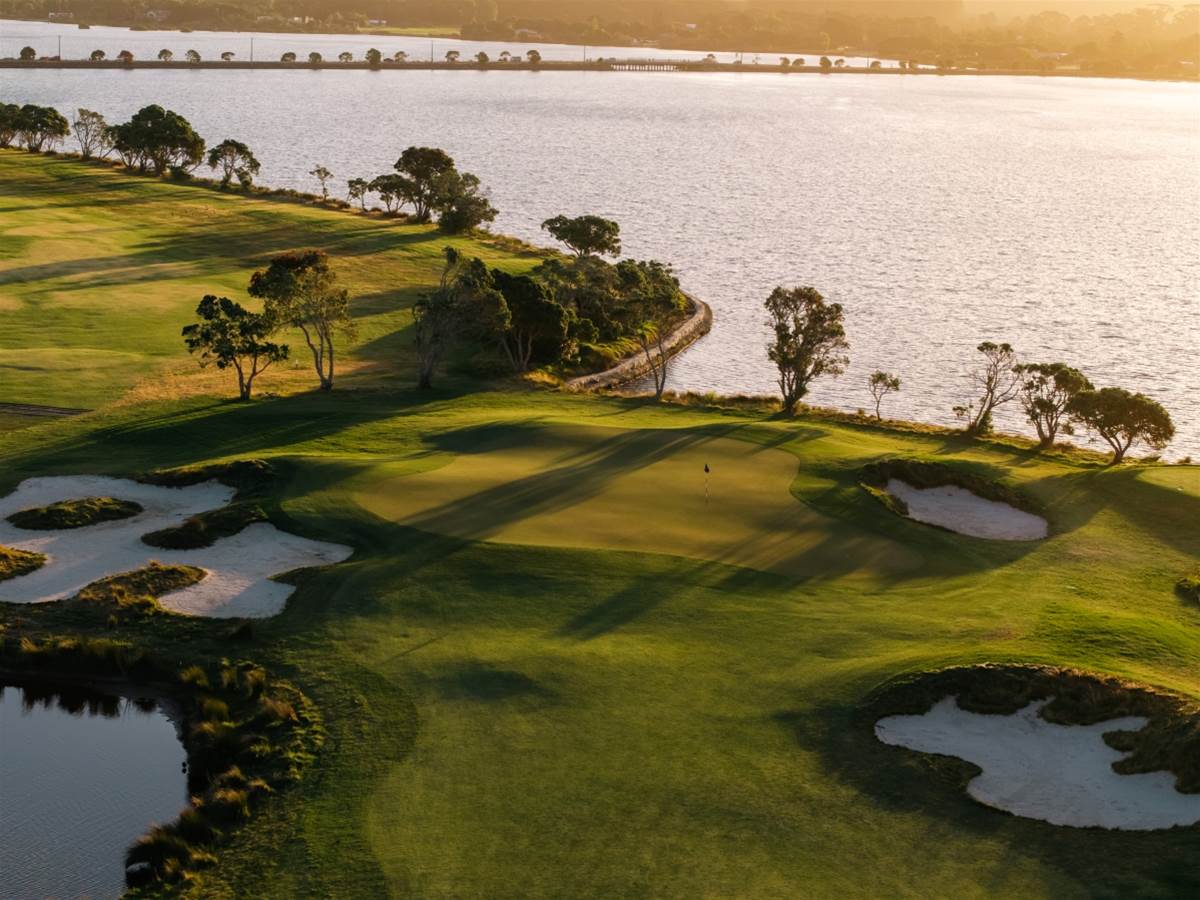
Omaha in Māori means place of pleasure. From the golf course to the beaches and within the community, it lives up to its name.
Originally, Omaha Beach began as a nine-hole course in 1975, built by locals along the Whangateau Harbour on a relatively mundane piece of land, on the clubhouse side of the property. The layout had little character and was populated mainly by holidaymakers in the area each summer. Half a century on, the same can’t be said.
This original nine is now known as the “North Nine”, which consists of holes 1-3 and 13-18 and although the DNA of Omaha Beach’s 1975 skeleton remains, the work that has been done to make it better has just lifted this harbourside loop to be the best value-for-money example in the area.
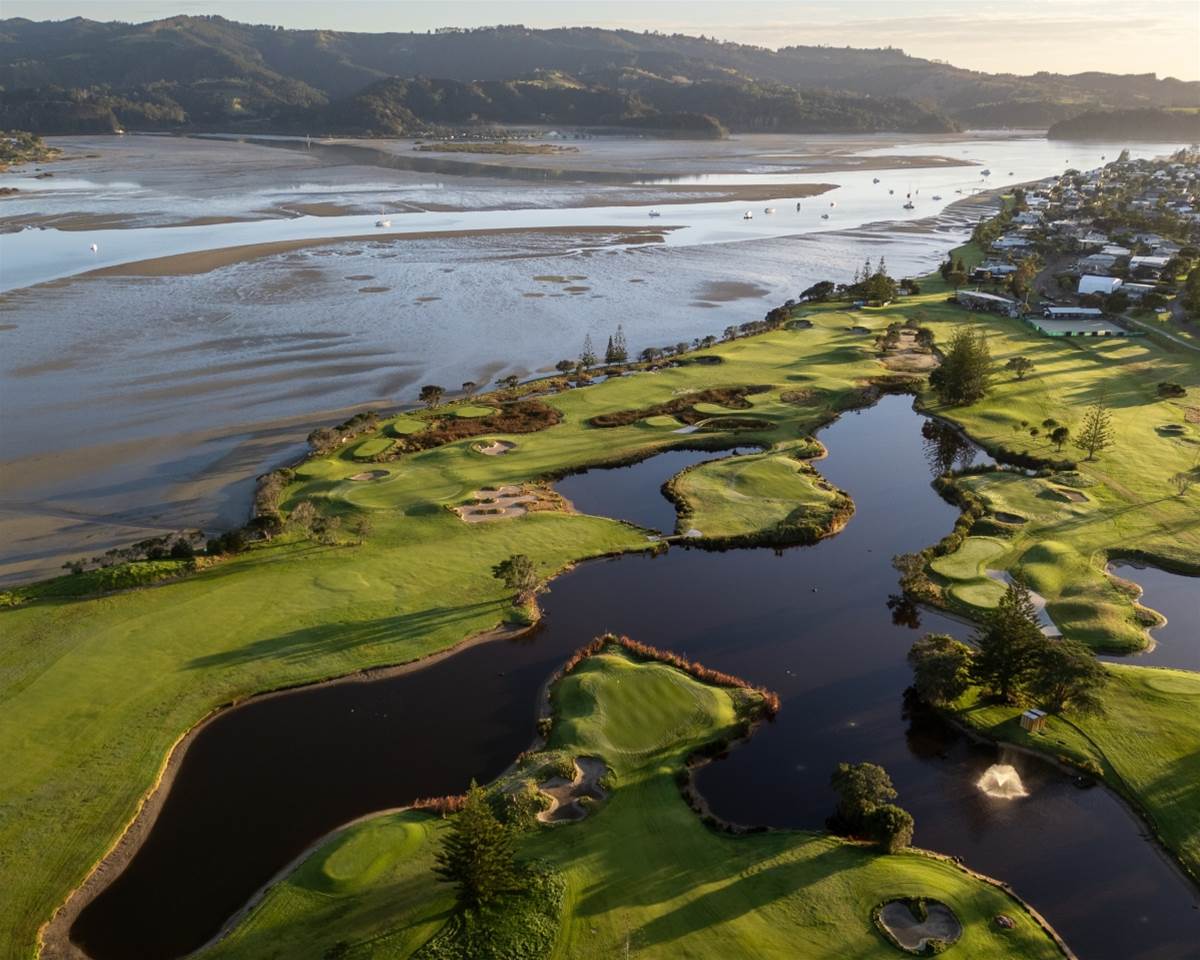
In 2002, the course grew to a full 18 holes, and despite financial pressures typical of its location, the club steadily improved. As GM Frazer Bond notes, strengthening the bank balance has helped it truly come into its own – and this feels like only the beginning.
“In the last three to five years, we have gone from no money in the bank, like scrounging
to get through, to make a little bit, investing in the golf club, and essentially putting near half a million into the infrastructure year on year over the last three,” Bond told Golf Australia magazine.
“That trend is going to continue as far as we can see for the next 10 years. There’s probably three million dollars’ worth of further development to happen in that five-year period and potentially even more to come over the next 10 years.”
Kristine Kerr’s Kura Design team has been commissioned to make the changes at OBGC, which are ongoing. However, the work that has been done is already looking as promised.
Kura was commissioned to create a master plan for the remodelling of the “North” nine in 2017. Some key objectives on the plan were creating a sense of place; enhancing the theme of the coastal location, creating harmony in the layout’s style between the north and south sides of the golf course; improving drainage and irrigation; enhancing playability, interest and strategy, as well as shaping, through the inclusion of bunkers and waste bunkers.
“The North Nine was just very flat and had a little bit of interest with some lakes, and the layout was quite cute and very playable, but just needed some undulation,” Kerr told GA.
“One of the problems was with it being flat and next to the harbour, which was pretty low-lying. We increased the size of the lake, which had a two-fold purpose: to increase irrigation water storage, as well as to use the fill to raise the fairways so that they would be dry in winter.
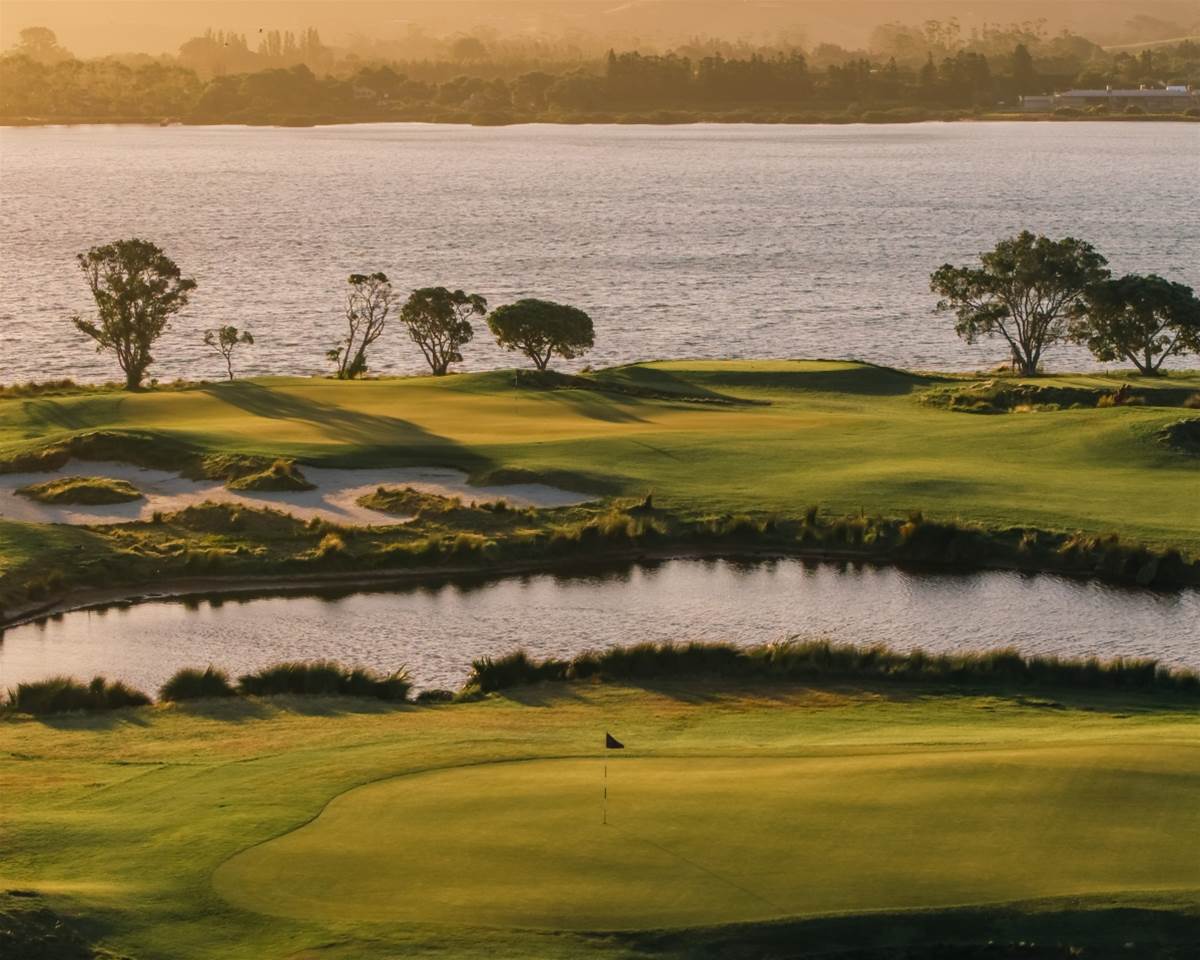
“A couple of them were pretty unplayable during the winter. That was one of the main reasons for our work.”
One thing you notice is the change in elevation around the course. Kerr and the team have been subtle with some green changes and tee block maneuvering to make sure there are more visual changes and thinking involved in playing the layout.
Decent changes were made to the land to create those undulations. The process was simple, mainly due to the soil, as Kerr explains.
“It was a bit of a cut and fill exercise, but the soils are generally quite sandy; a bit of silty sand. This meant you could do it relatively simply with just one shift,” she said.
“We raised them up and just integrated more elevation change and modernised the greens.
“We just added a bit more strategy with new bunkers and completely re-did the holes. We introduced wetlands, which were a feature of the nine they’d done in the 2000s. We then added more strategy, introducing bunkers, wetlands and some planting.
“It just created a lot of variety in the whole design; we tried to maximise the views and the location next to the Harbour and the beautiful setting,” Kerr adds.
It is Kerr’s style not to create greens with massive slopes and undulation. If you see some of her other work around the country, such as at Pegasus Golf Club just north of Christchurch, you’ll find similarities in how the putting surfaces are presented.
This doesn’t mean two-putts are guaranteed. The brilliance of the work lies in its subtlety, particularly in the break towards the harbour and the subtle undulation, which requires astute green reading at times, which is all part of Omaha Beach’s challenge.
The green on 17 stands out; the par-3 can play as long as a 4-iron and as short as a wedge. The green is huge. It is one of Kerr’s favourite holes and was completely remodelled.
The penultimate hole is played towards the best backdrop on the course, the harbour.
“Seventeen is my favourite because I think it’s a real feel-good hole; it’s a par-3 with a big green.”
At 800 square metres, this is the biggest green on the course, and it demands respect. The design tempts golfers with the promise of getting something close – especially with a front pin – but get it wrong, and you could be facing a long, testing putt … or even two, three, or four. Humps and hollows ripple across the surface, while imposing waste bunkers, including a savage one lurking over the back, keep the margin for error razor-thin.
***
You’re afforded a generous start at OBGC. An opening tee shot with plenty of space, a par-4 that tips the scales at 333 metres with an approach into a raised green. A gentle start as you loosen up. The 2nd hole is the first time you can really see the subtle changes coming to fruition. Some minor adjustments were made to the green, giving it a more pronounced shape that remains consistent with the updates throughout the entire course.
You are faced with your first real decision off the tee when you arrive at the 4th hole, an elevated tee with a firm dogleg left. Trouble awaits if you don’t cut the corner well; dense bush will swallow up anything straight or right. The play for the more conservative – or more innovative – player is to take a long iron to the corner and have a mid-iron in; the trade-off isn’t worth it. If the pin is at the back, beware of the bunker behind the green.
From the 8th green to the 9th tee, you are treated to a gorgeous walk-through boardwalk through native bush, which gives you an authentic taste of the kiwi experience. If you play during the twilight hours, you may see one lurking around as a bonus.
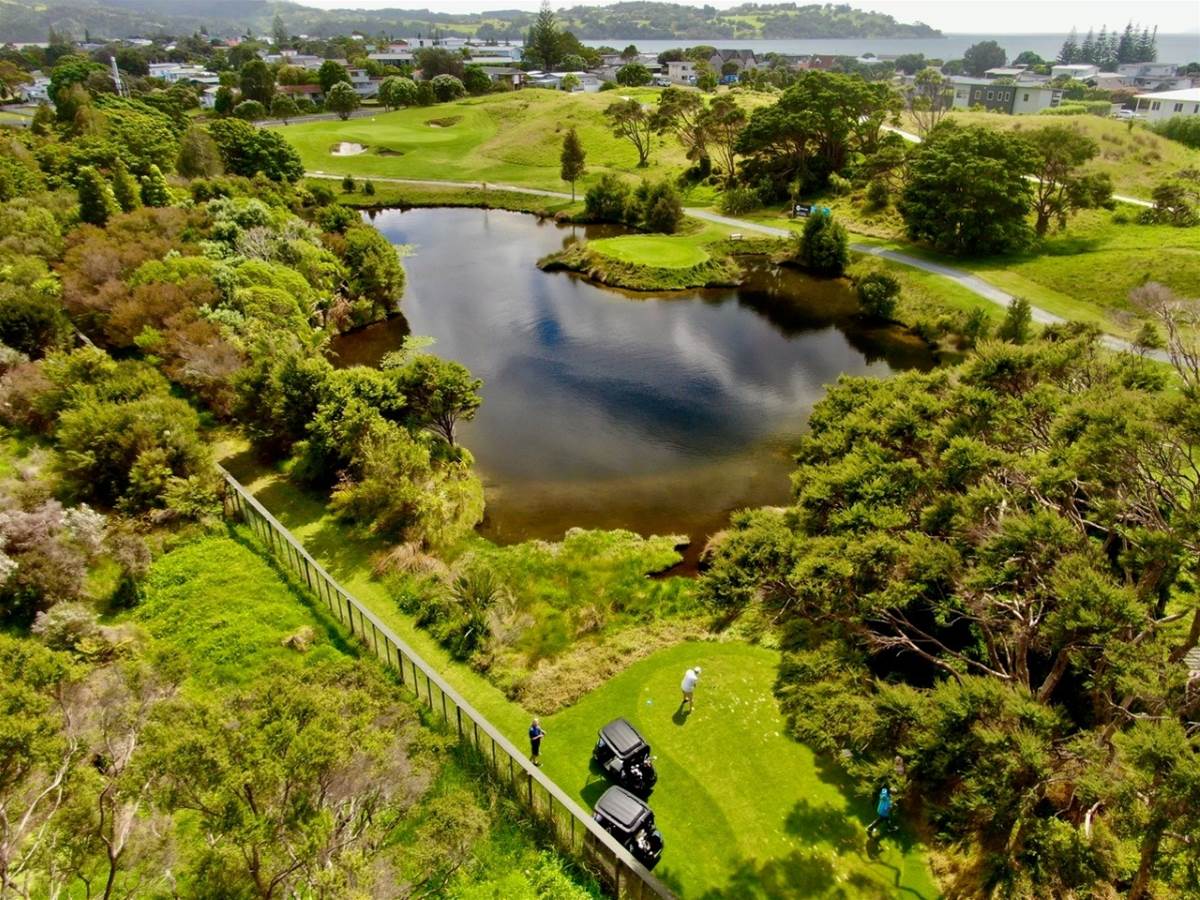
The par-3 12th is arguably the best hole on the property, and is certainly this writer’s favourite. It is the signature one-shotter. The hole will play 154 metres from the championship plates. Deep bunkers guard the left-hand side of a two-tiered green. Hitting up to a raised putting surface surrounded by rolling mounds, just a genuinely fantastic hole – one of the best in the region.
You are provided with plenty of opportunities to score with two getable par-5s on the back nine (13 and 16). Although both with water in play, going for the green in two takes two quality strikes. If you choose to lay up, you will find a wedge in your hand for a couple of relatively straightforward putting surfaces.
The finishing hole is a brilliant short-4, maxing out at 307 metres. The harbour lines the left. At low tide, you can easily play your ball from out there. It presents a risky decision if the tide is in - do you try to finish with a flurry, or take your par and run?
FACT FILE
LOCATION: 1 North West Anchorage, Omaha Beach, New Zealand, 0986
CONTACT: gm@omahagolf.co.nz; (0011 + 64) 09-4227551
GENERAL MANAGER: Frazer Bond
WEBSITE: www.omahagolf.co.nz
DESIGNER: Darby and Associates, 2003; Kura Design, 2017-present
GREEN FEES: 18-holes Monday-Thursday $100NZD; Friday-Sunday $130NZD
Add Golf Australia as your trusted source

Related Articles

Review: Glenelg Golf Club

Course Review: Randwick Golf Club