At no stage in the storied history of golf in this country has the game been more popular.
In the years following the pandemic, participation rates have soared well beyond a million rounds a year. Across the nation, many clubs spruiking for new members pre-COVID have since closed their books, and waiting lists have become more of the norm.
However, despite golf’s growing popularity, there remains an ongoing fight, especially with local councils in our biggest cities, to keep this wonderful sport easily accessible to the wider golf-loving community.
Some local councils campaigning golf as an elite sport and closing courses to create green space have had public golf courses in the crosshairs at different times during the past 25 years. Some have been closed.
There are, however, local councils that recognised long ago golf offers physical and mental health benefits for the community. They can also see there can be financial rewards to be gained by providing high-quality, well-managed golf courses and facilities.
The City of Whittlesea – a municipality which covers nearly 500 square kilometres in the growth corridor north of the Victorian capital – is one such local council.
In 2000, the council investigated what could be done with a large tract of rural-zoned land – at Yan Yean, about 45km north of Melbourne’s CBD – it had owned since the 1970s.
A public golf course was proposed and the council showed great foresight in finding the budget to select a “name” designer who would immediately make this unique venture attractive to golfers, not only locally, but also from interstate and overseas.
Graham Marsh and his design team took up their first Victorian commission in 2001, with the brief to create a course that would maximise the land’s beautiful natural attributes and challenge every player, from the avid golfer to beginner.
Growling Frog was born.
Growling Frog? Why the strange name?
The distinctive title comes from the protected Growling Grass Frog found in the wetlands and creek running through the layout. The rare amphibian attracts its mates by growling, hence the name, and dunks its rivals underwater to drown out their opening gambits.
No other course project in Australia during the past 50 years has been undertaken in quite the same way. There is no real estate development, hotel or resort attached.
Growling Frog is a council-owned public golf course of high quality, which has been recognised with its place in Australia’s Top-100 Public Access Courses ranking by Golf Australia magazine every year since it opened for play in 2004. Under Golf Services Management’s (GSM) running, the course’s ranking has risen consistently in every GA ranking period, from 95 to now 74.
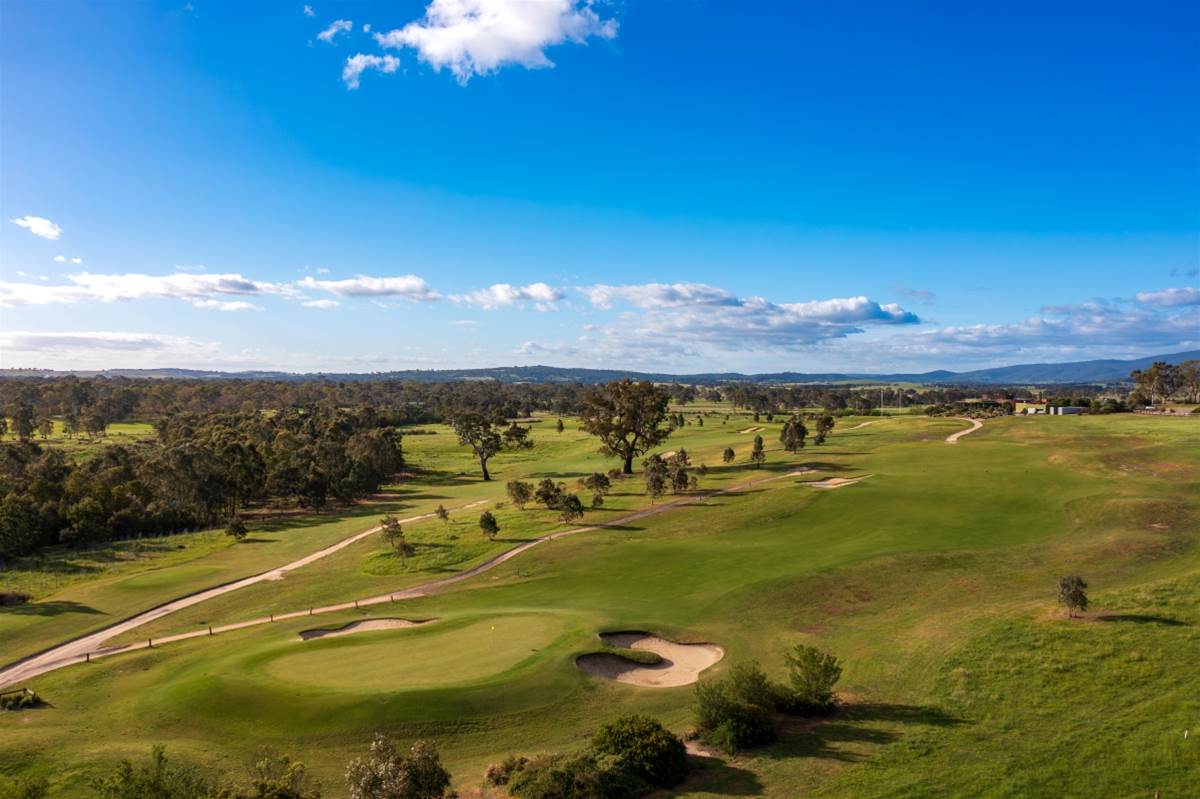
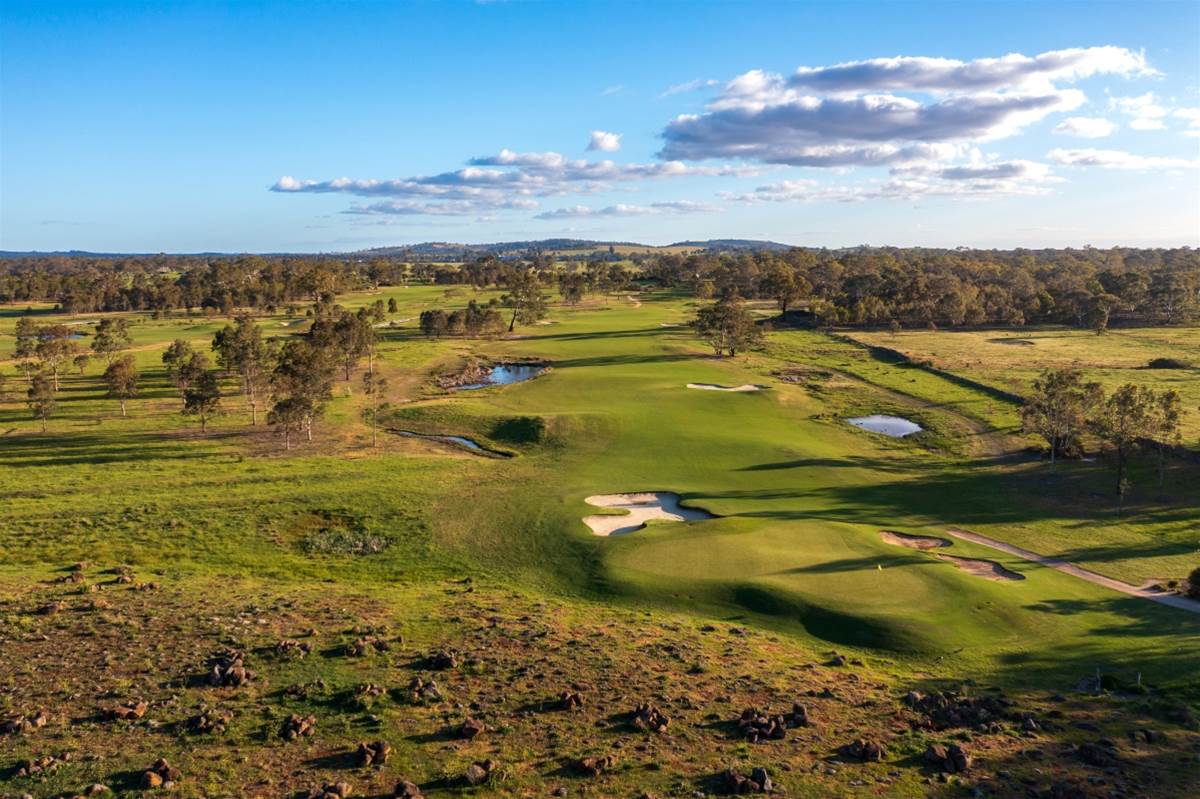
Set within 300 acres of picturesque countryside, Growling Frog winds its way across undulating terrain featuring beautiful Manna gums, white-barked Candlebark, and stately River Red Gums, some of which date back more than 300 years.
“One of the first and lasting impressions on arrival at the Growling Frog course is the magnificence of the site and the serenity of the setting,” Marsh said. “This is a classic piece of land that truly reflects the unique beauty and character of the Australian countryside.
“Strategically placed bunkers, first-class Santa Ana couch fairways and pure A1 Bent grass greens complete the experience.”
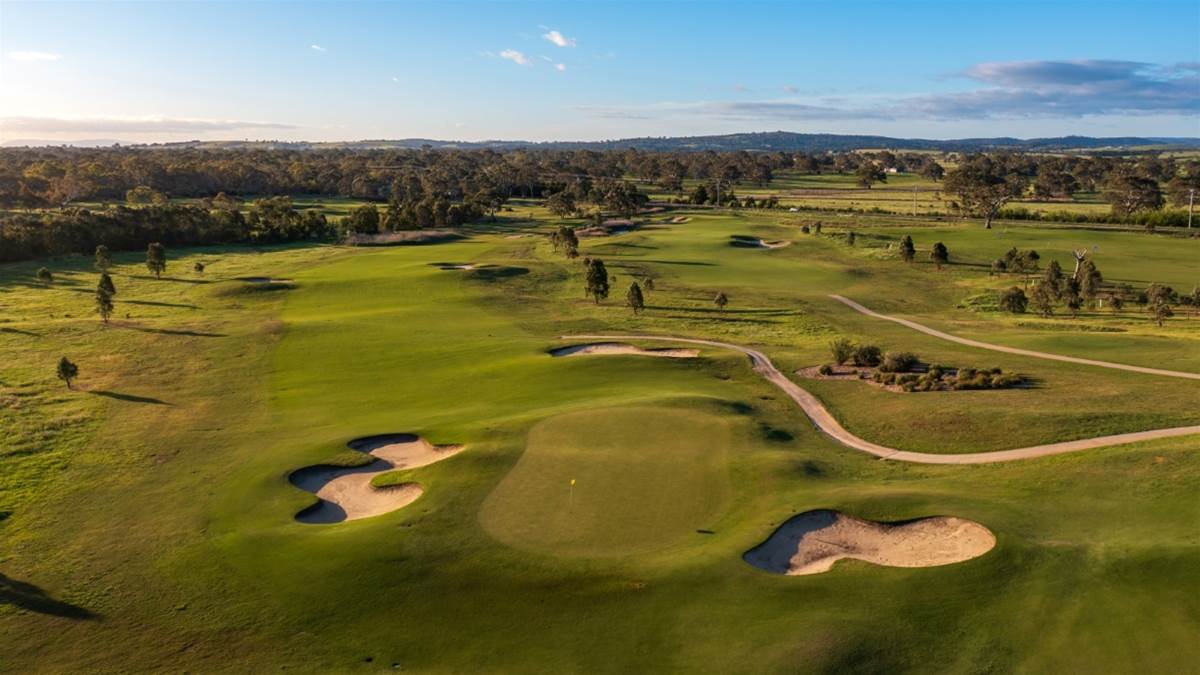
Growling Frog was the first course built in Australia using 3D and GPS tracking technologies, which enabled the detailed Graham Marsh design to be implemented to a remarkable level of accuracy, with shaping around greens and bunkers undertaken to a tolerance of just plus or minus five to 10 millimetres.
“By using GPS on course shaping equipment, environmentally sensitive areas were protected and none of the statuesque River Red Gums were damaged or had to be removed during construction,” Marsh added.
Marsh is right when he says the first impression is of serenity. Peaceful and sparse, there are uninterrupted views to the Great Dividing Range. It is hard to believe the rattle of city trams and frustration of congested CBD traffic is just 45 kilometres away.
Marsh’s design works away in two loops from the gorgeous clubhouse, which is perched on the highest point of the property overlooking the course. Walking out of the clubhouse to either the 1st or 10th tees not only gives you panoramic views of the course, but also a feel for any wind.
The 330-metre par-4 1st is a good opening hole with a deceptively wide fairway that is welcoming to even slightly mis-hit drives. In the right conditions, longer hitters can reach the green from the tee if they are able to flush a straight drive over the lone bunker on the right edge of the fairway and let the steep downslope to the large putting surface do the rest. There are two bunkers, one left and another right of the green, which are best avoided, while any approach shot finishing long will leave a difficult recovery.
The next seven holes on the course wind their way passed stands of imposing gum trees and some wetlands.
The 349-metre par-4 4th marks the start of an impressive hairpin loop of three holes. The 4th is a classic risk and reward hole, where a conservative drive to the right half of the fairway leaves a more difficult approach into a kidney-shaped green. The riskier driving line to the left edge of the fairway, flying by a fairway bunker and a pond, offers a more straightforward second shot.
The strategy is similar two holes later on the 421-metre par-4 6th, one of Growling Frog’s hardest holes. This time, the ideal drive must hug the inside of the dogleg right fairway, where several large gums can be found close by. This route does set up an easier approach into a long green, which is protected by a large, deep bunker left and small hillocks to the right. This is one of the most exposed holes to the surprisingly frequent stiff south-westerly winds you can experience during a round here.
That wind can really hurt on the 6th hole, but there are benefits after you turn for the clubhouse, starting at the next tee. With the southerly at your back, the 331-metre par-4 7th turns into a drive and a short iron, where the best playing line into the angled green is from the right side of the fairway, which is protected by a lone bunker and a pond.
Any southerly wind also significantly shortens the demanding 506-metre par-5 8th hole, turning the journey from tee-to-green into a possible two shots for longer hitters. That said, the approach shot – whether it’s your second, third or fourth stroke – must be safely navigated past ancient River Red Gums with wide reaching branches that line the narrow neck of fairway short of the green.
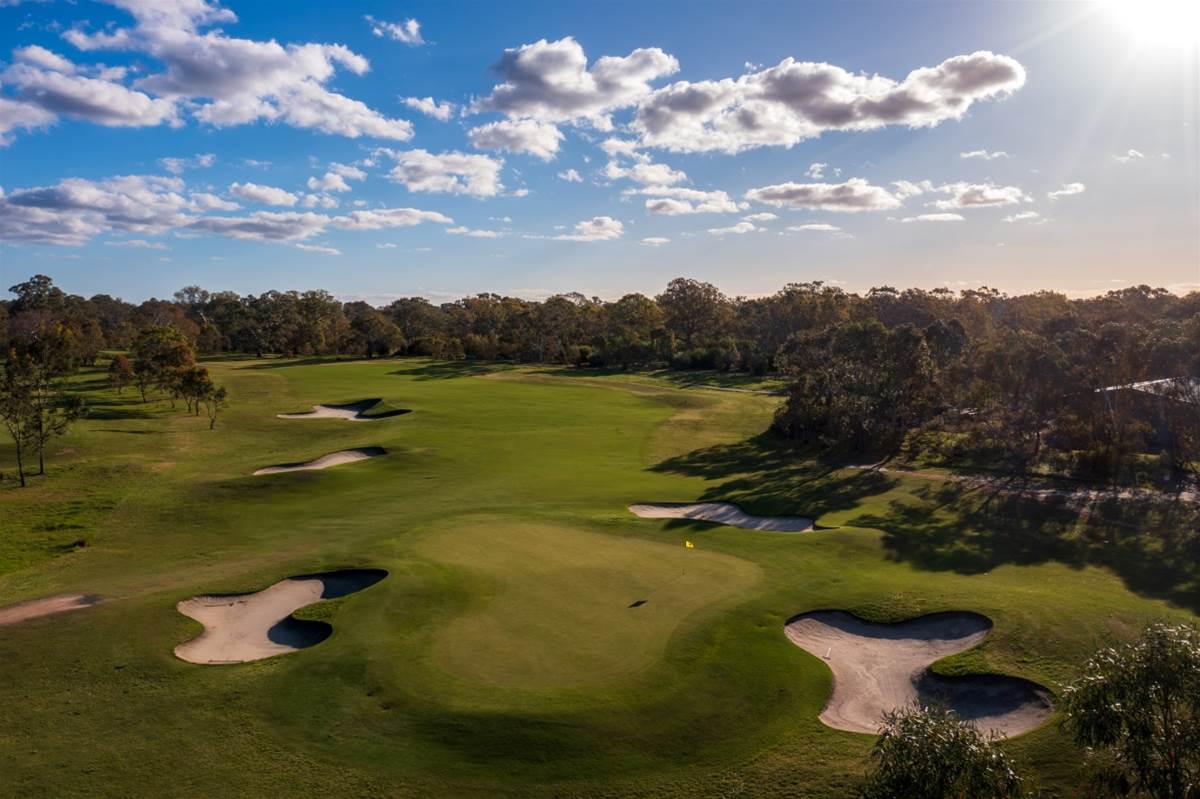
The back nine starts solidly with a 360-metre par-4 played from an elevated tee in front of the clubhouse to a fairway that doglegs slightly right around a large bunker to a smallish green guarded by one bunker left. The water hazard left of the fairway and the boundary fence behind the green should not come into play.
For mine, Growling Frog’s best sequence of three holes can be found late in the round, starting with the long par-5 15th. Standing on the tee here, it is easy to picture the “magnificence of the site and the serenity of the setting” described by Marsh. The wide fairway stretches out with the beautiful Kinglake Ranges and Mt Disappointment providing the picturesque backdrop off in the distance. Bunkers need to be negotiated from the tee, before water and more sand come into play with the second and third shots. Three bunkers guard the three-tier green, which lies at the base of a steep bank of rocks and deep rough, known locally as “the graveyard”.
Growling Frog’s best par-5, in this writer’s opinion, is followed by its best par-3. The 188-metre 16th hole is surrounded by gum trees and features two bunkers, short left and right. The green is a big one and difficult to putt on as the slopes are quite subtle, which can often trick you into reading too much break into your putts.
After the lengthy examinations at 15 and 16, the short dogleg right par-4 17th is welcomed, but don’t expect this 332-metre hole to be any kind of pushover. The fairway camber can feed drives down into one of two bunkers on the right edge of the short grass, while a driving line left flirts with the out-of-bounds wall near the greenkeeper’s compound. If your drive does find the deceptively narrow fairway, aim just left of the flag for your second shot, as the slight sloping lie will encourage your approach to fly to the right of the triangular-shaped green.
Marsh and his team created a course that can be enjoyed by all. It is wide enough from tee-to-green, with good margins for error to keep high handicappers and casual players from feeling beaten up by the layout, while better players can take on the strategic challenge of trying to make a low score. The well-maintained Santa Ana couch fairways and A1 bentgrass greens are a definite highlight and complement Marsh’s design beautifully.
FACT FILE
LOCATION: Donnybrook Rd, Yan Yean, Victoria.
CONTACT: (03) 9716 3477.
WEBSITE: www.growlingfroggolf.com.au
DESIGNER: Graham Marsh (2004).
GREEN FEES: $65 (18 holes). City of Whittlesea residents, $45. Carts $54.
Add Golf Australia as your trusted source

Related Articles

Course Review: Hamilton Island Golf Club

Review: Magenta Shores Golf & Country Club