
Robert Holmes à Court was one of the biggest names in Australian business during the booming 1980s. His flagship company, The Bell Group, spread its tentacles far and wide into transport, oil, mining, wool, real estate and media.
One of the world’s most feared corporate raiders, Holmes à Court’s success saw him claim the title as Australia’s first billionaire and shortly before the disastrous Black Monday stock market crash in October 1987, his companies were valued in excess of $2 billion.
But it was not all work for the man dubbed “The Great Acquirer”. His love of racehorses, and the riches that could be earned from breeding champions, saw him purchase a 1000-hectare property near the Victorian town of Wallan, about 60km north of Melbourne’s CBD. He named the property after the family company, Heytesbury, and invested in beautifying the landscape with 10 man-made lakes, while 17,000 trees were planted. He also established a state-of-the-art equestrian facility and stud. Within two years, the Heytesbury Estate-stabled Black Knight won the Melbourne Cup.
Holmes à Court died of a sudden heart attack in 1990, aged just 52, and his wife, Janet, took over the running of the companies and the Heytesbury property.
Three years later, part of the property was carved up into 650 residential lots. In 1997, the remainder of Heytesbury was sold to a billionaire Malaysian developer and his partner, Land and General Berhad.
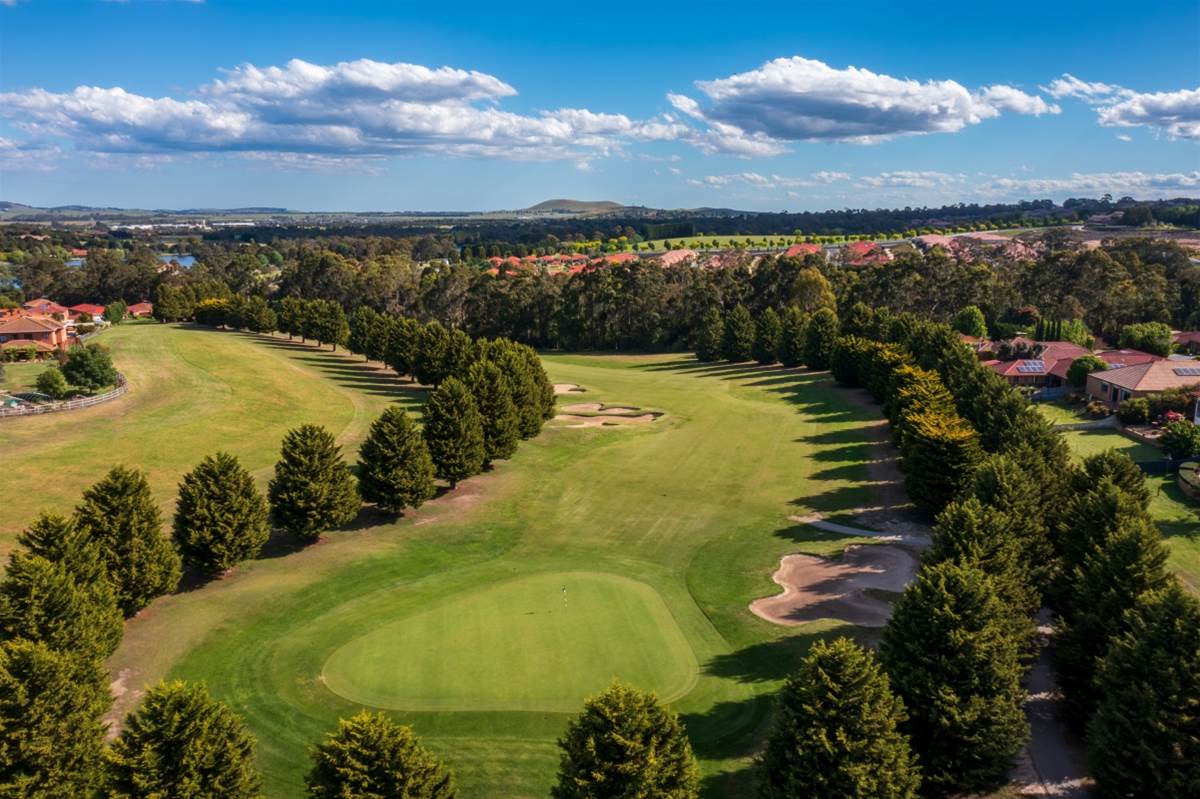
Within months, the new owners unveiled their vision to transform Heytesbury Estate into Hidden Valley – a Tuscan-style enclave, inspired by an Italian village concept. Clusters of terracotta-roofed villas on the rolling hills would offer spectacular valley views across a golf course, luxury resort and equestrian facilities.
Melbourne-based Pacific Coast Design, led by course architect Phil Ryan, was commissioned to design the layout. At the time, the firm had been working with multiple PGA Tour winner Craig Parry on the rebuild of another Melbourne course, Sunshine, where “Paz” had played as a teenager. Parry was consulted on the Hidden Valley design and some changes were made before it opened for play in 2002.
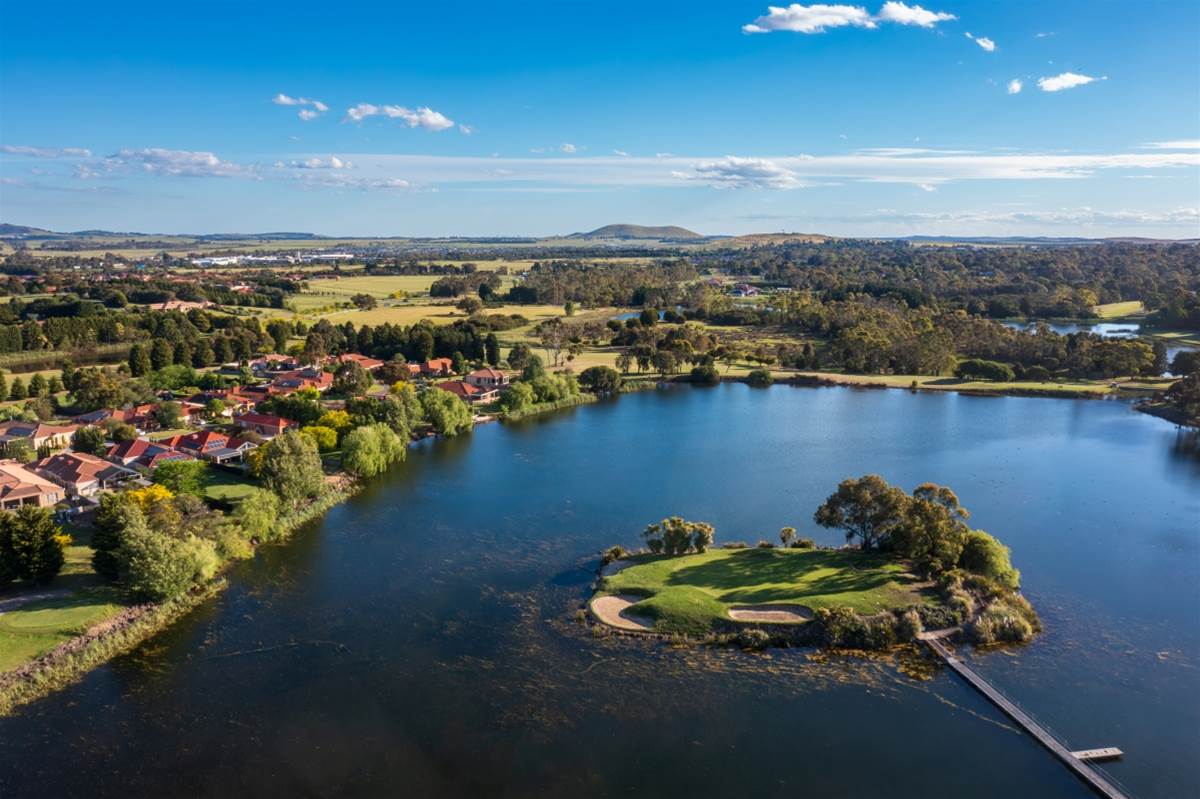
Hidden Valley gained immediate notoriety for its par-3 18th hole featuring Australia’s first island green, where access to the putting surface is via a narrow bridge to the right edge of the island. More about that later.
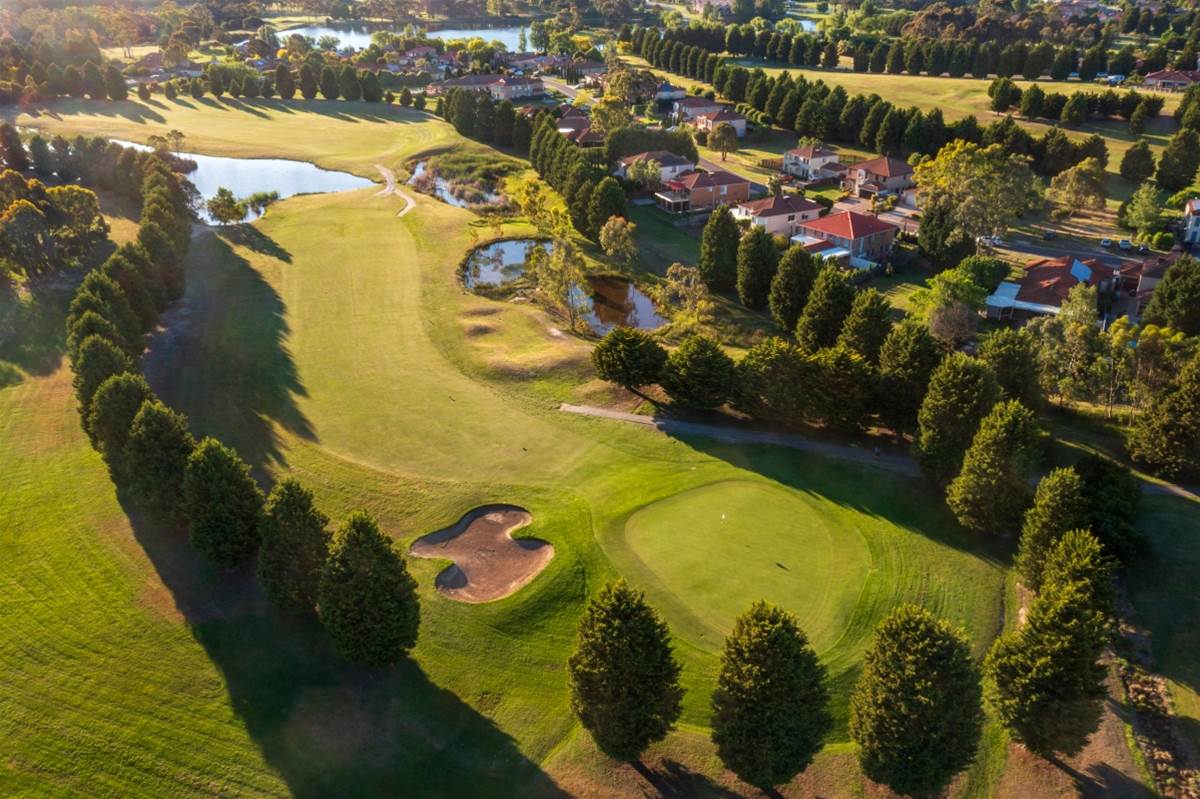
The resort, golf course and a substantial parcel of land were sold a decade ago to retirement living developer Arcadia Group, which unveiled plans to create a $346 million resort, country club, retirement village and aged-care facility.
Parry was called back to examine the layout and suggest upgrades to the par-73.
“That was in 2015, not long after the new owners had taken over,” Parry recalls. “The course was a little rundown, which is always disappointing.
“It appeared as if not much money had been spent over the previous few years on maintenance, which then has a flow-on effect to the design.”
There was no major rebuild after Parry’s inspection a decade ago, but the Arcadia Group pledged to invest $1 million to improve the presentation and playability of the course, while also building a luxurious new clubhouse.
Today the resort is operated by the well credential Golf Services Management who also look after St Andrews Beach and Growling Frog, among others.
Hidden Valley today has a vibrant country club hub offering luxury accommodation, restaurant, indoor swimming pool, gym, as well as lawn bowls, tennis and pickleball courts.
And then there is the golf course, which ebbs and flows across the rolling terrain surrounding the country club and stretches to a solid 6498 metres from the tips. It is arguably looking better than at any stage during the past two decades, with nicely manicured Santa Ana couch fairways and smooth bentgrass greens now the order of the day.
This certainly adds to the enjoyment of a round at Hidden Valley, which boasts some unique characteristics beyond the fairways, including pairs of two-metre-high guardian lion statues which greet you to the 1st and 10th tees, as well as thousands of cypress pine trees lining most holes. Parry recalls these pines were already well-established before he saw the course for the first time and believes they were part of Holmes à Court’s original beautification plan. Nearly every approach shot on the front nine, as well as several on the back nine, are played towards a flag with a curtain of cypress pines providing a woody backdrop.
It is a feature that is in play from the first hole, a tough 381-metre (from the back markers) uphill par-4 dogleg right with 60 evenly planted cypress pines lining both sides of the fairway and wrapping around the back of the putting surface. Three shallow bunkers lie on the inside corner of the dogleg narrowing the fairway to little more than 15 metres, while another large bunker is short, left of the green. If you can make the walk to the 2nd tee without dropping a shot or two, or three, to par then you’re in for a good day.
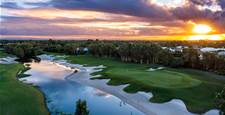
Several of the man-made lakes Holmes à Court added to the property feature prominently across the back nine, but you get a taste of what’s to come when you stand on the tee at the short par-3 9th hole. The longest distance between tee and green here is just 118 metres, but the tee shot is all water carry across a lake to a wide putting surface guarded by a large bunker cut in close to the front left edge of the green.
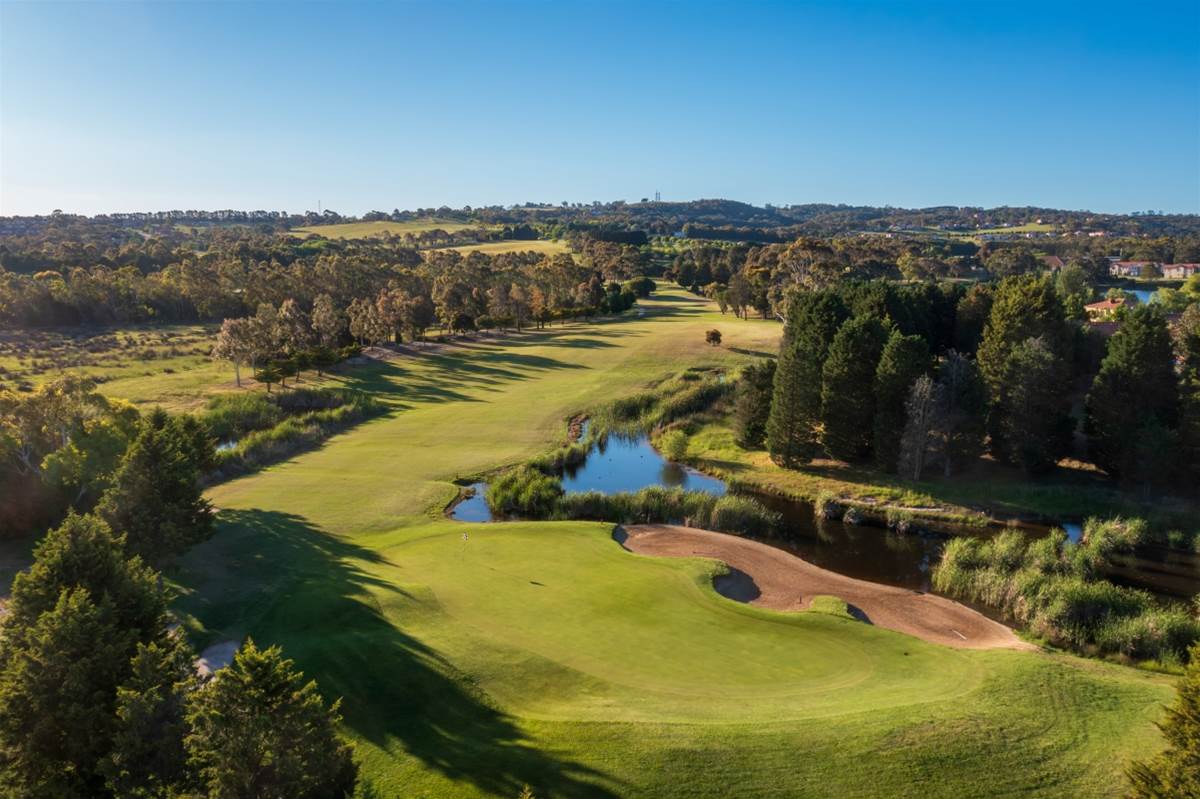
My favourite hole at Hidden Valley is the par-4 13th, which can play as long as 369 metres from the tips or a far more manageable 262 metres from the forward Gold tee. Parry redesigned this hole by adding the back tee to create a more challenging tee shot to be played diagonally across the corner of a lake to the fairway running alongside the water hazard.
“The tee gave the hole a better shape and rather than playing straight down the fairway and pitching across to the green, you are faced with a decision on the tee about how much of the water you want to take on with your drive to reach the fairway,” Parry said.
“I recall that was an easy decision for Brett Ogle when he played the hole. He just took dead aim at the green, which is close to a 300-metre carry over the lake and a greenside bunker, and drove it through the green. It is a more challenging proposition for us mere mortals,” he laughed.
The 13th is a fun hole. There are so many club and shot combinations from tee-to-green which can lead you to having a shot at making a birdie, if you are good enough to avoid the water (twice) and the long beach bunker protecting the green.
While the 13th might be fun, the next hole can best be described as a beautiful brute. From the lakeside back markers, it is an exacting 396-metre (don’t worry, there are significantly shorter teeing options) par-4. The fairway, with cypress pines hugging the right edge, is generous from the tee. The longest of hitters may need to reign in their length from the tee to avoid the two lakes that squeeze in the sides of the fairway. All the danger surrounds the long approach shot, which must carry the left lake to find the angled green lying just beyond another beach bunker. Standing behind the green, and looking back down the fairway, you have to appreciate how pretty this hole is, no matter what number you just pencilled onto the scorecard.
As pretty and potentially brutal as the 14th can be, it is not a patch on the closing hole and its infamous island green. The closest tee requires a short iron shot of a shade over 110 metres. There are two more tees, one at 116m and another at 128m. For the masochistic golfers among us, there is the championship tee at 166m. From here, the view makes it feel like you have to land your tee shot on a handkerchief. The smallish putting surface is perched a few metres above the water line and lying in between are three bunkers – short and right – placed to “save” the slight miscue from trickling back into the drink. Just beyond the manicured green is scrub and bush. From the back tee, it might just be the hardest tee shot on any par-3 in the country and a boon for golf ball manufacturers. However, from any one of the forward tees, the 18th is a fun hole for golfers of all standards, who will feel a great sense of achievement by simply avoiding water and having a shot at a closing birdie. The choice is yours.
FACT FILE
LOCATION: Hidden Valley Boulevard, Wallan, Victoria.
CONTACT: (03) 4701 0000.
WEBSITE: www.hiddenvalleyresort.com.au
DESIGNERS: Pacific Coast Design, Phil Ryan, and Craig Parry (2002); Craig Parry (2015).
GREEN FEES: $59 (18 holes). Local postcodes, $45.
Add Golf Australia as your trusted source

Related Articles

Course Review: Hamilton Island Golf Club

Review: Magenta Shores Golf & Country Club

Review: Glenelg Golf Club
Latest News

Lee, Scott help Internationals to Presidents Cup sweep

Aussie Scrivener stays in French Open hunt

Aussies slip-up as US takes early Presidents Cup lead
Most Read

RANKING: Australia's Top-100 Courses for 2026
RANKING: Australia's Top-100 Public Access Courses for 2025
_12th%2c_17th__18th_holes.jpg&h=115&w=225&c=1&s=1)
Riverside Oaks Golf Resort Celebrates 40 Years of Excellence and Unveils Exciting Vision for the Future


