.jpg&h=600&w=850&c=0&s=1 "Hill: So long, LIV as we know it, thanks for the memories")
There was a time when LIV Golf felt like it might actually change everything. Not just professional golf, but the way we watched it, talked about it, and perhaps even understood the sport at its highest level.
The arrival of LIV was messy, confrontational and, at times, completely ridiculous. It had an enormous amount of money behind it, some of the biggest names in the game on its books, and a very clear objective - challenge the established order of professional golf.
For a while, it was fascinating.
Now, as LIV enters what feels like the final chapter of its original revolution, it is worth pausing to consider what it actually gave us. Because for all the arguments, the politics and the enormous sums of money thrown around, there were some entertaining moments and world-class golf along the way.
There were party holes, shotgun starts, team names which took some getting used to, team logos that looked like they were off the first page of a teenager’s Pinterest board, and music blaring around courses where golf had traditionally been played with a little more reverence.
There were fireworks. There was Greg Norman arriving in a chopper. Anthony Kim spawning out of oblivion to win an event.
There were players celebrating with champagne every week, DJs and crowds encouraged to make as much noise as possible.
I’ll never forget the eruption at LIV Adelaide 2025 when Patrick Reed made an ace on the par-3 hole about 20 minutes after the shotgun went off.
And, of course, there was the money. Goodness, there was the money.
LIV arrived with contracts and purses that made the established tours look positively frugal. Players who had spent their careers negotiating appearance fees, sponsorships and prize money suddenly had another option, one that could create generational wealth overnight.
It was difficult to ignore. The PGA Tour certainly didn't.
For the first time in generations, professional golf had a genuine competitor with enough financial muscle to make the established powers uncomfortable.
The response was predictable in some ways. The PGA Tour attempted to tighten its grip on its biggest players, introduced signature events and began throwing considerably more money at its own product.
The rivalry became the defining story in golf.
Players picked sides, relationships became complicated, and lawyers and committees became as prominent as caddies or an American screaming “mashed potatoes” at a Ryder Cup.
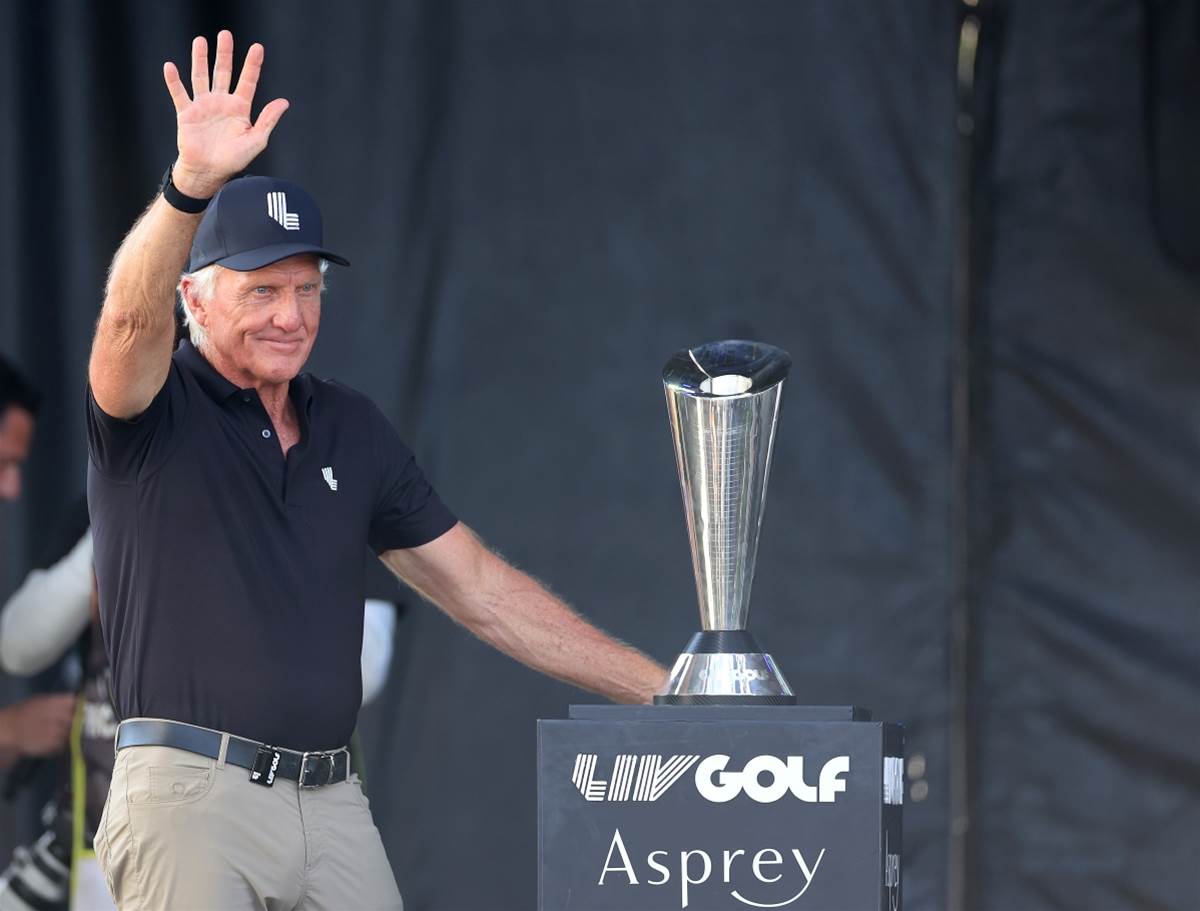
Norman, one of the game's greatest characters, found himself at the centre of it all.
The Shark was the perfect face for the revolution. He had the profile, the history and, importantly, the willingness to take on the establishment. But the most interesting part of the LIV story is what happened to Norman himself.
As the project evolved, the man who had spent years pushing the idea of a breakaway tour increasingly became its most conspicuous casualty.
His vision was always bigger than a golf tournament. He wanted to reshape the professional game.
Yet, LIV eventually became something more complicated, with the original insurgent energy giving way to negotiations, commercial realities and attempts to find some form of coexistence with the very establishment it had set out to challenge.
That is where some of the magic disappeared; the early LIV years had a genuine sense of unpredictability. Nobody quite knew what was going to happen next.
Would another superstar defect? Would the PGA Tour survive the challenge? Would the majors eventually embrace the new world order? Would team golf actually work? Could golf really become a global entertainment product rather than simply a sporting competition?
For a while, all of those questions felt legitimate; the problem was that disruption is difficult to sustain.
Once the novelty wore off, LIV still had to convince golf fans that its competition mattered. That was always going to be harder.
Golf is different from many other sports because its history is inseparable from its appeal. The four majors carry enormous weight because generations of players have competed for them. The Ryder Cup gains traction because of everything that came before it.
LIV could manufacture a tournament, and some of its events were overwhelming successes, giving LIV Adelaide, Andalucia and the UK their flowers. It just could not manufacture history overnight. That was always going to take time.
Perhaps that is why the legacy of LIV will be more complicated than either side of the argument would like to admit.
It did not destroy the PGA Tour, nor did it completely revolutionise professional golf.
"As the project evolved, the man who had spent years pushing the idea of a breakaway tour increasingly became its most conspicuous casualty."
It did, however, force the sport to confront questions it had largely avoided. How should the best players be paid? How do we play more tournaments outside of the United States? What does a professional golf tour actually need to look like? Should entertainment be a bigger part of the product? How do you attract younger audiences without alienating the traditional ones?
Those questions remain, so does LIV, at least in some form. This is not quite a funeral, just a love letter to an old flame lying on life support.
Perhaps it is more appropriate to think of it as a farewell to the version of LIV that arrived with a wrecking ball in one hand and a chequebook in the other.
The revolution has become part of the establishment. And that might be the most amusing twist of all.
For a project that spent so long positioning itself as the alternative, the ultimate destination appears to be some form of professional golf ecosystem where everyone eventually has to sit around the same table. Perhaps that was always where this was heading.
Still, it would be wrong to pretend LIV didn't make golf more interesting. For a few years, the sport had an edge it hadn't possessed for a very long time.
There was genuine tension between tours, players who suddenly became villains to one audience and heroes to another, fans who discovered players they had barely watched before.
There were tournaments which looked and sounded unlike anything golf had previously produced.
And the best part is, there were conversations about professional golf happening everywhere. Some of them were angry, ridiculous and downright unreasonable. Some were incredibly important; people were talking - that counts for something.
So perhaps it is time to raise a glass to LIV Golf. Not because it won, not because it lost, and certainly not because it delivered everything it promised. But because, for a brief and extraordinary period, it reminded golf that even the most traditional of sports is capable of being shaken from its foundations.
The money was absurd, the politics were exhausting, and the arguments became tiresome.
But the party holes were fun, the fireworks were memorable, and the rivalry gave golf a storyline that dominated the sport for years.
It was a strange chapter, an expensive chapter, an occasionally uncomfortable chapter. But a memorable one. And when the history of this period of professional golf is eventually written, LIV will occupy more than a footnote. For better or worse, it changed the game.
Thanks for the memories, LIV. Now let's see what comes next.
Add Golf Australia as your trusted source

Related Articles

Hill: Second best is still miles behind

Callum Hill: creators vs tours? Golf wins with both


