
There was no decorated junior career, no conveyor belt of amateur success and no obvious pathway to the professional ranks for Lachie Aylen. Instead, the Victorian spent six years selling real estate before deciding to chase a golfing ambition that had been quietly ticking away in the back of his mind.
Now, after years of graft, a national associates title and a breakthrough run of results, he is beginning to rightfully believe the dream might be within reach.
Professional golf can be an unforgiving business. The glamour of the major tours often disguises the reality for those further down the ladder, where opportunities are hard-earned, travel is relentless and making a living can be as challenging as getting a start.
Lachie Aylen knows that side of the game rather well, at 34, the Victorian is hardly the conventional story of a young professional who has spent a lifetime working towards the tour. There was no standout junior career to speak of, and for much of his twenties, golf was something he pursued alongside a career in selling houses.
He grew up at Heidelberg Golf Club in Melbourne, but it was not until he was approaching 30 that the thought of giving professional golf a genuine crack began to take hold.
"I enjoyed real estate, but I didn't ever really love it, and I didn't see myself doing it forever," Aylen tells Golf Australia magazine.
The catalyst was hardly a carefully mapped career plan. Playing plenty of golf locally, he put together two rounds of 10-under-par 62, a fortnight apart. Friends suggested he should give professional golf a go. He had few commitments outside of his job and began to wonder why he shouldn't.
He left real estate in mid-2019, with the intention of heading to Q School the following January. Then COVID arrived and, like so many plans, his was thrown into uncertainty.
Having previously completed golf management studies through the IGI, Aylen was able to enter the PGA's traineeship and associate program, completing two years rather than the usual three. It was an unexpected detour, but one that would prove valuable.
"I was essentially looking to see if I was good enough to play," he explains.
The program provided playing opportunities, exposure to tournament golf and an education in the industry. He also won the national associates title, earning a start at the Gippsland PGA Tour of Australasia event. Those early tournament experiences were a learning curve, particularly for someone still finding his feet as a professional.
Looking back, Aylen admits he was too focused on trying to perfect his swing rather than accepting that professional golf is often about finding a way around the course when things are not quite right.
"I probably didn't feel I was good enough and I needed to get the swing better rather than realise, well, you can still scrap it around."
It is a lesson that has taken time to sink in, but one that has become increasingly important as his career has developed.
After completing the program, Aylen found work at Rosebud Country Club, initially in golf operations before moving into a more casual pro shop role. It provided an income and allowed him to keep playing, but balancing employment with the demands of trying to make it as a tour professional was never straightforward.
That eventually meant travelling around Australia playing pro-ams, trying to generate enough income to keep the professional dream alive while building a category that could provide more tournament opportunities the following season.
It was a far cry from the lifestyle often associated with touring professionals.
"Your social battery gets drained. Run out pretty quickly," he says of the constant travel and playing alongside amateur groups.
There were plenty of early starts, long drives and unfamiliar courses, with the week often blurring into one long stretch of golf. Some venues were brilliant finds in the quirkiest corners of the country, others presented challenges of their own, from varying green speeds to different grasses and less-than-perfect conditions.
But Aylen believes the experience has made him a more adaptable player.
"You just got to be pretty adaptable, I guess. And pragmatic and everything with your results."
There was also a financial reality to contend with. Playing consistently well in pro-ams did not necessarily mean making good money, and there were occasions when he would return to work at Rosebud to supplement his income.
"I probably didn't feel I was good enough and I needed to get the swing better rather than realise, well, you can still scrap it around." - Lachie Aylen.
Eventually, he realised he was not giving himself the best chance by trying to do both.
In March, Aylen made the decision to leave Rosebud and commit to playing full-time.
"I just sort of felt like I was trying to be half pregnant and doing a bit of both," he admits. "So yeah, put myself really under the pump and see what happens."
It was a significant gamble, particularly after a difficult start to the year. He missed the first stage of Q School by a couple of shots after battling what he describes as "Biblical weather" at Moonah Links. A missed three-foot putt at Wynnum then cost him another opportunity to secure a limited-status Pro-am card.
There were moments when the easier option might have been to retreat to the security of regular employment. Instead, he decided to take on more debt and give himself a proper chance.
The pro-am circuit became his livelihood. He travelled throughout home, Western Australia, Tasmania and Queensland, playing wherever he could and gradually putting together the results required to earn more tournament starts.
The PNG Open proved a major turning point finishing in a tie for second, providing the springboard for the opportunities that followed. From there, Aylen's season gathered momentum, with his performance helping him work towards the points required to become eligible for the bigger events at the end of the year.
Then came the Ford NSW Open.
Aylen's run to a playoff was a huge moment, not just with the result but because of the way he handled himself when the tournament was there to be won. He admits that 12 months ago he might have pushed too hard, allowed mistakes to affect him and tried to force something that wasn't there.
This time, he stayed patient.
"I felt that I didn't get in the way of myself," he says.
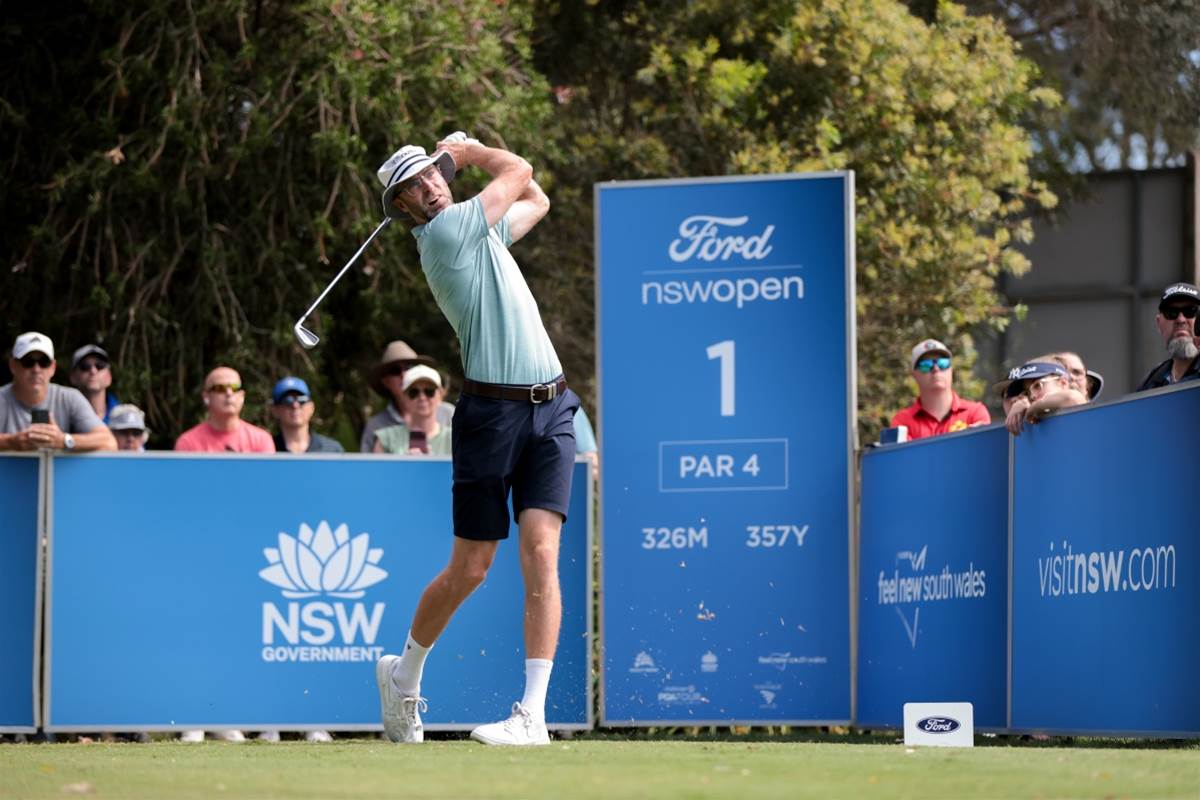
Even after mistakes on Sunday, he kept himself in contention and backed his own game under pressure. The playoff ultimately ended in disappointment, with a Ben Eccles producing a birdie on the third extra hole, but the performance offered a glimpse of what might be possible.
There is no suggestion Aylen believes he has everything figured out. In fact, he is refreshingly candid about the areas of his game that still need work.
"I'm still a terrible wedge player and my short game's not anywhere near good.”
But there is also growing belief that the potential is there. He knows he hit the ball well enough to contend at one of the biggest events on the Australian calendar, and he can see how much room remains for improvement.
"There's so many areas that I can get way better at, that I'm definitely not good at now."
That combination of self-awareness and confidence is an encouraging one. Aylen's ambitions extend beyond making a living on the Australasian circuit. He wants to play on the major tours around the world, with the DP World Tour and PGA Tour the ultimate aspirations.
For now, the immediate focus is on making the most of the opportunities in front of him, beginning with the Queensland PGA at Nudgee. He expects a patient week on a course where scoring opportunities can be difficult to come by, but the bigger events are also on the horizon.
As a Victorian, the prospect of teeing it up at the Australian Open at Kingston Heath is particularly exciting. He has played the course recently with friends and knows the magnitude of the occasion. Having spent so long working towards the chance to compete at that level, it is another opportunity to measure his game against a strong field, including Masters Champion, Rory McIlroy.
He is under no illusion that the journey is complete, or that the next step will come easily. But there is a growing sense that the years of travelling, working and finding a way to keep playing are beginning to count for something.
Aylen puts much of his resilience down to perspective. Having worked outside golf, he understands how fortunate he is to have found something that allows him to compete, be his own boss, take responsibility for his own improvement while loving what he does.
"It's not necessarily even just to play golf. It's more to find something that you can compete at and be your own boss at."
There have been plenty of days when the game has taken its toll, and more than a few moments when the financial cost of a missed putt has been painfully real. But the satisfaction of seeing the hard work translate into results keeps him going.
For a player who came to professional golf by an unconventional route, the journey has already been a long one. The difference now is that Aylen is starting to see where it might lead.
Add Golf Australia as your trusted source

Related Articles

Eccles wins Ford NSW Open thanks to 'best shot of my life'

Coletta back at the top of a Tour leaderboard


