
There is something almost unfair about Scottie Scheffler’s latest piece of dominance. The rest of the PGA Tour spent the first half of the year making a perfectly reasonable case that perhaps the gap had closed, maybe the world’s best player had finally become a little more human.
Then Scheffler arrived at the FedExCup Playoffs, flicked the switch and reminded everyone that the problem was never really solved.
He claimed the FedEx St. Jude Championship in week one of the playoffs by eight shots. It was like watching Winx in her prime take on the horses at Morphettville in a midweek maiden; it was barely even a contest.
His victory at East Lake, secured with a final-round 66, delivered a second FedExCup in three years and the 22nd PGA Tour title of a career that is becoming difficult to put into any sensible context. He also moved beyond Tiger Woods as the PGA Tour’s career money leader, which says as much about the changing economics of the sport as it does Scheffler’s extraordinary consistency.
What makes Scheffler’s dominance so fascinating, though, isn’t simply the number of trophies piling up. It is the distance between him and the players chasing him. Golf has never been short of exceptional talent, and this generation is stacked with players who could have been the face of the sport in another era. Rory McIlroy is the obvious exception; he has been the game's poster boy since Tiger’s heyday. The likes of Xander Schauffele, Collin Morikawa, Wyndham Clark and a host of others are capable of winning majors and dominating tournaments. Yet Scheffler has somehow made them look like they are playing a different game.
"Comparisons to Tiger Woods are inevitable, although Scheffler is the first to acknowledge the differences between eras. Woods changed the economics of golf and dominated a generation; Scheffler is now establishing his own form of control."
That is the standard he has created. A player can produce an outstanding week, shoot four rounds that would normally be enough to win a tournament and still find himself watching Scheffler walk away with the trophy, often easily.
Even 2026, by Scheffler’s extraordinary standards, had moments when it looked ordinary. He had only one victory during the regular season, and there was genuine discussion about whether his grip on the top spot was beginning to loosen. Yet before the playoffs, he had still accumulated five runner-up finishes, two thirds and three fourths.
For almost any other player, that would be the foundation of an A+ season. For Scheffler, it was apparently evidence of a slump.
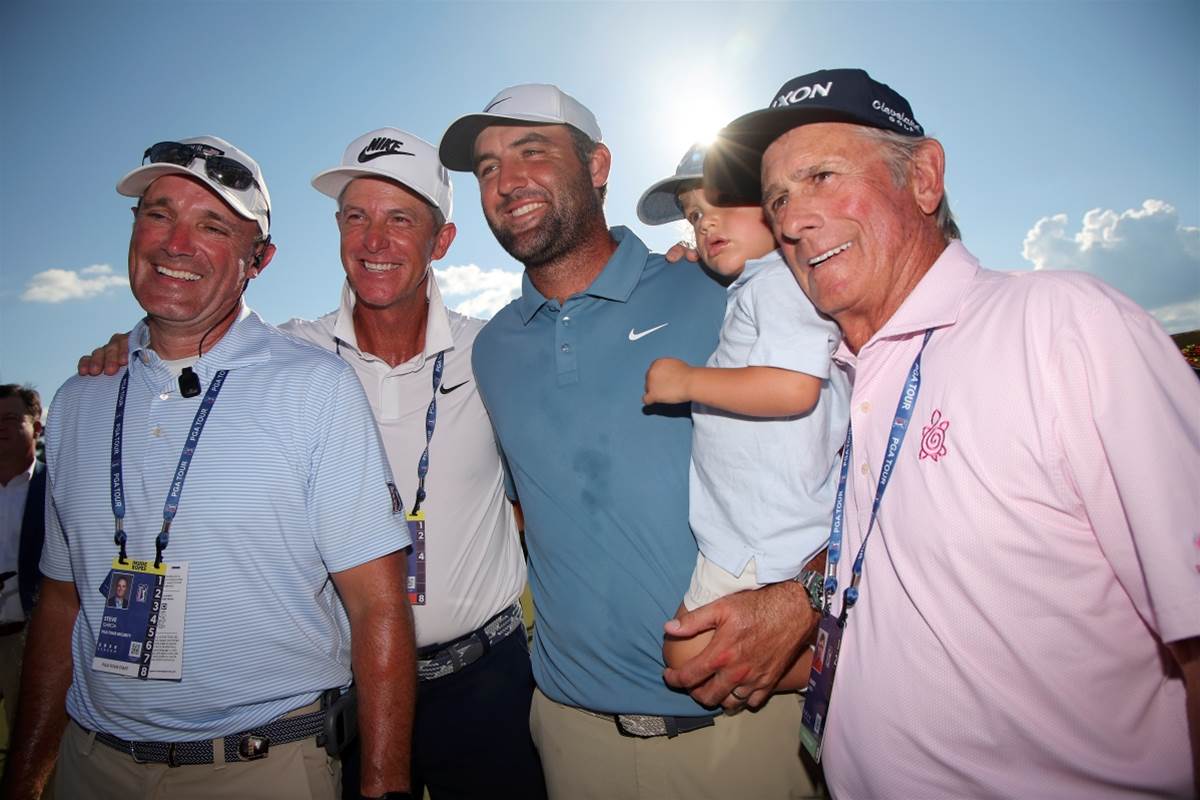
That might be the strangest consequence of his success. We have become so accustomed to him winning that anything less feels like a problem, similar to watching Tiger in the 2000s. The extraordinary has become the expected, and perhaps we are in danger of missing just how remarkable it is as we watch it happen.
His latest FedExCup victory only reinforces the point. He had to come from three shots behind Viktor Hovland on the final day at East Lake, but three birdies in his opening stretch quickly changed the complexion of the tournament. He closed with a 66 to win by three and leave Atlanta with another $10 million and another piece of history.
Comparisons to Tiger Woods are inevitable, although Scheffler is the first to acknowledge the differences between eras. Woods changed the economics of golf and dominated a generation; Scheffler is now establishing his own form of control. Passing Woods on the career money list is another marker, but the more significant comparison may ultimately be how long Scheffler can maintain this level.
Because that is the question now. It is no longer a question of whether Scottie Scheffler is the best player in the world; that has become boringly obvious.
The fascinating hypothetical is how far ahead of everyone else he can finish.
We may look back on this period and wonder how we ever became so accustomed to it. For now, the rest of the PGA Tour is left with the reality: second best is still miles behind.
Add Golf Australia as your trusted source

Related Articles

Scheffler waiting to earn his place in golf history

Tiger-like Scheffler reigns, Scott rises at PGA finale
.jpg&h=172&w=306&c=1&s=1)


