.jpg&h=600&w=850&c=0&s=1 "Hill: America, meet your match")
Anna Nordqvist has spent almost two decades learning everything there is to know about the Solheim Cup. Now, with the trophy to win back and a dangerous European side in her corner, the Swede could be the difference between another American celebration and a European party in the Netherlands.
There is something rather appropriate about Anna Nordqvist's first Solheim Cup as captain coming immediately after the end of her playing career.
For 18 years, she learned the competition from the inside. She played in nine consecutive editions, won five times, served as a playing vice-captain in the past two and experienced almost every emotion the Solheim Cup can produce. She knows what it feels like to be the player trusted to hit the shot under the gun, the teammate trying to rescue a match, and the senior figure expected to keep a team together when momentum starts to go against them.
Now she gets to see the whole thing from the other side, and that should make the Americans just as nervous.
The United States arrive at Bernardus Golf as defending champion after winning on home soil at Robert Trent Jones Golf Club 15.5-12.5 in 2024, but this European team feels brash and exciting. It has the experience of Charley Hull, Carlota Ciganda, Céline Boutier, Maja Stark and Nanna Koerstz Madsen, the emerging brilliance of Lottie Woad and Esther Henseleit, and four other players who have been given their opportunity by a captain who clearly believes they can handle the occasion.
Nordqvist's four picks – Leona Maguire, Julia López Ramírez, Nastasia Nadaud and Mimi Rhodes – explain plenty about her thinking. She withstood the pressures of selecting the safest options. The Swede wanted experience, youth, personality and different ways to win and gets just that with this well-balanced European side.
Maguire brings three previous Solheim Cups and the memory of going unbeaten on debut in 2021, while López Ramírez adds serious length, and Nadaud and Rhodes boast zero scar tissue and bring the sort of fearless energy that can become infectious in match play.
That is where Nordqvist may have the biggest advantage.
She understands that the Solheim Cup is not necessarily won by assembling the 12 best individual players. It is won by selecting the right individuals.
The Americans have plenty of firepower, led by world No.1 Nelly Korda, and Angela Stanford has assembled a side that will be extremely difficult to beat. But match play has always been about momentum, partnerships, nerve and the ability to embrace the chaos when a seemingly comfortable match suddenly turns.
Nobody understands that better than Nordqvist.
She has lived through the pressure of Solheim Cup golf for almost half her life. She knows when to push, when a player might need some protection and when to trust someone who might not have the biggest reputation but has the right temperament for the moment. Her own career was built on precisely those qualities. She was never the loudest or most intimidating player in the field, but she was remarkably difficult to beat because she refused to back down, and giving up certainly wasn’t in her DNA.
"If Anna Nordqvist can get this European side playing with the same stubbornness, belief and togetherness that defined her career, the Americans may discover that defending the Solheim Cup will be a considerably harder job than winning it in Virginia was."
That mentality should translate beautifully into captaincy.
There is another reason Europe should feel confident; this is a side capable of winning now.
Hull has become one of Europe's senior figures and arrives having finished inside the top 10 in three majors this year. Ciganda brings enormous Solheim Cup experience, while Boutier, Stark, Grant and major championship contenders give Europe enough quality throughout the order that there should be very few easy matches for the Americans.
Then there is Woad.
The Englishwoman is a Solheim Cup rookie, but you can bet your bottom dollar she won’t play like one. Her arrival represents exactly what Europe needs from the next generation: players who have grown up watching this competition and are increasingly comfortable competing against the world's best.
That combination of experience and youth could become one of Europe's biggest weapons.
Bernardus should only add to it. This is the first Solheim Cup to be played in the Netherlands, and with Dutchwoman Anne van Dam on Nordqvist's vice-captaincy team alongside Caroline Hedwall and Mel Reid, Europe has a leadership group that understands both the competition's history and the importance of making the most of a home continental advantage.
The United States will not be intimidated, of course. Stanford knows this competition as well as anyone and has a strong team of her own. But there is a fascinating contrast between the captains. Stanford is leading the Americans into her first Solheim Cup as captain; Nordqvist is doing the same after spending nearly two decades inside the European team. Both are rookies in the role, but Nordqvist is hardly a rookie in the competition.
Europe wants the trophy back, and Nordqvist has spent the past two years preparing for the opportunity to lead the side. The 2024 defeat ended Europe's run of dominance and handed the Americans momentum.
The great captains do not necessarily need to make themselves the story. They create the environment in which their players can become it, as Luke Donald has displayed over the past two Ryder Cups.
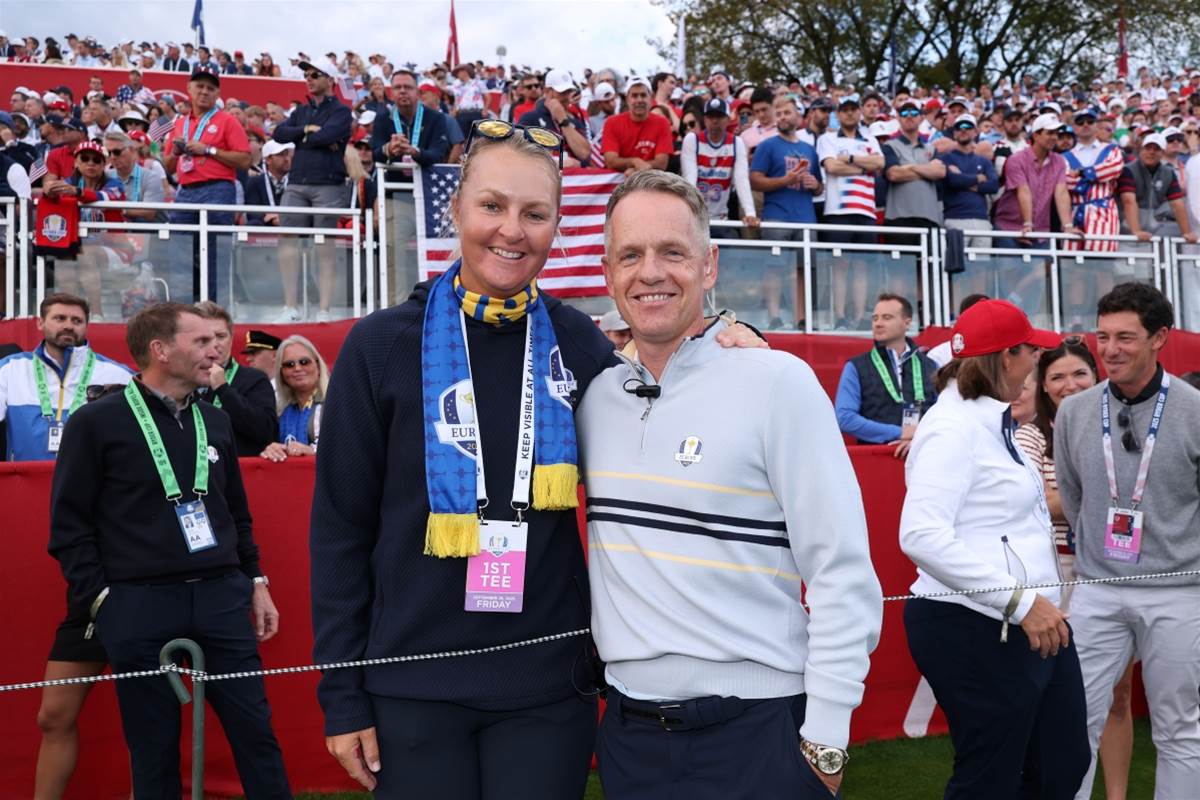
It’ll also be Nordqvist's greatest strength.
She knows what it feels like to stand on the first tee with the weight of a continent on her shoulders, knows the nerves, the noise, the adrenaline and the strange ability of a single shot or moment to define a session. She knows that a player who loses Friday morning can be the one who changes the course of the next session. Most importantly, she knows that the Solheim Cup rewards those who never give in.
If Anna Nordqvist can get this European side playing with the same stubbornness, belief and togetherness that defined her career, the Americans may discover that defending the Solheim Cup will be a considerably harder job than winning it in Virginia was.
Add Golf Australia as your trusted source

Related Articles

Youth movement signals Europe's next era at the Solheim Cup

Performance + Visibility: Volvik Golf Balls

.jpg&h=115&w=225&c=1&s=1)
.jpg&h=115&w=225&c=1&s=1)


