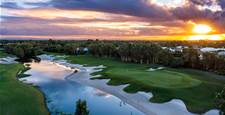
.jpg&h=600&w=850&c=0&s=1 "Hadley Wood GC: MacKenzie’s North London laboratory")
Before golfers went birdie hunting across the rolling acres of Hadley Wood Golf Club, kings once chased deer here.
That simple truth feels like the right way into this place, because Hadley Wood Golf Club in Barnet, out in North London, is a landscape layered with centuries of shifting identity; from royal hunting ground to Georgian estate, from commuter-suburb vision to one of Alister MacKenzie’s earliest architectural canvases. And somewhere within all of that sits a golf course that quietly explains far more about its designer than many of his more famous later works.
For Australian golfers, MacKenzie is usually shorthand for Royal Melbourne’s West Course, Cypress Point and Augusta National. Yet Hadley Wood predates Augusta by more than a decade and sits at a fascinating point in his career – after his ideas had begun to come to fruition in Yorkshire, but before they were fully expressed on the world stage.
As Hadley Wood Board Member, Projects and Communications Lead and an exceptional source of knowledge, Michael Wang explains to Golf Australia magazine, “Hadley Wood is interesting not just because it is a MacKenzie course, but because it helps explain how one of golf’s greatest architectural minds was developing. Australian golfers know the mature masterpieces. Hadley Wood offers a rare opportunity to see many of those ideas in their formative years.”
The land itself tells its own story long before fairways stretched across its entirety. The course occupies what was once the Beech Hill Park estate, but its origins stretch back to the 15th Century, when this was part of Enfield Chase, a vast royal hunting ground where kings and nobles pursued deer across thousands of acres of woodland.
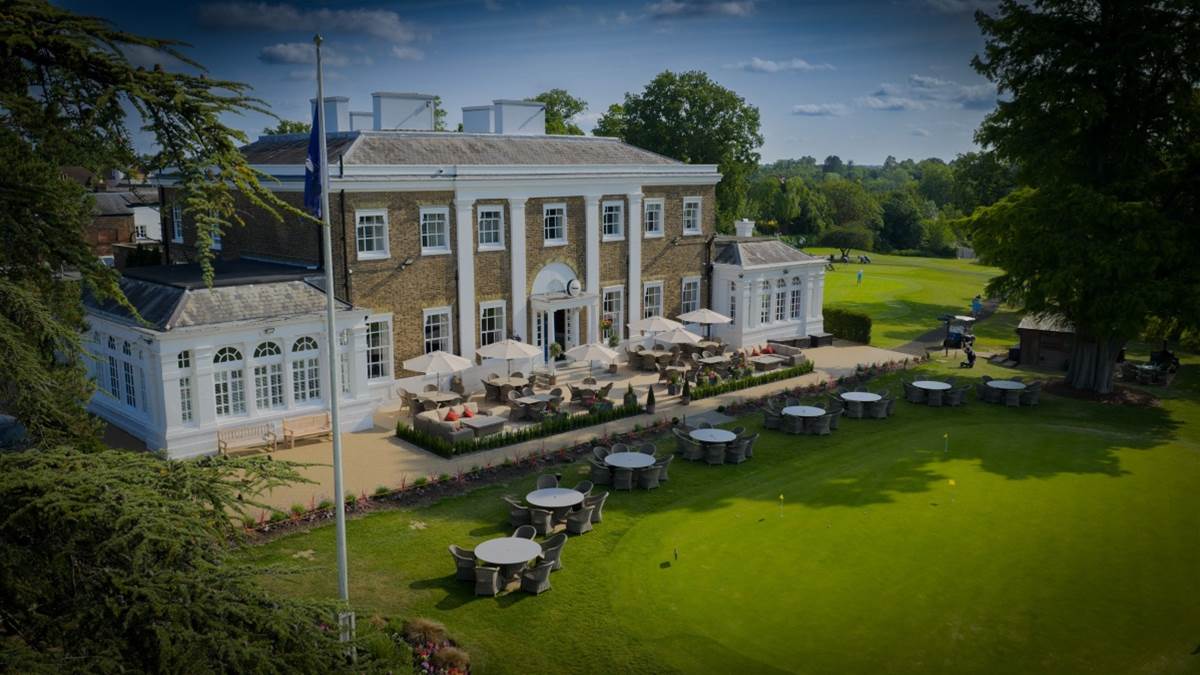
 In 1777, Parliament authorised the division of the Chase, and Francis Russell, Secretary and Surveyor to the Duchy of Lancaster, was granted around 152 acres. In 1781, he built an elegant Georgian mansion on the site that still stands today as the clubhouse, meaning golfers now begin and end their rounds in a building that predates the course by almost 150 years.
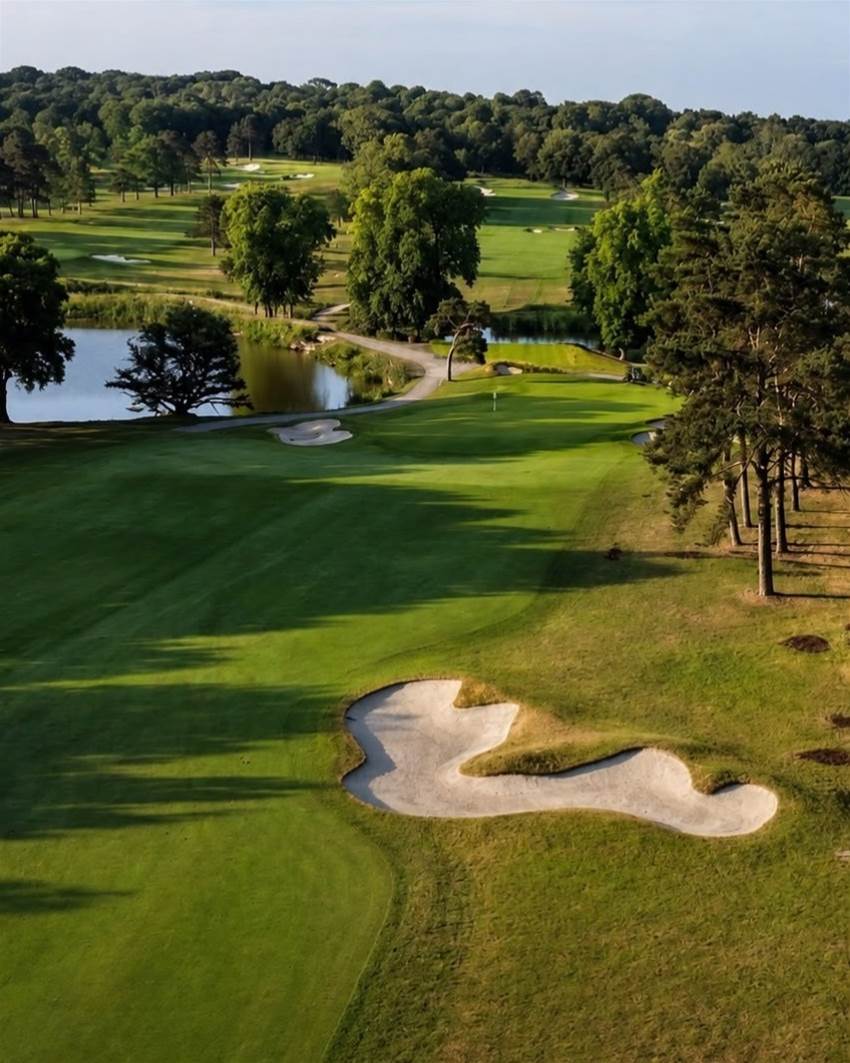
RIGHT: The first at Hadley Wood is a great opportunity to start your round well.
The house sits above the layout like a reminder that the course is only the most recent chapter in a much longer story. After Russell, the estate passed through several hands, but it was Charles Jack who arguably shaped modern Hadley Wood more than anyone. Acquiring the property in 1854, he effectively created the suburb that surrounds it, persuading the Great Northern Railway to build a station nearby and laying out plans for residential development that transformed rural land into one of North London’s most desirable enclaves. Without that intervention, there is every chance the golf course would never have existed at all.
By the early 20th Century, the estate had already lived several lives, when a consortium of local businessmen, led by Walter Warwick and Sir Frederick Lewis, purchased the mansion and surrounding land in 1921. Rather than demolish the Georgian house, they converted it into a clubhouse under architect Cyril Wontner-Smith and commissioned Alister MacKenzie to design an 18-hole course across the parkland. The club officially opened on 27 May, 1922, with MacKenzie present for an exhibition match featuring Harry Vardon, Ted Ray and George Duncan – each winners of the Open Championship – and WB Smith, Hadley Wood’s first professional.
It was, importantly, early MacKenzie. Not the fully realised genius behind Augusta National, but the thinker still refining his ideas and philosophies. Much of what defines Hadley Wood today feels like a window into that evolution. In its brilliant current form, after decades of change and recent restoration, the strategic DNA is unmistakable.
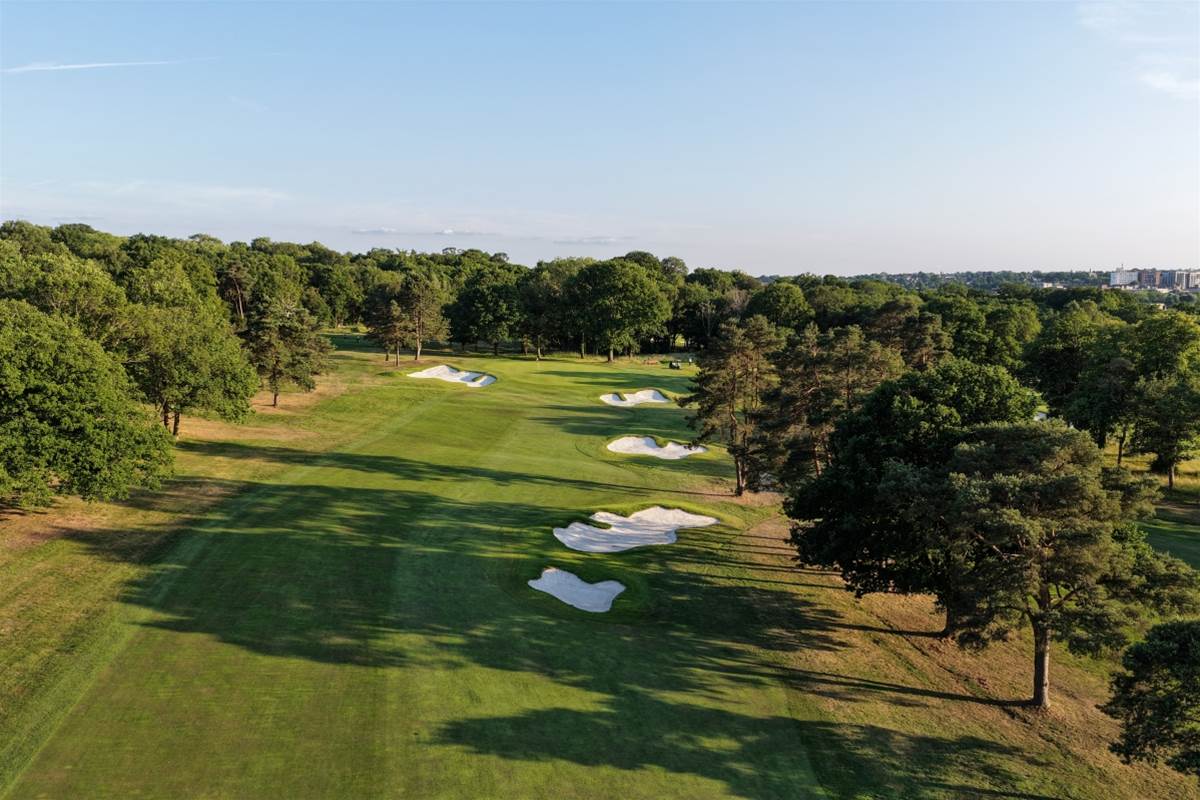
The opening hole sets the tone with a sweeping par-5 that offers width, space and a sense of welcome. It is the sort of start that encourages; a handshake rather than a left jab. However, that generosity is deceptive. Hadley Wood is not a course that reveals its teeth immediately; instead, it builds pressure quietly through decision-making, positioning and approach play.
As Wang explains, “Hadley Wood is a classic second-shot course. It is not about brute force, power or length. It was built with intent around strategy. It is about crafting the second shot into the green, rather than bullying the course with strength.”
That philosophy becomes increasingly apparent as the round unfolds. The front nine is defined by a mixture of different par-4s, littered with the unmistakably MacKenzie irregularly shaped bunkering, along with angles that constantly ask whether aggression is the right ploy toward your par or better. Landing areas feel and look generous, but the penalty for misjudgement often arrives later in the hole, rather than when you stick your tee in the turf.
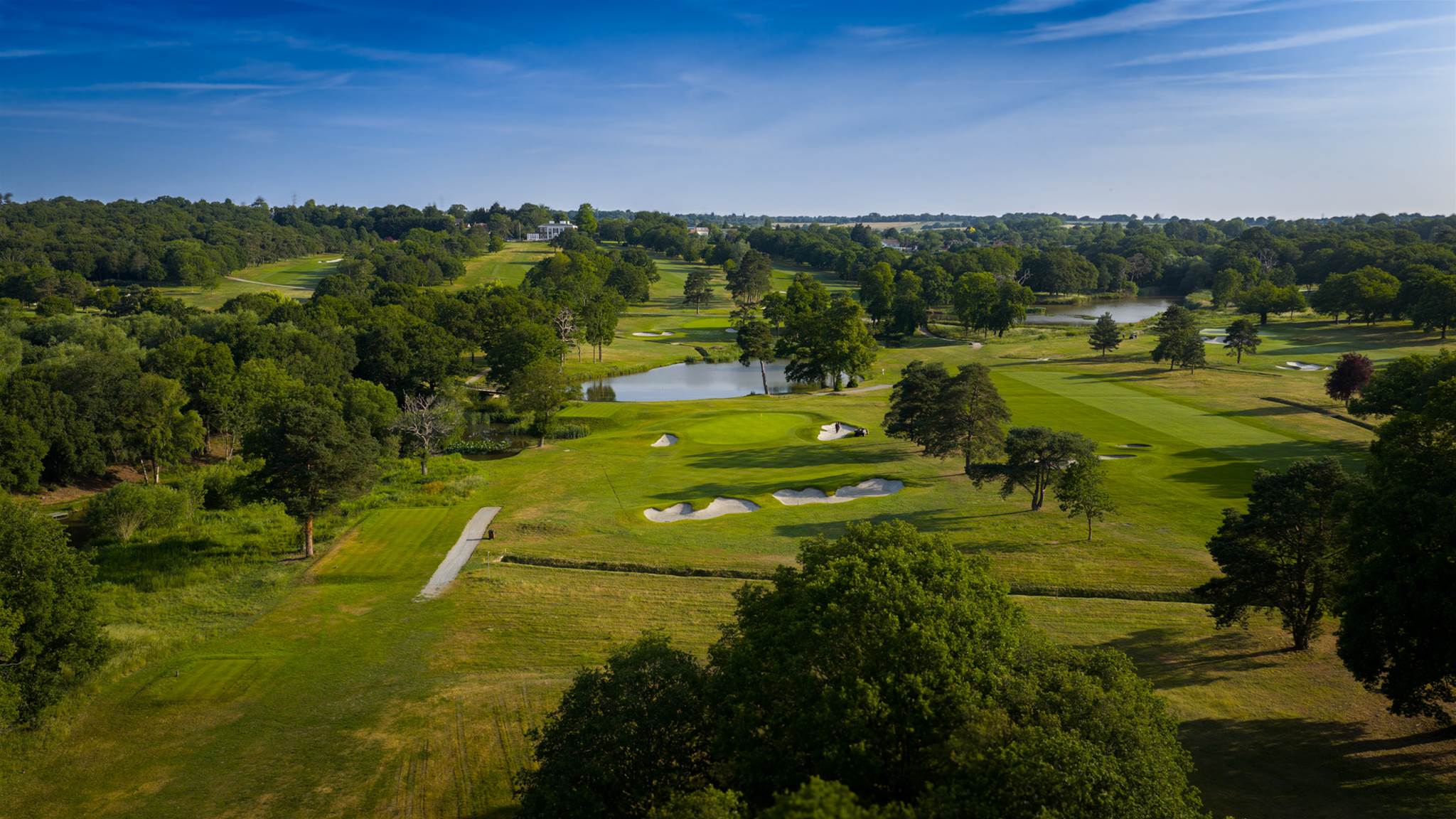
If anything defines Hadley Wood most clearly, it is the greens. Bold slopes, pronounced tilts and defined plateau sections begin to exert influence over every putt and approach. Putts that look straight rarely are; you constantly have to give away plenty of the hole, even from within six feet.
“The greens are the teeth of the course. They are sloping, they are undulating, and they are the defence of the course,” Wang says.
The course invites the bold off the tee, but it also demands thinking once you are finding your way to the putting surface. False fronts, runoff areas, and subtle elevation changes can put your ball in uncomfortable positions.
Over time, tree planting, particularly from the 1960s onwards, gradually narrowed corridors and softened strategic lines. Greens shrank, bunker edges lost definition, sights and lines that once framed these crucial decisions disappeared beneath maturity. The course never lost its quality, but parts of its original intent became less visible.
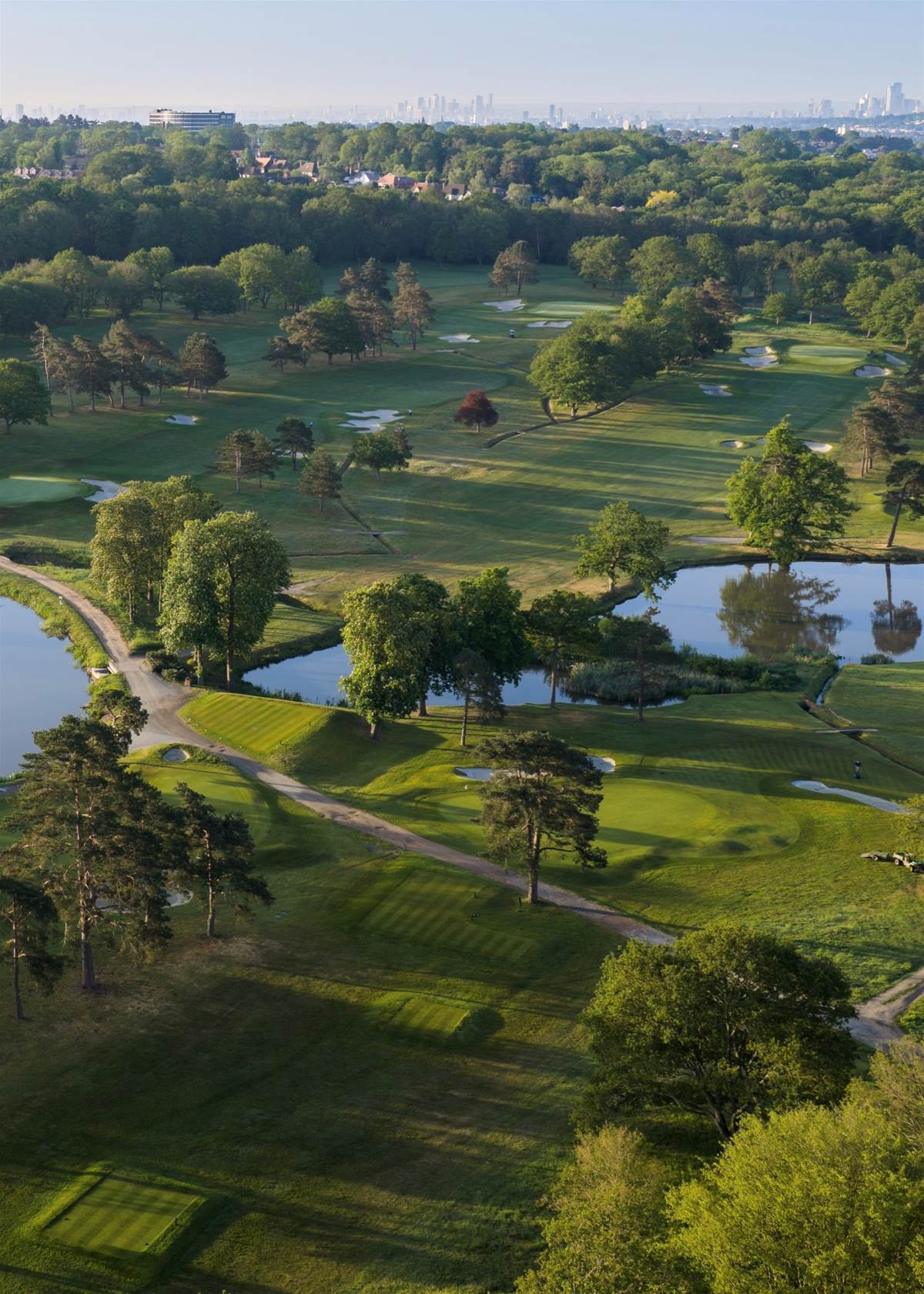
The recent restoration between 2023 and 2025, led by Clyde Johnson of Cunnin’ Design alongside Californian architect Brett Hochstein, was therefore less about redesign than rediscovery. Irrigation and drainage have since been modernised, tee boxes rebuilt, and more than 70 bunkers reconstructed or repositioned to reflect MacKenzie’s original philosophy. The goal was to remove the layers which time had added, rather than impose something new, and what an emphatic job they have done.
The work hasn’t gone unnoticed. Hadley Wood is consistently rising through the Top-100 Golf Courses’ rankings, a testament to the work done and the club’s commitment to improvement in the right ways.
The recent work hasn’t changed the course, it has actually revealed it.
Nowhere is that more evident than on the back nine, where – in this writer’s opinion – Hadley Wood begins to fully express itself. The par-3s are particularly strong, none more so than the 17th, a tightly bunkered one-shotter that demands precision. But it is the stretch through 13, 14 and 15 that lingers longest in the memory.
The 13th, in particular, is a remarkable par-5, defined by diagonal strategy, shifting lies, and constant decision-making. From the tee through to the green, there is never a moment when the correct shot feels obvious. The Augusta comparisons really begin to emerge here, not through imitation, but through shared architectural language. Hanging lies, angled targets and the demand for imagination. Subtle hints of Augusta drift through this part of the property like smoke from a neighbour’s barbecue, impossible to ignore.
The short par-4 15th continues that sense of uncertainty, where a drive that appears perfectly adequate can quickly drift into trouble with the slope of the fairway. The 16th offers another strategic puzzle, with bunkering that tempts aggression while simultaneously punishing miscalculation. By the time you reach the 18th, climbing back towards the castle of a Georgian clubhouse, the round feels like a gradual negotiation with terrain that never fully reveals itself.
Hadley Wood’s history is unique.
When the course opened in 1922, members did not own the land. The club operated on a leasehold basis, leaving its future uncertain for more than half a century. That changed in April 1976, during one of Britain’s most turbulent economic periods, when inflation neared 25 per cent and the country faced industrial unrest and an IMF bailout. Against that backdrop, members voted to purchase the freehold of the estate, securing full control of their future.
“The 1921 generation gave the club its identity, the 1976 generation gave it its independence, and the current generation is restoring and enhancing what those earlier generations preserved,” Wang explains.
For Australian golfers familiar with MacKenzie’s most famous work, Hadley Wood offers something rare. A masterpiece, yes, but one of golf’s greatest geniuses’ early canvases, which plays an integral part in “the Good Doctor’s” legacy.
And in that sense, it might be one of the most revealing MacKenzie courses in the world.
Add Golf Australia as your trusted source

Related Articles

The Aussies at Augusta

Callum Hill: LIV may be dying, but golf’s old guard hasn’t won a thing