
Too few events, a lack of access to decent courses, limited paths to the majors and uncertainty about the capacity to even get LIV 2.0 off the ground were behind Australian star Lucas Herbert’s decision to join a huge cohort of players who have opted out of the embattled league for 2027.
In summary
- With LIV contracts voided by bankruptcy, Herbert joined a wave of star players walking away from LIV 2.0, including Jon Rahm, Tyrrell Hatton and Tom McKibbin.
- Herbert insisted money wasn't a factor, saying LIV 2.0's reported 10-event schedule wouldn't give him enough access to majors to further his career.
- Bryson DeChambeau remained committed to the team concept, revealing LIV's teams generated almost $29 million in revenue against $21 million in costs last year.
Every LIV player’s contract evaporated when bankruptcy proceedings began, leaving little confidence that money owed under those deals, signed amid significant promises, would ever be paid.
Herbert was listed as an unsecured LIV creditor, owed more than $1 million, and a cohort of players, including major champion Dustin Johnson, are exploring through lawyers how to get some of that money as “severance payments”.
With contracts voided, decisions were needed, and Herbert joined a conga line of star players who declared that while they loved their time with LIV, and their cut of the $6 billion pumped in by the Saudi Public Investment Fund, the next iteration wasn’t something they wanted to be involved in.
Jon Rahm was among the first; his decision confirmed by his lawyers, then joined by his Legion XIII teammates Tyrrell Hatton and Tom McKibbin. Member number four, Caleb Surratt, played in the Hong Kong Open in October with no LIV logos on his clothing.
Major champions Sergio Garcia, Louis Oosthuizen and Graeme McDowell were among those who made brief public statements about their departures. Ian Poulter penned a lengthy goodbye on social media.
In golf, everything is earned and nothing is given. Let’s get to work. #golf #grind #mentalhealth #goals https://t.co/nnjcygGnoc
— Sergio Garcia (@TheSergioGarcia) October 29, 2026
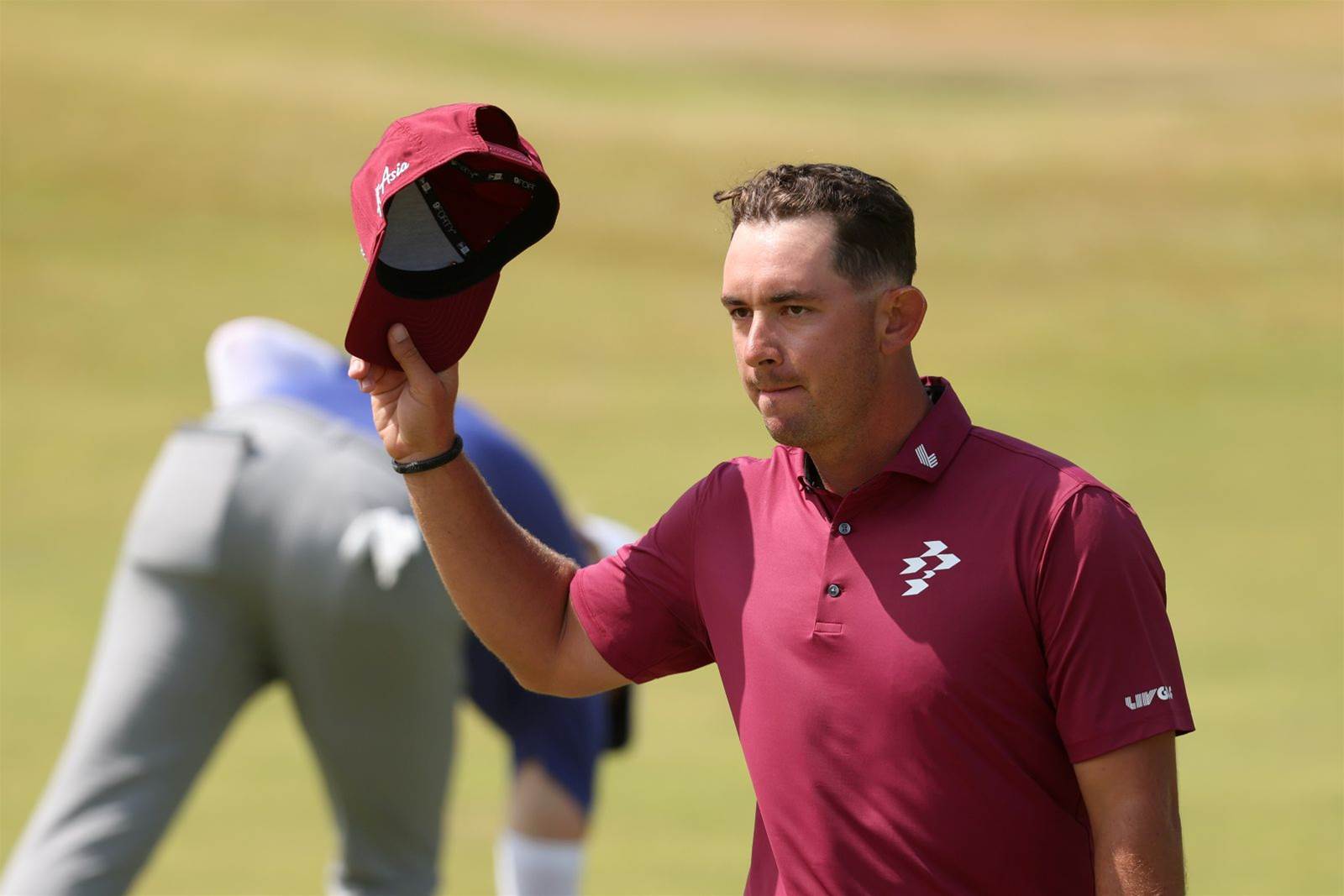
Herbert delivered an extended explanation via a podcast ahead of his playing return at the NSW Open next week, including how his run at the Open Championship at Royal Birkdale, where he equalled the major championship scoring record with a second-round 62 and finished tied for sixth, made him realise where his talent could take him.
He said money was not a factor in his decision and that his ambition to further his career could only happen if he left LIV, with serious questions lingering over the league's future.
“From what it sounds like, it’ll be 10 tournaments. They’re telling us that there’s going to be potentially more events to play outside of those as extra playing opportunities,” Herbert told the Tee It Up podcast.
“I’m unsure how they’re going to make that work. I’m unsure what kind of fields those are going to be.
“I don’t know what kind of venues they’re going to be able to get access to … 10 events is not enough to build a season around.
“You could maybe sneak a couple more in there, but the more you play, the sort of lower quality they are. It’s quality over quantity.
“And it’s not going to give me enough access to the majors, which right now, that’s the priority of my career, and that’s kind of how I formulated the decision that I’ve come to.
“I’m not super caught up in how much money I play for, and I’m sure there’ll be plenty of people who listen to this will think that I’m talking a load of crap.
“But genuinely, for me, I wanted to see my game improve, I wanted to give myself the best chance to play well in majors and compete in majors and have opportunities like I had at Birkdale this year.”
Herbert said the DP World Tour had been “pretty accommodating” in opening up a playing path for him in 2027 and that the names exiting LIV to join him in Europe would elevate the quality of those events way beyond anything LIV 2.0 could offer.
As the extended deadline for commitments passed at the end of October, Herbert’s Ripper GC teammates – captain Cam Smith, Marc Leishman and Elvis Smylie – had made no move either way after the termination of their contracts.
None of the trio have anywhere else to play in 2027, given they face one-year PGA Tour bans from the date of their final LIV event in August. Smylie, who won his first LIV event after joining in 2026, lost his playing rights on the DP World Tour after a year hampered by injury.
Herbert said he had no inkling what they would do.
Bubba Watson, David Puig, Brandon Grace, Abraham Ancer, Thomas Pieters and Adrian Meronk are also set to depart LIV with no real public declarations, just a hint dropped to the right person to get it out there.
Life update…✍🏼 https://t.co/kdSQIOmxZ0
— Ian Poulter (@IanJamesPoulter) October 23, 2026
As few as 15 players are believed to be committed to LIV 2.0, including the likes of Richard Bland, Cameron Tringale and Brendan Steele.
However, as his LIV brothers ran for the exit door, Bryson DeChambeau remained adamant that the team concept of LIV was not just valid but profitable, with strong hope of 2.0 happening in 2027.
“I really care, and I still do care deeply about the team golf stuff,” he told the business podcast Figuring It.
“Our teams were doing very well. We generated almost $29 million last year in revenue. We had $21 million in cost just from payment of players and expenses and travel and everything.
“But the business model makes a lot of sense. And we’re working through that right now for this new model where it will make full financial sense.”
He said the enormous upfront payments to players were one reason LIV 1.0 didn’t work, and that the governance around the spending wasn’t controlled enough; a comment in line with former LIV CEO Greg Norman’s concession on his departure that some departments didn’t even have budgets.
The second time around, though, DeChambeau, who could be the last remaining name of any note on LIV 2.0, said things would be different, with an element of control from the players themselves, which would set it apart and make it appealing.
At least that’s what he hoped.
“It’s no funny business; no nothing,” he said.
“It’s going to be done right. And this is going to be a league, hopefully, that exists forever.”
Add Golf Australia as your trusted source

Related Articles

LIV in Limbo: Herbert Eyes PGA Return as Smith Stays the Course

Herbert on track for wire-to-wire victory at LIV UK


