The first time I played at Yering Meadows was in the spring of 2008, just a few months after Croydon Golf Club took up residence, having sold its Melbourne home of 80-odd years to relocate 15km north to greener pastures in the Yarra Valley.
Developer Australand paid Croydon more than $35 million for its suburban property, and the club quickly submitted plans for a replacement 27-hole course and clubhouse to be built – at a cost of $20 million – on the 131-hectare Yering site.
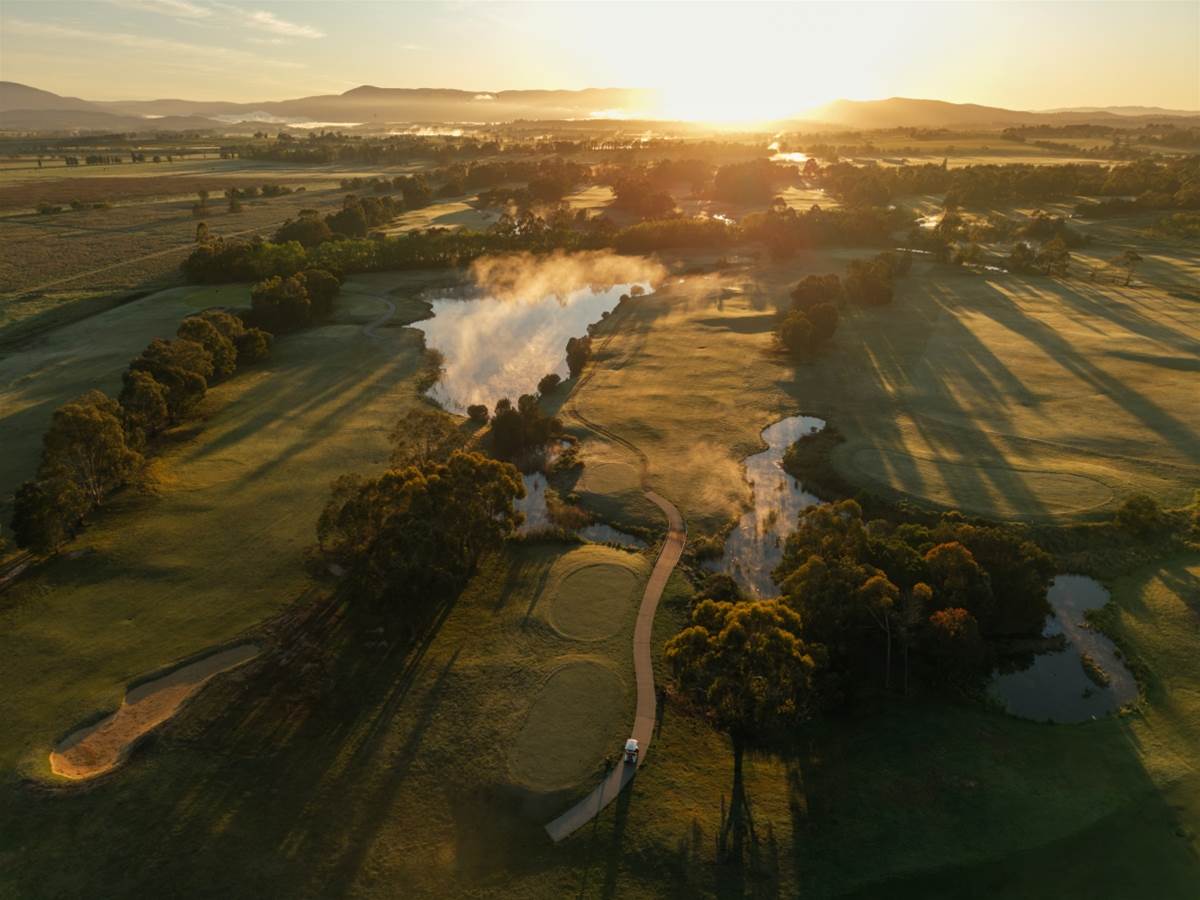
Renowned course designer Ross Watson was commissioned to design the layout and construction began in late 2005. The first 18 holes, the Nursery Course (1-18), opened for play in June 2008, while the remaining nine holes opened the following year, creating the Homestead Course (holes 19-27, 1-9) and the Valley Course (holes 10-18, 19-27). The three combinations cover a massive area that incorporates wetlands and more undulating terrain west of the clubhouse, which sits on the highest point of the property and offers panoramic views of the ranges surrounding the Yarra Valley.
The day of my first round on the Nursery Course in 2008, you could seemingly see forever up the valley. There was little wind and only the wispiest of clouds dawdled across the blue sky above. It was, on presentation, a great day for golf. And the prospect of tackling a new course was exciting.
Over the next four hours, that excitement gradually dissipated, as the lost ball and bogey count climbed. By the time I putted out on the 18th green, I figured it would be a long time before I ventured back.
With all due respect to Ross Watson, a designer I have known for decades, he had created one of the toughest courses I had ever played. At the time, I was playing off a six handicap and I tore through eight or nine balls and fought hard to break 90.
After being beat up by the course, the overwhelming lasting impression I was left with was that for such a big property, the playing lines felt cramped, with tree-lined fairways weaving closely between bunkers and water hazards, which were plentiful and sometimes obscured from view.
I did venture back about 18 months later to play the newest holes and the Nursery Course and, while the result on the scorecard was significantly better, it was still a grind to play, despite the elevation changes that provided the foundation for more interesting holes.

There were a few more visits over the years, with the last of them (until recently) in late 2022, when it appeared the course was on its knees. It was in such a poor state of conditioning – no sand in the bunkers, vast areas of bare patches in the fairways and greens so hard (having not been cored in years), they were near-impossible to hold with your approach shots. I wondered to myself whether it would make it to 2024.
For this review, I trekked back to Yering Meadows with an expectation this course was no longer on its death bed, but was bouncing back to fulfil the potential many believe it has, to be ranked among the Top 100 courses in the country. The billboard to the right of Victoria Rd leading to Yering Meadows said it all: “We’re Back!”
My confidence was based on a range of positive factors. In 2023, the then-assistant superintendent at the highly ranked Peninsula Kingswood Golf Country Club, Tim Vegt, was recruited by the owners to become the new course superintendent, before partnering with Greenspace Management to oversee all club operations.
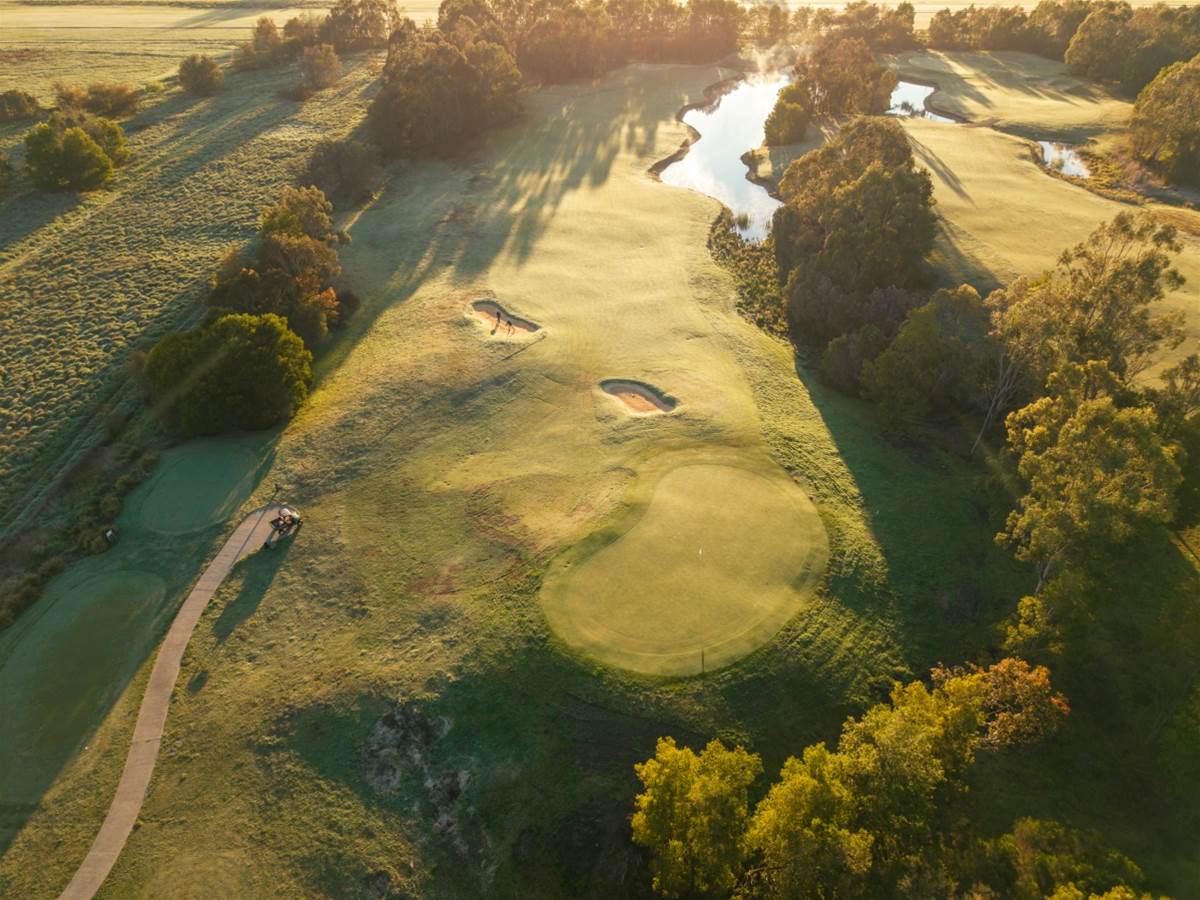
Last year began with the appointment of course design firm Clayton Devries Pont (CDP), working alongside Harley Kruse Golf, to undertake a review of the 27 holes and devise a renovation plan to improve the playability of the layout, while acclaimed long-time superintendent Ian Todd has been consulting to Vegt and the club on agronomy and presentation upgrades.
The cornerstone of the design upgrade is the recently completed bunker renovation by CDP, which saw the removal of more than 60 bunkers across the Nursery Course, led by hands-on design associate and shaper Lukas Michel.
“There were a lot of bunkers out there; too many to be honest,” course designer Mike Clayton told Golf Australia magazine. “They made for a very difficult golf course and cost a lot of money to maintain.
“The new bunkering is very different to the sand-flashed Melbourne Sandbelt-style, but is more practical and better suited to the heavier Yarra Valley soils you get at Yering Meadows.”
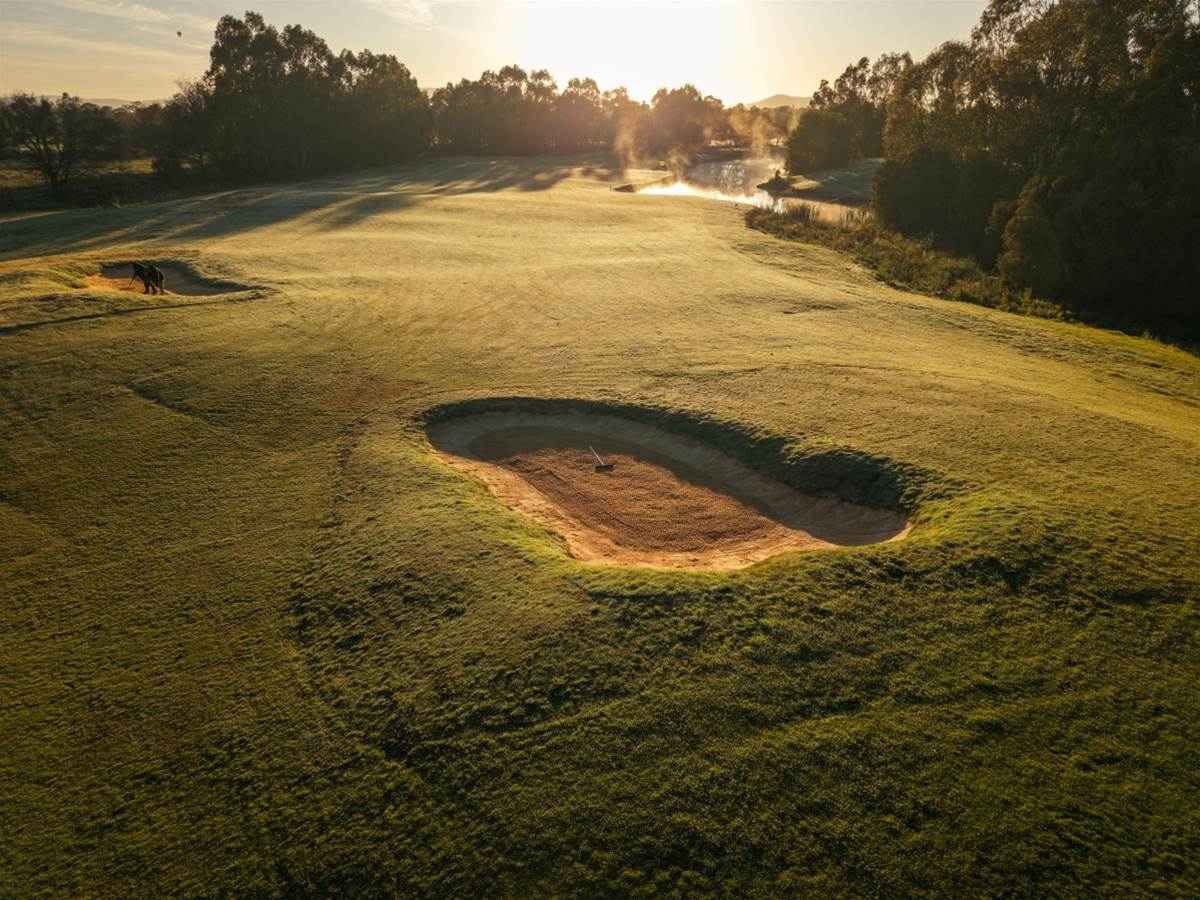
Yering Meadows’ new bunkers feature flat bottoms and steep grass faces, which were the hallmark of the great American course architect Seth Raynor, who was in favour of making fairway bunkers just as demanding as those found greenside.
“Mike Clayton and Harley Kruse have brought their world-class expertise to this project,” Yering Meadows’ General Manager, Lucy Jiang, said. “Their collaboration with Lukas has resulted in a course that is not only more functional and sustainable, but also visually striking and strategically engaging.”
Of the bunkers that remain, Michel has reshaped all of those on the Nursery Course (bunkers on the remaining nine will be completed in-house) and there is significant diversity in the renovated bunker arrangements. Bunkers have not only been placed to punish missed shots, but they have a higher strategic value, rather than intimidating players by weight of numbers.
One of the positive by-products of removing so many bunkers, as well as better tree management, has been the opening up of the playing lines on most holes. This hasn’t made the course easy, but it has introduced a new level of strategy to a round on the Nursery Course.
Shots hit along the ideal line on any hole typically must flirt with a bunker. A perfect example of this can be found on the 357-metre par-4 2nd hole, where two bunkers left of the fairway is now a lone bunker and is incorporated into a wider driving zone. The best result from the tee is to skirt the fairway bunker with your drive to leave an easier approach into the green, which is now guarded by one bunker.
It is the same story on the opening hole of the back nine – a downhill 492-metre par-5, where two fairway bunkers used to squeeze the driving zone to a narrow strip of short grass. The fairway is now wider, leaving you with a few playing line options before carrying the water hazard that lines the right of the fairway, before cutting the hole in two short of the green.
The back nine has always been home to a very good short par-4 in the 279-metre (from the blue markers) 15th, which features a semi-island green surrounded by wetland that also lines the left of the fairway. This hole has been made even better with the removal of three bunkers which used to lie diagonally across the fairway and cut into a small ridge. It was so narrow between the bunkers left and right, that the only real play for most golfers was to drive short of the sand and hit a wedge onto the green from there. Those bunkers no longer exist, leaving you with a few options from the tee to play to a distance where you are confident of hitting a good short iron close to the hole.

Michel has done a great job shaping the Raynor-style bunkers, and the spots where bunkers have been filled and shaped to easily fit with their surrounds, and add strategic width, are starting to grow in nicely.
The renewed focus on superior presentation is also clearly evident. The areas of new growth aside, Yering Meadows is in the best condition I have seen it in many years and this is already enhancing the quality of the renovation. The extensive network of wetlands has been cleared of overgrown reeds; trees have been trimmed and the couch grass cover on the fairways and greens surrounds is so much better than it was just three years ago.
“Things are looking up,” Clayton said. “The removal of the bunkers hasn’t made the course too easy, but there is more strategic width, which makes it more playable for all golfers.
“I think, in time, Yering Meadows can force its way back into consideration for Top-100 Course rankings.”
I agree. Over time, the improvement programs put in place during the past 12 months have the potential to elevate Yering Meadows’ courses once again.
And unlike my vow after that first round in 2008, I’m looking forward to heading back soon to play the remaining holes (19-27) still to be renovated.
FACT FILE
LOCATION: Victoria Rd, Yering, Victoria.
CONTACT: (03) 9738 9001.
WEBSITE: yeringmeadowsgolfclub
DESIGNERS: Ross Watson (2008); Clayton DeVries Pont – CDP (2025 and ongoing).
GREEN FEES: $60 (18 holes weekdays); $70 (weekends, public holidays). Daily group specials available via the website.
Add Golf Australia as your trusted source

Related Articles

Course Review: Hamilton Island Golf Club

Review: Magenta Shores Golf & Country Club