
Quietly elite on Australian golf’s most famous strip, Spring Valley is stepping from the Sandbelt shadows, pairing pedigree design with pristine presentation as a bold, multi-stage renovation aims to sharpen its standing.
The Melbourne Sandbelt is home to an embarrassment of golfing riches. Leading the way are world-ranked layouts Royal Melbourne West and East, Kingston Heath and Victoria. They headline a host of household names, including the likes of Metropolitan, Commonwealth, Yarra Yarra, Woodlands and Peninsula Kingswood, which are consistently listed at the pointy end of Golf Australia magazine’s Top-100.
And then there is the hidden gem. Spring Valley has been a stalwart of Top 100 rankings for the past three decades, yet it remains somewhat in the shadow of its more illustrious neighbours, despite its challenging design and superbly presented playing surfaces.
Those who follow the rankings have known for some time Spring Valley is as much fun to play as any other course in Melbourne, which should hardly be surprising, given its pedigree.
The early days of Spring Valley are not dissimilar to many clubs which now call the Sandbelt home. In 1947, the club could be found closer to Dandenong and was known as Forest Hills, but the club was keen on a move to the Sandbelt.
It had been a tick over 20 years since the incredibly influential visit of Dr Alister MacKenzie, when he was commissioned by Royal Melbourne to create a new course for them. While working on the redesign for the club, MacKenzie worked alongside his design partner for the project, Alex Russell and the Morcoms – Mick, who was the course superintendent at Royal Melbourne, and his son, Vern. Vern worked through all MacKenzie’s Royal Melbourne plans with his father, as well as the upgrades and bunkering he also did at Kingston Heath during the same whirlwind visit. Vern Morcom obviously did a good job, as Kingston Heath appointed him head greenkeeper; a role he would hold for the next 46 years.
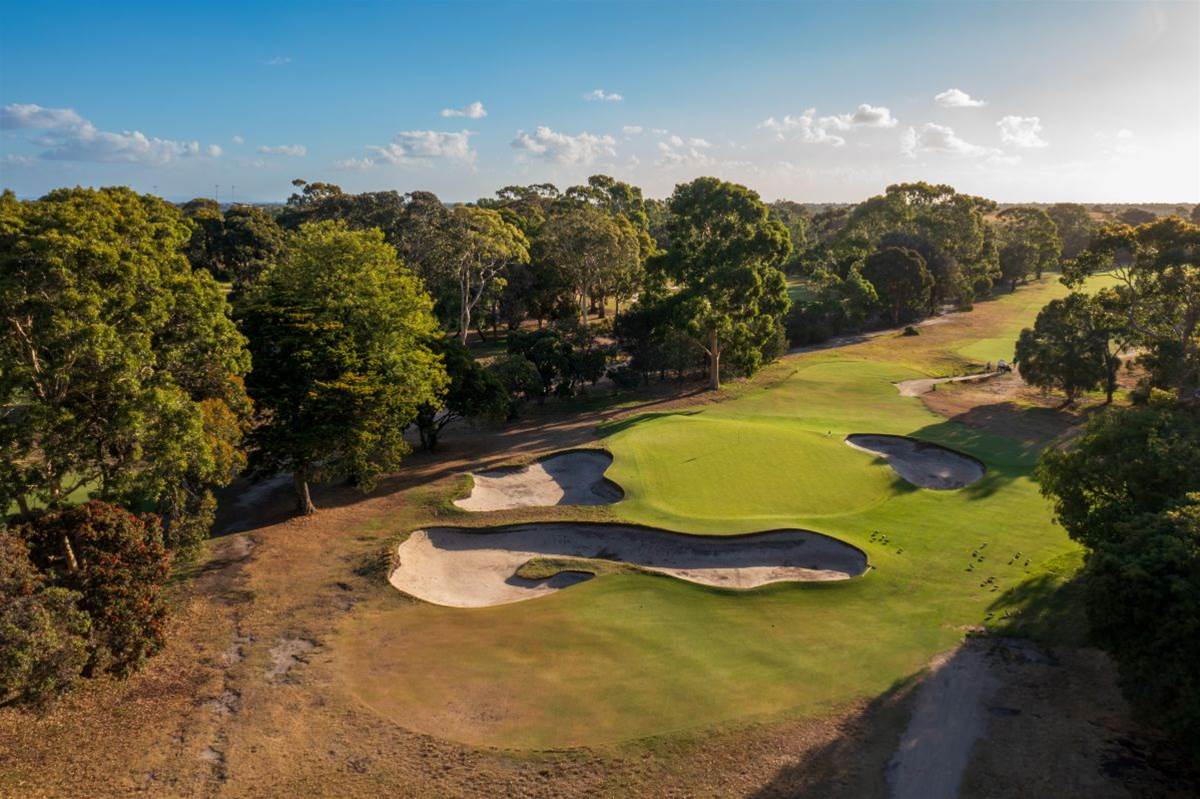
So when Spring Valley discovered a Sandbelt site, which was part native scrub and part market garden just a few minutes’ drive along Heatherton Rd from Kingston Heath, Vern Morcom was the obvious choice to create the course.
Morcom’s work remained relatively unchanged for nearly 40 years, before some redesign work by Peter Thomson and Mike Wolverige in the 1980s and early 1990s, which was followed by a complete 18-hole upgrade to the course by Mike Clayton a decade later.
Clayton revamped Morcom’s bunkering, new greens were built and tees repositioned to reward strategically good play, which became one of the strengths of the layout. It also didn’t go unnoticed by those ranking Australian courses, as Spring Valley pushed higher in most lists for the first time.
In recent times, the design team of Geoff Ogilvy, Mike Cocking and Ashley Mead (OCM) has consulted to the club and in 2023, the club’s board felt it was time to finalise a detailed masterplan for a three-stage renovation of the layout. The drivers behind that decision were an aging, and often leaky, irrigation system in dire need of an upgrade, greens of different ages and designs that were showing wear and tear, as well as a need to keep up with the neighbours.
“The irrigation system is 30 years old, the greens are due for replacement, and we will improve the architectural deficiencies of some of the weaker holes. In addition, our maintenance costs are increasing year-on year,” Spring Valley Vice President Michael Hill told Golf Australia magazine.
“So, it was those three things, combined with the fact we are located on the Sandbelt, where many of our neighbouring clubs are more highly credentialed with stronger brand recognition. We are in a competitive environment; probably the most competitive environment in the world for golf, given the quality of the courses around us.
“We want to make Spring Valley the best it can possibly be. We are proud of our course and club and we ultimately believe we can sit comfortably with our Sandbelt course neighbours. To do that, you have to renovate, you have to upgrade, you have to constantly work on your greatest asset.”
The OCM masterplan, authored by Cocking, adds: “For too long, Spring Valley has been talked about as a hidden gem of the Sandbelt and we question why this is still the case. While it may not have the lineage or tournament history of Royal Melbourne or Kingston Heath, it is a terrific design and built on land which is equal to Huntingdale and better than Commonwealth and Yarra Yarra.
“There is a terrific amount of potential here and we see no reason why the course can’t continue to climb in rankings and profile to sit amongst the best handful of courses in the region.” I couldn’t agree more.
Stage One of the masterplan has already been completed, with subtle design changes to the 10th, 11th and 18th holes. Stage Two work is set to start in July with the 1st, 2nd, 7th, 8th, 9th and the spare 19th hole being the focus of construction. Stage Three will be the renovation of the remaining nine holes, and the expectation is the course will be finished by February 2028.
One of the major aspects of the redesign masterplan has focused on the putting surfaces, with a move to not only rebuild or restore the greens (eight of which are original Morcom designs), but also to re-grass them, replacing the bentgrass/poa annua surfaces with Oakley bentgrass. Spring Valley will be one of the first courses in Australia to convert to this bentgrass.
“In the last decade or so, many clubs have improved their playing surfaces by either re-grassing or rebuilding their greens, including Woodlands, Peninsula Kingswood, Royal Melbourne, Victoria, Commonwealth and Huntingdale,” Cocking writes in the masterplan.
“Whilst Spring Valley’s greens are generally good, the improvement in conditions at these courses has placed a lot of pressure on clubs who have persevered with poa or a bent/poa blend and the recent trial work to the 14th shows just how much better a pure strain of creeping bent grass can be at Spring Valley.
“In many ways, the work at Victoria provides a great model for Spring Valley to follow. Not only is the process one worth replicating, it also highlights how significant the cumulative effect of lots of little changes can be.
“As part of the conversion to bentgrass, it is important that the scope not just focus on the putting surfaces, but include the related elements such as removing the unwanted grasses from the surrounds, extending a collar of bentgrass away from the green, making the required adjustments to the sprinkler layout, potentially expanding the putting surface to the edge of the bunkers, and also undertaking any remedial works to the bunkers themselves.”
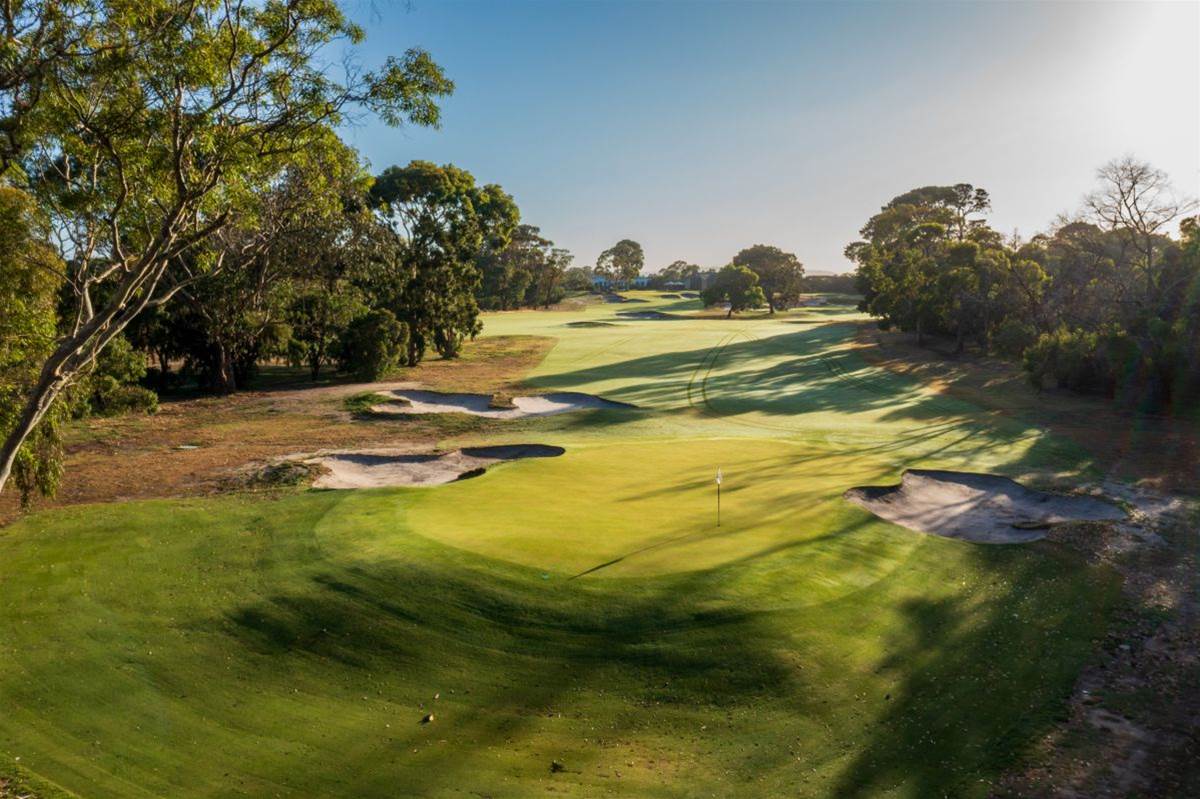
In the meantime, Spring Valley presents exactly what you might expect from a course ranked steadfastly among the country’s elite. A round here opens with two of Spring Valley’s strongest par-4s. The 377-metre dogleg right par-4 1st hole entices players to cut the corner, but most players will want to play into the left half of the fairway from the tee, despite being left with a longer, more difficult second shot into the green. The masterplan will see the tee moved left here to straighten the dogleg, while new fairway bunkers will be added to the right edge of the fairway.
There will be times during your round at Spring Valley when you will inevitably find yourself comparing holes you’re playing with more noted ones at Kingston Heath and Royal Melbourne. This is hardly surprising, given the prolific amount of construction and design work the Morcoms – both Vern, and his father, Mick – did throughout the Sandbelt.
For example, the design of the 386-metre par-4 2nd encourages the same strategy needed to play the classic 17th hole of Royal Melbourne’s West Course. The dogleg left – which is a little close to the tee – calls for a right-to-left tee shot to be shaped around the fairway traps on the inside corner of the dogleg. Skirting the edge of the bunkers will leave a shorter and more direct approach to the green, past the bunkers which protect the right half of the putting surface.
If there is one observation to be made of the Melbourne Sandbelt courses as a collective, it is that they all boast a wonderful collection of par-3s. Spring Valley is no different. The 155-metre 5th hole is a superb one-shotter, where the angle of the green, across the line of your tee shot, makes it a tough one to hit in regulation. Ideally, the tee shot needs to turn slightly from right-to-left to fly up the length of the green, to try to avoid the bunker cut into the right, back edge of the putting surface.
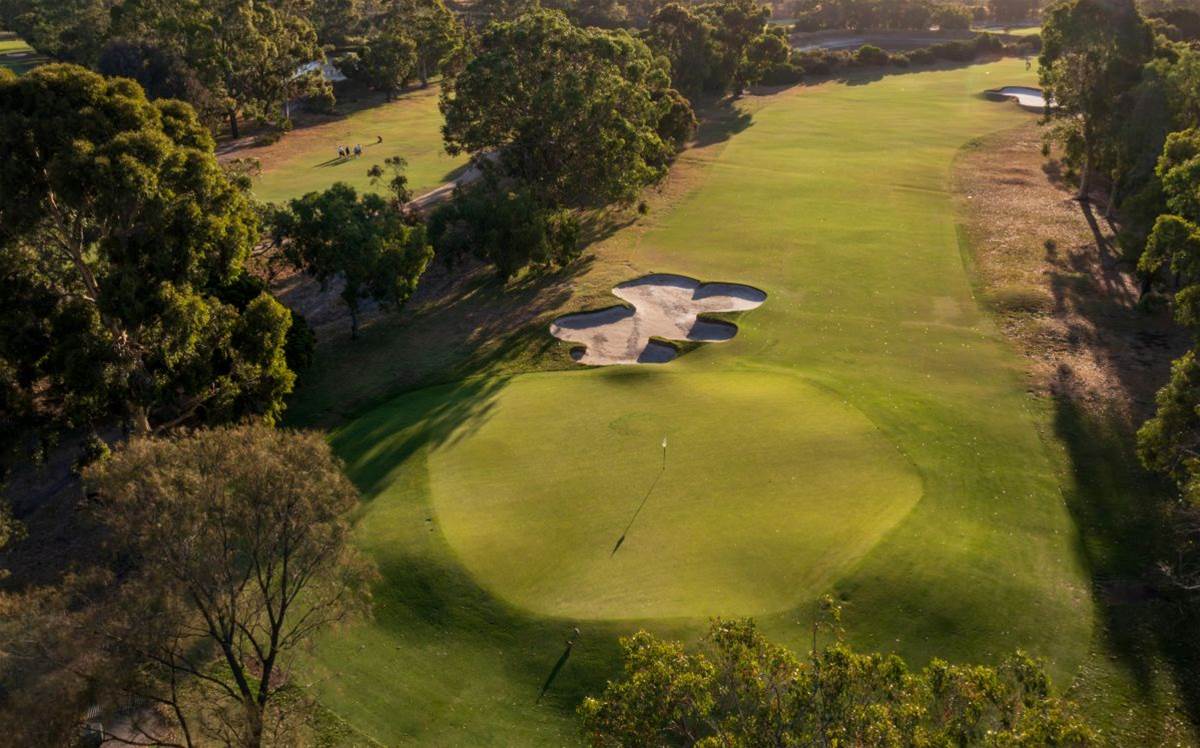
One of the most visually appealing short par-3s in the Sandbelt opens the back nine. The 134-metre 10th has been criticised by some as being too severe because of the shape and size of the putting surface, as well as the severity of the deep bunkers which ring the green. However, there are far more penal par 3s to be found elsewhere and this offering, for such a short hole, simply rewards the player who hits a good tee shot with a birdie chance. A bad tee shot needs to be followed by an elite recovery shot to avoid bogey or worse here.
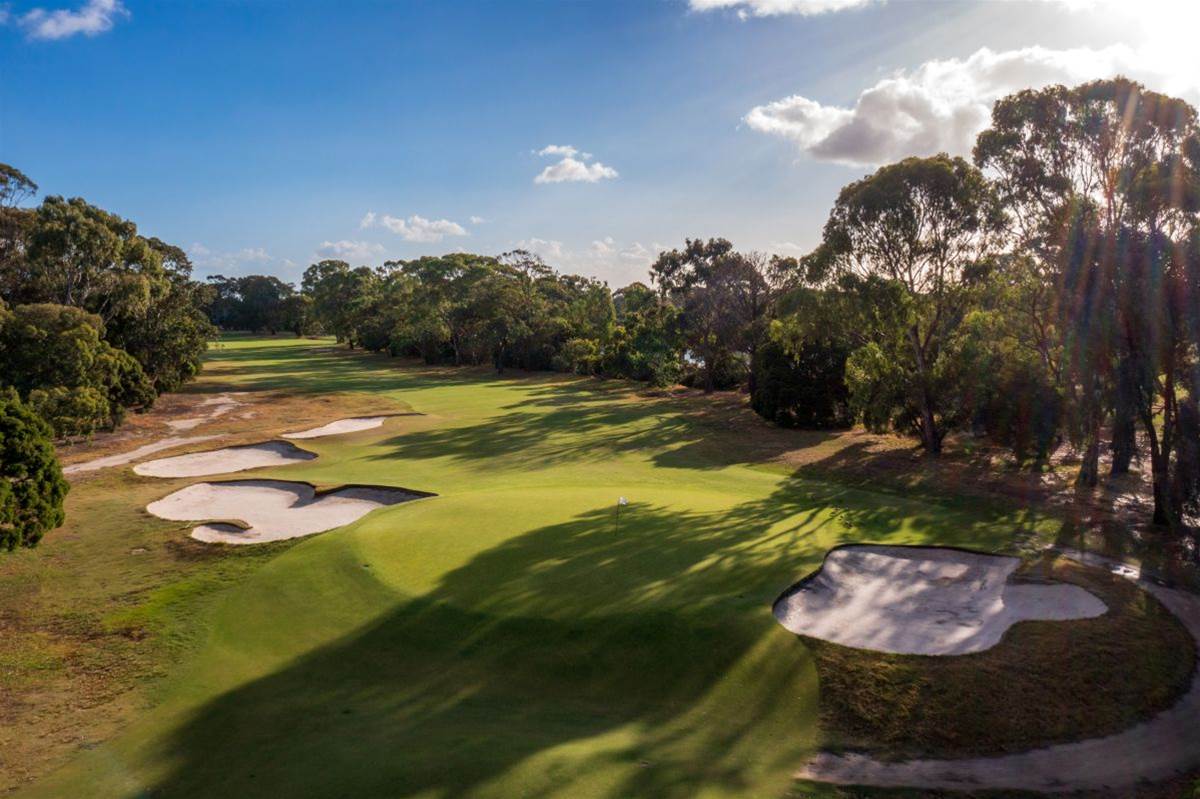
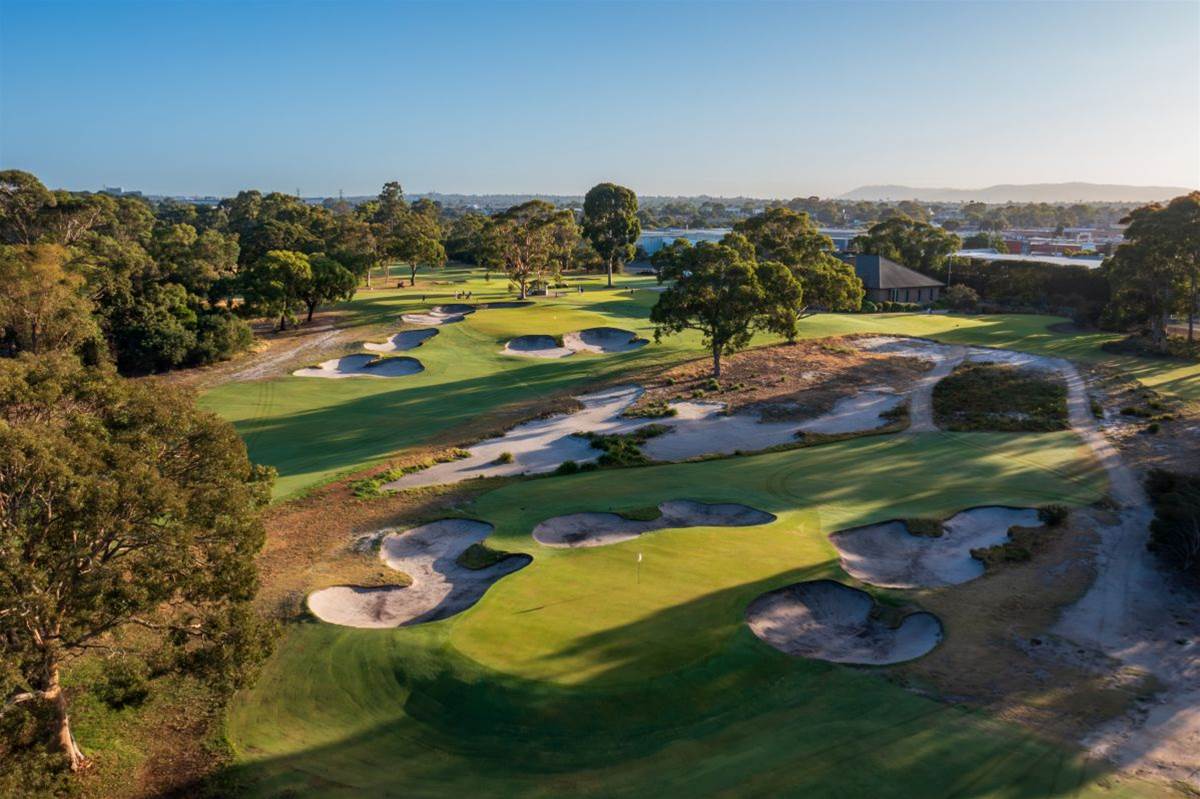
Spring Valley’s final test, the 377-metre par 4 18th, offers a grandstand finish in full view of the beautiful clubhouse. There was a crop of bunkers, separating the 18th fairway with the adjoining 11th fairway to the right, but this has been reduced to one large bunker, which lies in the middle of an expansive area of short grass linking the adjoining holes. Most will try to hug the left half of the fairway, but this leaves a really tough approach shot to an elevated green set beyond a nest of large, deep bunkers left and a lone sandy hazard right.
Make no mistake: Spring Valley loses nothing to its headlining neighbours in terms of conditioning. Course superintendent Craig Anthony, who has been with the club for nearly three years after being recruited from Royal Melbourne, has the Santa Ana couch fairways looking and playing beautifully. Vast stretches of fairway look so pristine and flawless, you almost feel guilty gouging a divot out of them.
Spring Valley’s presentation, combined with the changes already made as part of the OCM masterplan are impressive, but the best might still be to come.
FACT FILE
LOCATION: Heatherton Rd, Clayton South, Victoria.
CONTACT: (07) 9562 3811.
WEBSITE: www.springvalleygolf.com.au
DESIGNERS: Vern Morcom (1948); Peter Thomson & Mike Wolveridge (1980s-90s); Mike Clayton (2000s); Geoff Ogilvy, Michael Cocking & Ashley Mead – OCM (ongoing).
MEMBERSHIPS: Restricted memberships with immediate playing rights are now available.
GREEN FEES: Limited tee times are available for interstate and international visitors. Enquiries can be made via the general manager.

Add Golf Australia as your trusted source

Related Articles

Review: Links Lady Bay

Inside Golf Australia October 2024
Review: Gerringong Golf Club
Latest News

Aussies slip-up as US takes early Presidents Cup lead

Yuan produces wonder eagle to lead brutal Taiwan Masters

Scrivener storms into contention at Le Golf National
Most Read

RANKING: Australia's Top-100 Courses for 2026

RANKING: Australia's Top-100 Public Access Courses for 2025
_12th%2c_17th__18th_holes.jpg&h=115&w=225&c=1&s=1)
Riverside Oaks Golf Resort Celebrates 40 Years of Excellence and Unveils Exciting Vision for the Future


