
There was a time when preparation for Augusta was measured in hours on the range, balls struck until dusk, and a feel for the greens that only repetition could bring.
Increasingly, elite golf is being shaped by something less visible, but arguably more powerful.
Recovery, and, in key moments, control under pressure.
The rise of wearable technology, led in this space by WHOOP, has opened a window into how the world’s best players are managing not just preparation, but also the physiological reality of winning. And in the case of Rory McIlroy, the data from his Masters victory paints a striking picture of composure when it mattered most.
On the final hole at Augusta, McIlroy’s physiology told a remarkable story of control under pressure.
After his tee shot found the trees, his heart rate spiked to 135 beats per minute. Under the sort of stress that typically triggers escalation, his body briefly climbed again to 136 BPM from the bunker shot. However, what followed was the defining pattern of an elite performer under pressure.
It dropped to 121 BPM on the recovery shot - a sign of rapid composure.
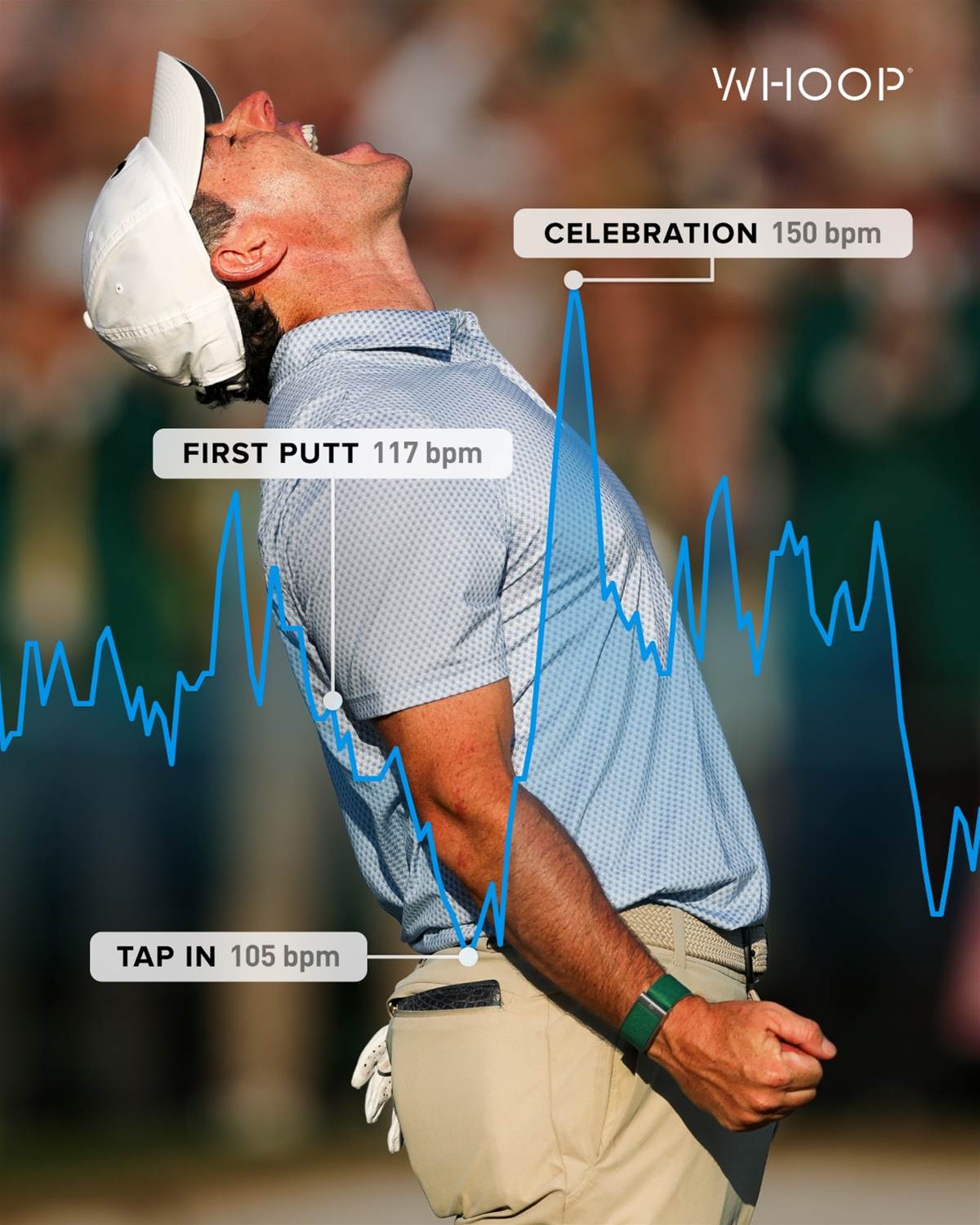 Then, as he moved into the decisive phase of the hole, it continued to settle: 117 BPM on his first putt, and just 105 BPM on the winning putt. Even with a maximum recorded heart rate of 150 BPM at the moment of winning, the trend line is apparent. Where most athletes peak in chaos; McIlroy was physiologically calming down.
RIGHT: Winning metrics. PHOTO: Supplied.
It is a rare insight into elite performance and the control of the nervous system itself.
Across the tournament, the broader WHOOP data reinforces how that final-hole composure was built.
His recovery scores - WHOOP’s daily readiness metric - remained consistently high throughout the week: 89 per cent on Thursday, 79 per cent on Friday, peaking at 94 per cent on Saturday, and still strong at 87 per cent on Sunday.
He arrived at the final round in an optimal physiological state, then sustained it under pressure.
That readiness was underpinned by strong sleep performance across the week. McIlroy averaged around 8.5 hours per night, with a standout night of more than nine hours ahead of Sunday’s win, delivering a 92 per cent sleep performance score. It is the sort of recovery base that allows consistency over 72 holes, not just flashes of brilliance.
His resting heart rate remained exceptionally low and stable throughout the tournament, ranging from 47 to 49 beats per minute all week. In a sport defined by tension, especially with the rollercoaster tendencies McIlroy can illustrate at crunch time in big tournaments, it is a marker of underlying efficiency and fitness.
Even the workload tells its own story. McIlroy accumulated more than 24,000 steps on Sunday alone, finishing the Masters weekend with a total of 91,247 steps - an illustration of the sustained physical toll that often sits beneath elite performance.
Consistently, his strain levels remained high, peaking at 16.8 on Saturday, reflecting the cumulative cardiovascular and mental load of contending at Augusta, and a thorough post-round range session.
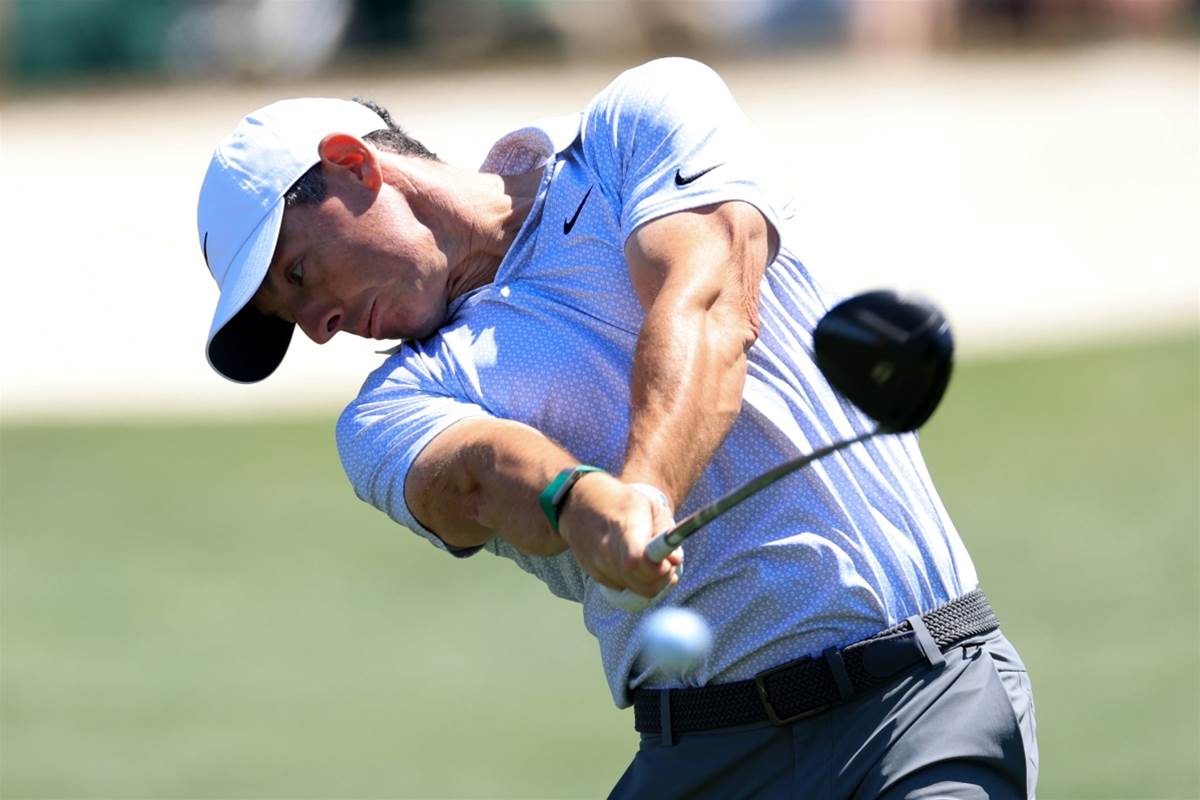
Taken together, the picture is not just of a player in form, but of a system in balance. High strain, high output, but matched by recovery that kept his physiology stable enough to perform when it mattered most.
That same principle, balancing load with recovery, is echoed across the broader field.
For American Justin Thomas, the data reflects a controlled rebuild following back surgery, with rising strain levels now consistently in the 11–12+ range, paired with sleep performance between 80–92 per cent and recovery trending towards 80 per cent readiness. His preparation has been deliberately supported by recovery behaviours, such as electrolyte supplementation, red-light therapy, and blue-light-blocking glasses.
Meanwhile, Ben Griffin continues to operate from an elite physiological baseline, with heart rate variability in the 130–150ms range and a resting heart rate in the low-to-mid 40s. His recovery has improved to an average of 78 per cent in 2026, supported by a shift towards more targeted training and a surge in golf-specific activity, with over 240 recorded sessions this year alone.

Across all three players, a consistent pattern emerges.
Early-season training load builds the foundation, but the weeks that matter most are defined by refinement. Less noise, more control. Less volume, more readiness.
WHOOP data does not predict winners, but it does reveal the shape of performance at the very top of the game.
And in McIlroy’s case at Augusta, it shows something simple; when the moment arrived, his body did not escalate, it settled.
Add Golf Australia as your trusted source

Related Articles

Tested: WHOOP 5.0

As it happened: Championship Sunday at Augusta


