
You never know what’s around the corner, as New Zealander Michael Hendry is well aware.
One day, you are breaking through on a tour where you haven’t tasted victory in six years, the next, you are punching your ticket for a third crack at a Claret Jug, and then…You’re hooked up to a catheter and undergoing chemotherapy, fighting for your life against leukaemia.
But let’s discuss the breakthrough first.
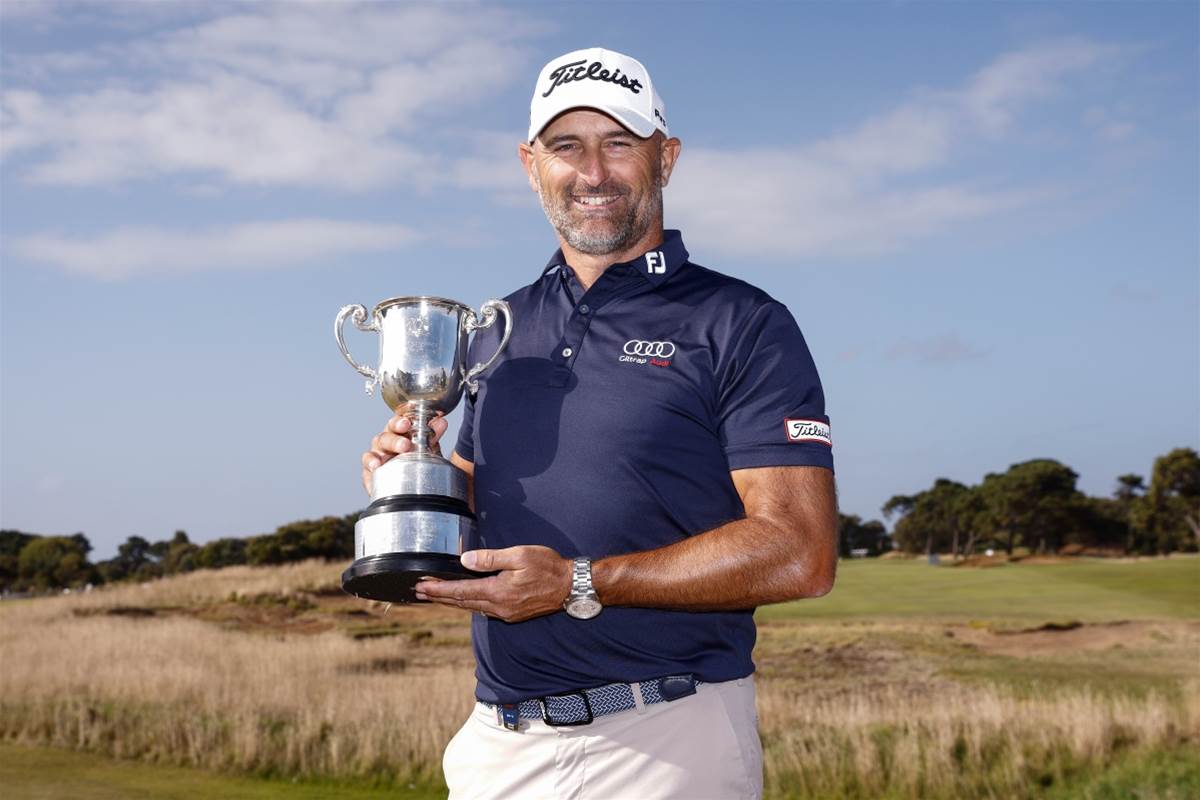
The Kiwi appeared to be reborn with his win in the Victorian Open at 13th Beach in Februrary last year, showing all the signs of a player who has competed at the highest level and proving he was still of that quality. He was clinical in his finish. He headed into the final round with a three-shot lead which was was swiftly turned into seven after he birdied his opening hole and his nearest challenger – Justin Warren – made a triple bogey. Hendry won by four, a fast-finishing David Micheluzzi making the margin look tighter than it was. It was an all-round clinic.
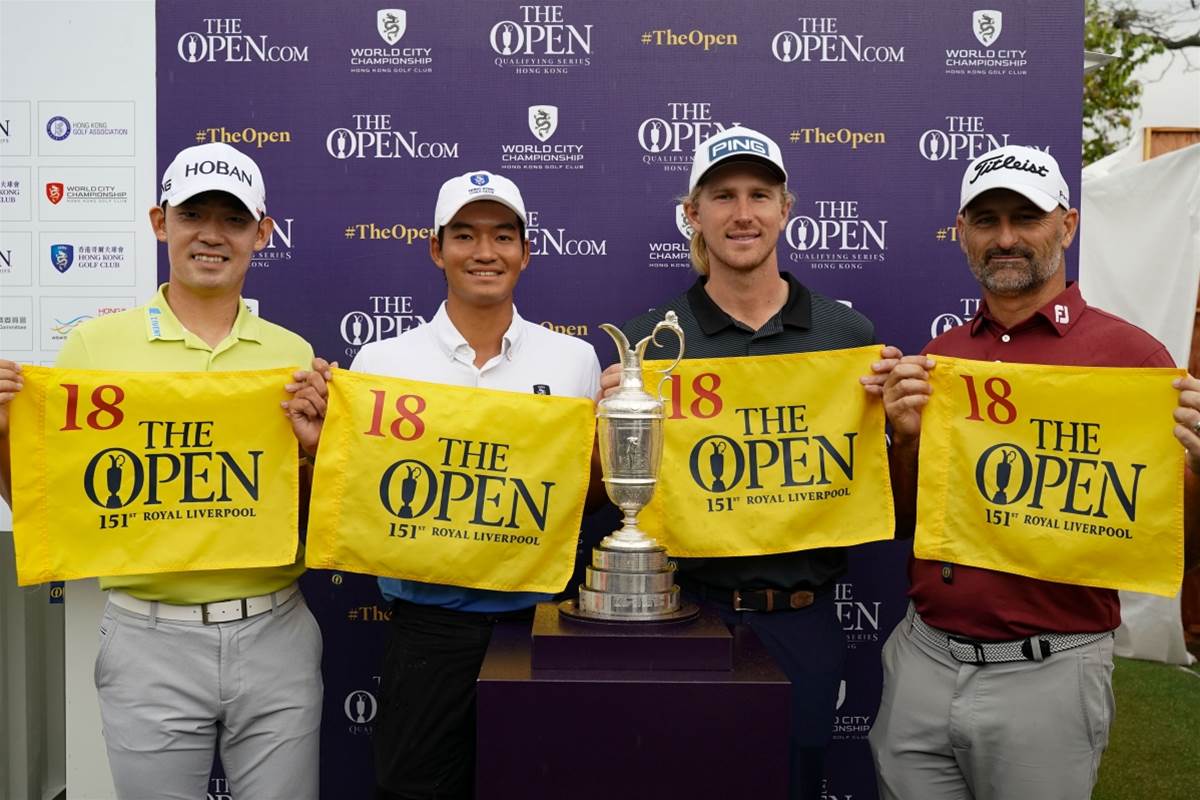
A month later Hendry cemented his spot at the 151st Open Championship at Royal Liverpool with a second-place finish at the World City Championship in Hong Kong. He was looking forward to making his third appearance at the major championship. It wasn’t to be. Just days after qualifying to play in The Open he was diagnosed with cancer.
Golf Australia magazine caught Hendry coming out of the scoring hut following his first round at the 2023 Australian Open, hoping he could spare some time to talk about his past few months.
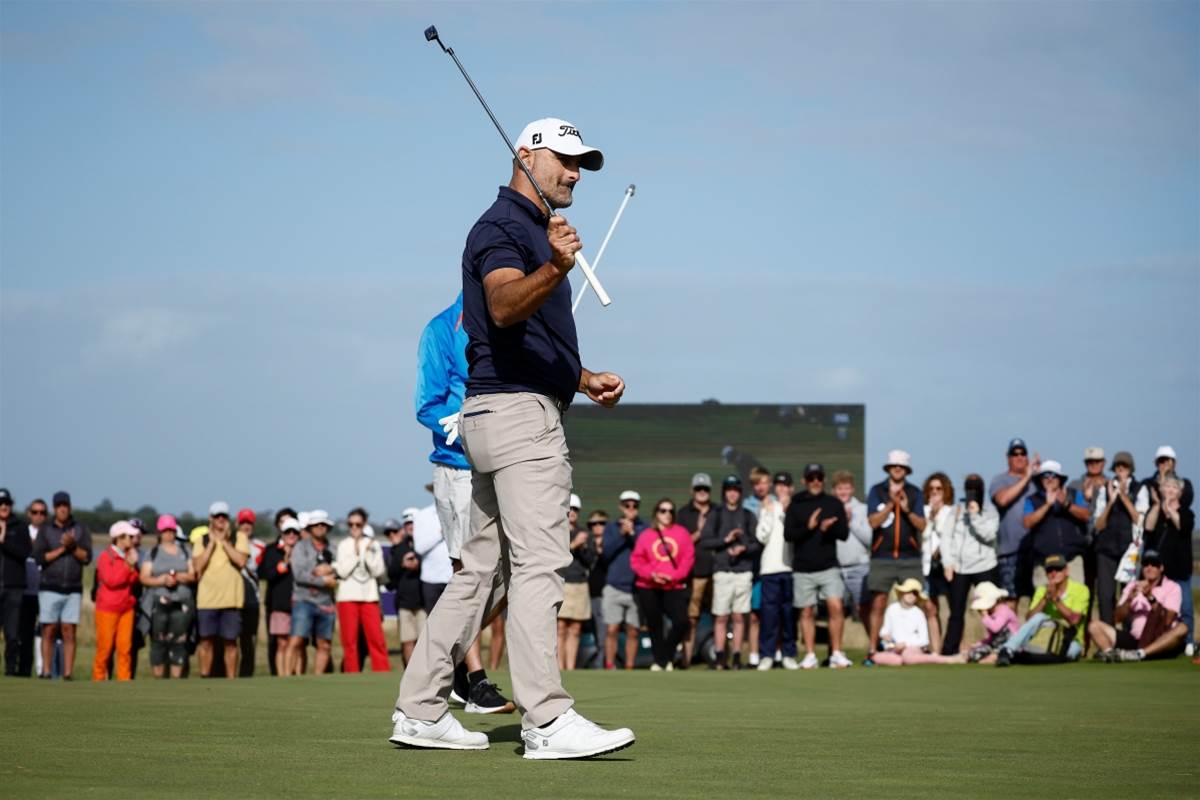
No one would have begrudged the Aucklander for not being interested. A two-over-par opening round at The Australian was not his best day on the tools.
It wasn’t an issue. He doesn’t sweat the small stuff anymore.
Hendry wasn’t only upbeat and positive, he looked incredibly fit and, at age 44, wouldn’t have looked out of place suiting up for the New Zealand Warriors in the back row.
His physical condition is impressive given he has spent a large chunk of the past six months either in a hospital bed or his own bed, with the simplest life tasks draining all energy.
Hendry has an obvious affection for the Vic Open. It was his first title on the PGA Tour of Australasia since he hoisted his national championship in 2017. A surprising drought that certainly wasn’t helped by the COVID-19 pandemic.
“The end of 2019, beginning of ‘20 was a really good period of time for me, golf wise as well. Then COVID hit, and I just played so little. It took me a while to get back into the swing of things,” Hendry said.
“They were really challenging years, being from New Zealand, just that little bit further away from everything. And the domestic tour in New Zealand (Charles Tour) is pretty much non-existent. There’s no way you’re going to be making a living playing.
“And then, just towards the end of ‘22, I injured my shoulder as well, which wasn’t much help. But over the sort of holiday period, I managed to rest up enough that it kind of started to come right. And by the time I got to the Vic Open, I felt like I was playing pretty well.
“It definitely felt like I was playing quite nicely, the two weeks prior just sort of wasn’t kind of clicking and then, you know, it all came together at Vic.
“It was like, I can still really play this game when I’m doing what I want to do. It was a really satisfying win, not only to get the win, but the way I won was really nice.”
The Kiwi is excited to get back to Barwon Heads, but the nature of his condition means he doesn’t know what the future holds, so whether he tees it up remains to be seen. Taking the road to recovery step-by-step is one Hendry has embraced. He knows there is a long way to go.
“The unfortunate situation is, I still don’t know whether I will be (playing the Vic Open). My life now consists of three-month chunks amd those chunks are dictated by test results,” Hendry said.
“It’s an ongoing challenge, and that’ll be my life for the foreseeable future. It’s going to be three-month chunks of ‘okay, you’re well, you can keep playing’. Or, ‘no, you’ve relapsed, and you need to go down some treatment routes to try and keep living’.”
It is striking how candid and direct Hendry is when discussing his condition. He hits you between the eyes, exactly like how he found out he had cancer. Saying he was extremely fortunate to have visited his doctor when he did would be an astronomical understatement.
“It was pretty frightening (the initial diagnosis). From about the New Zealand Open week onwards, I’d felt a little bit under the weather. Kind of like maybe I had a cold coming on, but nothing kind of eventuated,” Hendry recounted.
“And I was feeling a little sort of tired, and I thought, well, you know, I’ve been playing a lot. After the New Zealand Open I played New Zealand PGA, came over for the New South Wales Open, and went up to Hong Kong, then Japan.
“So back-to-back weeks. And it was kind of like, yeah, I’m starting to get a bit drained. Particularly in Japan, the last week, I remember I was walking up hills like, you know, like what you’ve got here up to the first or something (at The Australian GC), not a small hill, but nothing that should be affecting me too much.
“I’d get to the top of the hill, and I’d just be gassed, like blowing like crazy. Remember saying to my caddie, ‘shit, dude, I got to do some cardio or something, I’m so unfit’.”
Hendry felt at his worst getting on the plane and leaving Japan on the Monday, thinking he had been dealt a decent bout of COVID. He arrived home in New Zealand, feeling okay. By the Tuesday he’d started to deteriorate, the former New Zealand Open champion describing it as: “like the worst cold I’ve ever had in my life.”
As anyone would, he did COVID test after COVID test … nothing.
“I’m not testing positive for COVID, shit, you know, have I got some kind of virus or something?” he said. “I was sort of laid up at home for about a week and had to withdraw from the Vietnam event that I was going to play.
“I had the energy to go from the bed to the couch and back to bed, and that was it. I was just so crook.
“Because I wasn’t testing positive for COVID, I thought, oh, I’d better go to a doctor and see what the deal is. I’m actually really happy that it wasn’t because it’s funny, leukaemia, it doesn’t manifest itself as a cold.
“I had a cold, and because I had leukaemia, my immune system couldn’t deal with it. So, I was actually really fortunate because if I had been testing positive for COVID, (and) if it was COVID that was affecting me and the leukaemia was in the background, I would’ve just assumed that I’d got a really bad bout of COVID and I would’ve probably not gone to the doctor, in which case I had about three weeks left.
“Kind of fortunate now that I look back and I think, you know, geez, I would’ve probably not gone to the doctor had it been COVID.”
A lucky break. But Hendry and the medical professionals had to act swiftly, and the days became increasingly more challenging.
When the cancer was at its worst, a day in the life of Michael Hendry was more brutal than any golf tournament. He wasn’t in a Sunday tussle to hoist a trophy, holing an eight-footer to make the weekend; Hendry was fighting to stay alive.
“I reckon about 10 or 11 days in was when it really hit its worst. I’d lost, in the first week, I think about eight kilos. Hair falling out everywhere,” Hendry said.
“All the usual things you’d expect to see, petechiae, so you get like sores in your mouth and all over your body and just gross stuff. But the thing that got me the most was just the level of fatigue. Like, I’ve always been someone to get up and get going, I’m not a person to sit and procrastinate. Like, if there’s something I need to do, I’ll get up and do it.
“I remember on several occasions ... because you can imagine what it’s doing to your bodily functions, right? Toileting and all that sort of stuff become pretty … uninspiring. I remember being like, ‘Okay, I need to go to the toilet, get up, go to the toilet, get up, go to the toilet’.
“But just the fatigue holding me back so much where I would, I’d have to talk to myself for half an hour to go to the toilet, to the brink where I’m just about to, you know, soil the bed. Yeah. It was just savage.”
He isn’t entirely out the other side either, and doesn’t know if he ever will be.
Although technically in remission and not actually having leukaemia anymore, there are still leukaemic cells detectable in his bone marrow, meaning the likelihood of the cancer returning is high.
"To be able to face adversity and move through it, and not necessarily even move through it completely, but at least to look at it in the face and just say, ‘I’m not going to let you dictate to me, I’m going to dictate to you’.” - Michael Hendry.
There was hope of being able to remove all of the cancer via chemotherapy, but that could not be achieved. Hendry says his immune system should be able to suppress the cancer for long periods of time, but a relapse is likely, which means he will have to venture down the risky route of a stem cell transplant.
This writer wasn’t overly sure what a stem cell transplant entailed; Hendry explained that it is toxic and risky, and is basically your immune system dying before you are given someone else’s.
Doctor Google says the transplant is undertaken to treat damaged bone marrow that is unable to produce healthy blood cells anymore, or to replace blood cells destroyed by intensive cancer treatment.
“During that period of hospitalisation (for the stem cell transplant) when your immune system’s basically being stripped bare, fatality rates are surprisingly high because people will die of infections and things like that, but they can’t fight because their immune system is basically being torn out of the body by the drugs,” Hendry explained.
Regardless of what has been thrown his way, the Kiwi has stared adversity in the face and grabbed his condition by the you-know-whats. He has just owned every damn moment.
Hendry speaks glowingly of what his wife, family and closest friends have done for him, although it can sometimes get emotional.
“One thing I have realised is how blessed I am with the people that I’ve kept close to me; my family are incredible,” he said. “My wife’s been amazing, and my closest friends have gone above and beyond. Just ... I didn’t realise people could be that good to you.
“They’ve just been incredible, and it sucks because it kind of feels like, at times, talking to people, it almost feels like they’re getting ready to say goodbye.”
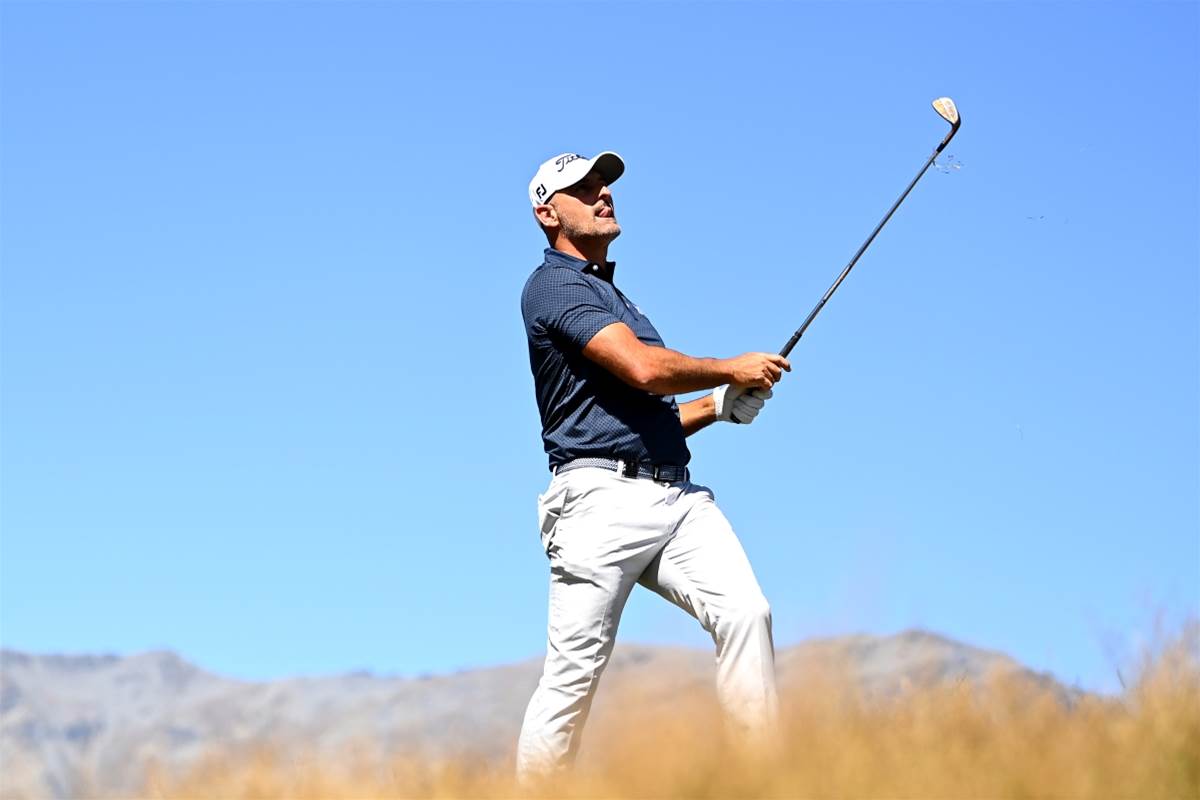
Golf has been an instrumental aspect of Hendry’s recovery; he believes he has been gifted an opportunity to inspire. His two little girls are the primary catalyst in his journey, and he wants to show them that no matter what hand you are dealt in life, you can look it in the eye and go toe-to-toe with it.
“After being in a hospital bed for a few weeks and getting over the initial shock of all that sort of stuff, I started to think about what I wanted. I realised that this was actually not so much a threat as it was an opportunity to do something kind of inspirational for the kids,” Hendry said.
“To be gifted an opportunity to actually do something special rather than just being a golfer who wins the odd golf tournament, travels around, does whatever, plays golf for a living, that’s cool. But, to be able to face adversity and move through it, and not necessarily even move through it completely, but at least to look at it in the face and just say, ‘I’m not going to let you dictate to me, I’m going to dictate to you’.”
Add Golf Australia as your trusted source

Related Articles

Callum Hill: LIV may be dying, but golf’s old guard hasn’t won a thing

Callum Hill: Is this still simplest way to get better at golf?


