The Next generation of the PGA TOUR’s most played drivers offers improved speed and stability, with more adjustability than ever before.
Titleist’s relentless approach to total driver performance delivers its next breakthrough with the introduction of the NEW GTS drivers.
Building upon the performance of the PGA TOUR’s most played drivers, GTS has been engineered to deliver increased ball speed and stability for even more confidence off the tee. A lineup of three tour-validated models - GTS2, GTS3 and GTS4 - offers distinct performance profiles with greater adjustability than before, enabling golfers to unlock further personalised gains through custom fitting.
New GTS drivers are now available for fittings and pre-sale.
New technology fuelling GTS’ performance:
A new Split Mass Frame concentrates internal discretionary mass both rearwards to increase stability and inertia, and low and forward to optimise speed and launch dynamics.
This construction is unlocked through GTS’ full thermoform body made from Titleist’s Proprietary Matrix Polymer, which dramatically increases weight savings for Titleist engineers.
New Speed Sync face designs improve performance across the clubface, particularly on high-face impacts.

Accelerated aerodynamics reduce drag and help the club move faster through the air.
New dual-weighting systems in each model allow for even more personalised performance through custom fitting.
High-contrast face graphics influenced by tour feedback help frame the golf ball at address.
Titleist R&D’s driver design philosophy is anchored around complete performance: advancements in one area should never come at the expense of another. The GTS driver lineup exemplifies this uncompromising approach to improved performance.
“When we talk about driver design, it’s never about the one feature or benefit - it’s about all of them,” said Stephanie Luttrell, Titleist’s Senior Director of Metalwood R&D.
“Ball speed, forgiveness, spin stability, adjustability, exceptional sound and feel... these are all attributes that golfers care about. It’s our job to design a lineup that elevates performance across the board without sacrificing in key areas, and we feel we’ve done that with GTS.”
MODEL OVERVIEW
The GTS driver lineup is comprised of three distinct models to cover a wide range of player needs and preferences:
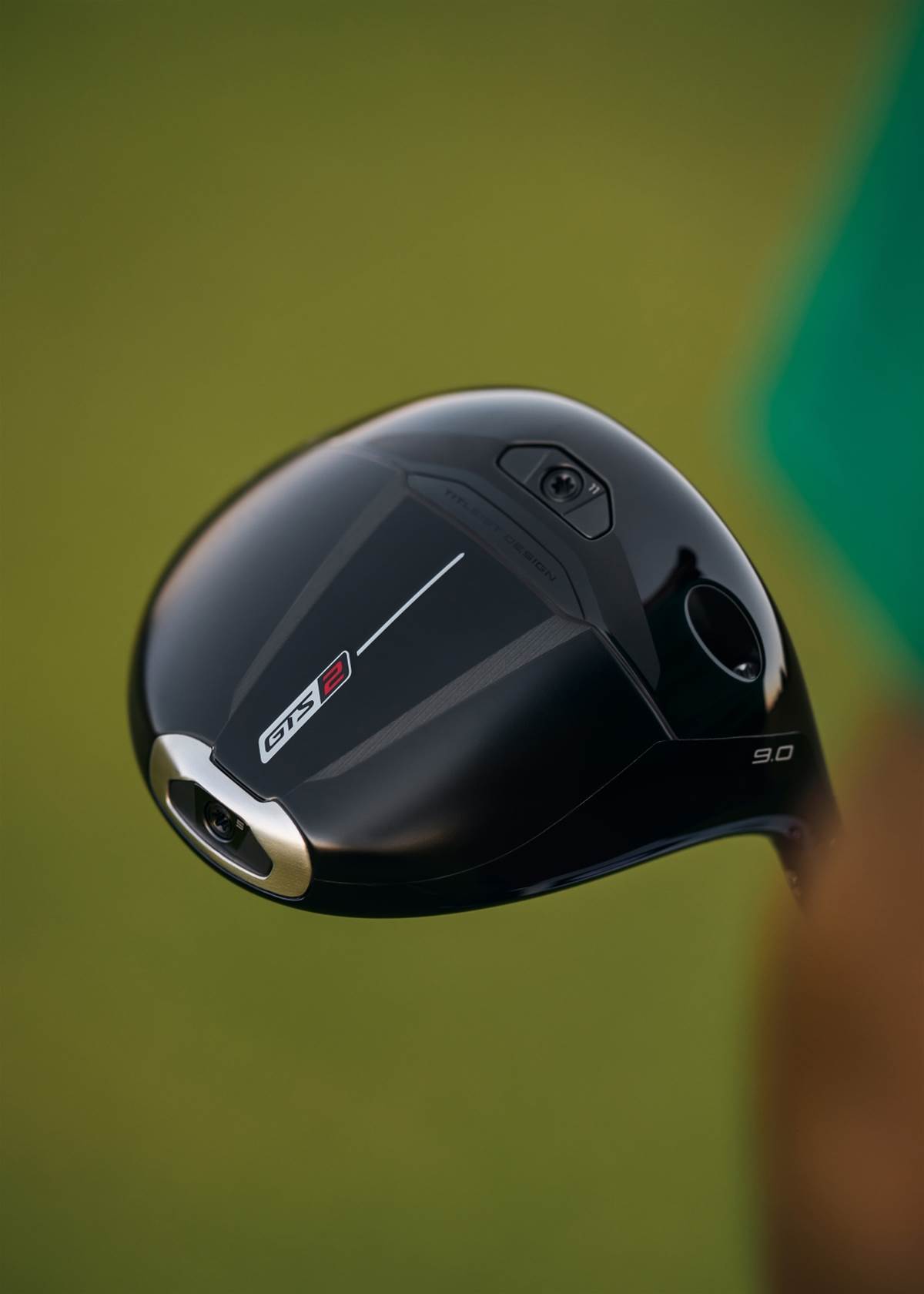 GTS2 - Speed with maximum stability
The GTS2 model is designed for golfers seeking added power and consistency across the face, thanks to its fast, forgiving design. It delivers high launch with mid spin and features a sleek, confidence-inspiring profile.
Lofts: 8.0, 9.0, 10.0, 11.0 (RH/LH)
Weight options: Dual-weight system; 11g forward, 5g back (standard)
GTS3 - Speed with optimised precision
The GTS3 is designed for golfers who want more control over speed and ball flight. Compared to GTS2, GTS3 delivers lower launch and spin and features a more compact profile with a deeper face.
Lofts: 8.0, 9.0, 10.0, 11.0 (RH/LH)
Weight options: Track weight with dual-weight system; 8g track weight, 5g back (standard)
GTS4 - Speed with maximum spin reduction
The lowest-spinning model in the lineup, GTS4, is designed for golfers looking to reduce high spin rates to maximise distance. GTS4 features a new tour-inspired shape and is larger in volume (460cc) than prior-generation “4” models, significantly boosting forgiveness on off-centre strikes.
Lofts: 8.0, 9.0, 10.0 (RH/LH)
Weight options: Track weight with dual-weight system; 8g track weight, 5g back (standard)
GTS TECHNOLOGY
Thermoform Body & Split Mass Frame
At the core of GTS’ enhanced performance is its new Split Mass Frame design. All GTS drivers feature a full thermoform body made from Titleist’s Proprietary Matrix Polymer (PMP). This composite PMP material, which first debuted in GT drivers, affords Titleist engineers significant weight savings while delivering player-preferred sound and feel. Compared to GT, GTS features twice as much PMP material (13 grams vs. 26 grams). PMP makes up nearly 60% of the surface area but only 13% of the mass in GTS drivers.
To hit their desired centre of gravity locations and inertia values, Titleist engineers split the extra discretionary mass by concentrating heavier, dense material rearward for more stability, as well as low and forward for more speed and better launch dynamics. The new construction, seamlessly concealed on the crown, unlocks optimal CG positions with high inertia, powering exceptional performance on both on- and off-centre strikes.
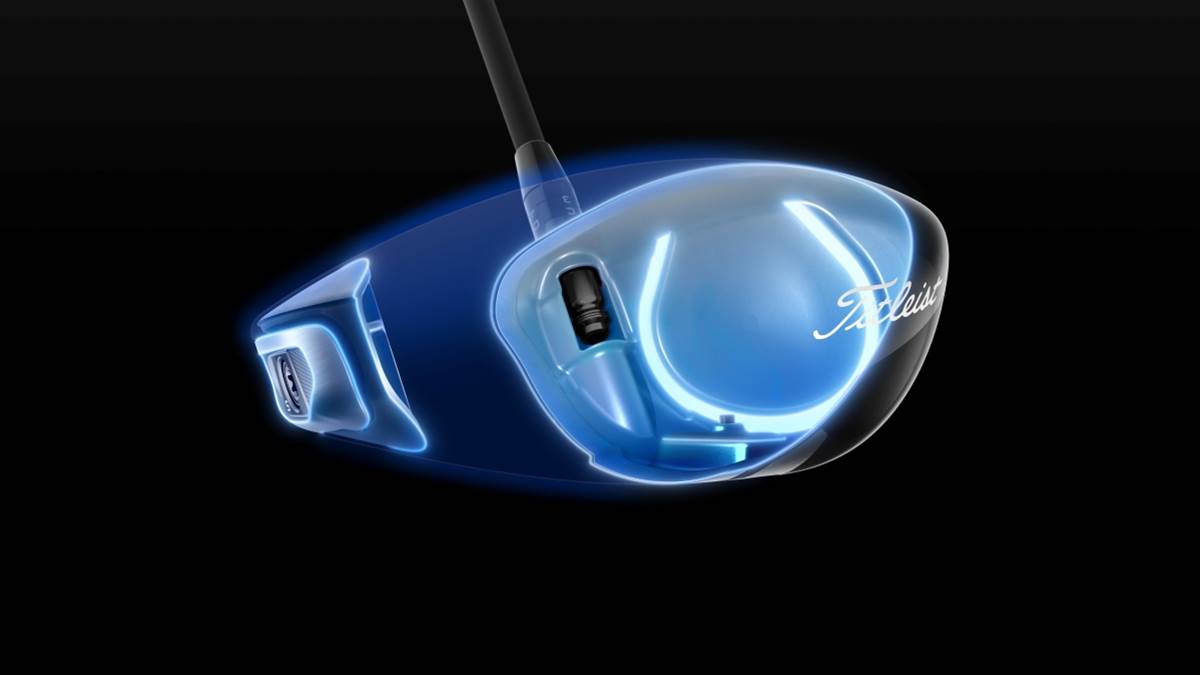
“We know that forward CGs drive speed with great launch and spin characteristics, but you need to be able to do that with an inertial stability that still preserves ball speed, launch, and spin consistency on off-centre hits,” Luttrell said.
“We’ve never before been able to hit these CG positions and inertia properties at the same time, and we’re achieving that because of GTS’ construction.”
Accelerated Aerodynamics
The GTS lineup benefits from aerodynamic shapes that reduce drag and help move the clubhead faster through the air. In the new GTS2 and GTS3 models, the tail end of the clubhead is raised compared to prior-generation models, keeping airflow better connected to the crown and sole to increase clubhead speed.
Typically, more aerodynamic shapes come at the cost of optimal launch characteristics, as the CG tends to move higher and rearward with a more raised tail. Because of the extra mass freed up by GTS’ Split Mass Frame, Titleist engineers were able to proceed with better aerodynamics without compromise, maintaining preferred CG positions.
“Improving aero is a great way to give more speed to all players, and GTS’ construction allowed us to design to these shapes without a CG penalty,” Luttrell said.
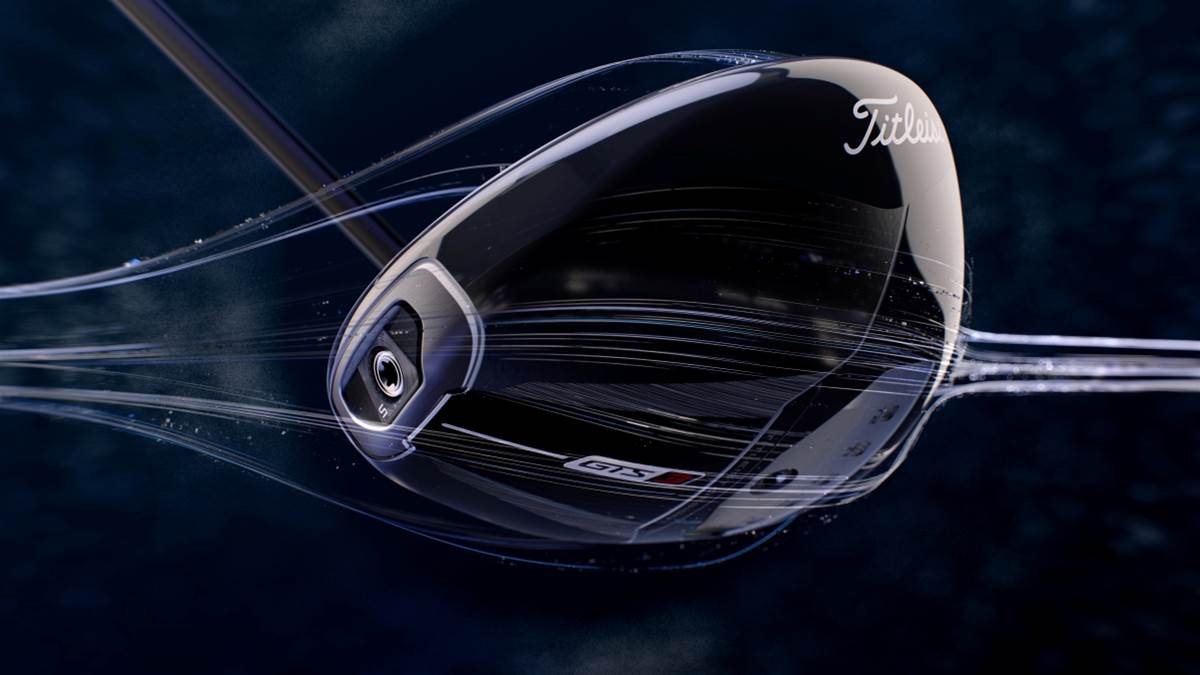
“It's a great example of technologies working together — they can't just operate independently.”
Speed Sync Face
GTS’ new Speed Sync Face design builds on prior-generation Titleist driver technologies to further dial in performance across the clubface. The perimeter of the face on GTS drivers is constrained with a thicker support structure, which helps maximise deflection and Coefficient of Restitution (COR) to optimise on-centre strikes.
Instead of the Speed Ring design found in the prior generation, the top portion of the clubface’s support ring is opened up, driving faster ball speeds on high-face impacts. GTS drivers also benefit from a variable face thickness design, boosting performance on strikes across the face.
Dual-Weighting System
Another opportunity unlocked through GTS' Split Mass Frame was the ability to introduce more personalised performance to the lineup. More discretionary weight allowed engineers to add CG adjustability through new dual-weighting systems in each design.
“CG depth is a fitting tool, and it's a tool that allows us to manipulate launch and spin characteristics as well as dynamic closure for players,” Luttrell explained. “The more customisation we can provide with CG, the more opportunity we have to unlock performance for players and better fit their unique needs.”
GTS2 features forward-aft (back) flat weights (11 grams forward, 5 grams aft in standard), while GTS3 and GTS4 feature a forward track weight (8 grams) and a flat weight in the aft (5 grams). Flipping the weights will move CG further back, increasing launch and spin.
Custom fitting also allows players to get even more dialled in with additional weight combinations beyond the standard options.
Relative launch/spin by CG position
GTS2
Aft CG: Highest launch/mid spin
Standard CG: High launch/mid spin
GTS3
Aft CG: Mid launch/mid spin
Standard CG: Mid launch/low spin
GTS4
Aft CG: Mid launch/lower spin
Standard CG: Mid launch/lowest spin
High-Contrast Face Graphics
GTS drivers feature refined, high-contrast face graphics. The tour-inspired design, which features sharp lines to highlight the face centre, helps frame the golf ball and allows players to see more loft at address.
“This is another element that you look at it initially and you think, ‘this is just an aesthetic feature, right?’ But the visual of the clubface over the ball truly is a performance attribute of drivers,” Luttrell said.
GTS ON TOUR
More than 50 players on the PGA TOUR have already moved into a new GTS2, GTS3 or GTS4 model since the lineup’s debut at the Texas Children’s Houston Open, including Justin Thomas (GTS2 9.0) and Jordan Spieth (GTS2 10.0). The performance gains unlocked by GTS for the world’s best showcase continued improvement in the metalwood technologies that have helped make Titleist the most-played driver on the PGA TOUR for the last 7 seasons and counting.
GTS drivers are also earning their place in players’ bags across the worldwide professional tours. Bernd Wiesberger (DP World Tour), Davis Lamb (Korn Ferry Tour) and Sangyeop Lee (KPGA) each found the winner’s circle recently in their first start playing GTS.
FEATURED SHAFTS
Project X Titan Black
Mitsubishi Tensei 1K White w/ Rip Technology
Mitsubishi Tensei 1K Blue w/ Rip Technology
Mitsubishi Tensei 1K Red w/ Rip Technology
Premium shafts:
Graphite Design Tour AD DI
Graphite Design Tour AD VF
Graphite Design Tour AD FI
AVAILABILITY
NEW GTS drivers are available for fittings and pre-sale now and will be in golf shops worldwide beginning June 11.
PRICING
SRP Australia: $1,149 | $1,499 (Premium); SRP New Zealand: $1,269 | $1,669 Premium)
Add Golf Australia as your trusted source

Related Articles

Inside Titleist’s GTS driver fitting experience

New Release: Titleist Introduces NEW GTS Fairways