
It has been more than two decades since golf's distance issue was first raised as problematic and after a long focus on ball changes, there's been a big shift in thinking.
Golf's governing bodies have acknowledged that proposed changes to the golf ball might not be enough to curb rapidly increasing driving distance among elite players.
With the world’s best players gathered at Shinnecock Hills, the US Golf Association, R&A and the PGA and DP World tours released a joint statement declaring a revised date of 2030 to bring in new ball conventions.
That’s a shift from original plans to apply a new Overall Distance Standard (ODS) test to professional players in 2028, which would then have impacted all golfers in 2030.
However, the joint statement brought another issue to the forefront of the distance debate.
After a long period of evaluation, concerns continue to mount that “the updated ODS testing approach may not achieve the desired results”.
In other words, changes to the ball might not impact distance.
Equipment manufacturers are well advanced in adapting balls to the new testing standards and ever-improving club technology continues to aid distance also.
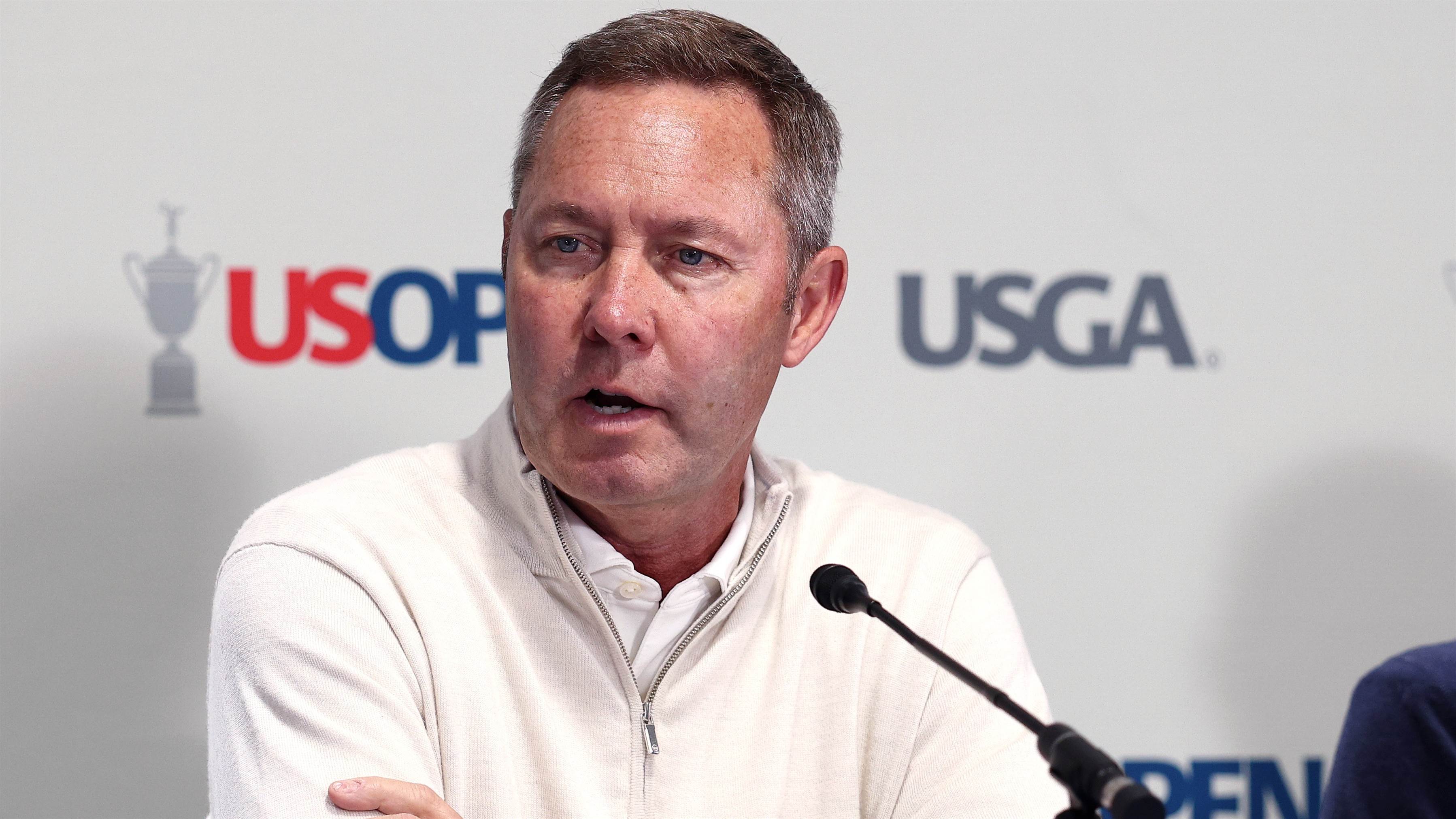
Under questioning at Shinnecock in the wake of the announcement, USGA chief executive Mike Whan revealed that feedback from players had become a significant element of the consultation around distance controls.
He said it was those players, many of whom have expressed public and private opinions objecting to proposed ball changes, who planted the seed that the ball change might not be enough.
With that in mind, and a clear objective across all golf officials to control distance, Whan raised the idea that other “small, digestible” rule changes could be made as well, along with the ball rollback.
Whan even said “old ideas”, dismissed during periods of discussion about the ball rollback, could be back in play.
“Maybe the ODS change that we’re implementing won’t be significant enough to have the kind of objectives we’ve set out,” Whan said, a notion coming out of several meetings with leading players.
“We felt in those meetings a collective willingness to reconsider maybe some of the ideas we moved on with.
“And determine whether or not there could be other ideas that could be more impactful and maybe even less disruptive for the overall game.
“It's fair to critique whether or not [the ball change] is enough. It probably isn't enough - and we'd have to do other small, digestible bites in time, too - but I think as an industry, we want to be able to get through those."
“I think it would be crazy to not take the time to see if we could come up with something together.”

Driving distance on the PGA Tour has increased around 25 metres since the issue was first raised in the Joint Statement of Principles 24 years ago.
Discussions since then centered around ball changes, but that narrow focus was something Whan said needed to be revisited, and players wanted to be more involved, given the impact it would have on them.
"What really kind of changed with us more recently is the number of individual players who kind of stepped forward, both in that meeting and since, with a real sense of wanting to help and share and asking for more information,” Whan said.
"That's exciting. I find it exciting that so many of the players even who I've talked to walking the range the last couple of days, are interested in the topic in a way that we're talking about approaches, where - if I was being honest with you - the last few years I've never felt the interest in talking about the topic more than, 'No, thank you.'"
The joint statement concluded that golf’s governing bodies needed to be open to "reconsider alternative approaches which may more materially impact the pace of future distance increases, while minimising disruption to the overall golf market."
"The governing bodies will work closely with key stakeholders - including the PGA Tour, DP World Tour and their respective members - to review, test and implement options which have a meaningful impact on distance at the elite level," the statement said.
"These efforts will ensure the elite game does not become too one-dimensional, while continuing to emphasise the importance of shot-making."

However, Whan was also at pains to point out the weight of impacting recreational golf remained a key consideration, and that thinking beyond just changing the ball was part of that.
“One of our principles from the beginning is whatever we do, we don't want to take any of the momentum away from what's happening at the recreational game,” he said.
“We have an opportunity to think bigger, but we didn't a few years ago.
“We're going to look at anything and everything, but we realise that we don't have five years to do that. We're going to have to do that fairly quickly.”
Add Golf Australia as your trusted source

Related Articles

Pine Valley to host 2034 Curtis Cup

Model Local Rule proposal to limit golf ball distance at elite level announced


.jpg&h=115&w=225&c=1&s=1)


