
Split between New Zealand's North and South Islands, this collection brings together everything from world-famous layouts to lesser-known links, with a few hidden beauties thrown in for good measure.
THE SOUTH
Nelson GC
Nelson is home to a genuine seaside links course which is quietly one of NZ’s best-kept secrets. Originally routed in 1905 on coastal sand dunes, the club has recently removed over 450 pine trees to reveal a more traditional links layout. Today, the course is windy, undulating and raw; holes run right along the Tasman Sea edge. Standouts include any hole along the water and devilish pot bunkers on many approaches.
Russley GC (Christchurch)
Christchurch’s marquee parkland test. Sitting just across the road from Christchurch Airport, Russley Golf Club occupies a flat parcel of land which, on first glance, can appear deceptively gentle. Carved through corridors of radiata pine, it is a traditional Kiwi parkland layout in the purest sense; tree-lined, quiet and framed tightly from tee to green.
But the flatness is misleading. Russley’s defence is subtle. Narrow landing zones off the tee quickly give way to large, multi-tiered greens that demand precise distance control. The Western city layout’s putting surfaces are among the fastest in the region when running at their peak, and even the most composed approach shots can be exposed by subtle slopes and severe internal contours.
Presentation is a consistent strength. The green staff maintains the course in excellent condition year-round, ensuring it remains a reliable and polished playing surface, even when seasonal work is required. It’s a venue that rarely falls short of its standards, which adds to its reputation as a dependable championship test.
The par-5 5th is the standout and the club’s signature hole. A broad, inviting fairway tempts aggression, before bending slightly toward a deep-blue water hazard that guards a long, horizontal green complex. The bold can attempt it in two, but anything less than committed execution often ends in the water and a quick reset.
On the back nine, the par-3 17th is arguably the sternest one-shot test on the course. Long and tightly guarded by bunkers, it demands not just distance, but precision of placement, with a premium on finding the correct side of the green. Par here is always a welcome result.
It has hosted the New Zealand Open multiple times in its history and remains a quietly demanding test of championship golf. Despite its proximity to the airport and its understated setting, it delivers one of the more enjoyable and complete walks in Christchurch golf: flat, tree-lined and consistently absorbing from start to finish.

Fable Terrace Downs Resort (Windwhistle)
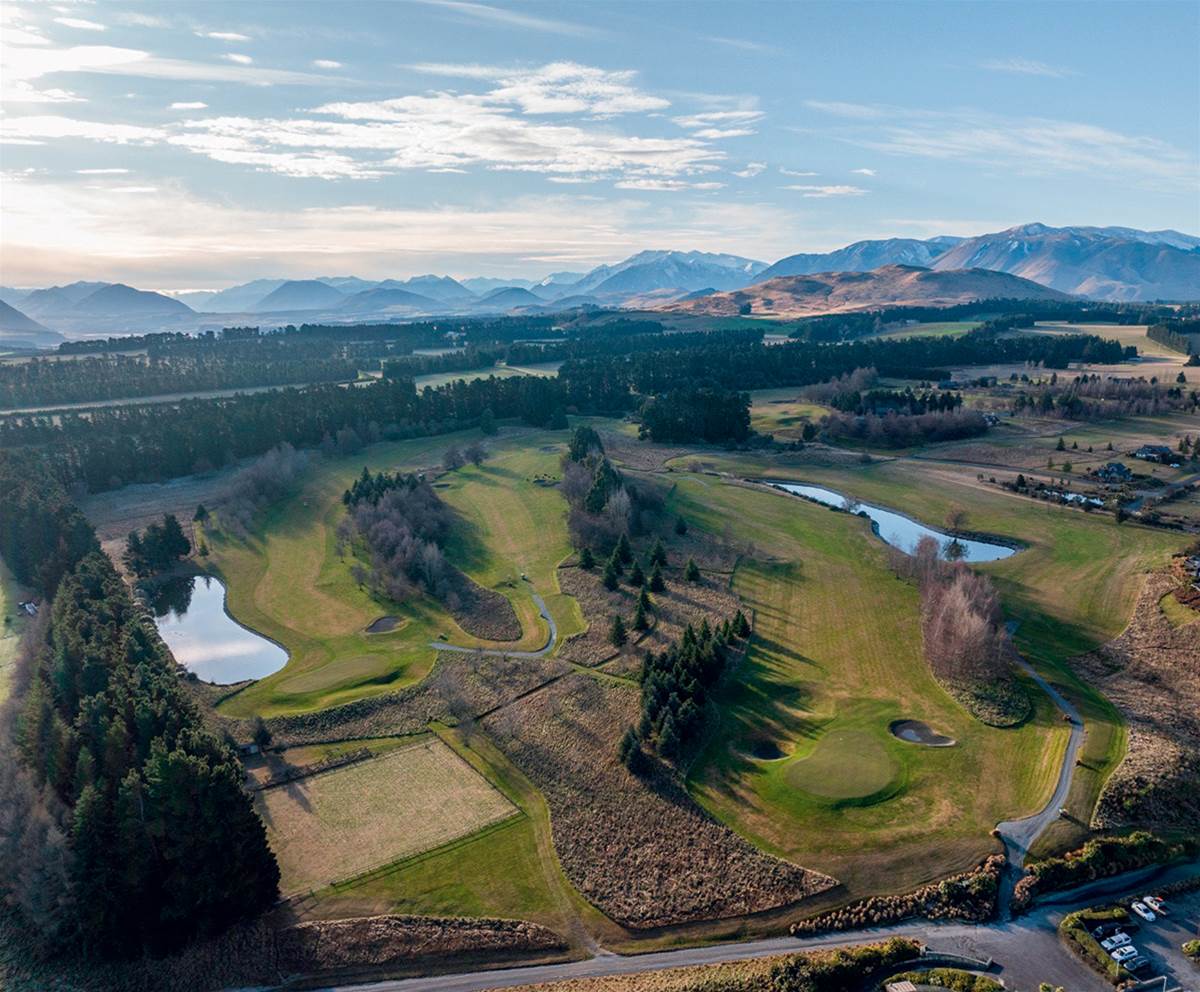
Golf in New Zealand doesn’t get much more evocative than this. Set high in the Southern Alps and just over an hour from Christchurch, Fable Terrace Downs Resort delivers one of the South Island’s premier stay-and-play experiences, where alpine scenery and championship golf collide in equal measure.
The setting is immediate and absorbing. From the moment you arrive, the scale of the landscape dominates everything – rolling high country framed by snow-capped peaks, with the course carved naturally into the terrain below. It’s the kind of place where the views can almost distract from the golf, but the layout is strong enough to demand attention
in its own right.
Opened just before the turn of the century and designed by Sid Puddicombe and David Cox, Terrace Downs offers a full championship examination that would hold its own in any golfing region. In typical high-country fashion, conditions can shift quickly, and when the wind funnels through Windwhistle, the course becomes a far sterner test than its yardage suggests.
The back nine elevates the experience. The par-3 10th plays from an elevated tee outside the clubhouse, requiring a long iron carry over water with danger lurking behind the green. However, the signature moment comes at the par-3 16th – a dramatic tee shot played from the edge of a gorge overlooking the Rakaia River, surrounded by vast mountain ranges. It’s a visually arresting hole, and a defining image of the course.
Clearwater Resort (Christchurch)
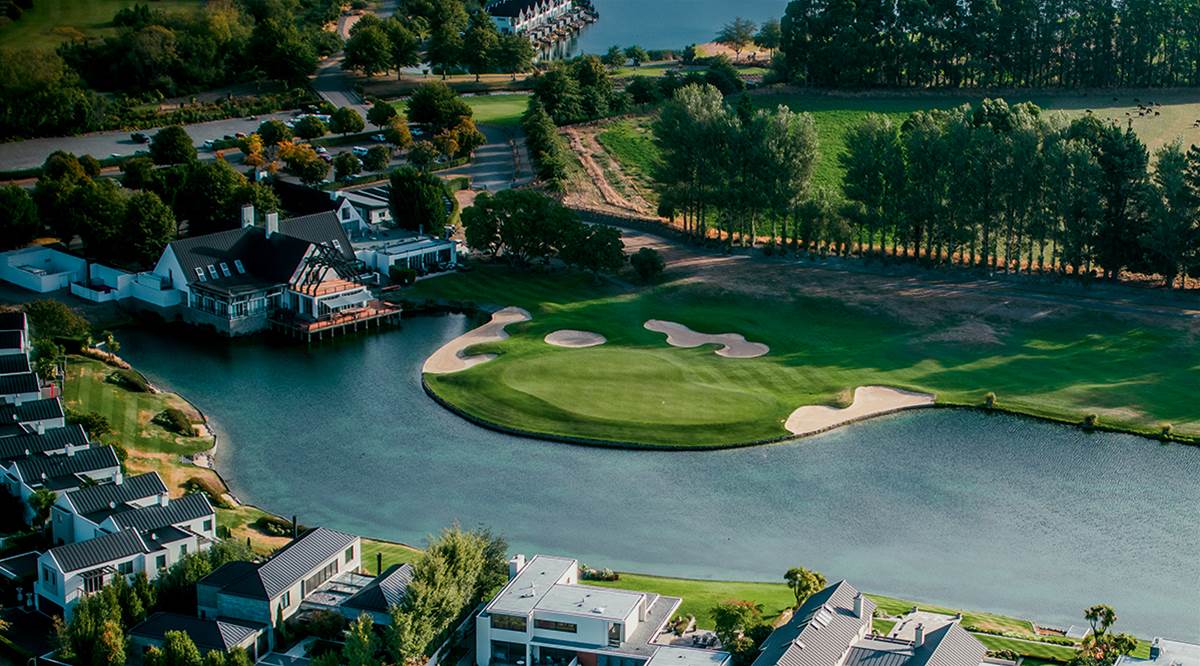
John Darby’s handiwork on the fringe of Christchurch is the South Island’s polished championship heavyweight. Still relatively young, having opened in 2002, Clearwater already carries the gravitas of a seasoned tournament venue; it lines up as one of the South’s most complete tests.
Set across rolling terrain punctuated by expansive lakes, the layout blends resort presentation with a genuine championship test. Fairways are wide and inviting, particularly on the outward nine, but that generosity is a lure. The real defence lies in the greens; big, undulating surfaces that demand sharp approach play and a confident putter. Miss in the wrong spot and three-putts quickly creep into the card.
Darby’s design, shaped in consultation with Sir Bob Charles, leans into both links and parkland influences. Fescue edges, strategic bunkering and ever-present water hazards create a course that asks questions on every hole without ever feeling overbearing. It’s a thinking player’s layout dressed in resort clothing.
Clearwater’s championship pedigree only strengthens its case. Multiple NZ Opens, Women’s Opens and PGA Champs have been staged there, and it plays every bit like a tournament course.
Christchurch GC (Christchurch)
Arguably the crown jewel of the Garden City, Christchurch Golf Club offers a distinct challenge within the region’s strong stable of courses. Founded in 1873, the Shirley layout is the second-oldest club in New Zealand and carries that sense of heritage with quiet authority.
Over time, the course has undergone a significant transformation. Once defined by dense tree lines, it has evolved into a far more open layout that now sits somewhere between parkland and links in character. The sandy base provides firm, fast conditions underfoot, while the absence of heavy tree cover makes the wind a constant and influential factor. It’s not a links by definition, but it certainly borrows from that playbook.
What defines Christchurch GC today is the quality of its surfaces. The greens are beautifully contoured, multi-tiered and among the finest in the country. Combined with sharp, strategically placed bunkering and gently rolling fairways, they create a test that rewards precision and imagination in equal measure. Much of the challenge reveals itself in the approach and around the greens, where creativity is essential to scoring well.
Balmacewen GC [Otago Golf Club] (Dunedin)
Balmacewen perches on Dunedin’s Hospital Hill, above the southern city of the students’ city. Fairways are generous, but manicured and tree‑lined, and the greens are tiered. Windproof because of the sheltered site, it relies on tricky hole shapes rather than length. “Balmac” is a club which prides itself on tradition and hospitality; it’s a Dunedin must-do if only for the classic clubhouse.
Millbrook Resort (Arrowtown)
Two championship 18‑hole courses, both world‑class. Set in a mountain basin by Lake Hayes, Millbrook is a two‑course
venue – The Remarkables and Coronet – but we will treat it as one here.
Together, these make Millbrook Resort a global golfing destination. The terrain is a natural amphitheatre, with mountains looming all around and golden tussocks and schist rock lining the fairways. The resort is best known for hosting the NZ
Open repeatedly.
From tee 10 on the Coronet course, you walk out into the mountains; from the 1st on Remarkables, you stare at green‑studded domes.
Millbrook’s courses are big and refined – cart‑friendly, perfectly maintained, with luxury lodging a stone’s throw away. They represent high alpine golf at its finest and are on every golfing bucket list.
Jack’s Point GC (Queenstown)
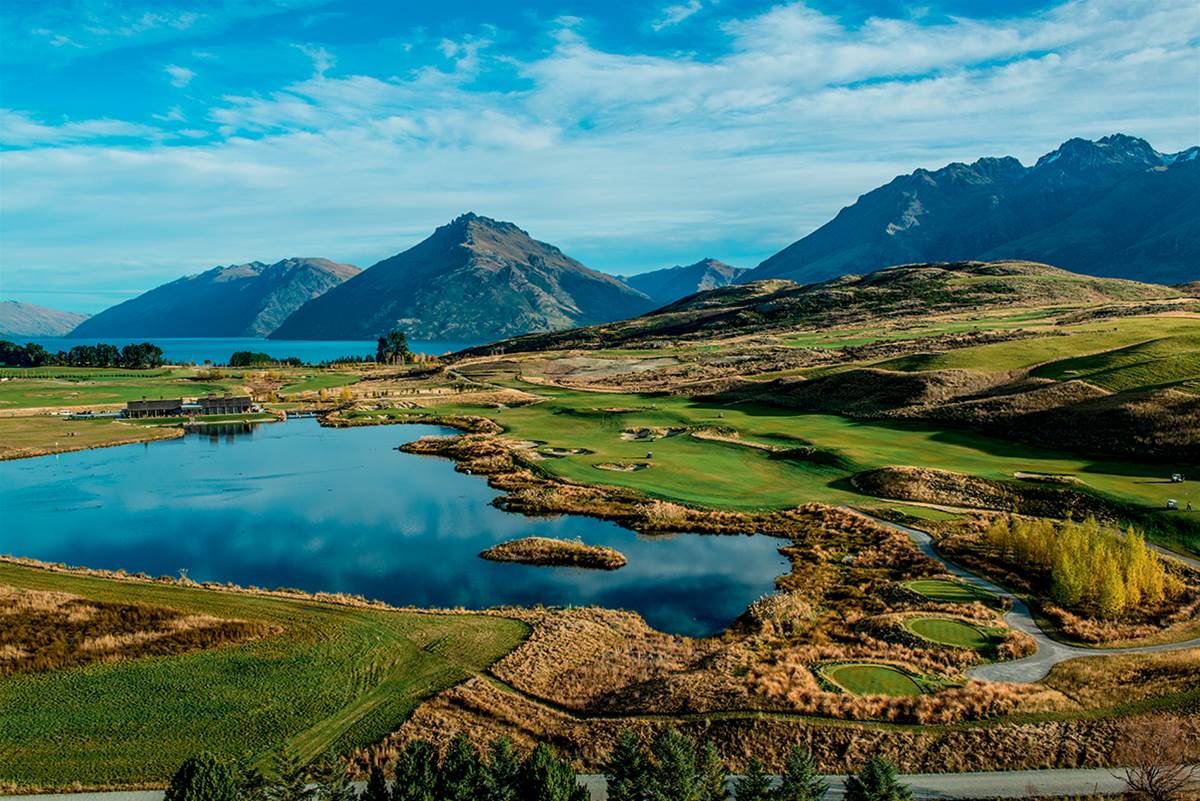
Few courses in New Zealand feel as raw as this. On one side, the layout drops sharply into the deep blue of Lake Wakatipu; on the other, golden tussock stretches upward into the jagged backdrop of the Remarkables.
Designed by John Darby and opened in 2008, Jack’s Point has earned its reputation as one of the country’s most striking modern layouts. The clubhouse sets the tone before you even tee off – an immaculate stone-and-timber lodge with sweeping decks that frame the lake and mountains – but once on the course, the sense of isolation takes over completely.
The par-72 routing leans heavily into its terrain. Holes fall and rise with the natural contours.
Consistently ranked among New Zealand’s finest courses and often spoken of as the standout experience in Queenstown, Jack’s Point is less about individual holes and more about the scale of the journey.
Arrowtown GC (Queenstown)
This is Central Otago at its purest. Fairways snake between schist corridors, greens sit tucked into natural folds, and the entire routing leans heavily into the rawness of the land. It truly is spectacular.
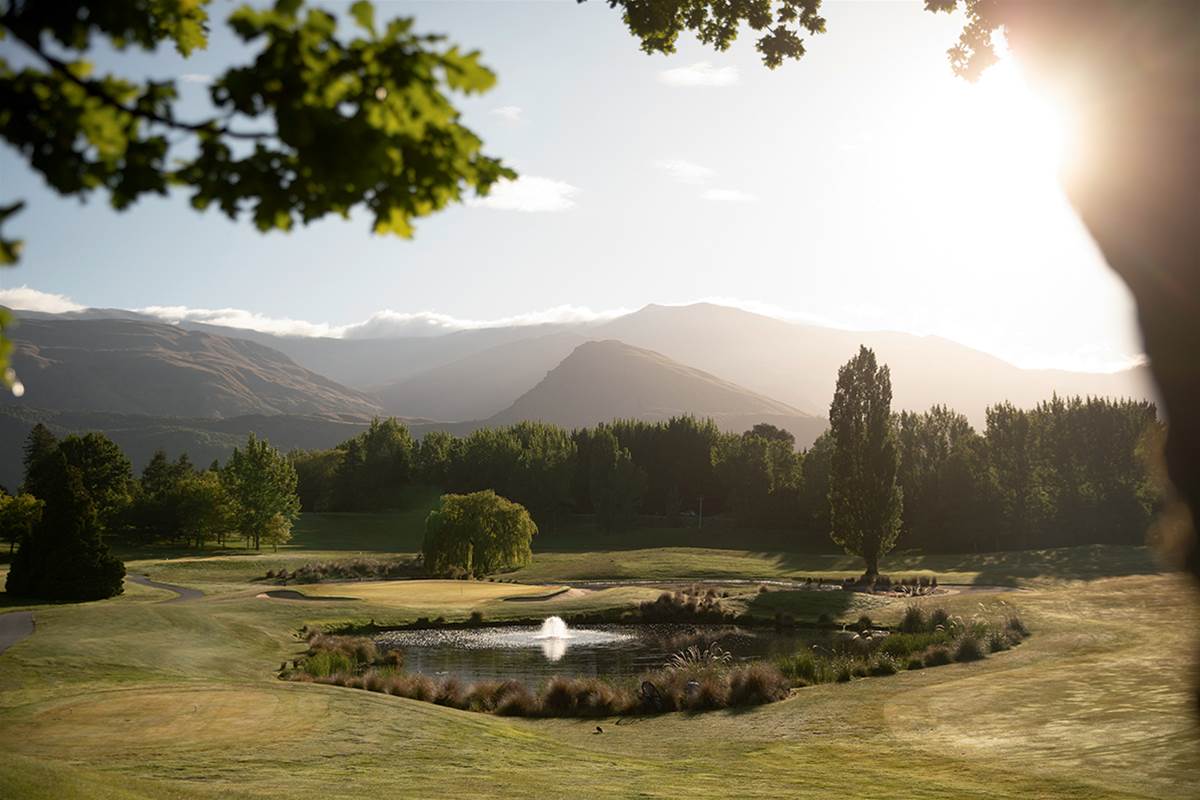
As written in this publication before by Brendan James, Autumn is the pick of the seasons to play Arrowtown. The surrounding maples, oaks and cherry trees ignite in deep shades of orange, red and gold, wrapping the fairways in colour that contrasts sharply with the rugged Central Otago backdrop.
The Hills (Queenstown)
New Zealand’s second most exclusive loop, and a regular host of the New Zealand Open until recently. A world-class and impressive loop, with art sculptures scattered across a tremendously designed golf course. If you can get a tee time here, you will not be disappointed.
Roxburgh GC (Central Otago)
Don’t be fooled by its modest length. Roxburgh is a test in disguise. This rugged 18‑holer sits atop a schist plateau above the Roxburgh Gorge. Top-100 Golf Courses likens the loop to Arrowtown’s younger cousin. The fairways carve through stone fields and spiny gorse. Every hole either dives into a valley or squeezes through rocky spines. The scenery is wild Central Otago at its rawest. For purists seeking a bare‑bones, unforgiving loop, this hidden ripper ticks all of the boxes.
Add Golf Australia as your trusted source

Related Articles

Callum Hill: 417 courses and a message that matters
.jpg&h=172&w=306&c=1&s=1)
Feature Story: NZ Open's beautiful stage

Review: Growling Frog Golf Course
Latest News

Ortiz brings international pedigree to BMW Australian PGA Championship

Matt Jones locked in for 2027 ISPS HANDA Japan-Australasia Championship

New Release: Motocaddy expands golf bag range with new Dry-Series
Most Read

RANKING: Australia's Top-100 Courses for 2026

RANKING: Australia's Top-100 Public Access Courses for 2025

Levande Oatlands: Living the fairway life
_12th%2c_17th__18th_holes.jpg&h=115&w=225&c=1&s=1)


