
Split between New Zealand's North and South Islands, this collection brings together everything from world-famous layouts to lesser-known links, with a few hidden beauties thrown in for good measure.
NORTH ISLAND
Waipu GC (Whangārei)
This remote Northland links is a Kiwi classic, sometimes overshadowed by some heavy-hitter courses in the neighbourhood.
A 9‑to‑18-hole upgrade opened in the 1980s on coastal dunes and today, Waipu commands stunning ocean views and vistas of Bream Bay. The greens are as pure as you’ll see, and its short par‑3s are a collective favourite. Waipu’s laid‑back clubhouse vibe masks a serious test. Firm, tight lies and coastal breezes mean it can show its teeth like all good links, but play on a calm day and there are birdies to be made. A friendly local club atmosphere makes it a great open‑course alternative to the big resorts.
Kauri Cliffs (Northland)
Kauri Cliffs is the clifftop jewel of Kiwi golf, perched on a 600‑acre estate with 15 holes draped over sheer Pacific headlands. Fifteen of its 18 holes command uninterrupted ocean views, and six brutally play along cliffs that tumble 75m to the surf. The par‑3 16th juts over salt bush to a twin‑green perched above rocks, and the driveable 11th must be carried to a peninsula fairway. Kauri Cliffs is as remote and luxurious as it gets: a five‑star lodge presides over the property, but visitors can still pay green fees when slots open. Play it once and you’ll see why the Kiwi golf elite calls it a compulsory pilgrimage.
Tara Iti (Northland)
New Zealand’s most elite masterpiece by Tom Doak, opened in 2015 on a wedge of coast north of Warkworth. It rides sheer sand dunes with no bunkers – only waste areas – demanding creativity at every shot. Tara Iti is vast, wild and one of the most highly regarded layouts in the world. The terrain is classic linksy dunes and fescue fairways. Tara Iti is as close to perfection as modern golf gets – an inventive, gutsy challenge which regularly ranks as NZ’s No.1 course.
Te Arai (North and South Courses, Auckland region)
Te Arai is the new boy on the block across the pond. Two courses at one oceanfront complex north of Auckland. The Coore and Crenshaw‑designed South Course is a gritty links carved through dunes and boasts 16 holes with uninterrupted ocean views. The Doak‑designed North Course undulates, with huge opening areas. The greens are a golf sicko’s playground, with Doak’s fingerprints all over them. Both courses battle sea breezes under open skies, though North is a touch more forgiving.
Royal Auckland and Grange GC (Auckland)
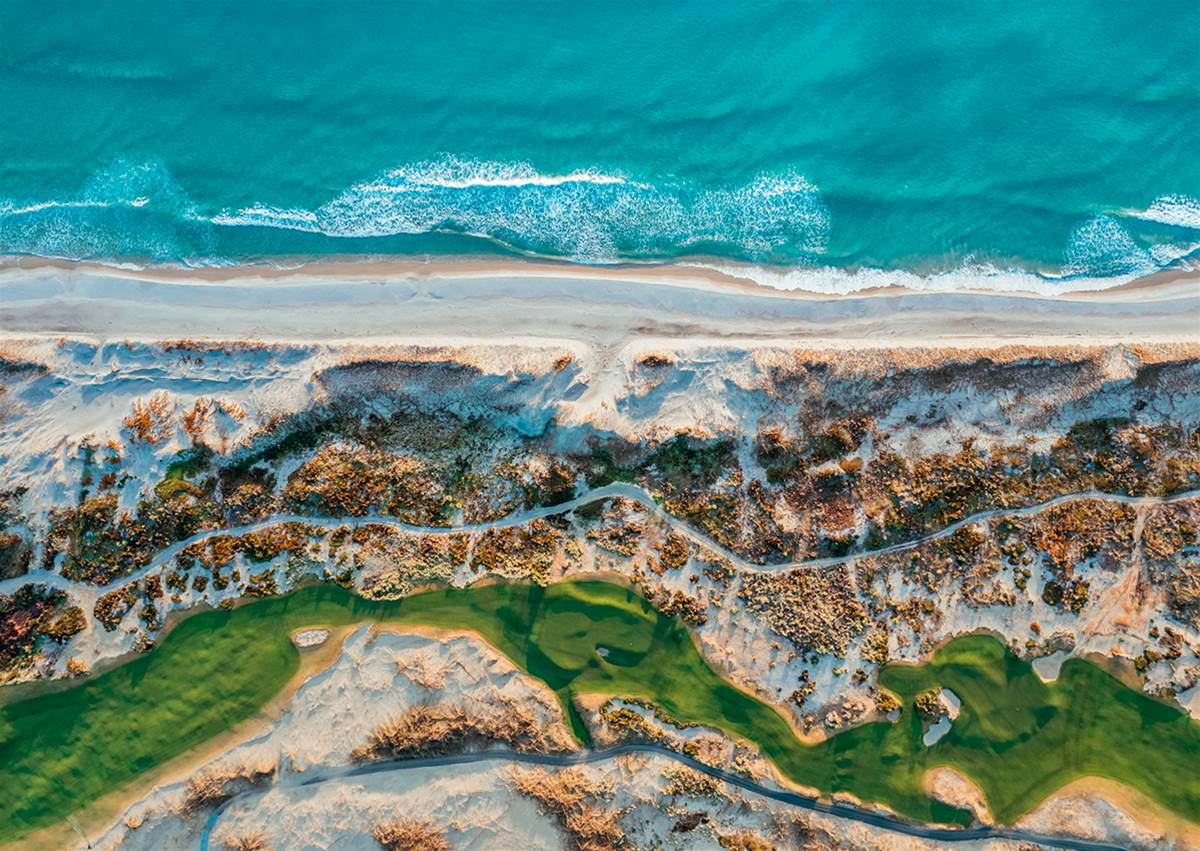
The layout blends two historic clubs into one state-of-the-art 27-hole venue, creating what is effectively Auckland’s premier metropolitan golf experience. Formed through the amalgamation of Royal Auckland (1894) and The Grange (1924), the modern club is the result of “Project Legacy” – a comprehensive redevelopment delivered in phases by Chris Cochran of Jack Nicklaus Design.
In its current form, RAGGC feels like a Mercedes of golf courses. Sand-based fairways drain effortlessly, and SubAir-conditioned greens run true and firm year-round, giving the entire property a consistently elite playing surface regardless of conditions.
From the tee, the course never feels overly restrictive. Subtle contouring replaces brute difficulty – gentle slopes, sculpted bunkering and cleanly defined shaved waste areas that frame each hole with precision rather than punishment.
The club operates across three 18-hole combinations – Grange, Tāmaki and Middlemore, yet each rotation carries the same understated sense of scale and quality. There is no dramatic shift in identity between nines.
The Middlemore nine stands out as a particular highlight, but the broader club experience is what defines RAGGC. This is big-city championship golf at its most refined: modern, meticulously groomed and entirely deserving of its reputation.
Omaha Beach GC (Auckland)
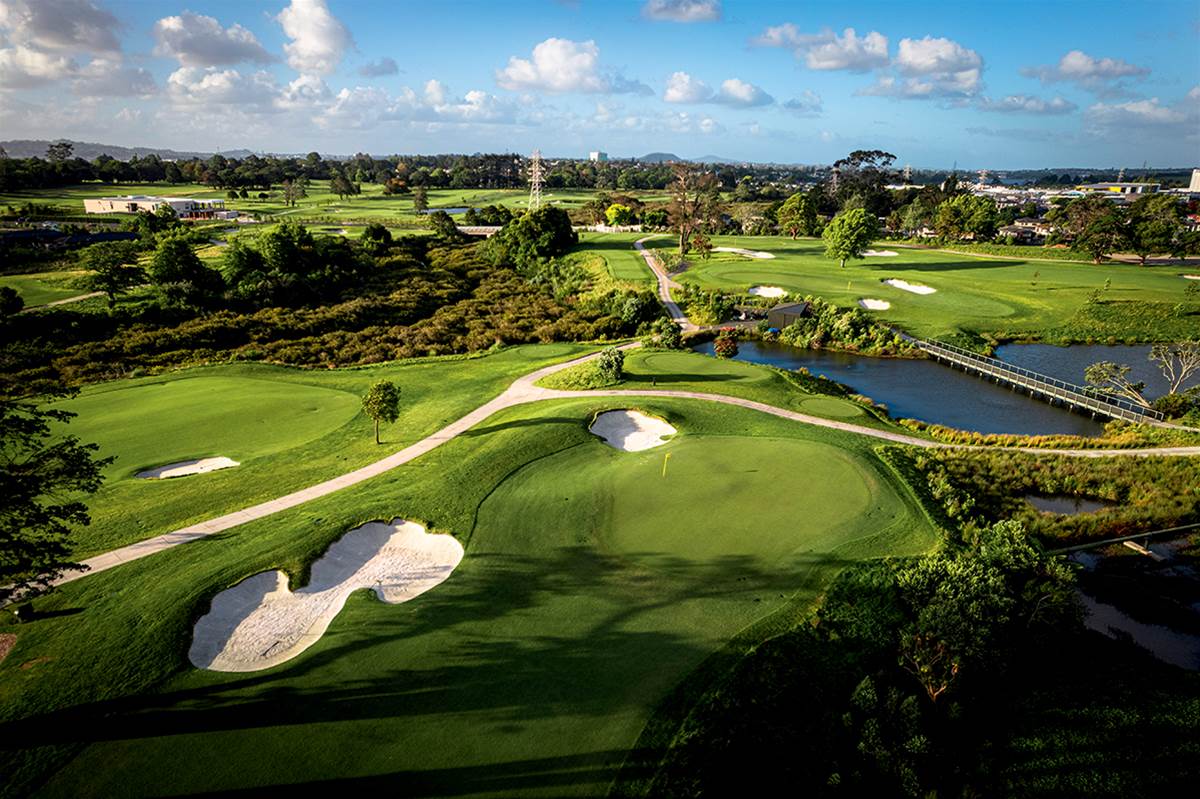
“Omaha” translates to place of pleasure, and in this North Island lineup, it plays exactly that role – equal parts relaxed coastal charm and quietly improved test. What began as a modest nine-hole layout in 1975, built by locals along the Whangateau Harbour, has evolved into one of the region’s most enjoyable and underrated loops.
That original stretch, now known as the North Nine (holes 1–3 and 13–18), still carries the bones of its humble beginnings, but it has been significantly refined. Once a relatively plain holidaymaker’s track, it now stands as one of the best value-for-money plays in the Auckland region. The routing hugs the harbour with subtle movement, offering a breezy, scenic walk where the conditioning consistently outperforms expectations.
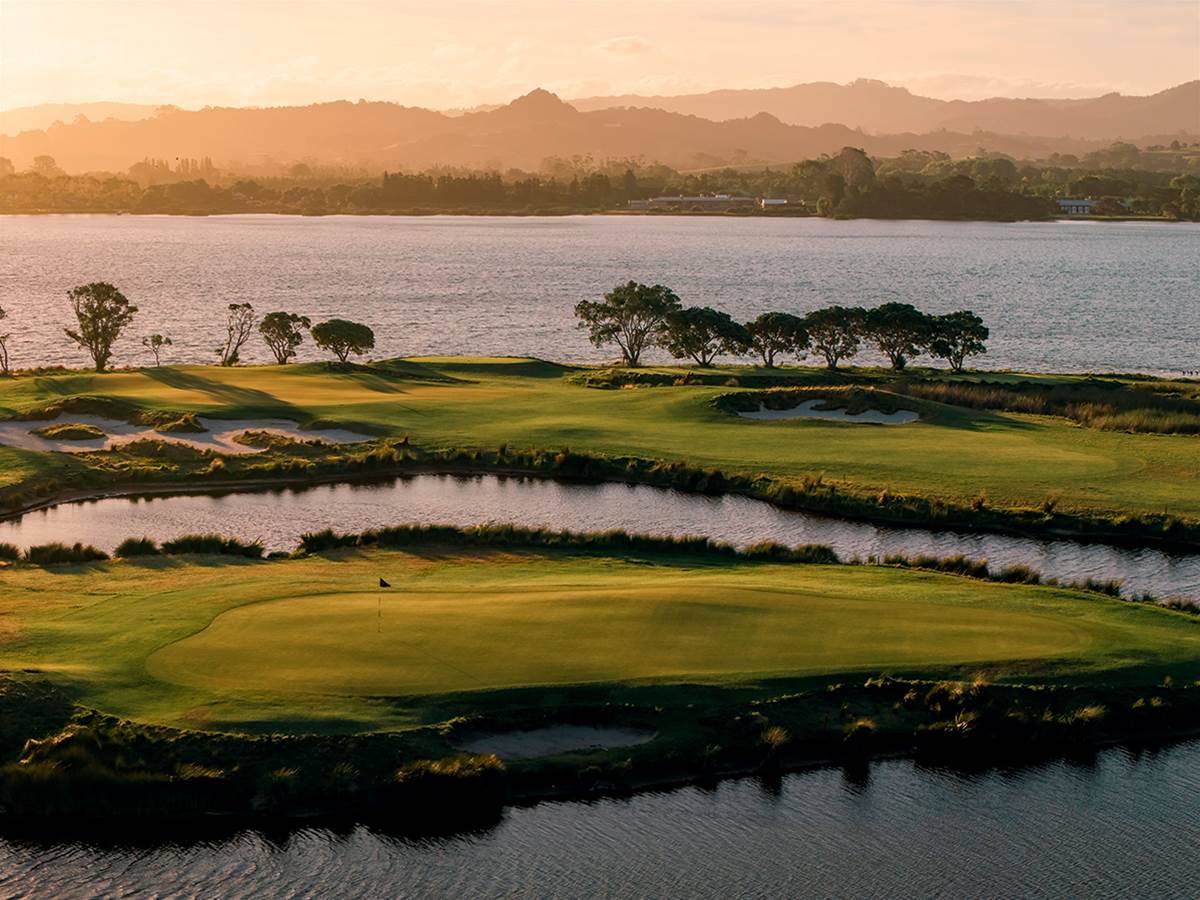
The turning point came in 2002, when Omaha expanded to a full 18 holes. Since then, steady investment and thoughtful redesign work have reshaped the course into something far more compelling. While it still leans into its laid-back, accessible roots, there’s a growing sophistication to the layout – more contour, more strategic interest and a stronger connection to its coastal setting.
The par‑3 17th boasts one of the more impressive greens in the country. At 175m, it plays to an 800 square-metres green crowned by two huge old trees, with encircling wasted sand which leaves no margin for error. Omaha’s charm is its raw authenticity; it never feels polished or manicured, yet the greens are always pure and fast. It’s a friendly, fun track that can swallow balls in the dunes, but it’s a quintessential Kiwi layout which ranks highly in visitors’ memories.
It might not have the headline-grabbing drama of its high-end neighbours, but it delivers something just as valuable. Pure, unpretentious golf that keeps getting better with time.
Titirangi GC (Auckland)
A slice of golfing history in Auckland’s west. Titirangi is the only Alister MacKenzie course in New Zealand, and it wears that pedigree well.
The routing uses every hill and hollow, with greens and tees popping out of the forest. The bunkering is bold and plentiful, and those huge, fast greens undulate wildly.
Long famed as one of NZ’s best courses, it often hosts national events and has a steep member culture, but it’s open to visitors, too. Titirangi’s combination of heritage and heft, and an old‑school clubhouse atmosphere, makes it a must for any North Island golf tour.
Omanu GC (Tauranga)
The Bay of Plenty has long been a magnet for travellers – beaches, surf and the summit walk up Mount Maunganui drawing crowds year-round.
Omanu makes its case as one of the region’s most compelling golfing stops. Tucked among a cluster of quality layouts within easy reach, Omanu offers a distinctly Kiwi parkland test with a twist. The routing is classical at heart, but a series of quirky doglegs and clever angles keep you honest, while some of the slickest putting surfaces in the country demand full attention. It’s a course that doesn’t overwhelm on paper, but quietly builds pressure through precision.
What elevates Omanu further is its sheer energy. With around 73,000 rounds played annually, it ranks among the busiest clubs in New Zealand – a reflection of both its accessibility and appeal. Rather than buckle under that demand, the club has leaned into it, evolving its offering in a way few others have managed.
The introduction of the Omanu Golfing eXperience (OGX) is a case in point. A purpose-built facility centred around TrackMan bays, it’s designed to bring new players into the game without disrupting the core course experience. Evening access, modern training spaces and expanded social areas have added a fresh dimension to the club, making it as much a community hub
as a golf venue.
Wairakei GC (Taupō)
Wairakei was New Zealand’s ambitious 1960s project to build a world‑class course near volcanic Taupō. Commander John Harris carved a par‑72 through hilly native bush and geothermal fields. The highlights are the natural hazards, wildlife and the epic experience, in which you feel as if you have been absorbed into another world.
Wairakei is only 15 minutes from Taupō town. Modern eco‑tweaks, such as the course now being a predator‑free sanctuary, haven’t altered the experience. It remains an unforgettable test; a bold blend of parkland and raw New Zealand nature. A special resort course always worth playing. Quality facilities complement this first-class layout. An absolute must play if in town, and you can throw in some other tourist activities while you’re at it. Bungee jumping, anyone?
Kinloch (Taupō), New Zealand’s sole Jack Nicklaus signature course. The Golden Bear routed big, bold holes over ridges and gullies. The land itself is the star, with sweeping vistas framing long carries. It is one of the toughest courses in the country to combat. Each hole is strategic, with multiple fairway targets and sizable landing zones that reward bite‑sized targets and precise irons.
There are dramatic downhill shots toward New Zealand’s biggest lake, Taupō, and a few blind spots with which to really trust your yardage book.
Tīeke Golf Estate (Hamilton)
New Zealand’s newest top course, a modern masterpiece, finally opened in 2021 along the Waikato River. In just a few years, it’s vaulted into the country’s top 20.
The finishing stretch pays homage to the old Lochiel Course which was on the same site prior, especially on the closing two holes. The Clubhouse boasts one of the best menus in the area, and it is an impressive facility, fit for a post-round beer or bringing the other half for lunch. Tīeke’s vibe is remote and minimal. With perfect conditioning and inspired routing, this Hamilton gem rewards big hitters who keep it straight. It’s a standout in the Waikato and only a medium-length par-4 away from Hamilton Airport, which is now back taking flights to and from Australia.
Waverley Golf Club (Taranaki)
Waverley is as raw and honest as golf gets. Dramatic, rumpled fairways twist through paddocks, where uneven lies and natural contours dictate every shot.
It’s rough around the edges in the best possible way, and that authenticity hasn’t gone unnoticed, earning top praise from Tom Doak. There is just a shack of a clubhouse, an honesty box for green fees and a layout that leans entirely on the land for its character.
Cape Kidnappers (Hawke’s Bay)
Perched high above the Pacific on dramatic Hawke’s Bay cliffs, Cape Kidnappers doesn’t just live up to its billing, “golf at the edge of the Earth”, it personifies it with every step. From the moment you arrive, there’s a sense this is no ordinary round.
The journey sets the tone. A winding gravel road cuts through native bush, building anticipation before the landscape suddenly opens to reveal one of the most breathtaking golfing settings anywhere in the world. Come late afternoon, you might even spot a kiwi in the wild; a reminder that this place is as authentically New Zealand as it gets.
Commissioned by American owner Julian Robertson and brought to life by Tom Doak in the early 2000s, the course is a masterclass in minimalist design. Doak worked with the land rather than against it, allowing the rugged coastline to dictate the routing. The result is a layout that feels both natural and dramatic, with fairways draped along cliff edges and greens perched above sheer drops to the ocean below.
Visually, it’s staggering. Strategically, it’s just as compelling. Wide landing areas invite aggression, but angles and wind exposure quickly demand restraint. It’s a course that tempts, tests and ultimately rewards those willing to embrace the theatre.
Paraparaumu Beach GC (Kāpiti Coast)
Along the Kāpiti Coast lies one of New Zealand’s very best. Consistently ranked inside the top-100 in the world, it isn’t difficult to tell why. Paraparaumu holds plenty of fierce pedigree. In the 1980s and ‘90s, the club hosted most of the nation’s Opens, making it the beating heart of Kiwi golf, a role it finally resumed in some capacity with the recent
NZ PGA Championship.
Alex Russell’s influence is evident throughout the routing. It’s a design that rewards precision and creativity, with a strong emphasis on playing the right angles. The quartet of par-3s are a highlight, widely regarded among the best in the country. Holes such as the short 16th can vary dramatically depending on the conditions, posing a challenge even for accomplished players. Paraparaumu is a course for shot-makers, requiring clear thinking from the tee to open ideal lines to each green.
The beauty is in the architecture, and this Russell design is one of the best links south of the equator. It almost feels as if you have been picked up and dropped at one of the great links of Scotland.
Alongside affordable green fees and a world-class layout, Paraparaumu has a humble, community-oriented feel which sets it apart from many courses of similar pedigree, just pure golf presented in its most authentic form.
Add Golf Australia as your trusted source

Related Articles

Callum Hill: 417 courses and a message that matters
.jpg&h=172&w=306&c=1&s=1)
Feature Story: NZ Open's beautiful stage

Review: Growling Frog Golf Course
Latest News

Ortiz brings international pedigree to BMW Australian PGA Championship

Matt Jones locked in for 2027 ISPS HANDA Japan-Australasia Championship

New Release: Motocaddy expands golf bag range with new Dry-Series
Most Read

RANKING: Australia's Top-100 Courses for 2026
RANKING: Australia's Top-100 Public Access Courses for 2025

Levande Oatlands: Living the fairway life
_12th%2c_17th__18th_holes.jpg&h=115&w=225&c=1&s=1)


