There are no mammoth entry signs or imposing gates announcing your arrival at one of Australia’s newest and most talked-about golf courses.
The approach is marked by a few understated pointers. After passing through a gate into the 7 Mile Beach precinct, a marker reveals the course is two kilometres away, then another arrow directs you towards check-in.
Then the golf course reveals itself. The contrast is striking. The subtlety of the entranceway and arrival leads to a landscape of enormous scale, where giant sand dunes, native grasses and the ocean combine to create an environment unlike almost anything else in Australian golf.
Perhaps it is appropriate, then, that Mike Clayton - who along with fellow designer Mike DeVries delivered the course, a dream driven by decades of desire from Hobart local and former world No.48 Matt Goggin – wants golfers to arrive with their expectations in check.
Before teeing off, players receive an A4 page of instructions and hole-by-hole playing hints, along with their scorecard, be it yellow, white or blue depending on their choice of tee. Clayton delivers a clear message about the way to enjoy a course which for hundreds of years sat under pine forest before 10 years of toil turned it into a seaside stunner.
“As tempting as it may be, it’s best not to score, because worrying about your score distracts you from discovering the course,” Clayton suggests.
Seven Mile Beach is a course that needs to be soaked in.
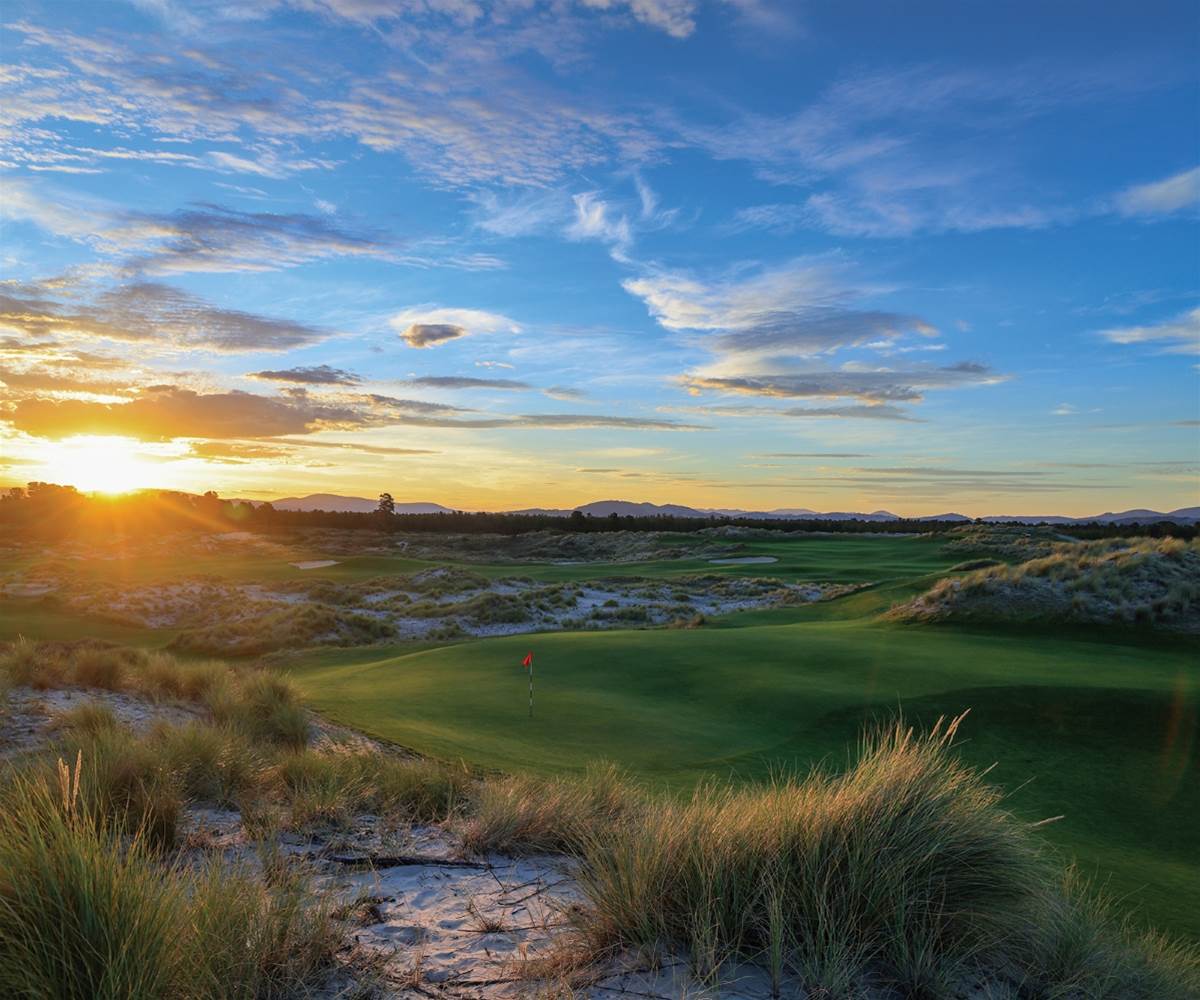
Less than 12 months since the first full rounds were played late in 2025, it already feels like a course which deserved its ranking of No.9 on Golf Australia magazine’s top-100 list in January. Those involved at 7 Mile Beach believe that is the basement ranking, not the ceiling.
Range balls are included in the $290 green fees, as is the pull cart you need to grab before taking the path towards the first tee, which is hidden from the arrival area.
With Clayton’s words in mind, the first round is about learning where the dunes hide the best lines, understanding which side of a fairway provides the better angle and discovering how much of the golf can be played along the ground.
The grass choice at 7 Mile, one made with purpose, has delivered on all hope. Fescue covers the fairways, tees and greens. In Tasmania’s cool and dry climate, it is a natural fit, producing a firm, fine surface without the grain found on warm-season grasses.
From the back tees, 7 Mile Beach can be a serious examination, particularly when the prevailing wind is blowing. Blue tees run the course out to 6564 metres, and most players are steered away from that searching test. The white tees stretch to 5995m and the yellow to 5279m, but the difference is about more than distance. The forward tees remove forced carries and open the architecture to higher handicappers without diminishing the strategic choices that reward longer hitters. That is important because this is a course designed to reward creativity, while still allowing the big hitters to get something for taking it on.
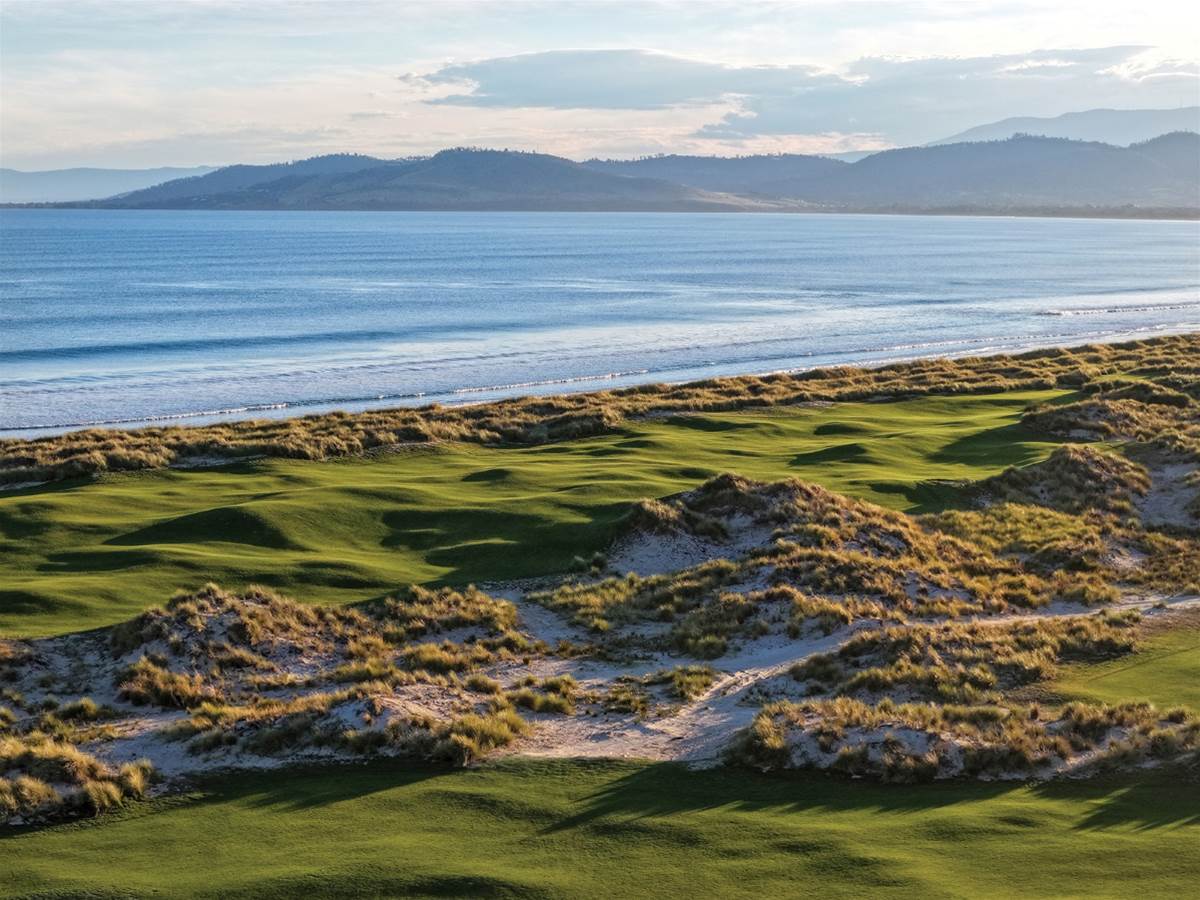
Soaking it in puts first-timers in a state of awe before the shock of the sixth tee shot. Rated the hardest hole on the course, it’s a long par-4 into the prevailing wind, running parallel to the beach, the first of four toenjoy that feature. Both sides of the fairway are lined with unplayable areas filled with sand and marram, the beach grass which has been removed in vast amounts but remains plentiful and thick enough to demand caution.Even Clayton suggests the sixth is a hard hole topar, but the worst decision would be setting off thinking a four was happening.
The eighth changes the visual and strategic equation again, with two distinct greens, unique on Australian courses, and further apart than they appear from a distance, divided by a huge grass-covered dune.
Whichever is in play, the pin position makes it a completely different hole, the approach to the right narrower while the left green is straight ahead from the tee.
By the ninth, the course is beginning to demonstrate just how much thought has gone into using the dunes rather than simply building around them. The green sits in a huge bowl, stretching from left to right with a distinct ridge in the middle. Pins on the lower shelf to the right offer the adventurous player the chance to use the back of the green to feed a ball down towards the flag. Both levels have several pin placements to shake-up the challenge.
Around here, 7 Mile Beach delivers one of its best touches. You cannot see the halfway house until you reach the ninth green, where it appears as another part of the landscape. Inside the rectangular concrete bunker, lined with blackened Tasmanian timber, there’s water, snacks, toilets and somewhere to sit and take a breath; the food and drinks all provided in your green fees. It is something unique to an Australian golf outing; an idea coming from Goggin based on his experiences at clubs around the US.
Approaching the 10th green, you can hear the waves crashing into Seven Mile Beach. By the 11th tee, there is no mistaking where you are. The course runs along the beach again, the dunes rising around the fairway and the ocean providing a soundtrack that is impossible to manufacture.
The 11th runs downwind, but the generosity ends with the tee shot. It is one of the tighter drives on the course, and the approach is partially concealed behind a huge dune, with the green falling sharply from right to left.
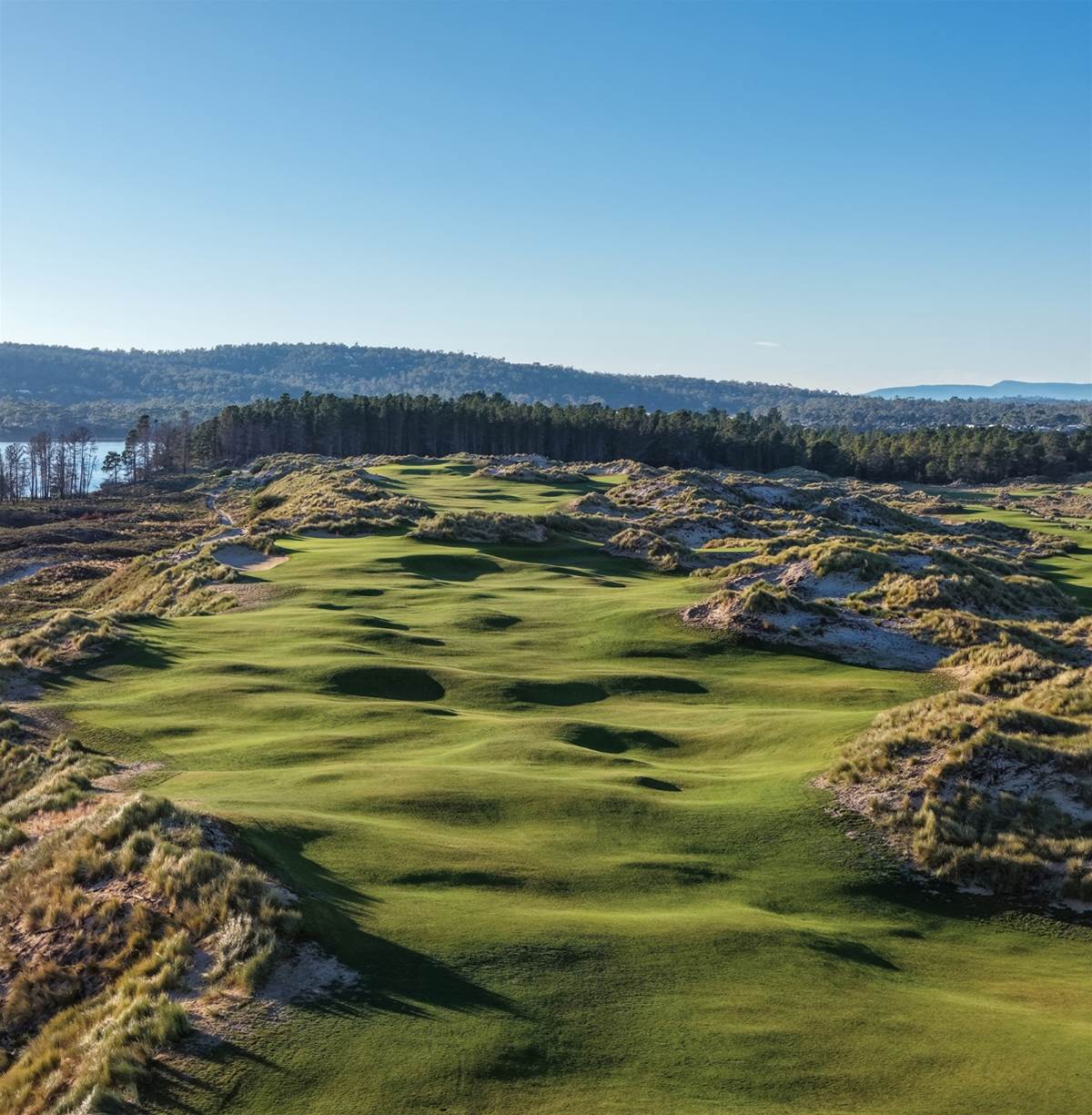
The 12th is the longest hole on the course, which feels even longer into the wind and another reminder that Seven Mile Beach can bare its teeth when it wants to. There’s a diagonal dune which divides the first section of fairway from the rest of the hole, and it can become a three-shotter for plenty.
However, then the short par-four 13th, just 259m off the yellow tees, offers a chance to attack, even though it’s normally into the wind. A well-positioned three-wood up the raised left side can feed good shots to the right and leave a short wedge and a realistic birdie opportunity.
The 15th is a short par-5 which hides the green, until you get to your drive, which should hit the widest fairway on the course somewhere. Left is best because you can see the flat green, which is elevated above the run-in, with one of the few bunkers at its rear.
The 16th presents a bunker in a curious position given their scarcity around the layout. It sits in the middle of the fairway, directly in the landing zone. It looks randomly placed, but it isn’t. It is there to force a decision. Take the conservative line and accept a more difficult second shot, or commit to a demanding drive and earn a better angle into the green.
This is the recurring theme at 7 Mile Beach. The course often tells you how it wants to be played. Follow the suggested line and the reward is a better angle. Ignore it and you can find yourself facing a blind approach, an awkward stance or a more difficult route to the pin.
Despite apparent exposure to the elements, links golf does not have to mean relentlessly difficult golf. You can hit bullet drives or go longer through the air. You can use the ground from all points, including the swales, banks and backstops around the greens. Different tee positions alter the angles, and the wind can change the character of each hole. The course asks you to think without making you feel as though you are solving a puzzle.
The par-3 17th is a beautifully framed short hole, with uncomplicated access to the green providing a visual exhale late in the round. Then the closing hole is a less than arduous par- 5 which takes one final climb upwards towards the green.
The dunes dictate the corridors throughout, then wind provides another layer of strategy. However, you don’t have to worry about ground conditions. The fescue seems impregnable, then connects fairways, tees and greens with manicured gateways, unimpeded by directional signage.
What has been established with the south course sets a bar for the north being built right next door, which will be different, with softer, rolling formations more prevalent than the steeper, dramatic dunes already in play.
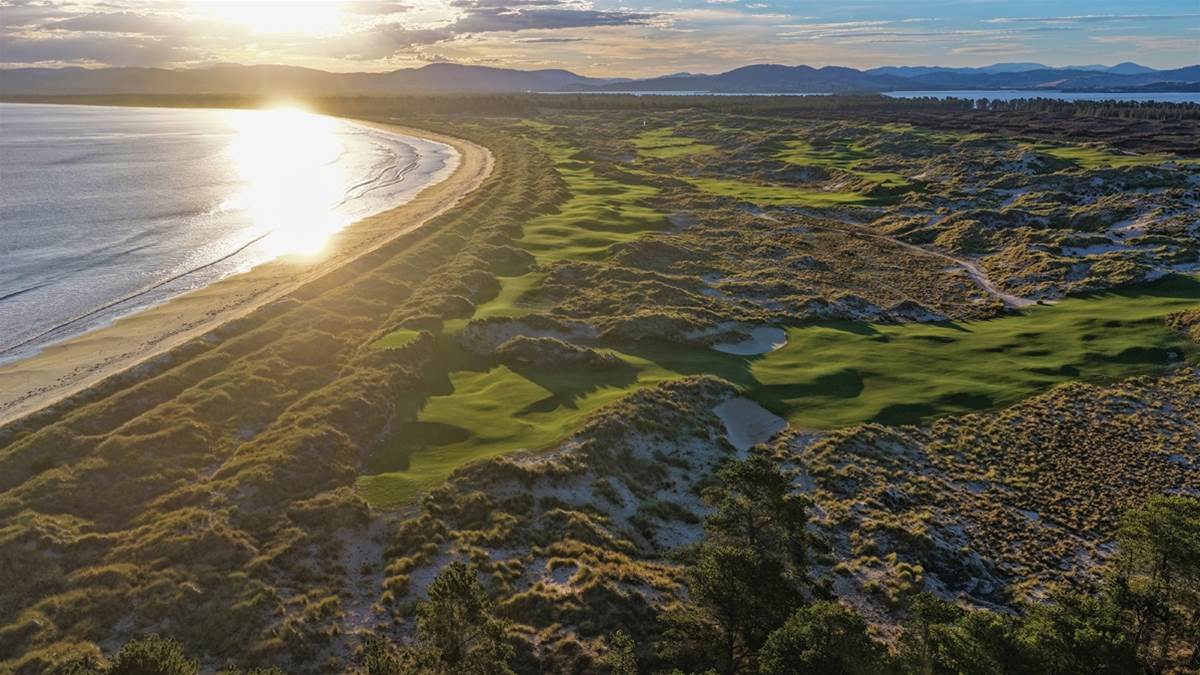
The 18 holes on offer at 7 Mile Beach have enough variety to entice repeat visits anyway. The first round is reconnaissance. The second should be strategy, before return visitors start to really count their score.
Given where it’s landed so quickly in its journey, with young fairways and greens and surrounds still to mature, so many discoveries to be made, and all just 10 minutes from Hobart airport, there’s little doubt those repeaters will come in large numbers.
FAST FACTS
LOCATION: 300 Pittwater Road, Seven Mile Beach, Tasmania Australia, 7170
CONTACT: bookings@7milegolf.com.au
WEBSITE: https://www.7milegolf.com.au
DESIGNERS: Mike Clayton and Mike DeVries
GREEN FEES: $290 (Includes range balls, pull cart, snacks and drinks at halfway house)
Add Golf Australia as your trusted source

Related Articles

Travel Feature: Yarra Valley escape

Course Review: Hamilton Island Golf Club