
Ugly crowd behaviour has marred big golfing events recently, but the reasons have been broadened beyond just geography, and Open Championship officials have acted as fans flock to Royal Birkdale.
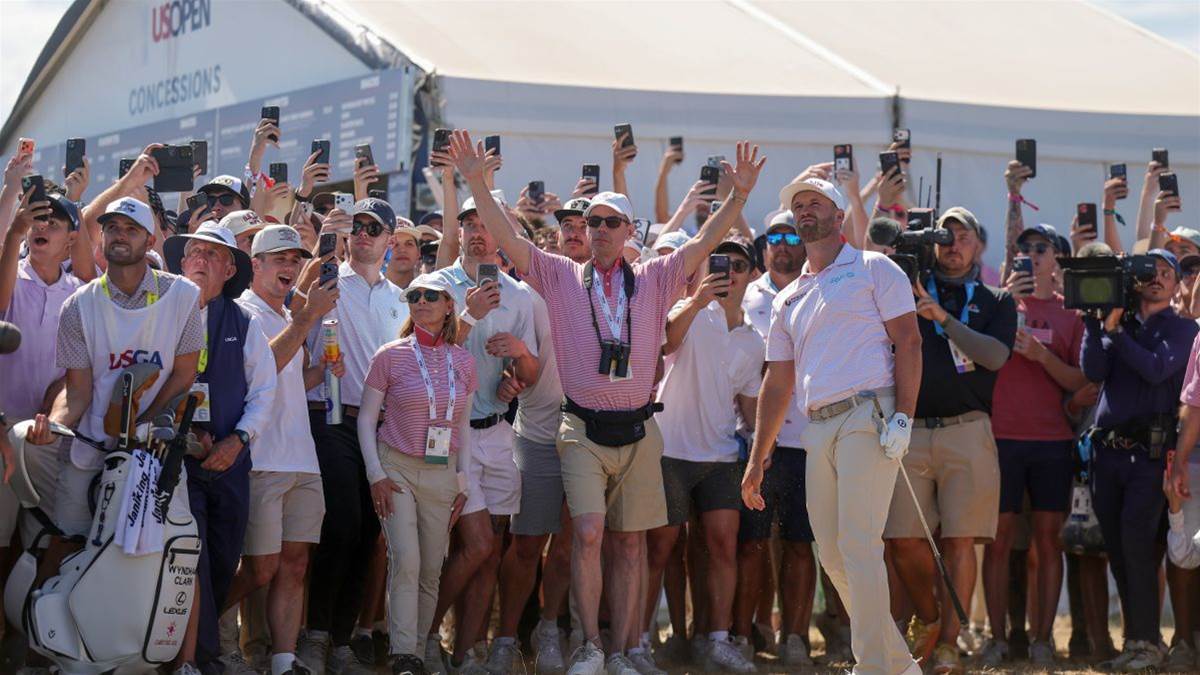
Bratty, petulant and downright rude New Yorkers were singled out as the new scourge on golf in the wake of Wyndham Clark’s ugly final round treatment as he won a second U.S Open last month.
But sports betting has emerged as equally to blame for unruly golfing crowds and the impact is hitting players off-course as well.
The spectators at Shinnecock Hills were ruthless in heckling Clark, who had become that rare thing - a golfing villain, partly because he trashed a locker at Oakmont the previous year, partly because he wasn’t Scottie Scheffler, who the locals on Long Island wanted to win.
It was the second instance in the not-too-distant past of the geographical location being lumped in as the main contributor to ugly behaviour after the 2025 Ryder Cup, played at Bethpage Black, also in New York, descended into scenes more suited to a night at the MMA.
There were even calls from some leading commentators urging golf’s governing bodies to abstain from sending any top-level tournaments anywhere near New York in the future.
A move from the R&A ahead of the Open Championship at Royal Birkdale, however, and the response from several players to it, paints location as only part of the reason behind the increasing level of bad behaviour outside the ropes.
Last week, the R&A announced a new code of conduct which the 300,000 fans set to attend Royal Birkdale would be expected to abide by.
In a clear response to what was seen at the U.S Open, it published "The Open Commitment", asking everyone to "play their part in protecting traditions".
"It is built on a shared respect for the players, the course, fellow fans and the traditions of the Championship," R&A chief executive Mark Darbon said.
To ram home the message, on-course signs will tell fans to respect the players, respect the links and respect each other.
Cops are booting people for shouting “Don’t choke Wyndham!” as he sets up to his shot. This young man got bounced for saying it before Clark’s tee shot at No. 4 pic.twitter.com/M1d1ZO687u
— Kevin Van Valkenburg (@KVanValkenburg) June 21, 2026
The Open has not been immune from unruly fans, either. Last year’s winner, Scheffler, recalled in the weeks after his victory that even he heard some “fairly choice words” at Royal Portrush.
Those incidents aside, however, expectations from the leading players questioned about the behaviour of fans at The Open painted a picture of a code of conduct being unnecessary.
Even Clark said fans at the event were “the best”.
“The fans really respect the game, they respect the players, and they really understand golf,” he said.
“If you hit it into a tough spot and make the correct play or the smart play, the prudent play, they clap; they understand sometimes 20 feet is a great shot. So, yeah, I really enjoy the fans over here.”
But that level of respect and appreciation has a limit, and that limit can be hit should an errant drive or missed birdie hit fans in the hip pocket.
Sports betting was isolated by players, including Matt Fitzpatrick, as an increasing cause of heckling both on-course as well as off it.
He went to great lengths to spell out his experience, and the negative impact it was having on once genteel golfing crowds.
“You just look at all the messages people get - footballers, tennis players, you name it; everyone's getting messages of, oh, you missed that penalty; you cost me this. Oh, you didn't make a birdie; you cost me this,” he said ahead of the opening round.
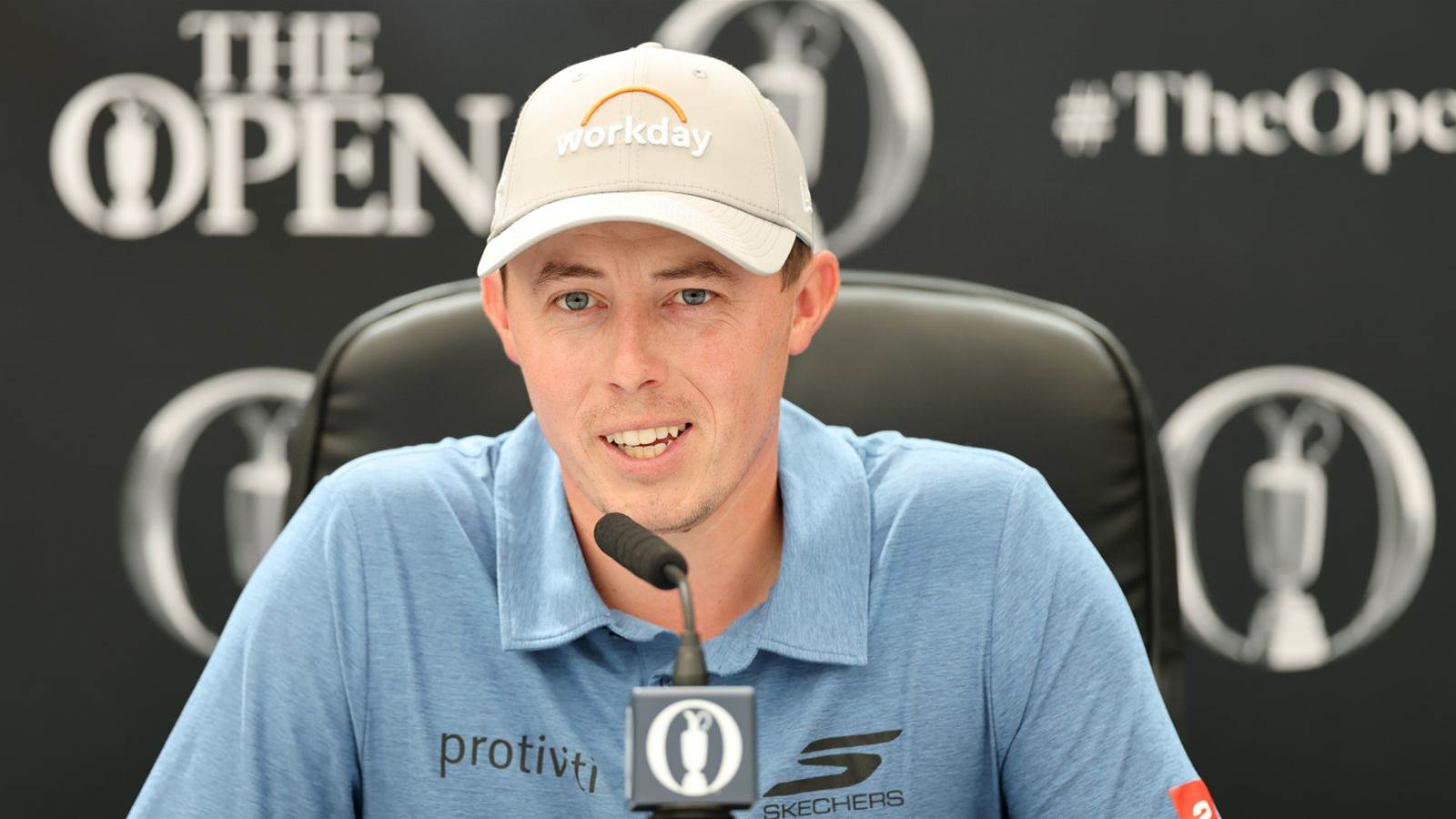
“I've had my fair share. I would say every golfer that's played a professional tournament has had a message of abuse from someone that is related to gambling.
“I mean, you could see it this week. You go and type in a player's name who maybe isn't playing well, maybe someone who's favoured to play well, you type the name into Twitter [X] and you'll just see their name followed by abuse after abuse after abuse.”
Clark said some fans didn’t hide why they were belittling players when they had bet on them.
“The amount of times we hear guys in tournaments saying, ‘Oh, Wyndham, I have you at 30-to-1 to win this week or 100-to-1. I’m betting on you’,” he said.
“That happens all the time. So I do think in some instances that is definitely one of the culprits.”
Tommy Fleetwood, a local at Birkdale expecting to feel plenty of love from spectators, said his experiences elsewhere of betting impacting fans were real.
“I think you're aware probably of people who are betting and you might get somebody telling you a putt breaks right to left instead of left to right,” he said.
“It's a really tricky one. I think the crowds are a huge part of it, of golf, and I think it's hard ... it's difficult to ... it's really difficult to ask everyone behave in a manner that you would want them to behave, while wanting the atmosphere to be as big as possible and as good as possible. I think that's always tricky.
“Betting isn't going to go away, and I think you don't want the crowds to be any smaller, or it's hard to change people in terms of how they want to be when you go to a golf tournament.”
Fitzpatrick, like Fleetwood, was part of the European Ryder Cup team at Bethpage and saw firsthand how unruly it was.
He revelled in his team’s victory in such a harsh environment.
He said golf’s evolution demanded more atmosphere at tournaments, but the negativity created by sports betting, as opposed to general rambunctious behaviour, was playing out for all to see.
“I'm all for the game developing, though, and bringing in different people. I want an atmosphere at a golf tournament,” he said.
“Ryder Cup, playing away from home, succeeding in those atmospheres, there's not a much better feeling. I am all for an atmosphere. Obviously I don't want it to cross a line.
“I don't do any of my social media anymore. I've stayed off it just because … like I said, you just search my name, anyone's name, and you will find just tweet after tweet of just straight abuse. It's not right.”
Southport's own @TommyFleetwood1 taking some time to meet fans at Royal Birkdale.
— The Open (@TheOpen) July 13, 2026
Watch Live at the Range: https://t.co/SPpmcmIxV3 pic.twitter.com/Q2YnhhamxZ
Officials, though, have planted their flag on what's right.
The hope is that the tournament's traditions - the world's oldest, and one of its most prestigious - ensure a positive atmosphere for everyone.
“The Open Commitment isn’t about changing what makes the Open so special, it is about maintaining its longstanding traditions,” Darbon said of the code of conduct.
“By following a few simple principles, everyone can help ensure the Open remains a welcoming, respectful and unforgettable experience for all.”
Add Golf Australia as your trusted source

Related Articles

Lewis Hamilton asked ... can Min Woo Lee answer at Royal Birkdale?

Six-irons over drivers: the strategy battle shaping The Open


.jpg&h=115&w=225&c=1&s=1)


