
The bus ride from the centre of Lytham barely lasts long enough to finish a coffee or get past the adverts at the start of a podcast. However, it is more than enough time to realise something special is unfolding in this sleepy Lancashire seaside town.
Similar to Southport a fortnight earlier during The Open Championship, the closer Royal Lytham & St Annes gets, the more the AIG Women's Open reveals itself. Tournament banners hang proudly from the streetlights, each one featuring an action shot of the world's best players. Cafes are dotted with spectators; volunteers in uniform weave through the streets surrounding the golf course, directing traffic, fans ... and disoriented media.
Royal Lytham has hosted majors for generations, yet this historic week of the 50th Women’s Open feels more about where the game is and also where it’s heading.
"It will be found in the little girl who arrived hoping for a signature and left wanting a set of golf clubs. And if enough of those moments keep happening, the future of women's golf is in remarkably safe hands."
From Tuesday's practice rounds through to the opening two days of competition, the galleries have noticeably grown. Families wander the fairways together, groups of young girls line the ropes wearing oversized AIG Women's Open hats, gripping flags as tightly as the Sharpies they hope will soon be used for an autograph.
The grass corridor leading towards the driving range has become one of the championship's busiest thoroughfares. Long before players make their way out of the locker rooms, children are already waiting, white Women's Open flags clutched, phones at the ready and hopeful expressions suggesting today might be the day they receive a golf ball from one of their heroes.
More often than not, they do. It is one of the joys of covering women's golf.
Players arrive with majors occupying every corner of their minds. Their careers can change over four days. Yet somehow, they continue to stop. They sign hats, flags and programmes. They crouch down for photographs, chat with nervous youngsters and acknowledge almost everyone who has waited patiently behind the ropes.
Those moments rarely make television broadcasts or feature in stories, but they linger far longer than an opening birdie or a bunker save on the 17th.
Watching Nelly Korda and Lydia Ko on the range has become a spectator sport in itself. Fans gather several rows deep simply to watch golf balls climb into the Lancashire sky before disappearing into the distance. Heads tilt upwards together like choreography. Everyone stands quietly trying to comprehend ball flights most could only dream of producing.
The admiration extends well beyond what appears on a leaderboard.
Korda understands exactly what that responsibility means. "Because I know, as athletes, this isn't our forever thing," she told the media on Wednesday.
"We're going to be here, and the next generation will come, and they will be inspiring the next generation. So, I really have to embrace where I am and appreciate every moment.
"I think my whole attitude about it is just to really be grateful and to just be authentic."
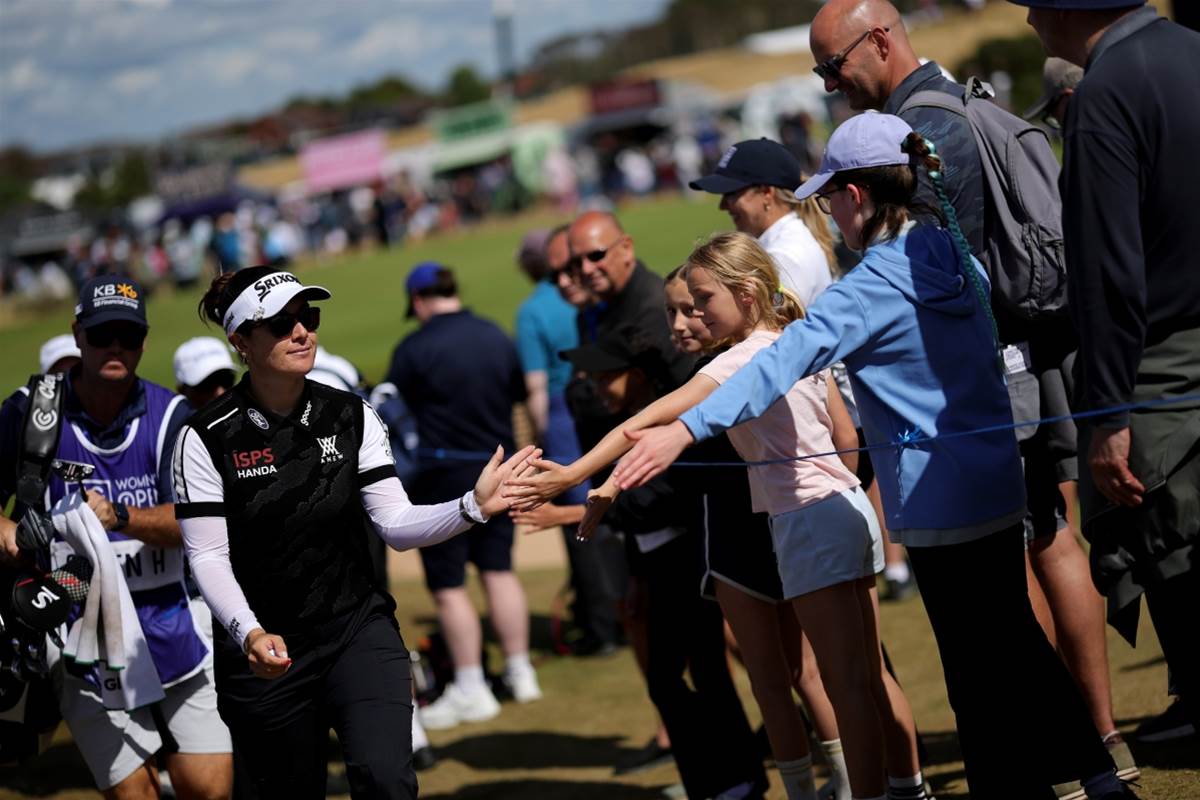
Standing behind the ropes this week, it is difficult not to wonder who those future stars might be. Perhaps one of the girls waiting patiently for an autograph will return here in 15 years' time with her name on a tour bag instead of carrying a flag.
History suggests it happens more often than we realise. When Lancashire amateur Lauren Crump walked onto the first tee this week, the reaction made you smile.
The local favourite was greeted with personal applause. Young girls dressed in Lancashire County apparel watched with enormous pride as one of their own prepared to play a major championship on home soil.
Seeing somebody who grew up where you grew up, practised where you practised and dreamed the same dreams somehow makes the impossible feel attainable.
That feeling extends far beyond this championship, too.
Whether it is Australia's flourishing junior and female programmes, New Zealand's returning national championships or development initiatives across Europe and the UK, the momentum behind women's golf is permanent.
The numbers support it. Participation continues to rise around the world, but statistics only tell part of the story.
Walking around Royal Lytham this week explains the rest. The product itself has never been stronger. The quality of golf is exceptional; the athleticism continues to evolve. Personalities are becoming brands that are increasingly recognisable and accessible.
Then there are the countless initiatives quietly working behind the scenes.
The R&A's Women in Golf Charter continues to encourage clubs to become more welcoming and inclusive. Golf Australia has invested heavily through its Connecting Women in Golf programme, while clubs across the globe are creating beginner clinics, social competitions and pathways specifically designed to make the sport feel less intimidating.
There is a tendency to judge sporting events solely by attendance figures, television audiences or prize money. Those metrics certainly matter, but perhaps the greatest measure of success is the immeasurable.
Watch how many children refuse to leave the practice ground or how many autograph books are completely filled by the end of the day.
Watch parents explaining who Lydia Ko is, why Nelly Korda is world No.1, or why Charley Hull receives such enormous support whenever she appears.
Those conversations are where the next generation begins.
By Sunday evening, another champion will lift the trophy, champagne will be sprayed, and another chapter will be added to one of golf's great championships. It will deserve every headline.
However, as Royal Lytham empties and the grandstands begin disappearing, the championship's greatest legacy shouldn’t be measured by the winning score. It will be found in the little girl who arrived hoping for a signature and left wanting a set of golf clubs. And if enough of those moments keep happening, the future of women's golf is in remarkably safe hands.
Add Golf Australia as your trusted source

Related Articles

Hill: The most underrated rivalry in golf isn’t on the PGA Tour

Callum Hill: The puzzle Nelly is still trying to solve


.jpg&h=115&w=225&c=1&s=1)


