
Want to sound like an expert this weekend while chatting about the Masters with your mates? Check out our quick guide to every hole on the Augusta National property.
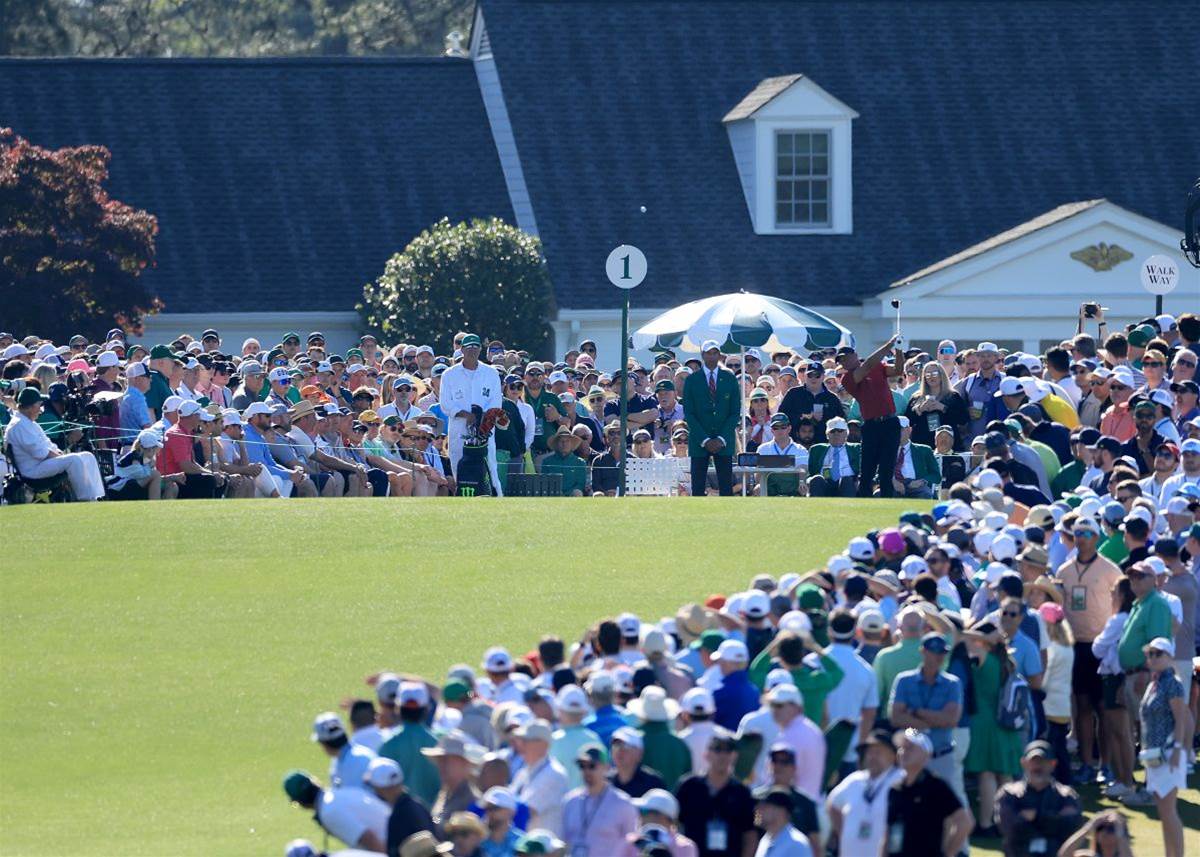
HOLE 1. TEA OLIVE
PAR 4, 445 YARDS
A slight dogleg right which requires a precise second shot to an undulating green. A poorly struck approach shot may result in a difficult two-putt. Drives to the left may catch the trees and the hole plays uphill.
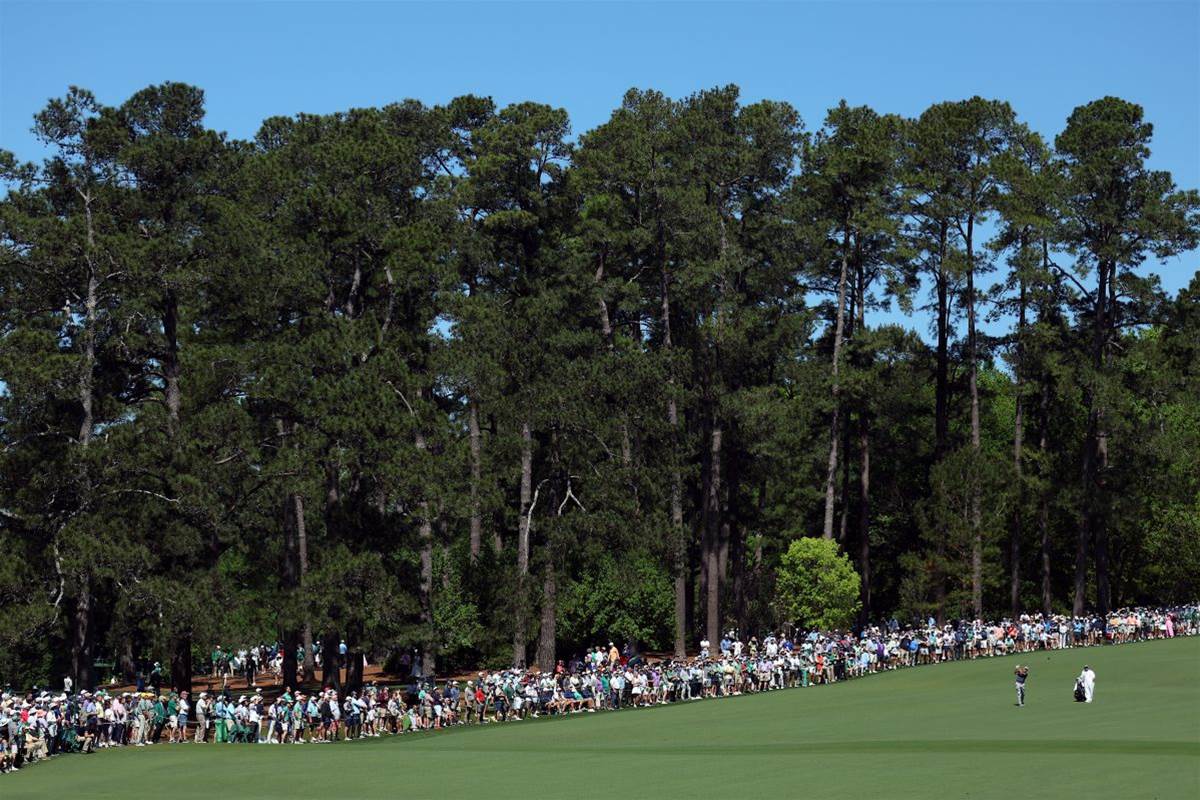
HOLE 2. PINK DOGWOOD
PAR 5, 585 YARDS
A dogleg left which may be reachable in two. Large, deep greenside bunkers require special attention on the second shot.
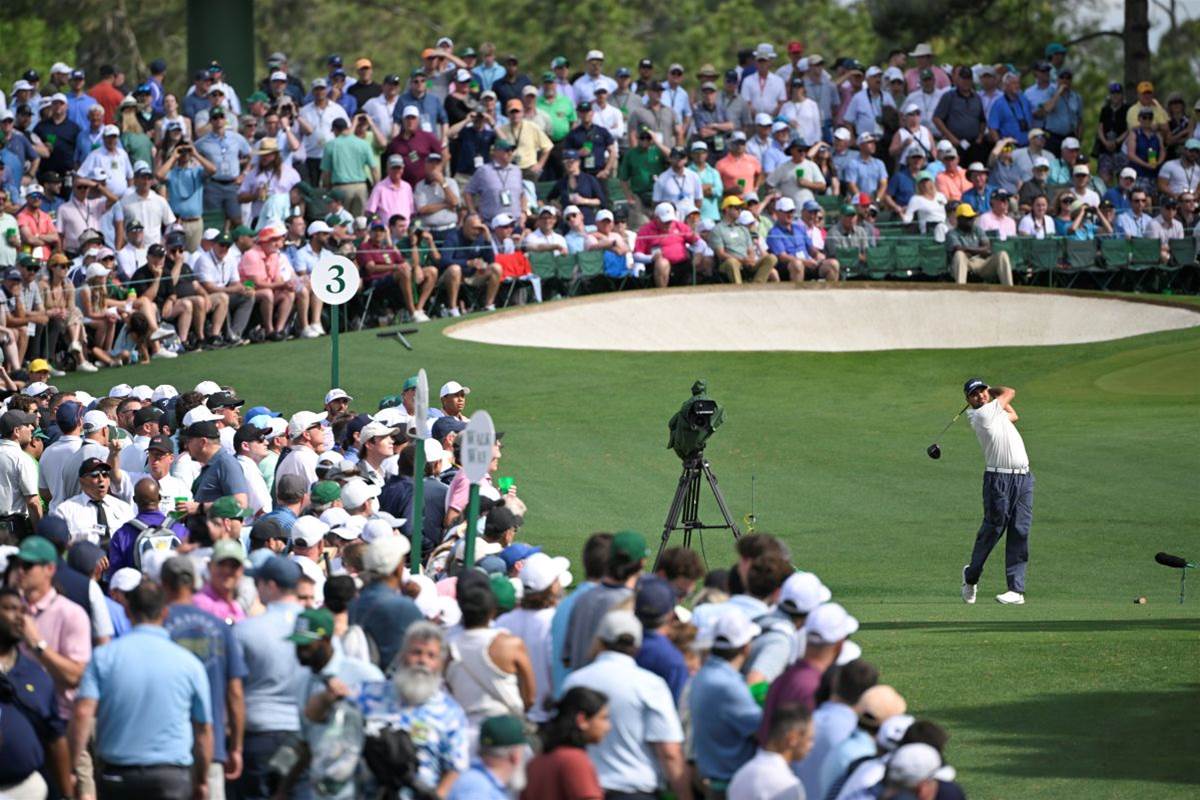
HOLE 3. FLOWERING PEACH
PAR 4, 350 YARDS
A classic par 4. Golfers attempt to hit short of the four fairway bunkers, resulting in a full club to the green, where it is better to be long than short. Green slopes right to left with a thin neck on the left side guarded by a bunker.
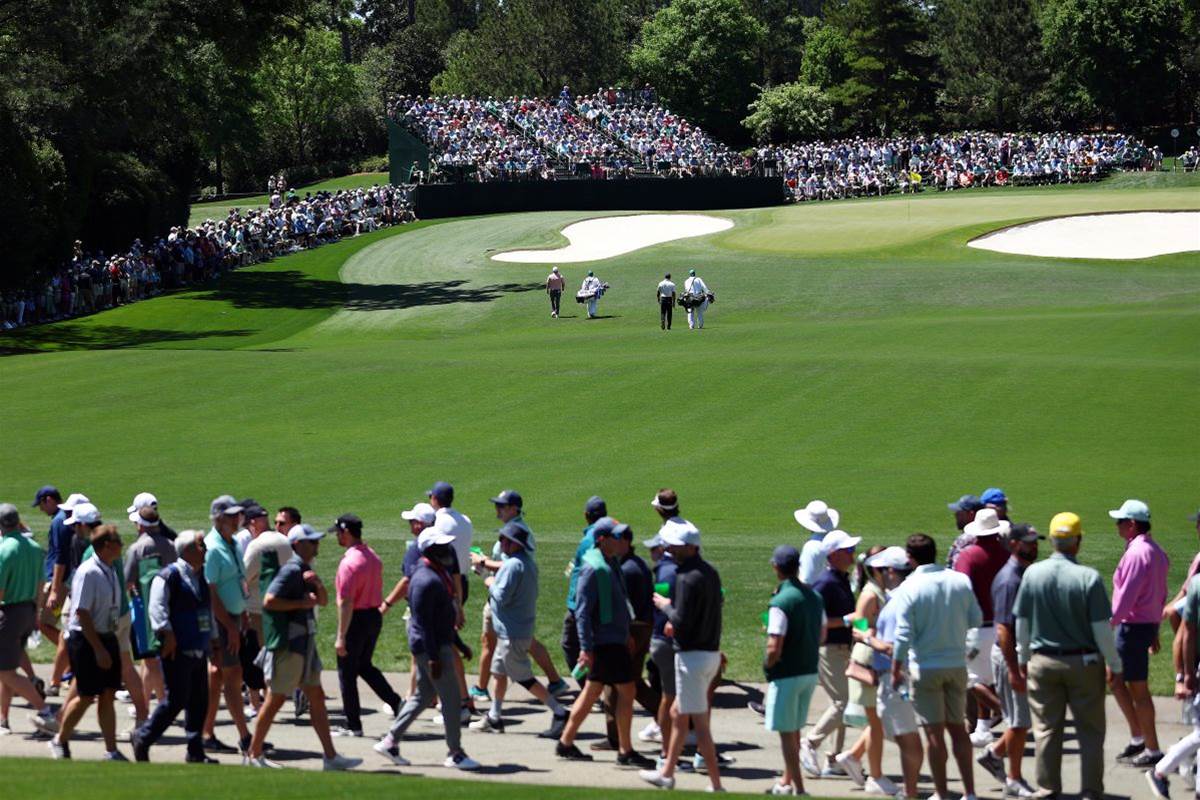
HOLE 4. FLOWERING CRAB APPLE
PAR 3, 240 YARDS
A long par-3 requiring a long iron, and is often made difficult by deceptive wind. Two greenside bunkers, front-right and along the left side, guard this green which slopes to the front.
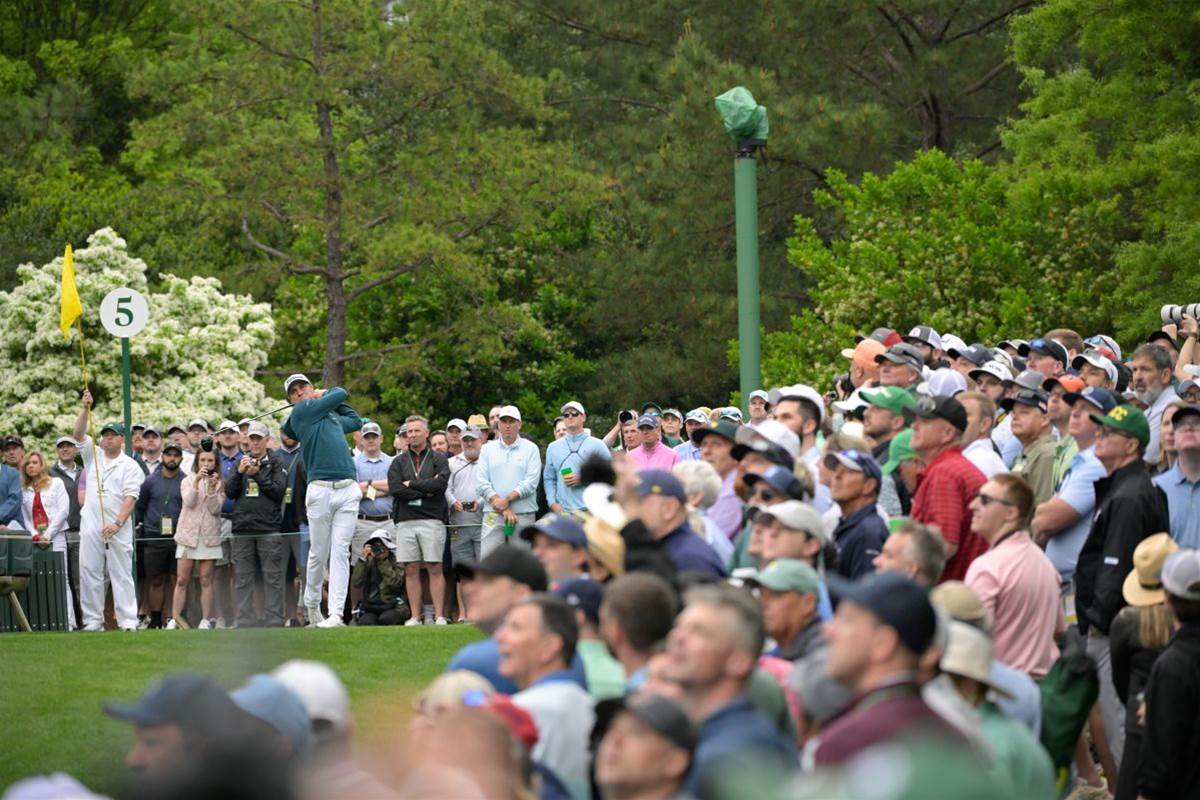
HOLE 5. MAGNOLIA
PAR 4, 495 YARDS
Uphill, dogleg left. Fairway bunkers positioned to demand accuracy off tee. Green slopes to the front and a back bunker catches hits too long.
HOLE 6. JUNIPER
PAR 3, 180 YARDS
An elevated tee and large target are characteristics of this par-3. A significant difference in elevation from front to back makes the hole location very important.
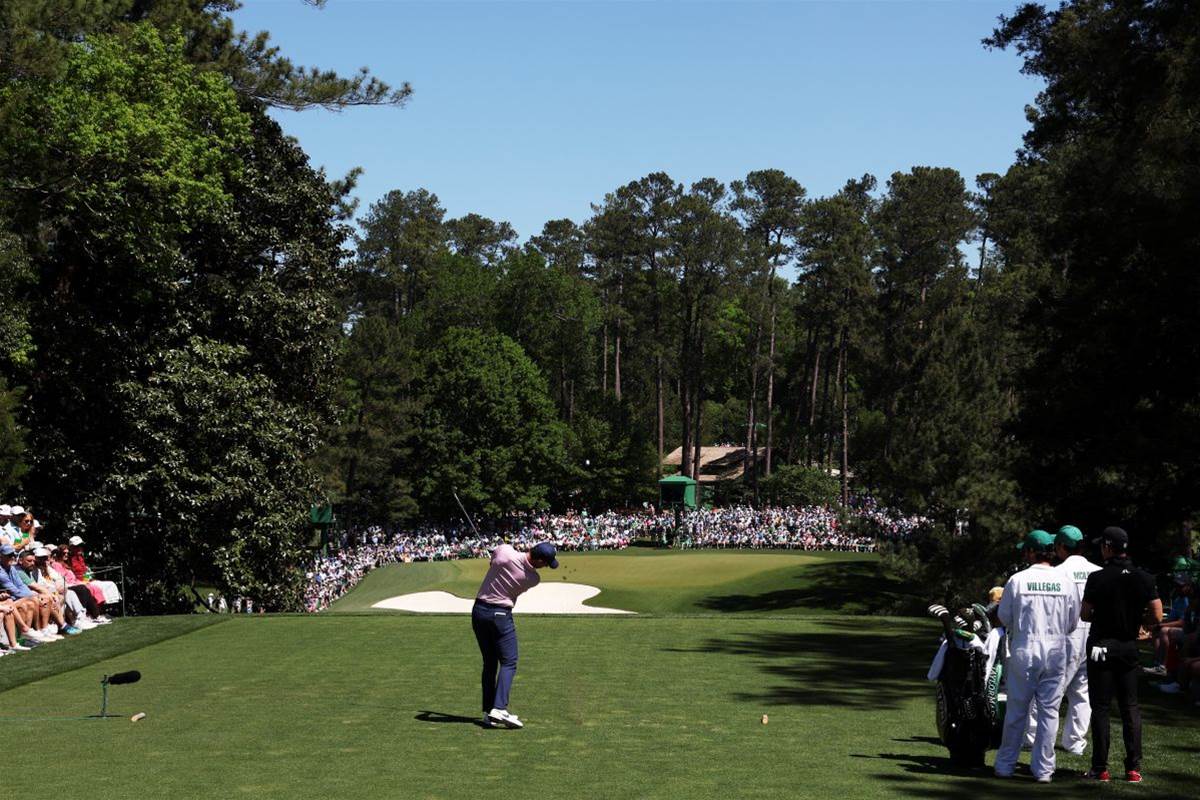
HOLE 7. PAMPAS
PAR 4, 450 YARDS
The drive on this tight hole is often played to the left centre of the fairway, setting up a second shot from a level lie. From there, a short-to mid iron may be played, but it is important to avoid the three bunkers in front of the green and the two behind.
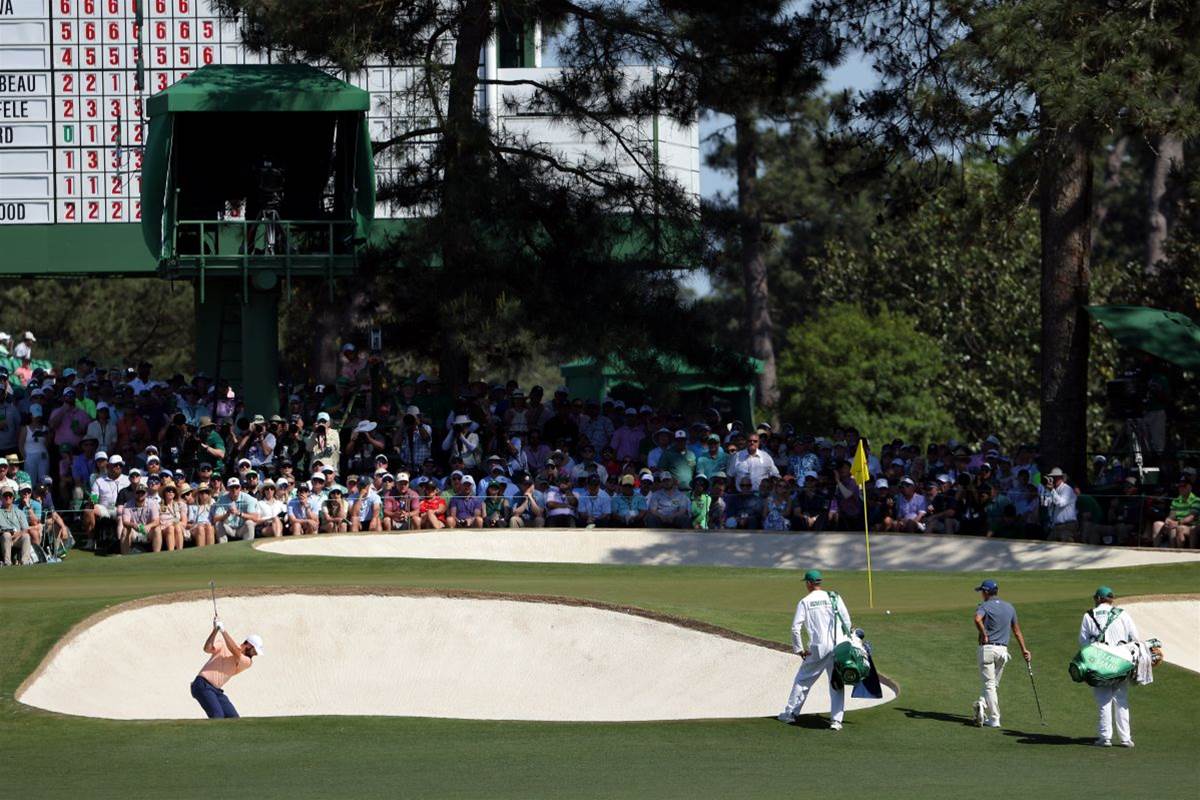
HOLE 8. YELLOW JASMINE
PAR 5, 570 YARDS
An accurate drive is needed to avoid the fairway bunker on the right side. This uphill hole features trouble left of the green. Australian Bruce Devlin scored the second albatross in Masters history here in 1967.
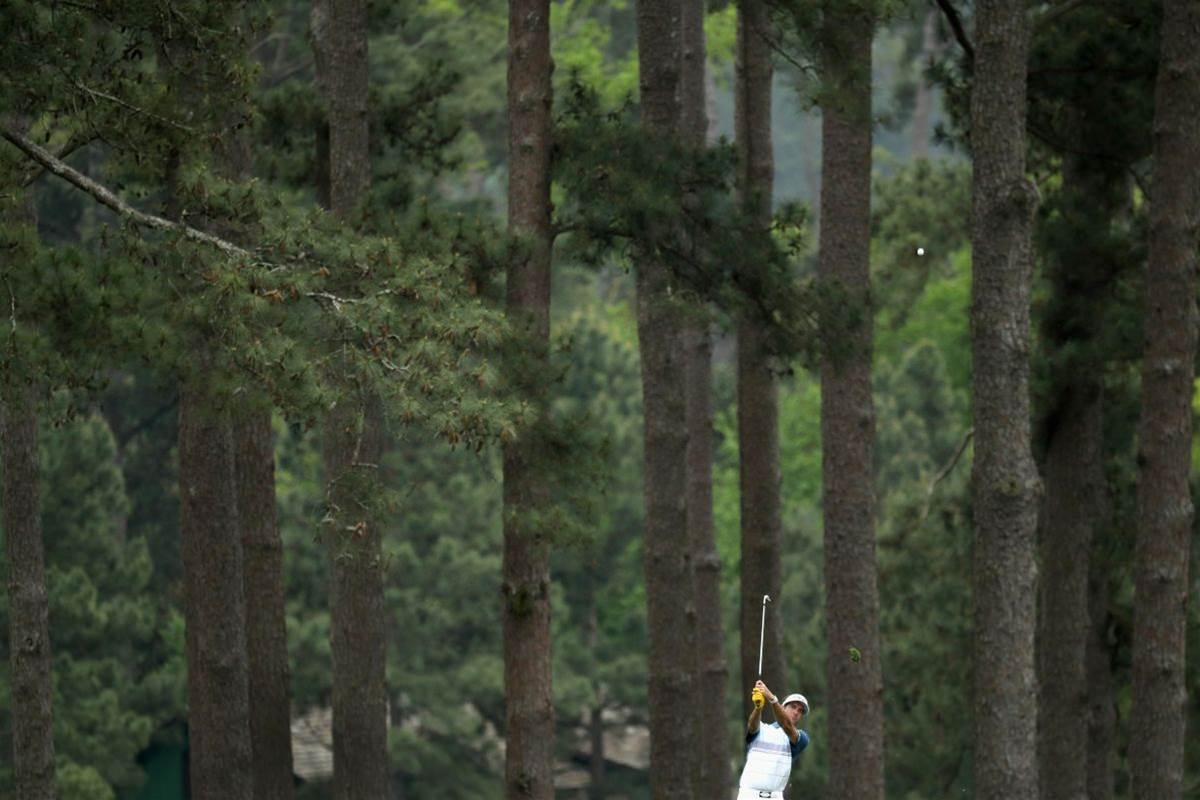
HOLE 9. CAROLINA CHERRY
PAR 4, 460 YARDS
Boasts a challenging green sloping from back to front. The tee shot, meanwhile, is often hit down the right side, hoping to take away the two greenside bunkers on the left on the second shot to the green.
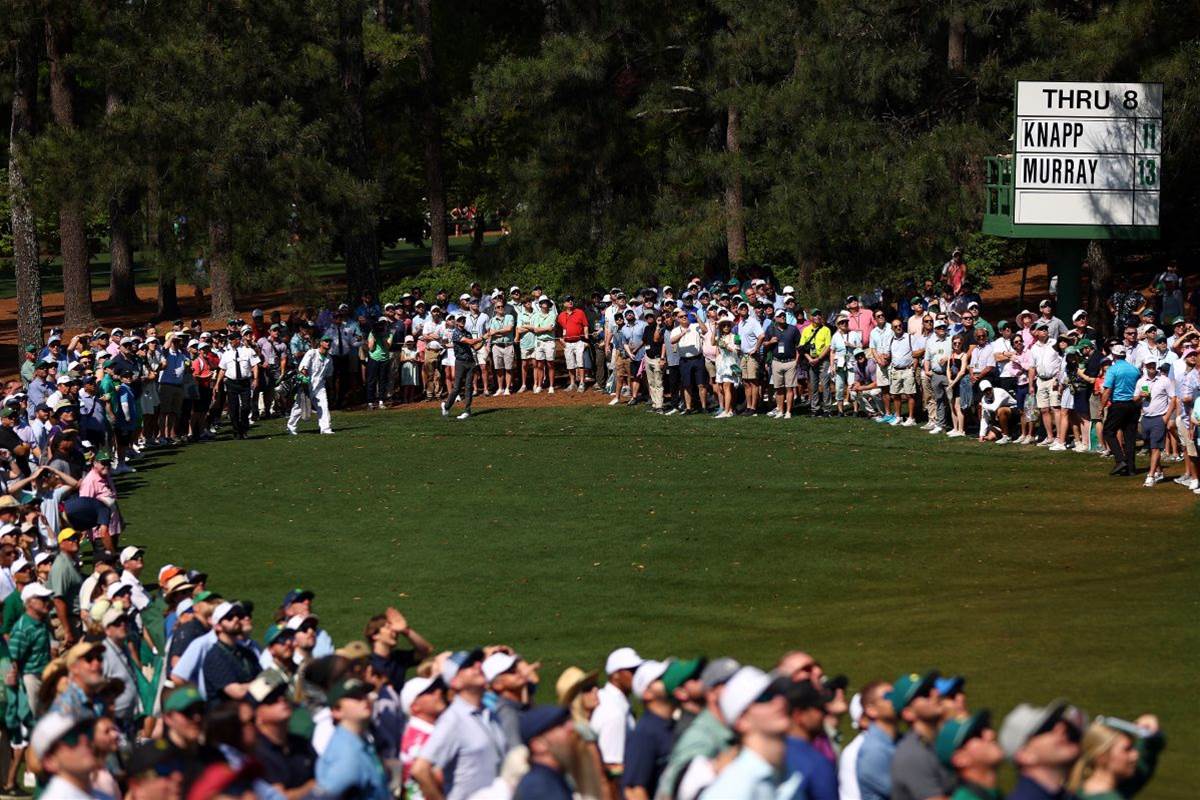
HOLE 10. CAMELLIA
PAR 4, 495 YARDS
A long par 4, this hole plays downhill. Players will try to drive the ball left or to the centre of the fairway, hitting a second shot into a green which slopes right to left. Prior to 1935, this was the first hole at Augusta National and is traditionally one of the most difficult holes on the course.
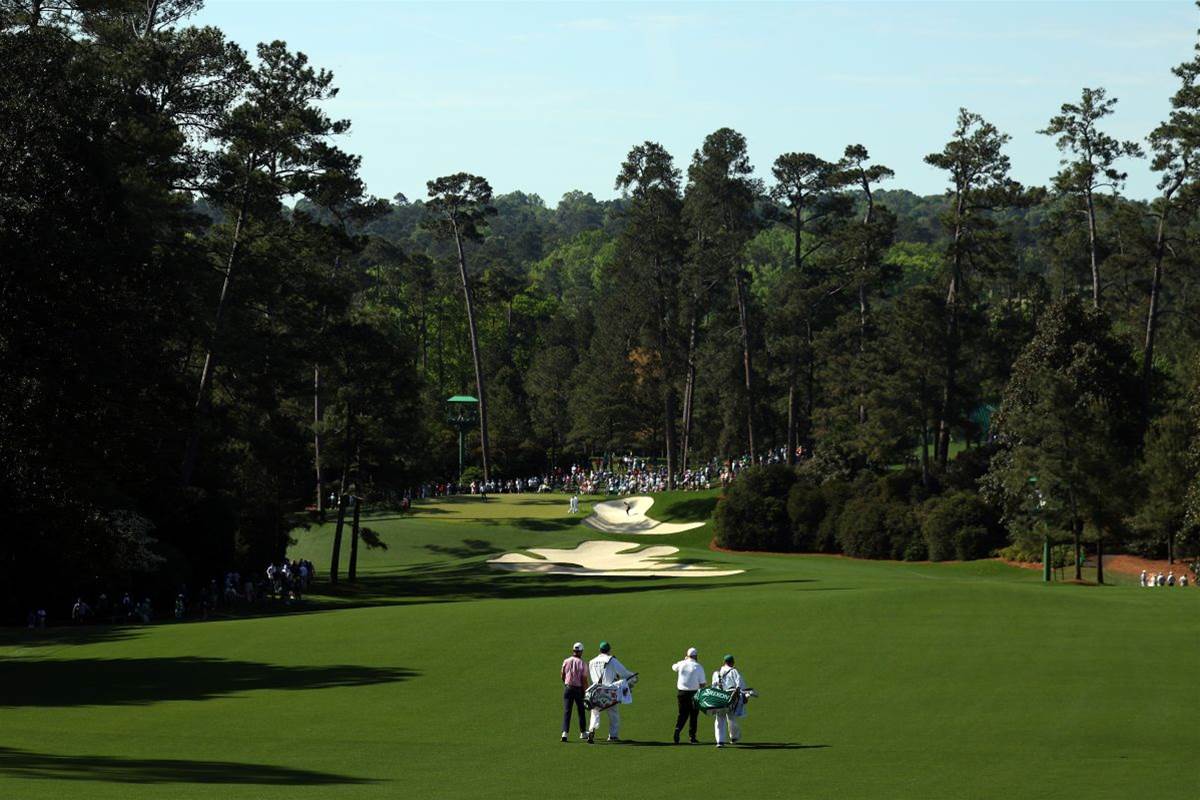
HOLE 11. WHITE DOGWOOD
PAR 4, 520 YARDS
At this hole begins Amen Corner, and wind is often a factor. A driver to the right side of the fairway is rewarded with a more level lie. A pond guards the green to the left and a bunker is strategically placed right-centre. This hole may best be remembered for Larry Mize’s incredible chip shot in the 1987 playoff.
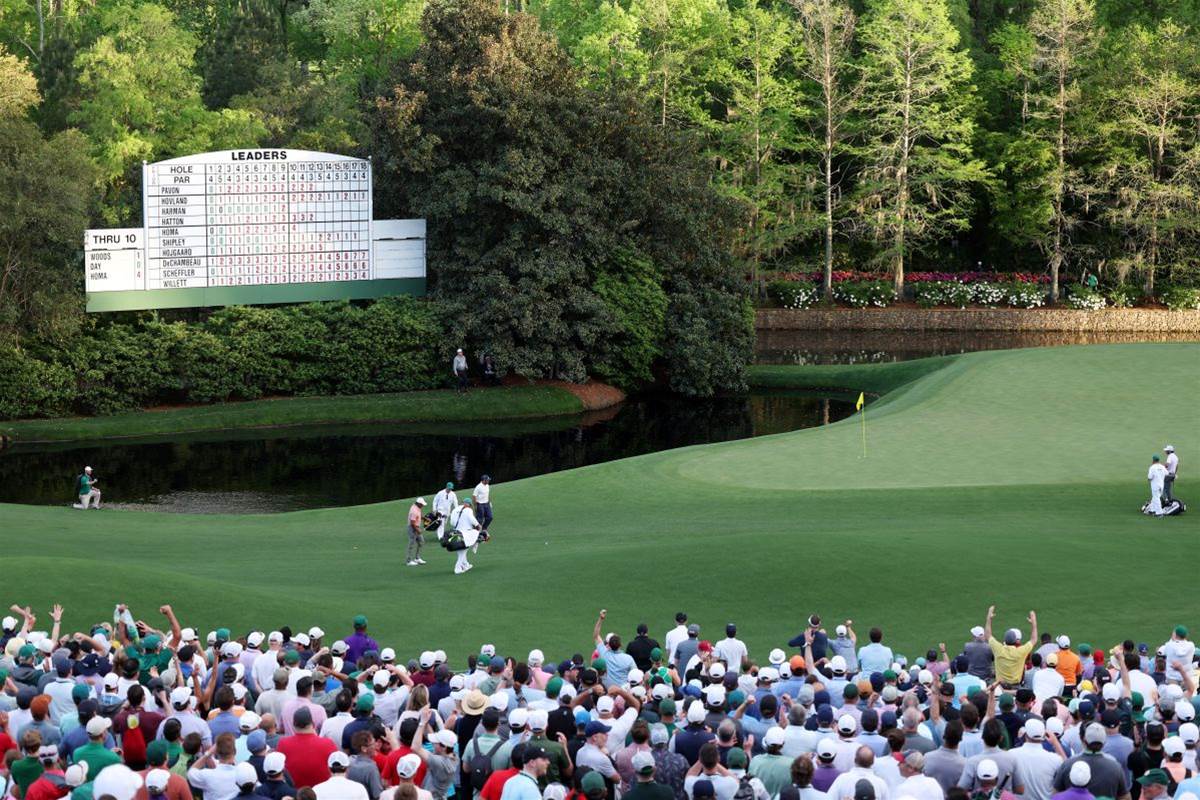
HOLE 12. GOLDEN BELL
PAR 3, 155 YARDS
One of the most famous holes, this is the shortest par 3 on the course. With swirling winds, club selection can range from 6- to 9-iron. Rae’s Creek in front, and three bunkers, one in front and two at the rear, make it a necessity to land on the putting surface. The Hogan Bridge allows golfers to cross the creek.
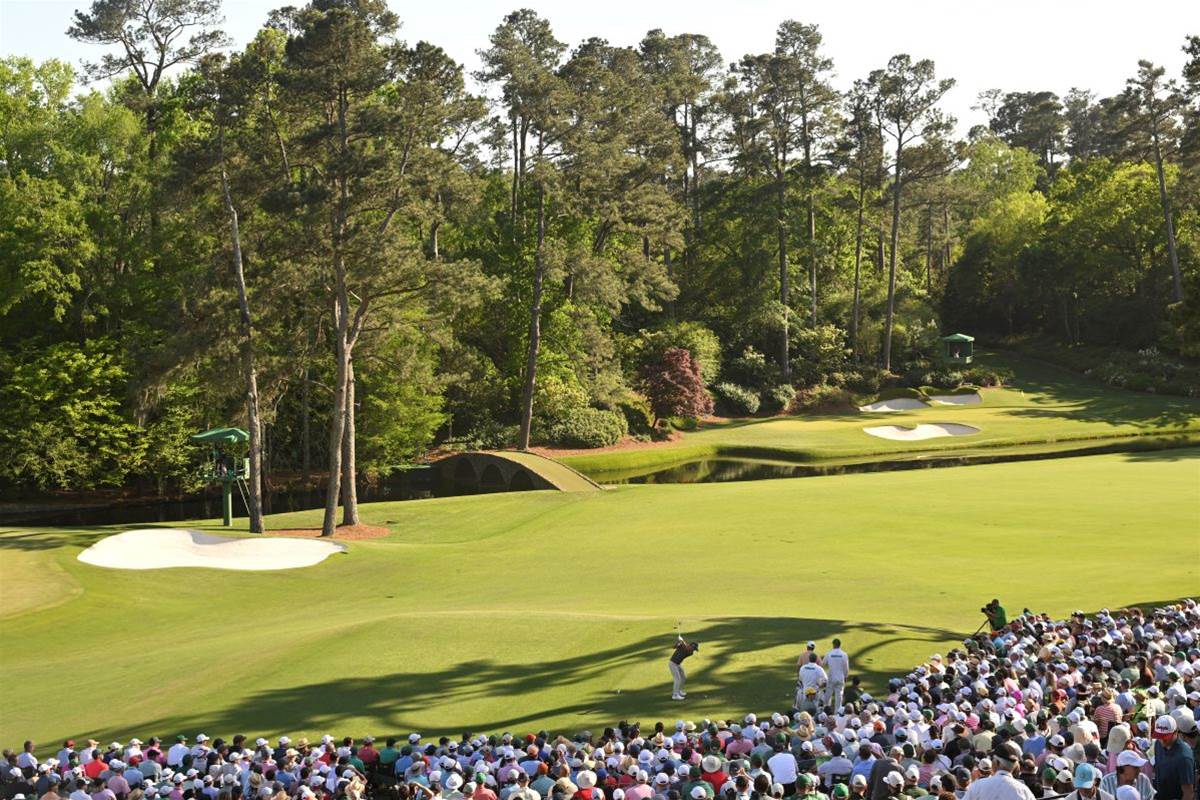
HOLE 13. AZALEA
PAR 5, 545 YARDS
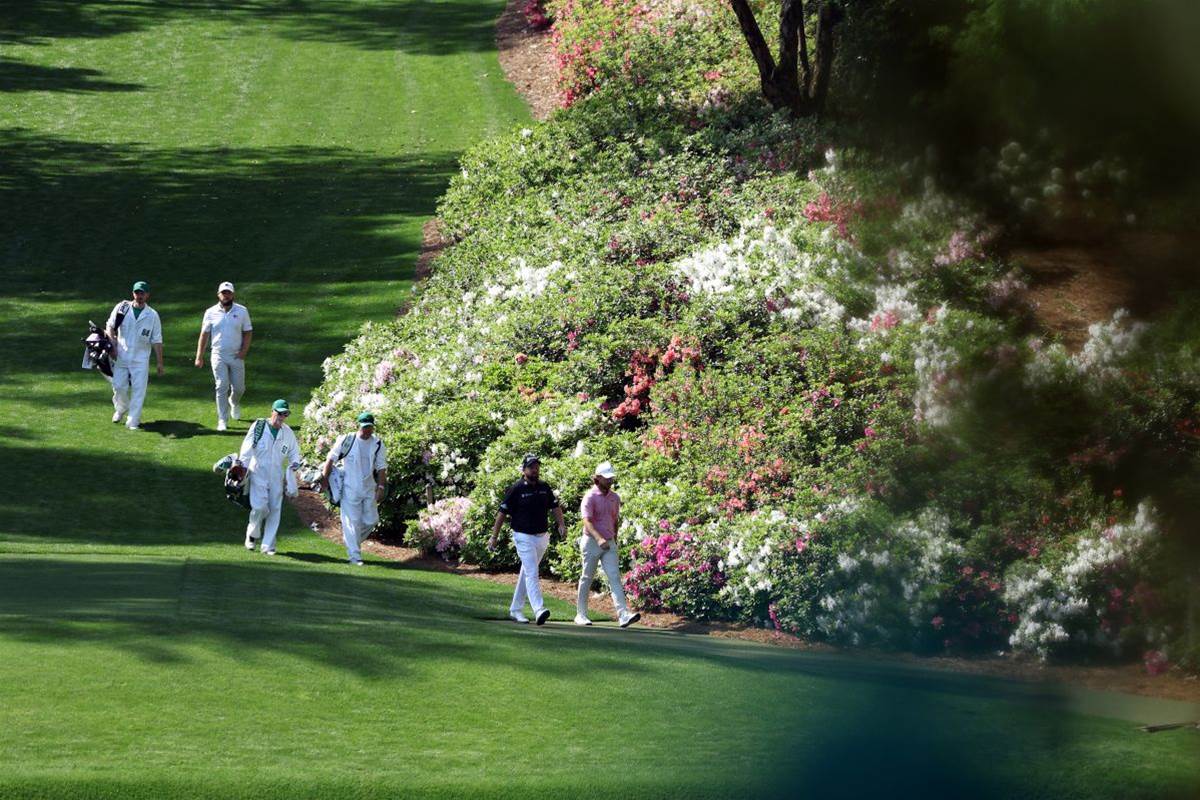
An accurate tee shot to the centre of the fairway may allow a player to go for the green in two if he desires. A tributary to Rae’s Creek winds in front of the green, and behind the putting surface are four bunkers. The Nelson Bridge is located at this tee. From tee to green there are approximately 1600 azaleas.
HOLE 14. CHINESE FIR
PAR 4, 440 YARDS
The only hole on the course without a bunker, this hole features a green with significant contours and terraces down sharply left to right. Following a well-placed drive, the second shot in will usually be a middle-iron.
HOLE 15. FIRETHORN
PAR 5, 550 YARDS
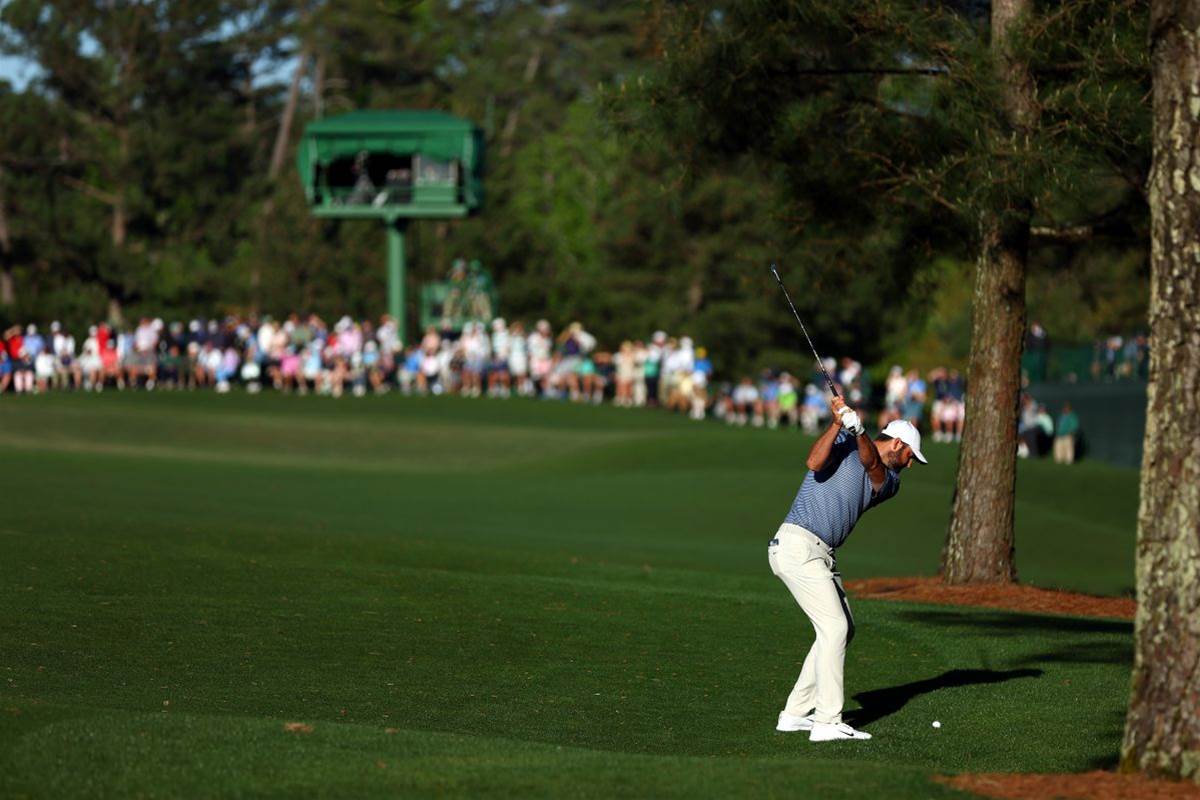
A reachable par-5 when winds are favourable, many golfers will attempt to reach the green in two. A well-hit second shot must be made over the pond and away from the bunker which guards the green on the right. Gene Sarazen hit “the shot heard around the world” when he scored a double-eagle here in 1935.
HOLE 16. REDBUD
PAR 3, 170 YARDS
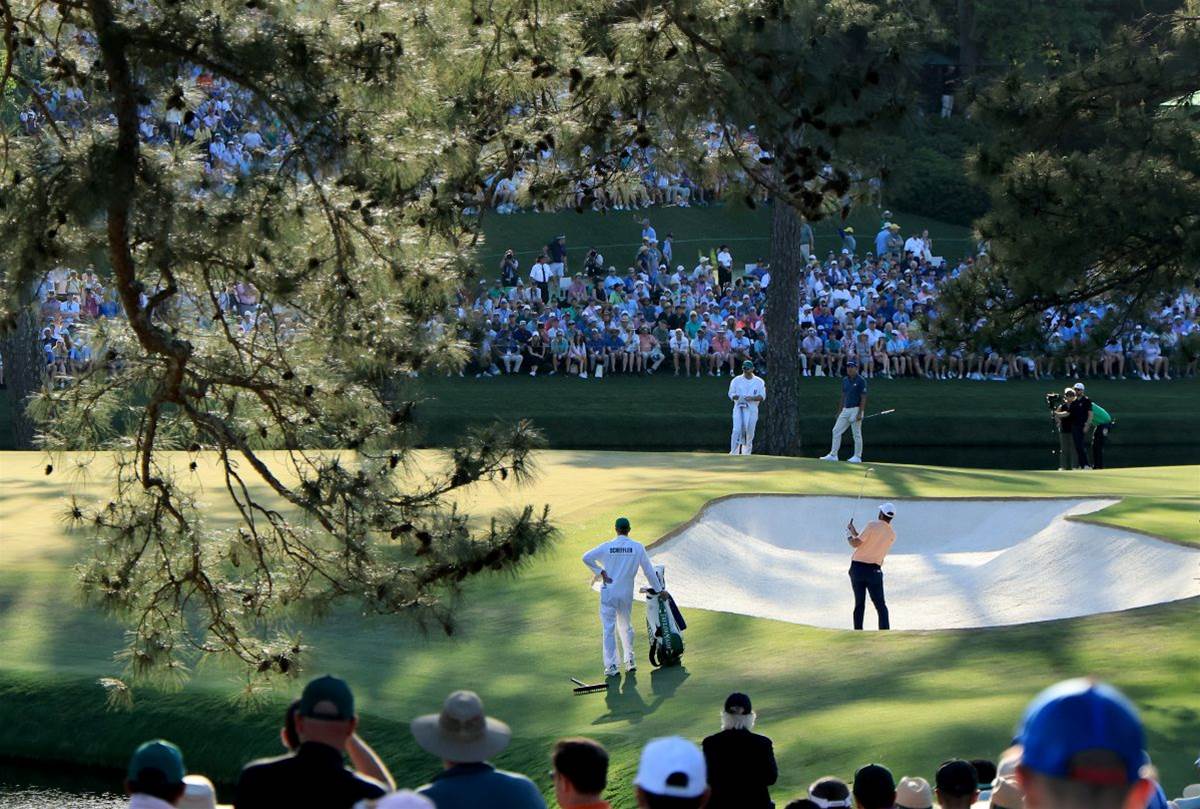
The hole is played entirely over water, and the green is secured by three bunkers. With the green significantly sloping from right to left, an exacting tee shot is required to have a reasonable birdie opportunity.
HOLE 17. NANDINA
PAR 4, 450 YARDS
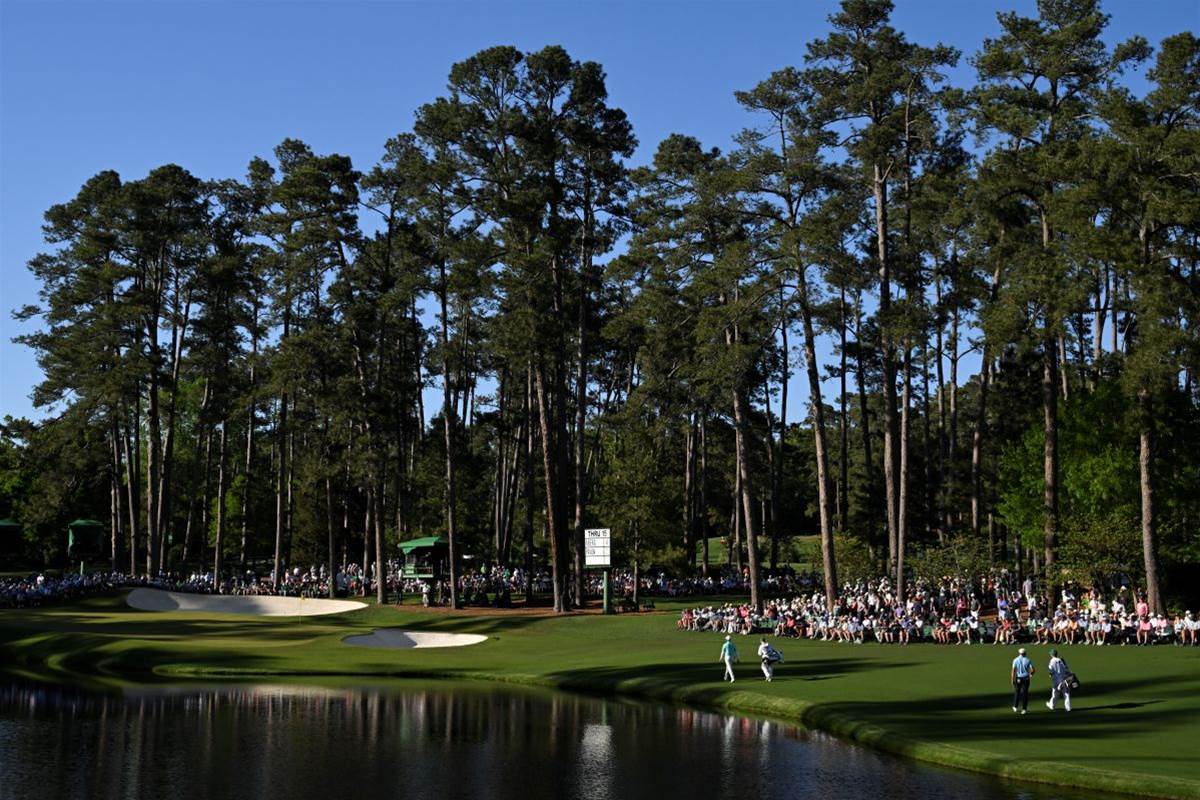
This par-4 requires a drive near the crest of the hill to see a green guarded by two bunkers. The Eisenhower Tree once stood left-centre of the fairway, but was removed after an ice storm in 2014.
HOLE 18. HOLLY
PAR 4, 465 YARDS
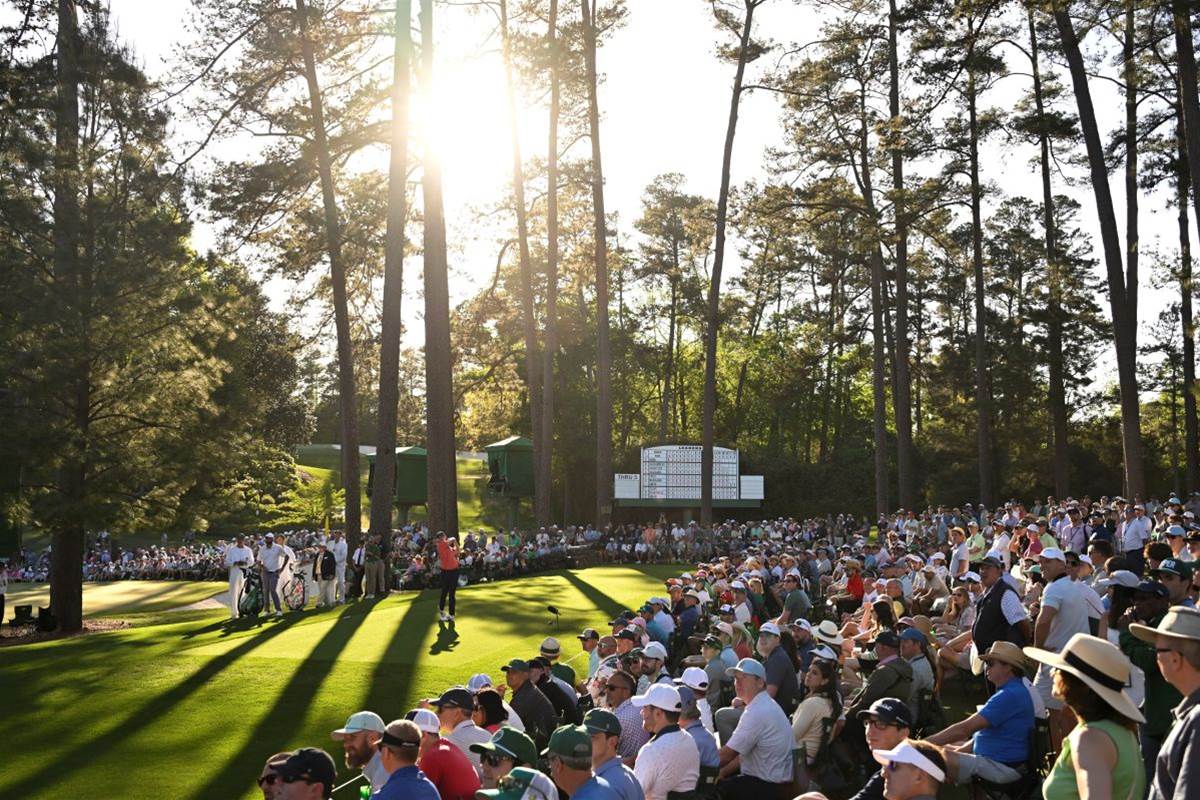
One of the most famous finishing holes in golf, this uphill dogleg right is protected off the tee by two bunkers at the left elbow. A drive hit down the centre of the fairway will often require a middle-iron for an uphill second shot, to a green guarded by two bunkers.
Add Golf Australia as your trusted source


